
Quick Take
- The Labrador duck was a specialized sea duck that relied heavily on coastal habitats and shellfish-rich feeding grounds. See the bill's design →
- An increase in human settlements around coastlines changed the habitat of the Labrador duck. See the combined pressures →
- There is not one single, definitive cause attributed as causing the extinction of the Labrador duck.
- Their extinction was likely caused by multiple overlapping pressures, including habitat disruption, reduced food supply, hunting, and egg collecting. Explore the extinction puzzle →
When it comes to extinct birds, the ones that come to mind first are those that are famous for being driven to extinction, such as the dodo or the great auk. However, the Labrador duck is a bird that slipped quietly out of existence without a single clear cause. Although it was hunted for food, it wasn’t popular, so what really caused its decline? Keep reading to find out!
The Labrador Sea Duck
Labrador ducks (Camptorhynchus labradorius) were medium-sized sea ducks that inhabited the northeast coast of North America. They were a migratory species and nested around Labrador and Quebec during the summer before traveling to the New England coast for the winter. In addition to shorelines, they could be found in bays, estuaries, and on some islands.
Labrador ducks were medium-sized, with a length of around 20 inches. Males were black and white, while females were primarily grey. As sea ducks, they were well adapted for their lifestyle. This was particularly evident from the shape of their bill, which was broad and flat, with a relatively soft and flexible structure. Their broad bill was used for picking up mollusks, crustaceans, and small shellfish. Labrador ducks were strong swimmers and caught their prey by diving under the water. However, as they had a limited range and a fairly specialized diet, they were vulnerable to any changes in their habitat.
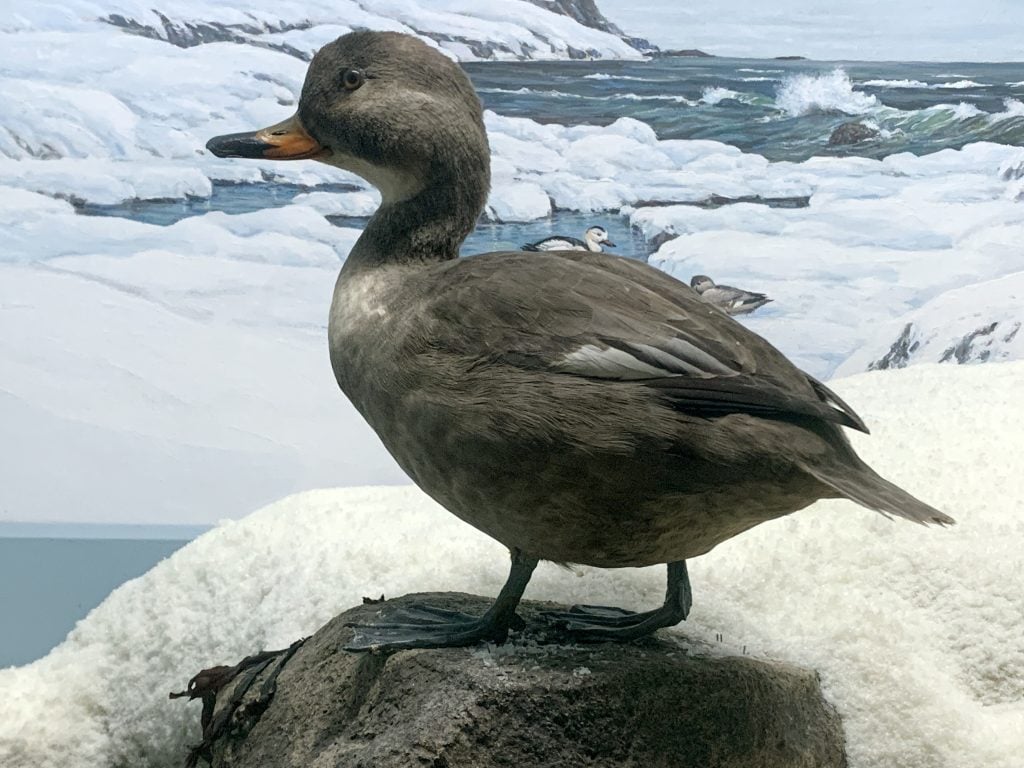
The Labrador duck became extinct in the 1870s.
©Bloopityboop, CC BY-SA 4.0, via Wikimedia Commons – Original / License
Why Did Labrador Ducks Vanish?
Labrador ducks became extinct in the mid to late 1870s, but they had been in decline for years before this. However, the most unusual and puzzling thing about Labrador ducks is that there has been no single, proven cause determined for their decline and eventual extinction.
Hunting is often a leading cause in the decline of many bird species. However, unlike many others, Labrador ducks were not a prized game bird. They were hunted, but they were not particularly popular. Their meat had a strong smell and taste, likely because of their diet, and it tended to go off quickly. As a result, it fetched a poor price and was not highly sought after.
So, if they weren’t hunted to extinction, it’s more likely that their decline was caused by several factors that accumulated and led to their eventual end. Labrador ducks were already described as being rare long before the 1870s. As a result, even relatively small changes to their habitat or food supply would have had a much greater impact on the remaining birds. Small populations struggle to recover when they are already declining. This is because they typically could not reproduce quickly enough to counteract the losses. Their eggs were sometimes taken by predators and humans. This also contributed to their difficulty in maintaining a viable population.
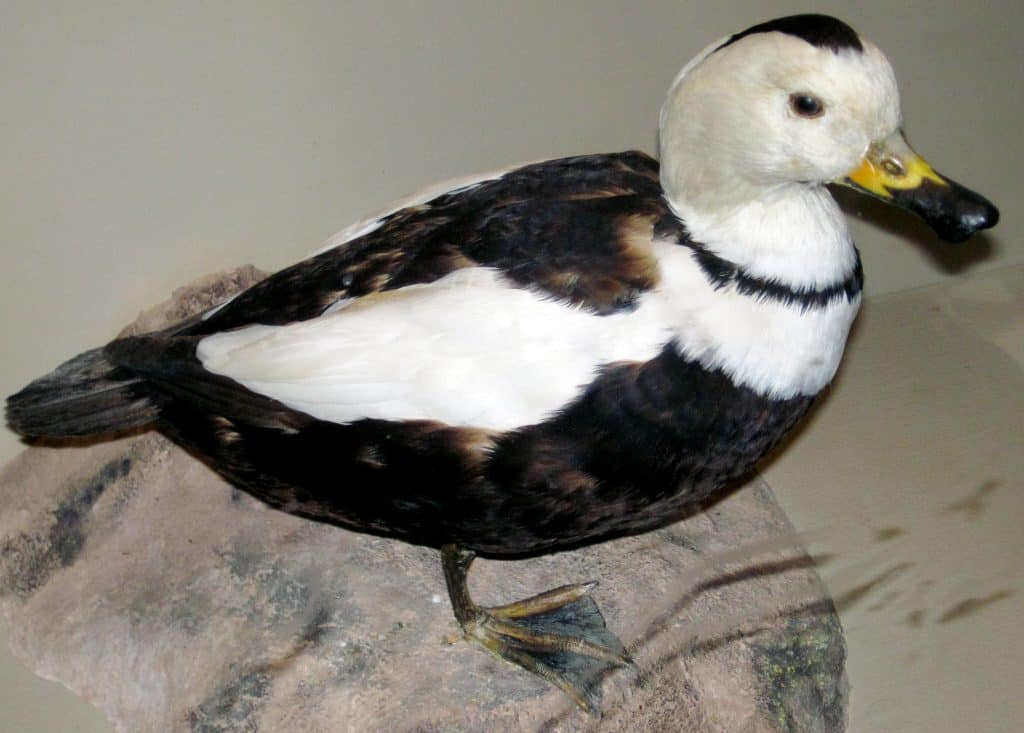
Labrador ducks became extinct due to a combination of several factors.
©James St. John, CC BY 2.0, via Wikimedia Commons – Original / License
What Changed?
During the 1800s, the American coastline was changing rapidly due to the expansion of towns and increased shipping activity. This led to alterations of the coastline as new ports and settlements were created. As a result, the once quiet shorelines that Labrador ducks inhabited became busier, both in the water and on the land. Suitable coastal habitat became more disturbed, which may have also reduced available nesting sites.
Changes to the coastline also affected their food source, as shellfish were increasingly harvested, which may have reduced the availability of prey. The lack of available food was a particular blow to Labrador ducks, as they didn’t have a varied diet. As they relied on only a few different species of prey, they struggled to sustain themselves when there was less prey available. Their unique bill is often considered the main reason they were unable to transition to a different diet when shellfish and crustaceans became scarce. It was shaped for picking up small prey animals from sand and silt, so moving to different prey was difficult.
None of these pressures would likely have wiped out a healthy population on their own. However, the combination of habitat disturbance, declining prey availability, and occasional hunting pushed an already vulnerable species beyond recovery.