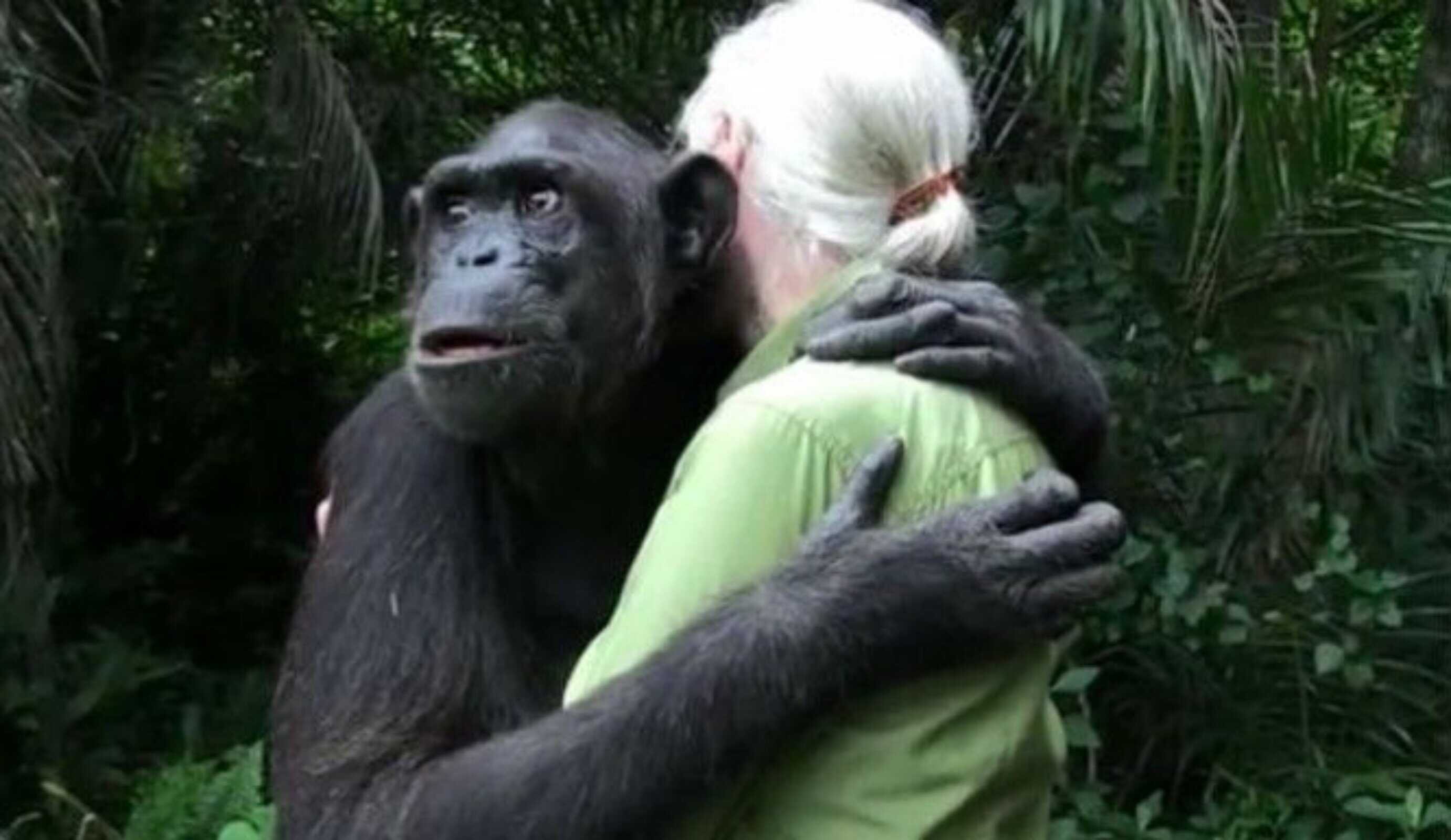

Chimpanzees are capable of complex emotions. While this is common knowledge today, it was not in the 1960s. It was not until Jane Goodall began working in the field of animal research that this groundbreaking information was learned.
Goodall worked with countless primates during her career, but there were some with whom she had a closer bond than others. An example of this is a chimp who gave such a pure, loving hug to Goodall that it brings tears to one’s eyes. Had Goodall not changed how animals are both observed and treated in the field of animal research, there is a good chance that far less would be known about primates, their social structures, and their complex emotions. She was a pioneer in the field, and her absence is palpable.
An Emotional Farewell
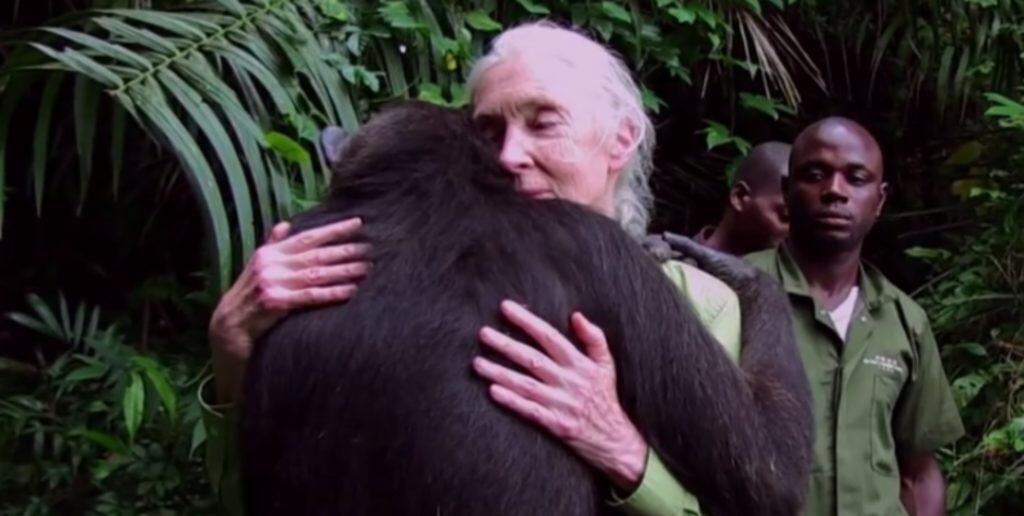
A chimpanzee turned to say goodbye to Jane Goodall before returning to the jungle.
© – Original
Jane Goddall passed away at the age of 91 on October 2, 2025. Since that time, Goodall has been remembered for her groundbreaking research with primates. More often than not, it is stories of how she changed the field of animal research forever, with her empathic approach to observation and research.
A prime example of the success Goodall achieved during her lifetime is an Instagram video showing a chimpanzee being set free. While it is not disclosed where the chimp is being freed, there is a clear bond between Goodall and the chimpanzee that cannot be denied, as evidenced by the chimpanzee’s lack of desire to run away immediately.
The video shows a large crate in the jungle carrying a single chimpanzee. The door to the cage opens, and the chimpanzee is again able to taste freedom. However, instead of running away and not looking back, the chimpanzee turns to give a brief embrace to one of the team researchers before jumping onto the crate.
Goodall does not reach for the chimpanzee, likely to encourage it to return to the jungle. The chimpanzee, however, has other ideas and walks over to Goodall to hug her. This is not a short embrace. It is one that clearly shows how close Goodall and the chimpanzee have become and underscores the emotional intelligence chimpanzees possess, something Goodall discovered, forever changing the way chimpanzees were viewed in the scientific community.
Jane Goodall Was an Acclaimed Primatologist
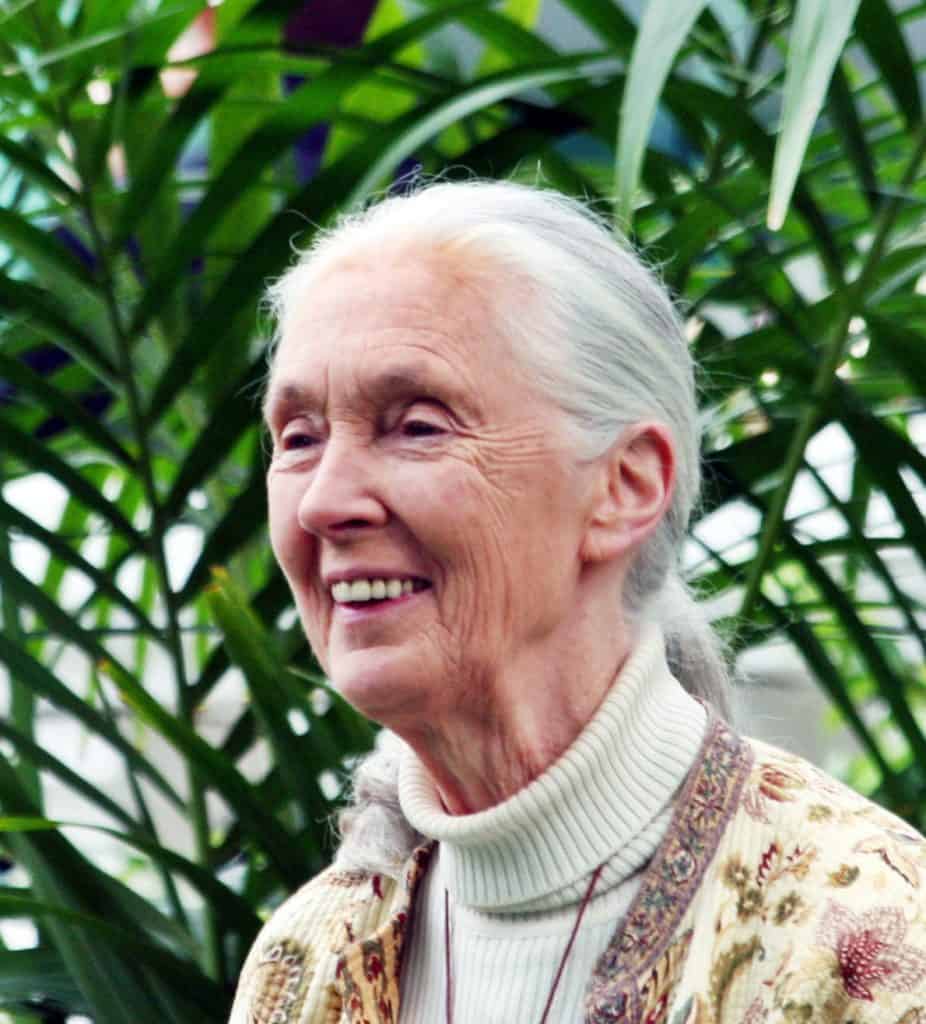
Jane Goodall changed the field of animal research for the better.
©"Jane Goodall GM" by Floatjon is licensed under BY-SA 3.0. – Original / License
Goodall was an innovator in the field of animal research. What is most interesting is that when Goodall began to study chimpanzees, she did not have a degree in animal science. It was not until she went to Cambridge in 1962 that she earned her PhD, something that was accomplished without ever earning a bachelor’s degree.
While not considered the appropriate method for observation today, Goodall observed chimpanzees by becoming part of their environment. She gave the primates names rather than numbers, which enabled her to adopt an empathetic observational approach to the chimpanzees. This approach is now widely used today when observing different species of animals.
What was not known before Goodall began to study chimps was that, like humans, they had a complex social structure. They also had emotional depth that rivaled that of humans. No longer were humans seen as the only creatures capable of having complex emotions. The ability to have these emotions is something that was evolutionary and is shared by the closest living relative in the animal kingdom, the chimpanzee.
This research approach also positively affected the conservation and welfare of chimpanzees and other animals. No longer were animals seen as creatures who were incapable of understanding what was happening to them. They were seen as having emotions that enabled them to experience joy, grief, and everything in between. Without Goodall’s methods, there is a very good chance that the empathetic approach to research would not exist today.
The Emotional Life of Chimpanzees
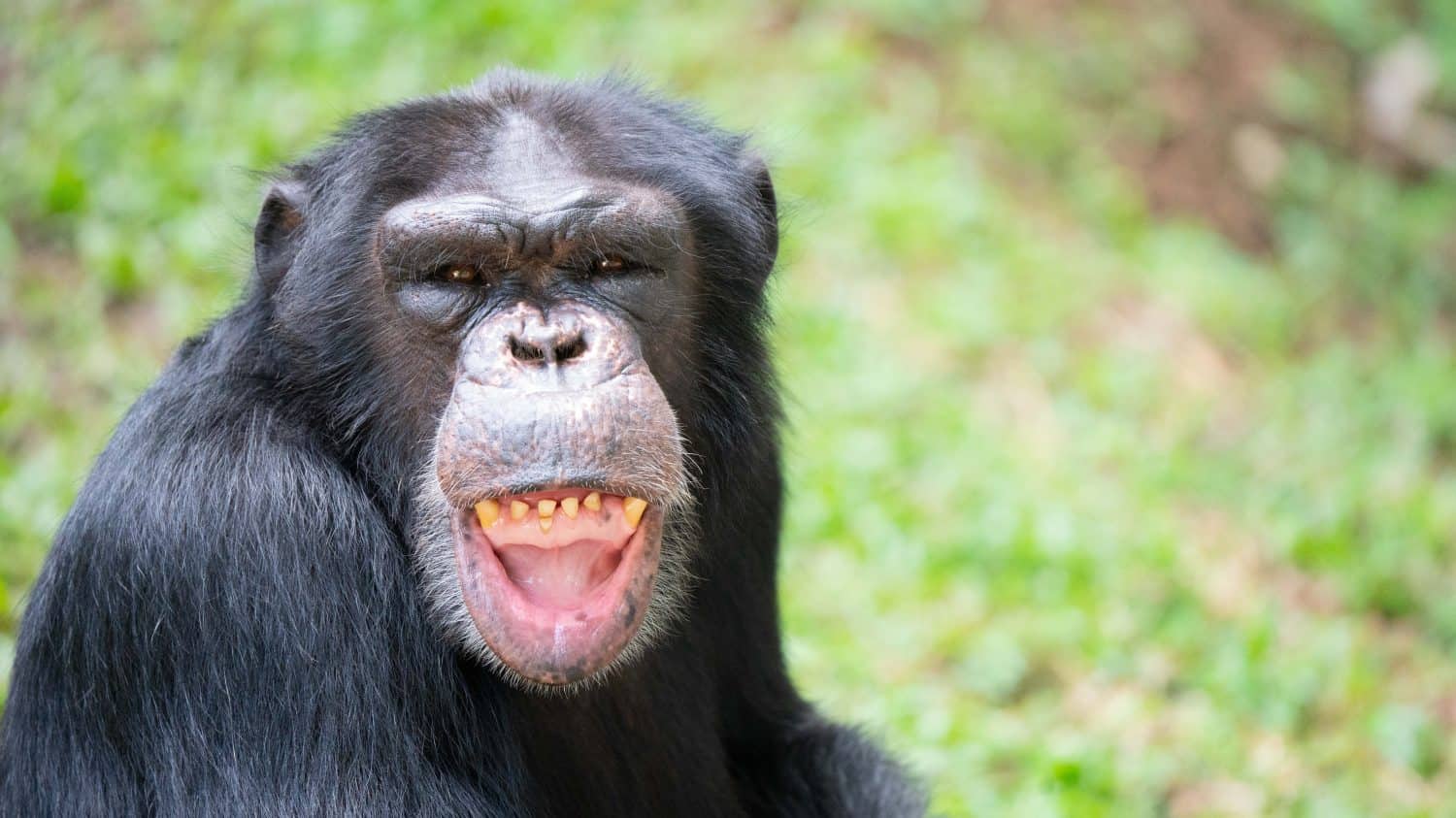
Chimpanzees have a variety of complex emotions they are capable of expressing.
©Thisara Hettiarachchi/Shutterstock.com
Chimpanzees are capable of having a variety of emotions. While they may not express them in the same way humans do, the primates have been observed experiencing feelings in both happy and sad situations.
Some of the most common emotions chimpanzees have been observed displaying over the last several decades include:
| Emotion | Teeth being bared, screaming, and aggressive behavior |
| Anger | Not leaving a deceased member of the community, grooming others, and inability to be comforted |
| Empathy | Coming back together after an altercation to make amends, behaving in a comforting manner |
| Fear | Visibly shaking, alarm calls, taking cover so as not to be found |
| Grief | Grooming others, making happy, laughing-like sounds, and being playful with others in the community |
| Joy | Grooming others, making happy, laughing-like sounds, being playful with others in the community |
| Sadness | Lack of energy, unwillingness to participate with others in the community, walking slumped over without energy |
While these behaviors were observed in the presence of other chimpanzees, they have also been seen when a familiar human comes into view. This is because chimpanzees can recognize faces, even those they have not seen for long periods.
Chimpanzees Are Capable Of Recognizing Faces
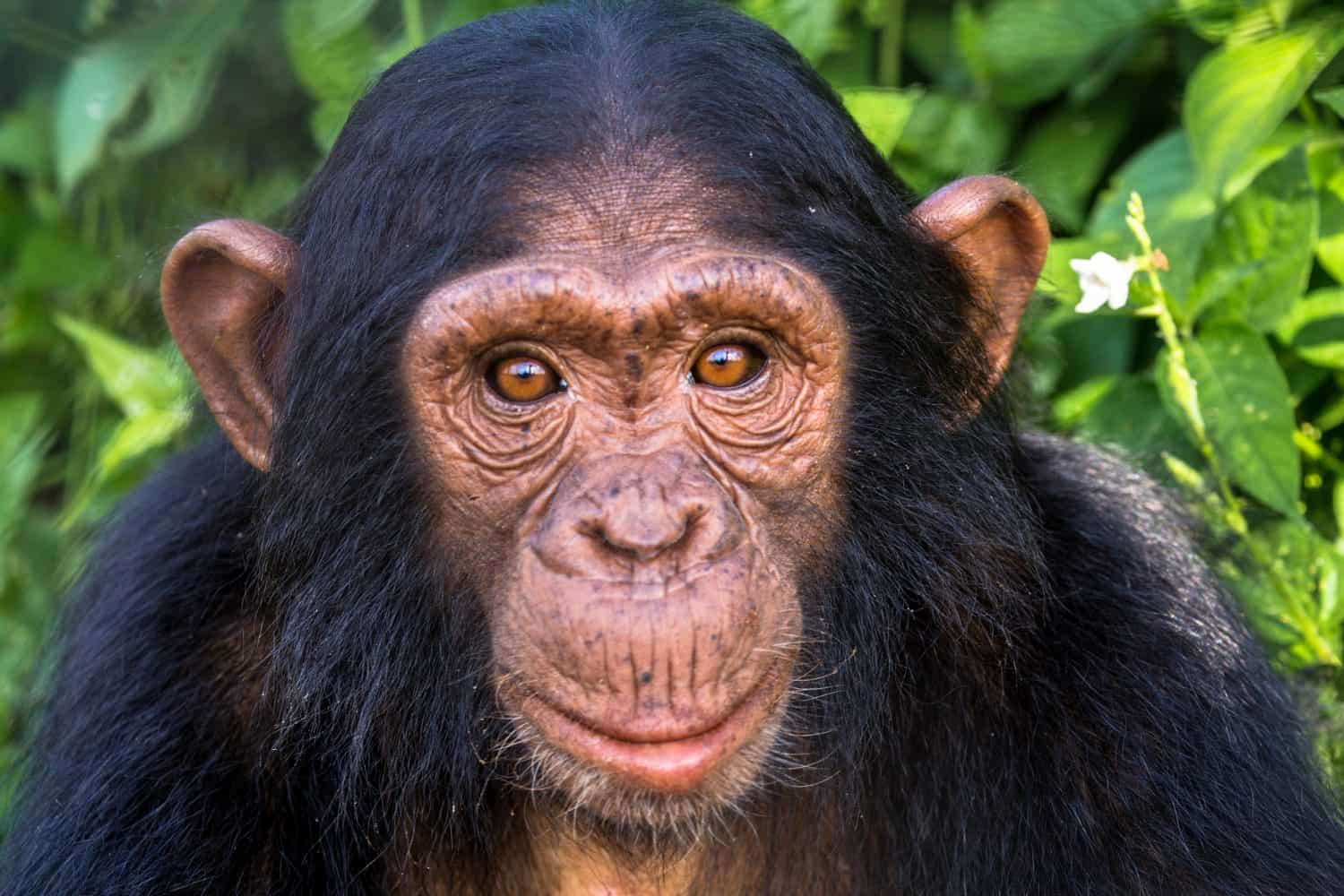
Chimpanzees can remember faces they have not seen in decades.
©Alexwilko/Shutterstock.com
Like humans who can recognize a person after not seeing them for a long time, chimpanzees can do the same. This process is known as social memory. Whereas humans tend to remember those with whom they have both good and bad experiences, chimpanzees tend to remember those with whom they have positive interactions.
According to a 2023 study published in PNAS, chimpanzees not only recognized those they had interacted with in the previous few months or even years, but also recognized those they had been around 26 years prior. This set a record previously held by dolphins, in which they recognized a voice call from a dolphin they had been close to 20 years earlier.
Chimpanzees recognized others based on their unique facial color patterns. This ability to remember family members and others who were part of the community helps maintain the social hierarchy. Chimps have complex social structures, as Goodall recognized decades ago, so there must be a way to recall who has power in a community. There is a linear hierarchy with an alpha male at the top with the most power. It is only when a male is challenged that this hierarchy may change.
What is most interesting about the study is that chimpanzees preferred to take longer looks at those chimps with whom they had a good relationship, rather than those with whom they did not. This is remarkably similar to humans, who also prefer to be around those who make them comfortable rather than those who cause discomfort.
Chimpanzee Attachment Differs From Humans
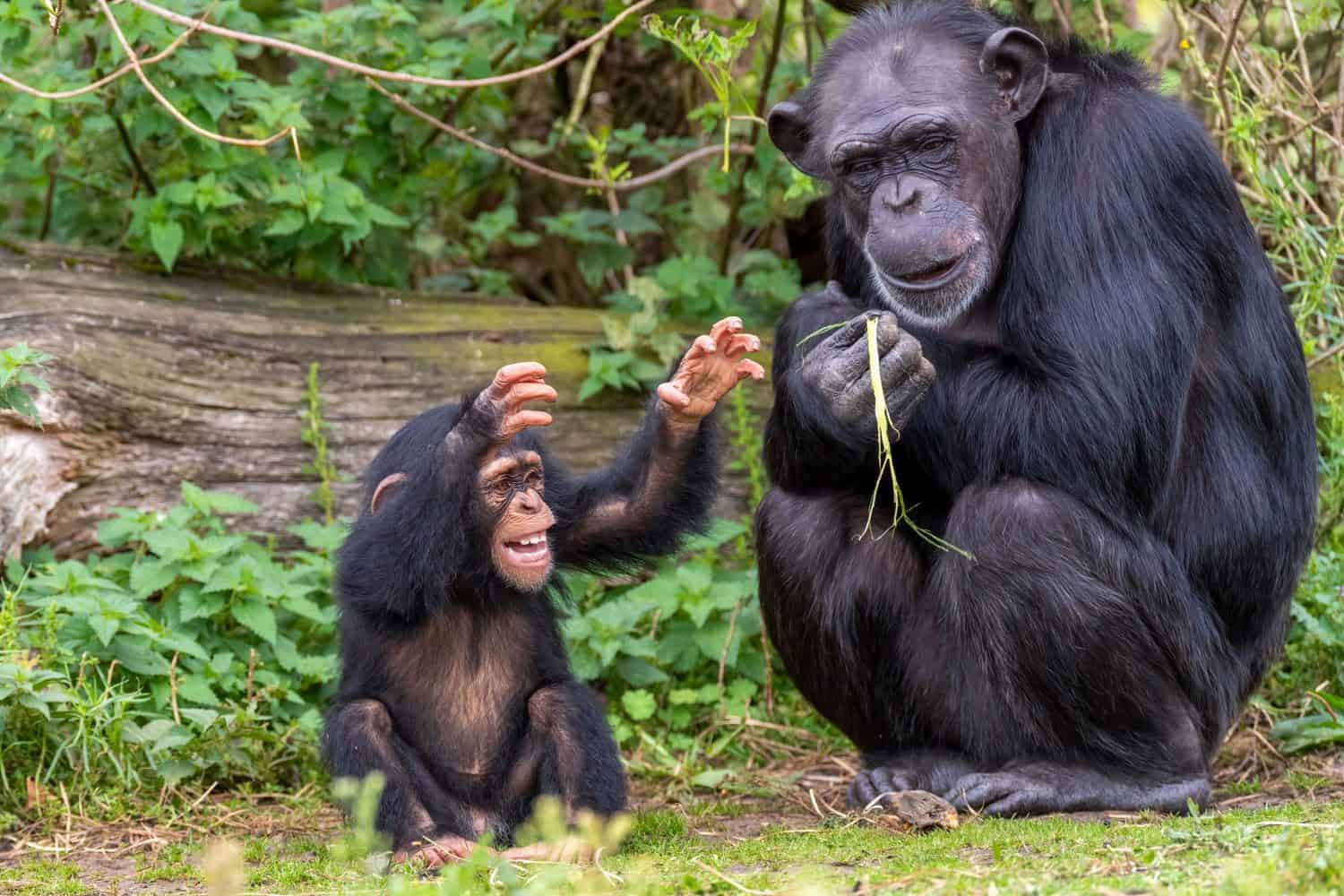
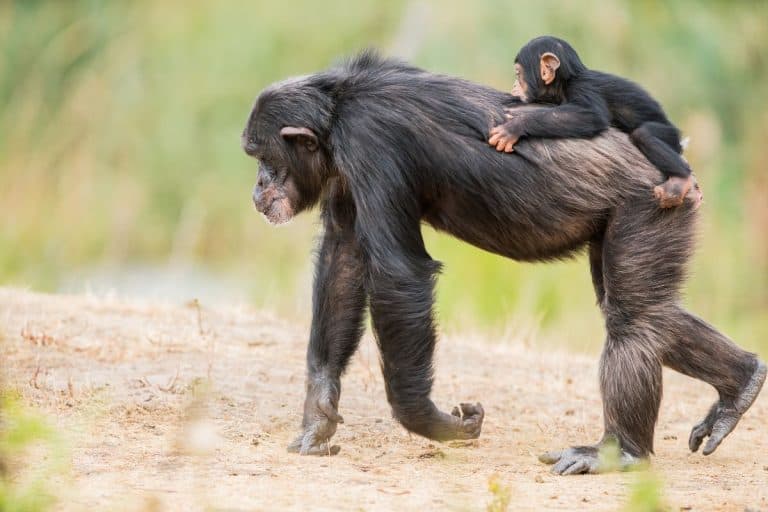
Chimpanzees have different attachment methods than humans do.
©Wirestock Creators/Shutterstock.com
Chimpanzee attachment to one another is both similar to and dissimilar from the attachment bonds humans make. Like humans, chimps have both secure and insecure-avoidant attachment bonds. However, they do not exhibit disorganized attachment.
To better understand the different attachment styles, an explanation is as follows:
| Attachment Style | Description |
| Secure Attachment | A strong emotional bond between a younger and older individual, where the older individual (generally a parent) meets all the needs of the younger (typically a child). This attachment allows younger individuals to feel secure in their surroundings and to explore freely, knowing they can return to their trusted older individual for comfort and reassurance. |
| Insecure-Avoidant Attachment | Younger individuals who did not have supportive or responsible older individuals during their younger years grow up to be self-reliant and independent. However, this can come at a cost of not being able to build strong relationships with others. |
| Disorganized Attachment | Younger individuals attempt to build bonds with older individuals but may also fear them. This can result from inconsistent parenting or as a result of trauma that older individuals faced during their early years, which leads them to unintentionally create unsafe environments for younger individuals to grow up in. |
For humans, the insecure-avoidant attachment between a parent and child is based solely on parents who were not supportive enough. For chimpanzees, this is not always the case. Instead, if the environment where the chimpanzee community is, is stable, chimpanzees may not feel the need to check in with their caregivers as they explore. They are secure enough to be independent. However, if stability changes, younger chimpanzees can quickly shift to a secure attachment and seek reassurance from their caregivers when insecure.
Chimpanzees Can Form Bonds With Humans
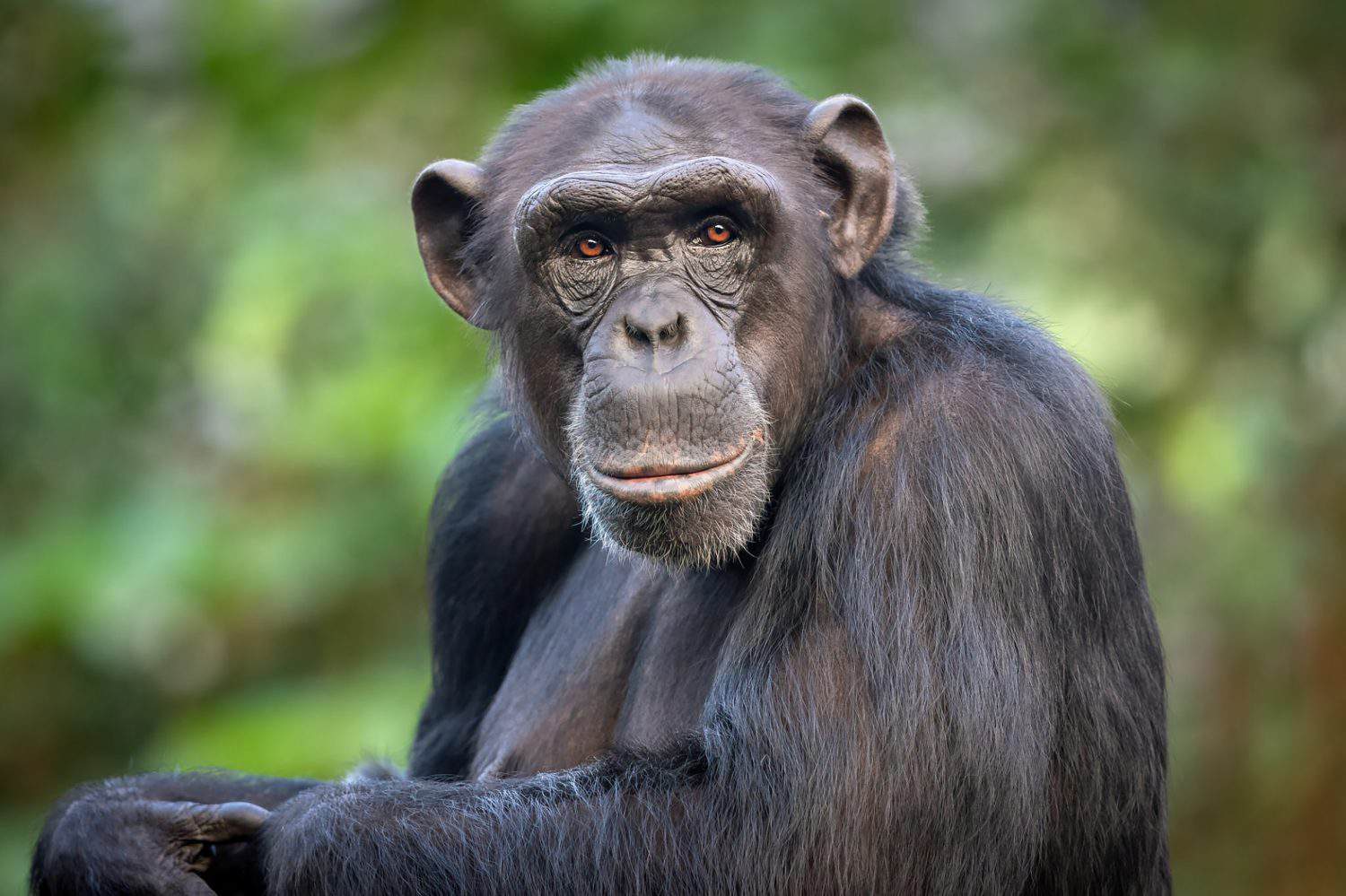
Chimpanzees can form strong bonds with humans.
©KensCanning/Shutterstock.com
Through her research, Goodall demonstrated that chimpanzees could form bonds with humans. This was first illustrated in 1964, when her husband took a picture of Goodall. The photo showed a 26-year-old Goodall reaching out to a young chimpanzee, later named Flint, who reached out in return.
While both scientists and the Jane Goodall Institute no longer endorse coming in such close proximity to chimpanzees, or any other wildlife, for that matter, Goodall used groundbreaking techniques to gain knowledge about chimpanzees, which included the fact that bonds could be made between humans and the primates.
More recently, a 2019 study published in Proceedings of the Royal Society B illustrated the bond that chimpanzees and people can have via shared experiences. The study had people and chimps watch a video of baby chimpanzees together. The chimpanzees were then allowed to approach the stranger they had watched the video with. In all instances, chimpanzees approached the strangers they watched the clip with in nearly half the time they approached a stranger they did not watch the video with.
People who have shared experiences are more likely to interact and bond with others than with those who have no common ground. The same can be said for chimpanzees and interactions with humans. It is by understanding this emotional intelligence that more progress can be made in the conservation efforts to keep chimpanzees from going extinct.
Understanding Chimpanzee Emotional Intelligence Is Necessary for Conservation Efforts
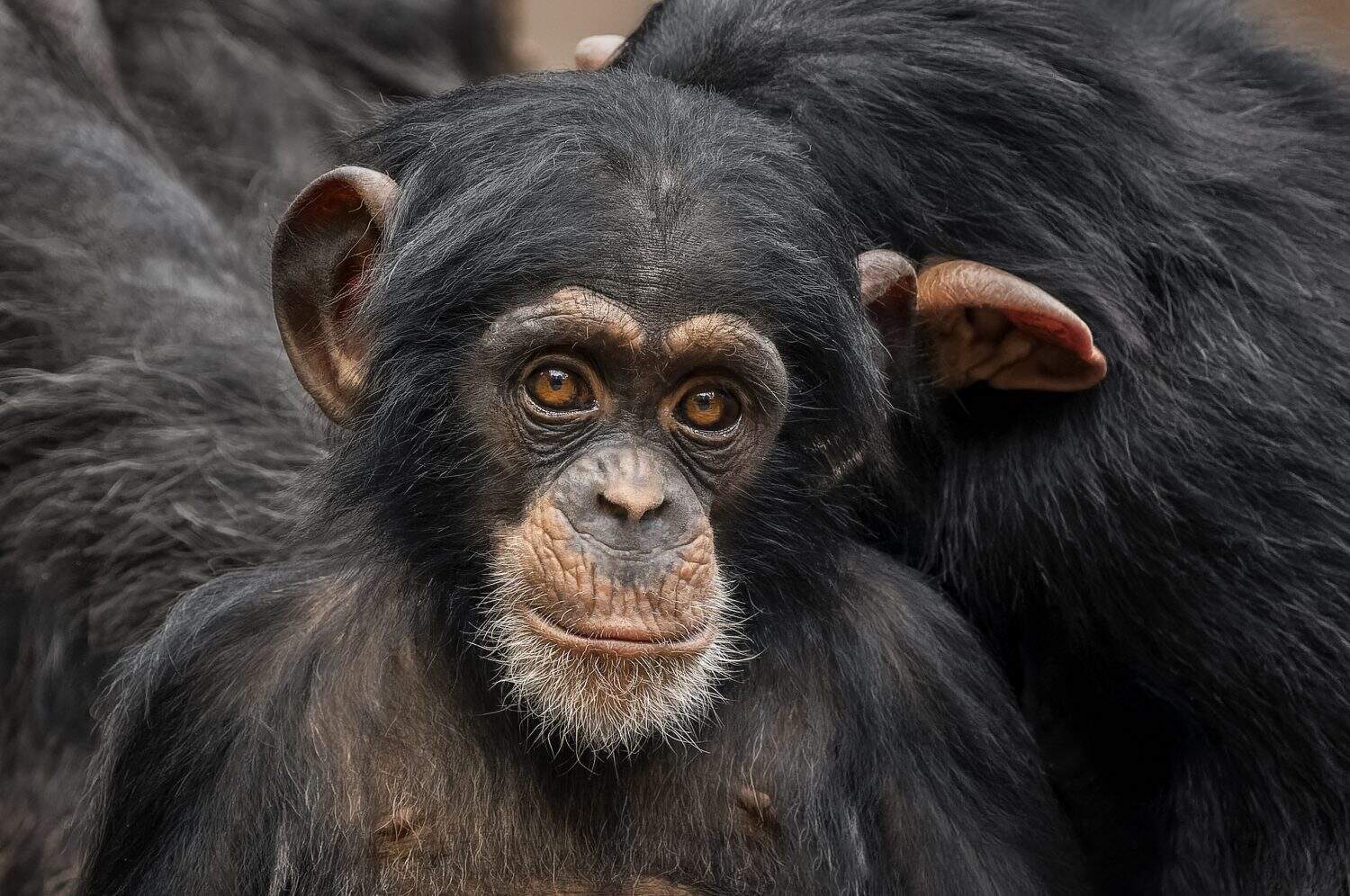
Chimpanzee populations have decreased by more than half in the last several decades.
©jindrich_pavelka/Shutterstock.com
Chimpanzee populations have been drastically declining since the 1990s. At that time, it was estimated that there were one million chimpanzees in the wild. However, by 1996, that number had fallen dramatically, prompting the IUCN to classify chimpanzees as endangered.
At the time, the chimpanzees were deemed an endangered species, multiple studies claimed the global population of the species would decline by 50% by 2050. In 2025, there are an estimated 172,000 to 300,000 chimps left in the wild. The population of these primates will continue to decline year after year unless conservation efforts can stop the threats that plague chimpanzees. The threats include:
- Illegal wildlife trade
- Destruction of habitat
- Poaching
- Disease contracted from close interactions with humans
- Chimpanzees are being killed for raiding farms
Understanding chimpanzees’ emotional intelligence makes it easier to impart that knowledge to others. If people better understood that when chimpanzee habitats are destroyed, family members are captured to become pets or bushmeat, or that chimpanzees are contracting human diseases due to increased human encroachment, and that chimpanzees feel pain, sadness, fear, or grief, it might make people think twice about targeting these primates.
Additionally, understanding chimpanzees’ emotions makes it easier for conservationists to develop better plans to protect both chimps and their environments. Because chimpanzees have “complex emotional needs,” the ethical argument for their conservation becomes stronger, given their understanding of the events that lead to population decline. It also improves the lives of those in captivity, ensuring that their welfare requirements are met to the highest standards and making life enriching and worth living even when not in the wild.
Chimpanzees are the closest living relatives to humans in the animal kingdom. Therefore, it suggests that they would share similar emotions to people, which they do. Understanding this should motivate more people to want to save the chimps from the path of extinction they are currently on. Without human help, chimpanzees are sure to be eradicated from the planet, and with their loss goes their emotional intelligence, which is still being fully understood today.