
Quick Take
- Some chimp mothers carry their dead infants far longer than others, and the reason has nothing to do with grief. See the carrying behavior →
- Scientists can't yet confirm whether these mothers even know their infants are dead, and whatever the answer turns out to be may rewrite what we know about human cognition. Explore the open question →
- One specific cause of infant death almost completely stops the carrying behavior, whereas another dramatically extends it. See how cause of death matters →
- The mother-infant bond in these species is measurably stronger than most people realize, a fact that matters because it shapes outcomes long after infancy ends. Understand the mother-infant bond →
There are multiple species that visibly mourn their dead. From elephants to orcas, gorillas, dolphins, and giraffes, several species have their own way of grieving.
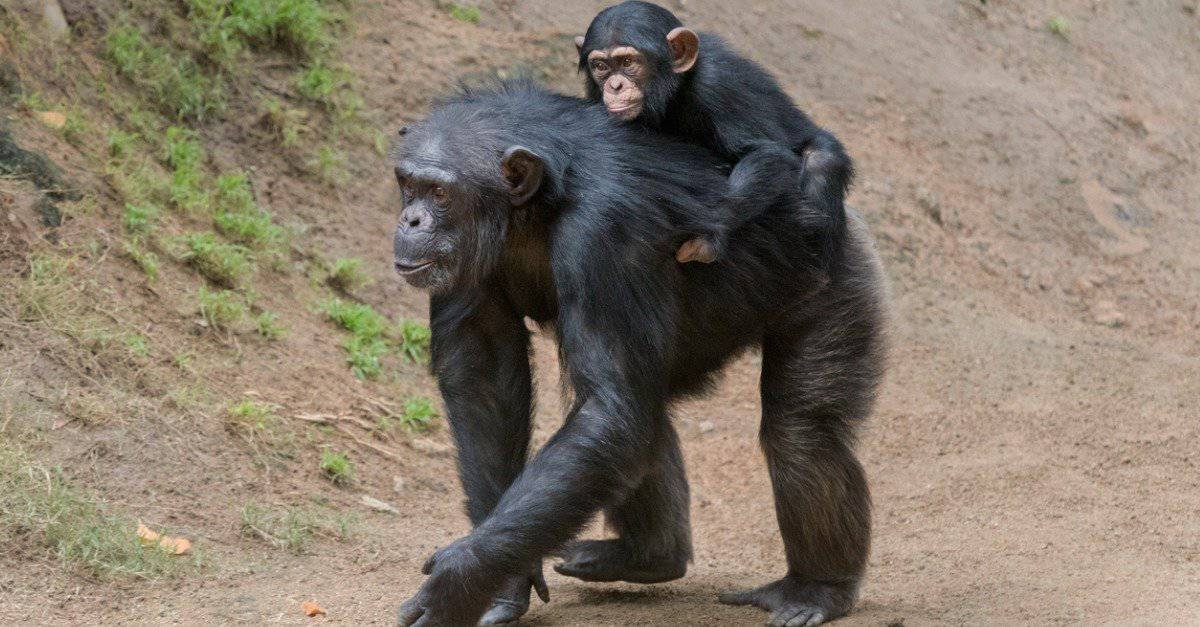
Chimpanzee and bonobo mothers have long been witnessed carrying their deceased infants on their backs, sometimes for months. Multiple hypotheses explain why this happens, one of which is mourning. While this has yet to be determined, a new study sheds some light on the factors that lead mothers to carry their dead infants and just how long this process can continue.
Chimpanzee and Bonobo Mothers Carry Their Infants Long After Death
Chimpanzee and bonobo mothers have been known to carry their deceased infants on their backs for weeks after the baby has passed. While commonly documented, the act is not well understood. The concept is known as infant corpse carrying (ICC), and some people in the scientific community believe it is a forming of mourning. Others believe the mothers are unaware that their infants are no longer alive. Scientists are working to improve their knowledge about the emotions and socialization of these species.
A new study published in Biology Letters helps identify why and how long mother bonobos and chimpanzees carry their deceased infants on their backs. Additionally, the study may be a starting point for understanding when the “human response to death,” as we currently know it, began.
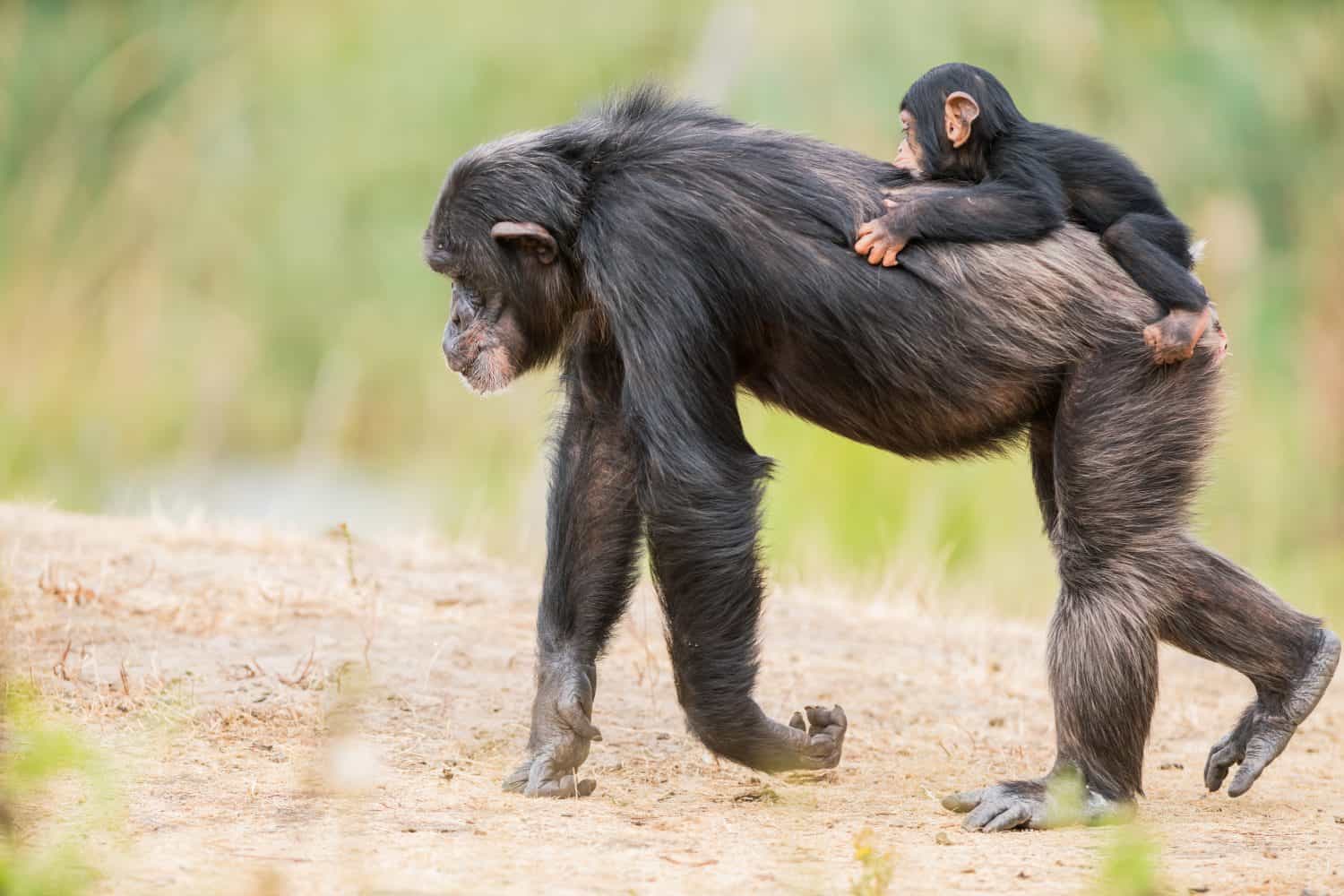
Chimpanzee and bonobo mothers were noted to carry their deceased infants on their backs between 30 minutes and 126 days after the death.
©Marcel Derweduwen/Shutterstock.com
To determine the duration and reasons mother chimpanzees and bonobos keep their babies on their backs after death, doctoral candidate Reece Hammond and Professor of Evolutionary Anthropology Dr. Thomas A. Püsche, both at Oxford’s School of Anthropology and Museum Ethnography, did not observe the animals in the wild. Instead, they pored over data from 83 separate published cases of ICC occurring at 15 different locations.
The authors found that the timeframes for carrying infants ranged from 30 minutes to 126 days. On average, however, mothers carried their dead babies on their backs for 11 days. Consequently, some mothers carried their infants to the point where they were mummified.
What Factors Contribute to Some Infants Being Carried Longer Than Others?
Not every chimpanzee and bonobo mother carried their deceased infant on their backs for long periods. As the study noted, there were specific factors that determined whether a mother would carry their no-longer-living infant on their backs longer than others.
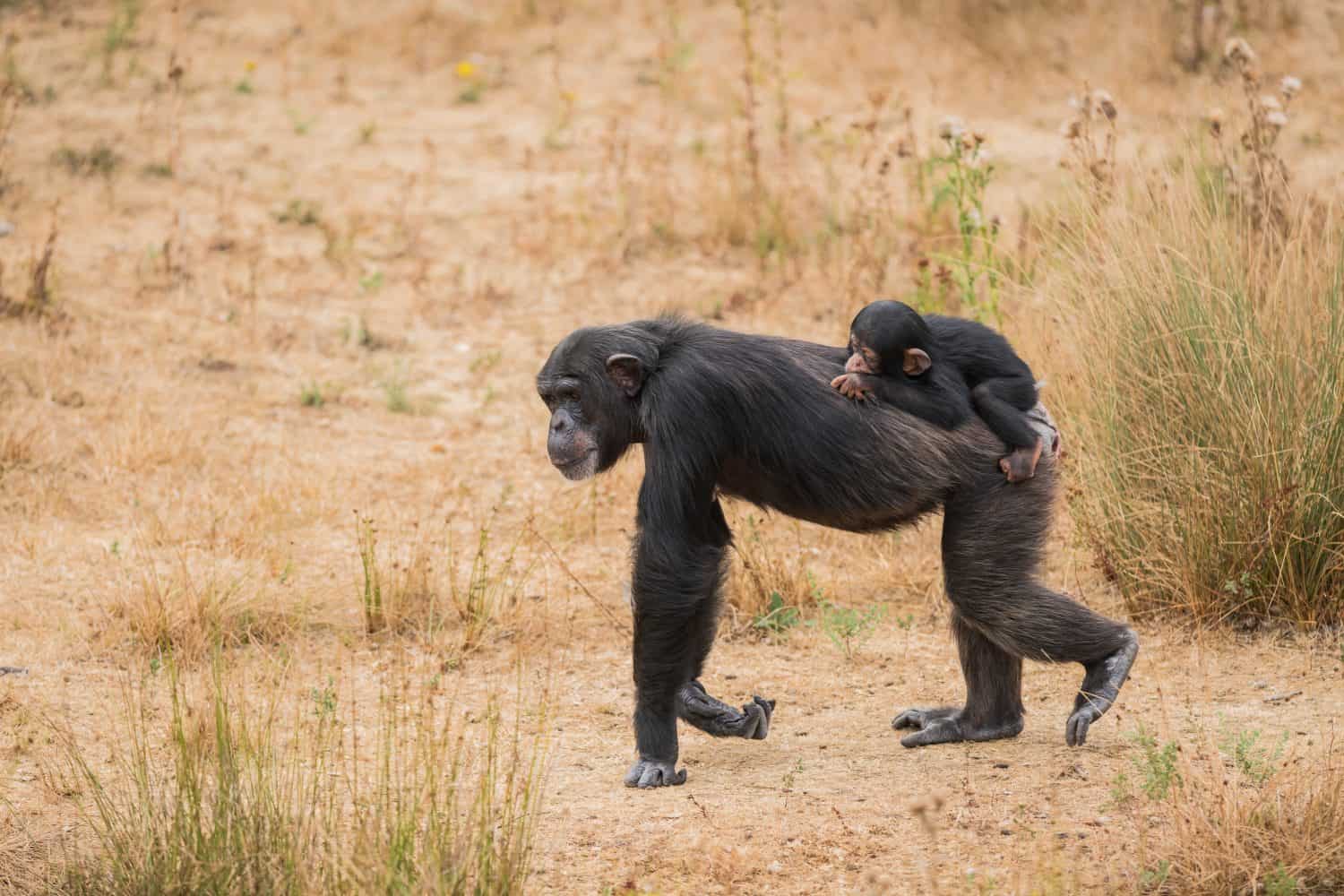
Mother bonobos and chimpanzees carried deceased infants longer if the infant died of disease, was older at the time of death, or the temperature was cooler.
©Marcel Derweduwen/Shutterstock.com
The study revealed the following information:
- The infant dying from a disease led to longer-term carrying on the back. If an infant died from infanticide, the baby was not carried on the back for any remarkable amount of time.
- If an older infant died, it was carried for longer due to a strong bond.
- Long periods between births led to mothers carrying dead infants for longer periods of time.
- When temperatures were colder, deceased infants were carried longer.
Scientists are still working to discover if the mothers recognize death. While all the signs point to the fact that they do, there is still no scientific data to prove it. If it can be proven, it is just one more commonality shared between humans and their closest living relatives.
Chimpanzee and Bonobo Mothers and Infants Share a Strong Bond
The bonds between chimpanzee mothers and infants, and between bonobo mothers and infants, are incredibly strong. This bond is so strong, in fact, that where it exists, infants have a 95% survival rate through their first year. Compare that to a weakened bond, and the survival rate drops to 75% through the first year.
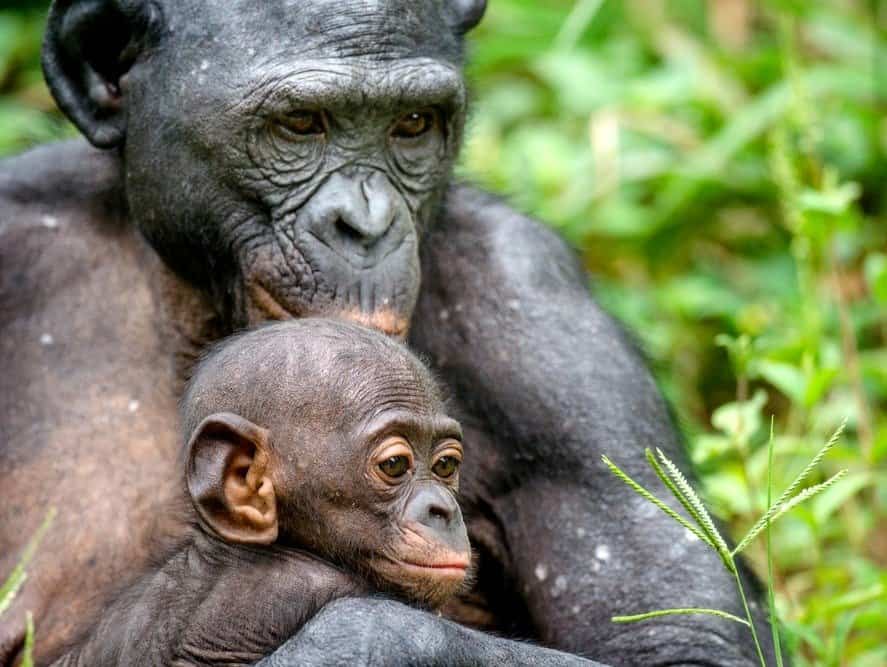
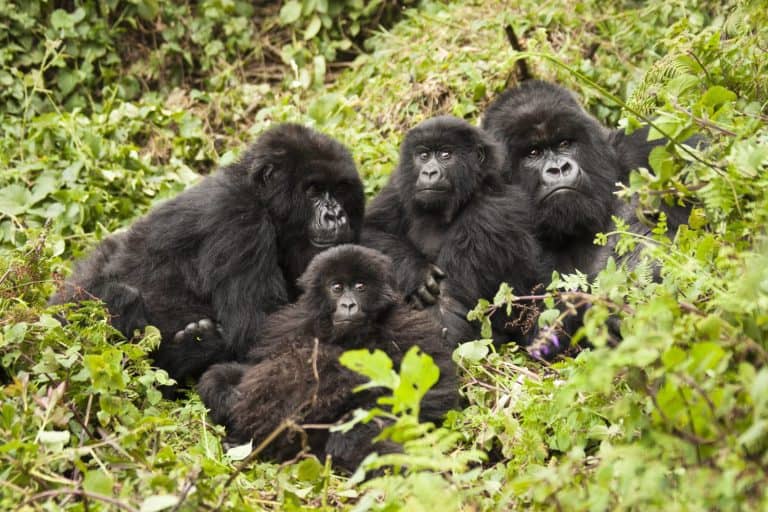
Mother bonobos and chimpanzees form a strong bond with their infants that can continue well into their juvenile years.
©Sergey Uryadnikov/Shutterstock.com
Physical contact (such as riding on a mother’s back) builds the bond between mother and infant. This emotional attachment can be seen as mothers groom their babies, protect them, support their social learning, and teach them to defend themselves.
In many cases, chimpanzees and bonobos care for their offspring even after the young can care for themselves. Interestingly, bonobo males who are strongly tied to their mothers are four times more likely to have offspring than those who are not. This shows how important early-life bonds between mothers and infants are, and the devastating impacts when they are missing.
Do Chimpanzees and Bonobos Recognize That Death is Final?
Because chimpanzee and bonobo mothers continue to carry their infants for days, weeks, or even months after they have died, it can seem as though these adult females do not recognize that their infants are no longer alive. However, according to the study’s authors, this is not necessarily the case.
“Our findings show that we don’t need to assume that chimpanzee and bonobo mothers understand death as irreversible to explain how long they carry their dead infants,” the study explained. “The patterns can be explained by the persistence of maternal behavior and by social, life-history and environmental factors, but importantly, that does not mean these animals are incapable of recognizing death.”

It is not clear whether chimpanzees and bonobos recognize that death is final.
©GUDKOV ANDREY/Shutterstock.com
Chimpanzees, bonobos, and humans might perceive and deal with death differently. If chimpanzees and bonobos indeed do not recognize that their infants’ condition is permanent, it could point to how cognitive reasoning has changed between the species over the last several million years since humans, chimpanzees, and bonobos shared a common ancestor.
However, chimpanzees and bonobos may also understand death and its finality. But because they do not deal with it in the same way humans do, it is mislabeled. By projecting human emotional characteristics onto chimpanzees and bonobos, we can misidentify much of their grieving process. Only when we learn more about the complex relationships between chimpanzee mothers and infants and bonobo mothers and infants, as well as how their brains operate, can we truly explain whether they recognize the finality of death.