
Quick Take
- Raising an orphaned elephant requires deliberately doing something most animal caregivers would never consider, and skipping it makes rewilding nearly impossible. See how keepers step in →
- Most hand-raised wild animals can't survive a return to nature, yet elephants are a documented exception. The reason comes down to how they learn. Discover why elephants succeed →
- An orphaned elephant that loses its mother also loses access to something no keeper can fully replace, and that loss shapes every decision the Sheldrick Trust makes. How the Trust fills the gap →
- Decades after release, former orphans keep coming back to the nursery, and what they bring with them is the clearest proof the program works. Meet the returning wild-born calves →
A new short film from the Sheldrick Wildlife Trust captures nearly 50 years of elephant rescue work in just over two minutes. The video moves from a keeper cuddling a newly rescued baby elephant, to sunset bottle feedings, to fully grown former orphans walking through the green grasslands alongside wild-born calves of their own. Behind these moving scenes lies decades of research showing why raising a young African elephant is one of the most challenging rescue projects in animal conservation.
Continue reading
Recreating the Mother’s Role
Baby African elephants depend almost entirely on their mothers. Studies from Amboseli, Kenya show that calves nurse for two to four years and rely heavily on milk for nutrition throughout that time. Losing a mother during their first year is almost always fatal without human help. Research from Samburu found that even if orphaned calves stay with their family group, they face higher mortality rates and struggle to fit in socially.
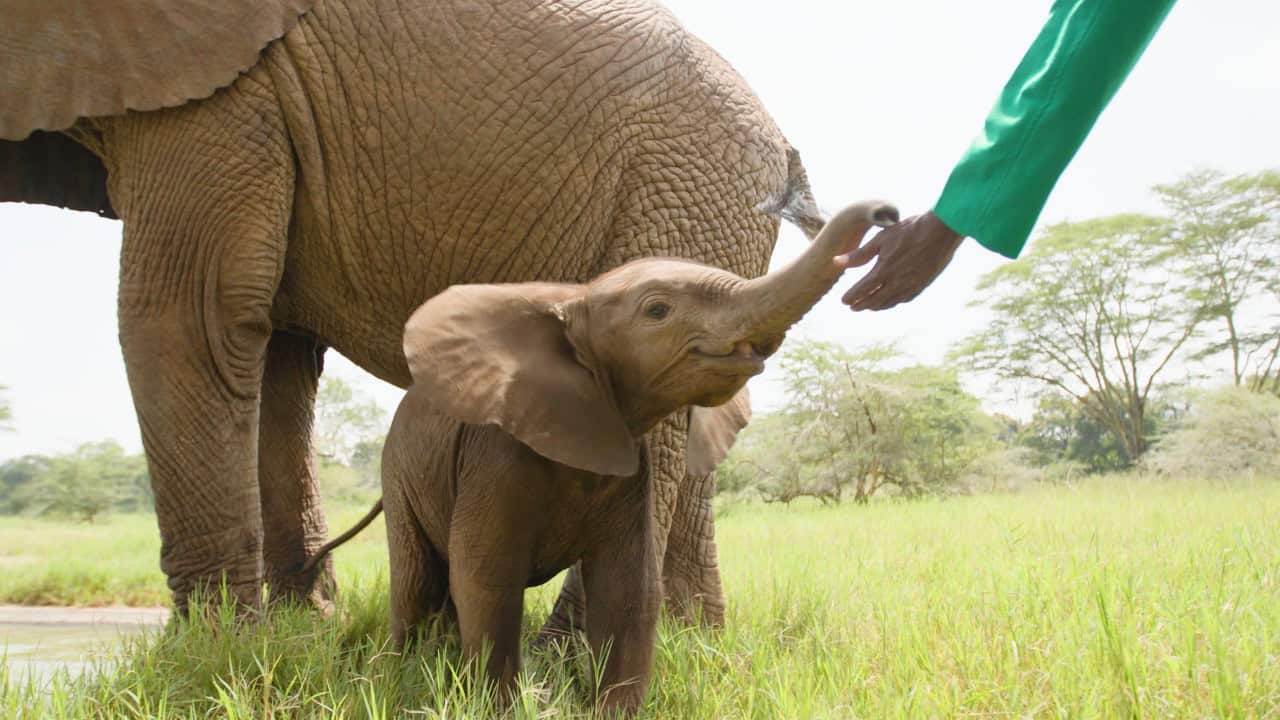
This natural biology shows why the Sheldrick Trust’s work is so intense. Daphne Sheldrick founded the organization in 1977 and developed a successful milk formula for infant elephants after decades of failed attempts by zoos and rescue groups worldwide. Keepers take turns sleeping in the stalls so calves don’t bond with just one person. This method is designed to prevent over-attachment that could make returning to the wild harder later on. At the Nairobi Nursery, calves get bottle-fed every three hours day and night, mimicking how often wild calves nurse from their mothers.
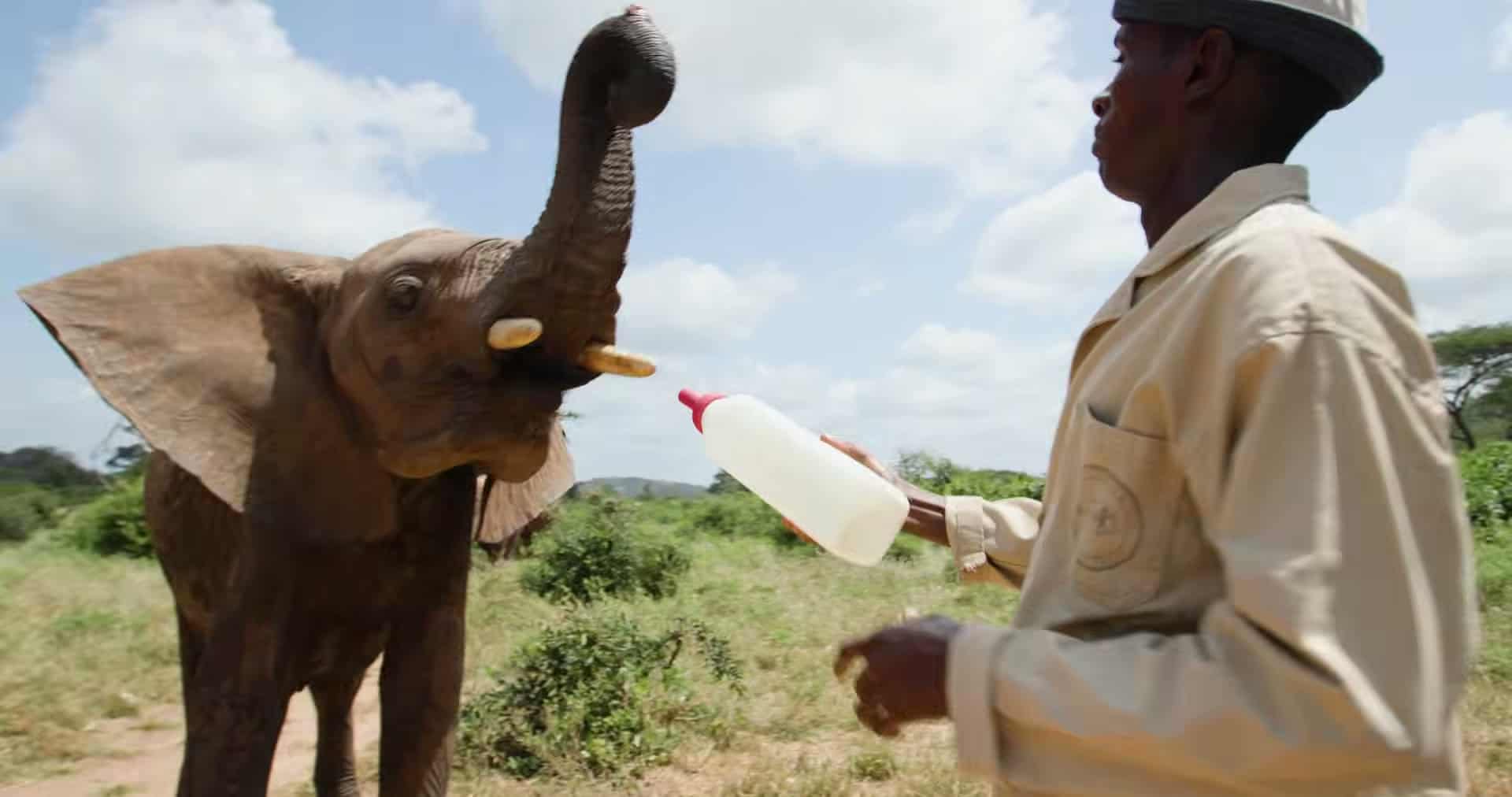
Baby elephants are bottle-fed every three hours, 24 hours a day. This feeding schedule closely mimics how wild calves nurse from their mothers.
©Sheldrick Wildlife Trust via YouTube — used under fair use – Original / License
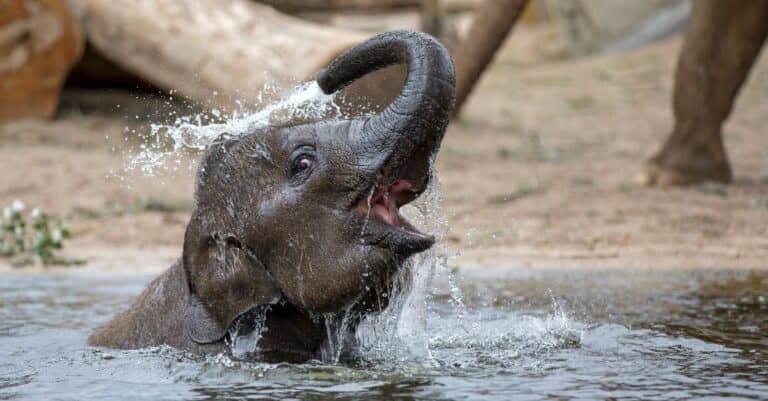
The playful tumbling in the film illustrates how play helps young elephants build physical coordination, learn body language, and manage stress. Calves that play more with others fit into multi-age herds more easily, which is crucial for animals whose survival depends on staying together in a group.
Learning How to Be Wild Again
Elephants are among the few mammals, along with apes, dolphins, and whales, that learn complex skills from their elders over many years. Research shows that older female herd leaders carry decades of vital knowledge about where to find water, how to navigate migration routes, and how to spot danger. Younger elephants learn these survival skills by watching the adults over time. An orphan raised alone misses out on this crucial education, but the Trust solves this by moving growing calves from the Nairobi Nursery to release sites in Tsavo East National Park. There, they mingle with older former orphans who step in as foster leaders to teach them the ropes.
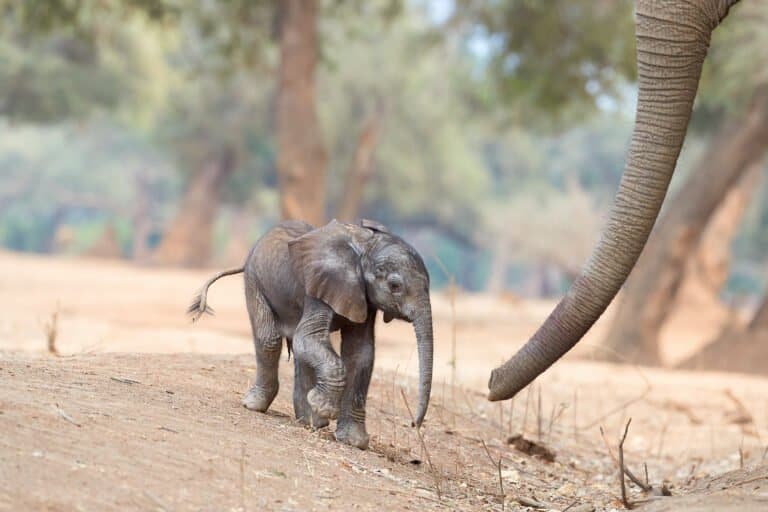
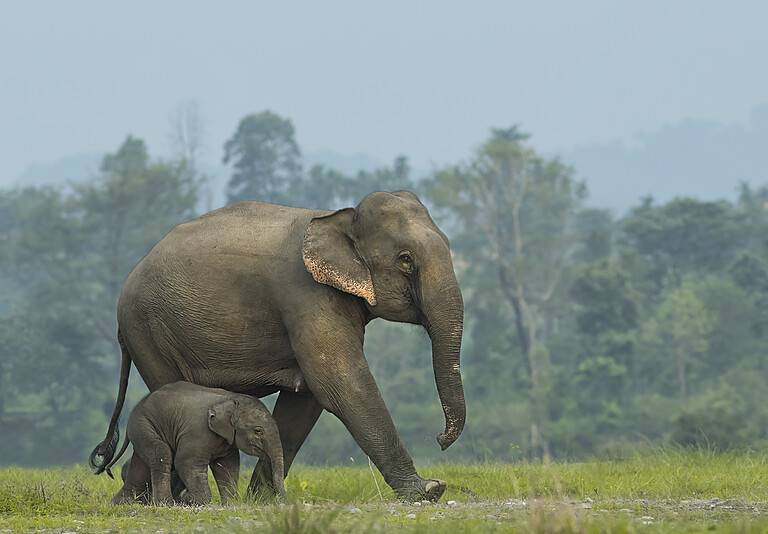
The return-to-the-wild footage showing former orphans roaming Tsavo with their own babies marks the program’s greatest success. The Trust has recorded more than 94 wild-born calves and grandcalves born to ex-orphan mothers, proving these elephants can successfully raise families in the wild. Because elephant pregnancies last about 22 months and mothers wait four to five years between births, tracking this progress takes decades of dedicated work.
A Lasting Impact for Endangered Elephants
This work comes at a critical time. African savanna elephants are classified as Endangered, with populations dropping by more than 60 percent over 50 years mainly due to illegal ivory poaching and habitat loss. Poaching is often the direct cause of a calf becoming an orphan. While saving individual babies won’t single-handedly save the species, the Sheldrick Trust pairs its orphan rescue program with anti-poaching patrols, wildlife veterinary teams, and local community programs across Kenya.
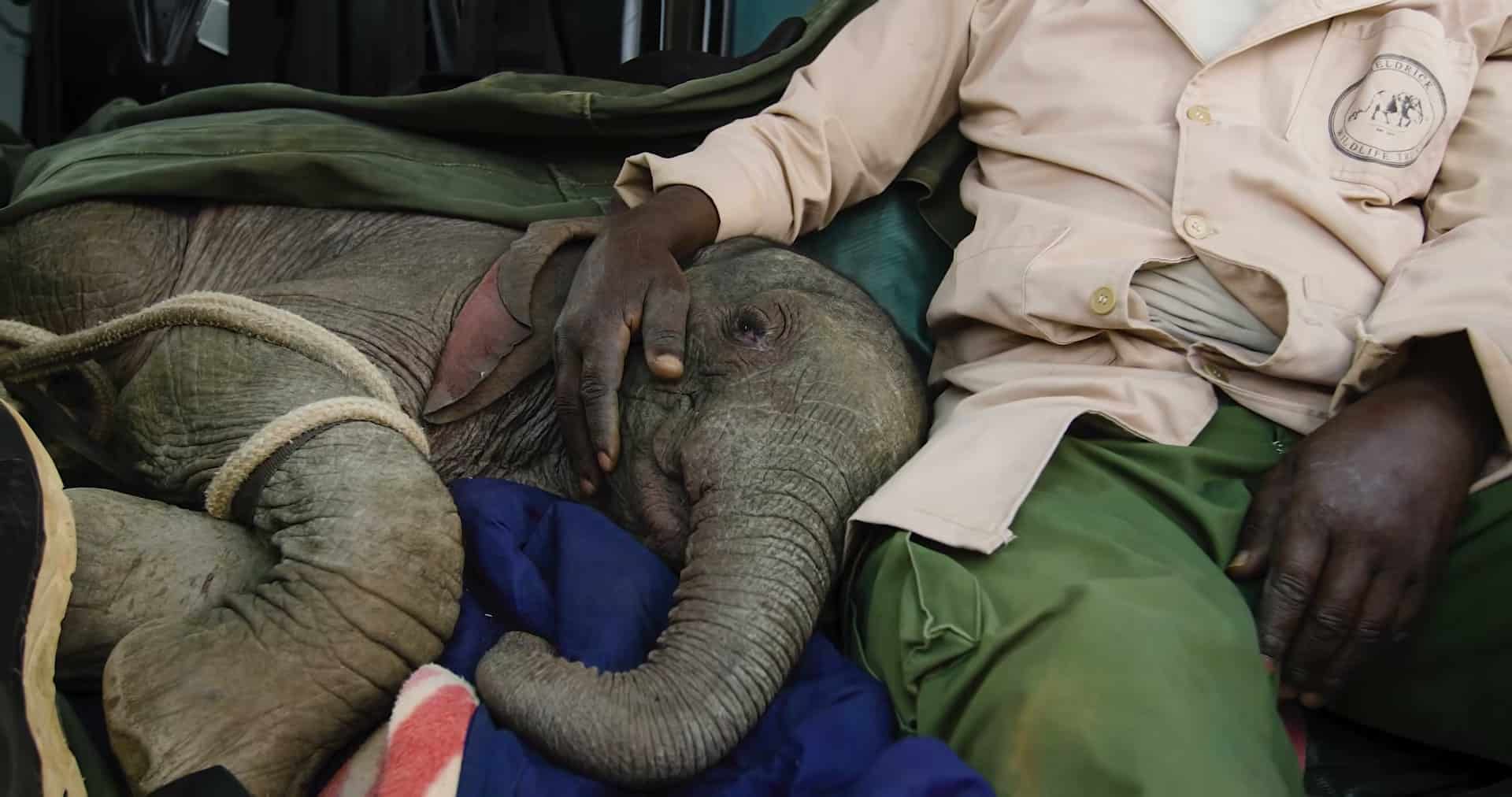
Keepers take turns caring for the calves to avoid the babies getting too attached to one person. This makes their return to the wild more natural.
©Sheldrick Wildlife Trust via YouTube — used under fair use – Original / License
The film also counters a common belief: that hand-raised wild animals can never truly go back to the wild. For some species, bonding with humans makes returning to nature impossible. But elephants are different because they rely on long-term learning rather than hardwired instincts. Provided they have foster herds, gradual exposure to nature, and care from multiple keepers rather than a single person, they can and do return to the wild successfully. The growing generation of wild-born calves in Tsavo offers clear proof.
The film closes with former orphans bringing their new babies back to meet the keepers who raised them, a habit the Trust has seen time and again. Whether this comes down to the deep, long-term memory elephants are famous for, or simply remembering a place where they always felt safe, it aligns with decades of field research showing that elephants recognize familiar individuals even after many years apart.