As one of the most popular pet snakes worldwide, ball pythons unfortunately have their reputation tangled with many snake misconceptions. These creatures get their name from their defensive behavior of curling or ‘balling’ up when they feel nervous or threatened. That being said, are these animals something to fear? This article dives into the answer to this question with insights from Dr. Emily Taylor, who is a professor of biology, founder of @coastsnake, and co-founder of @rattlecams.
Clearing Up the Misconceptions
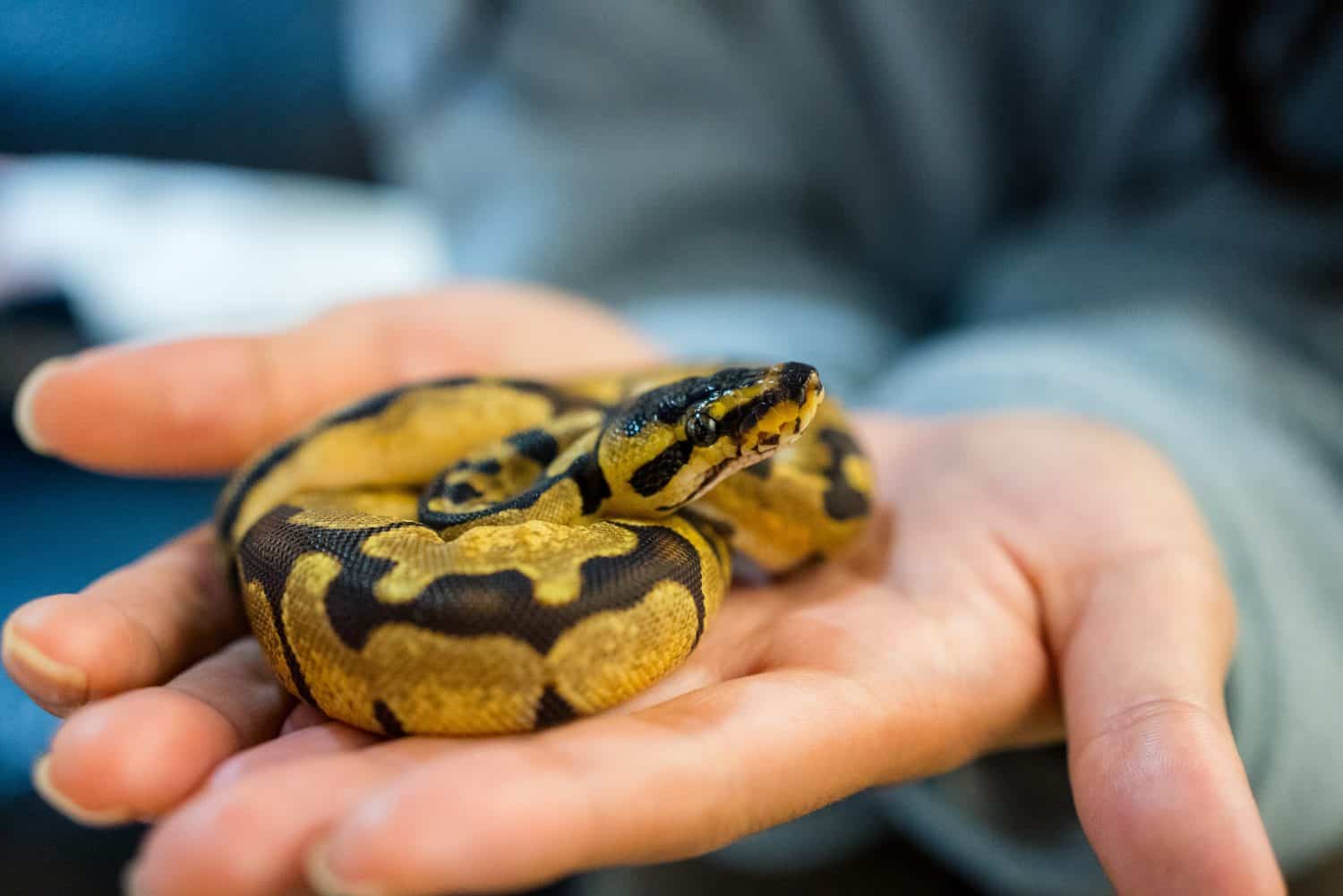
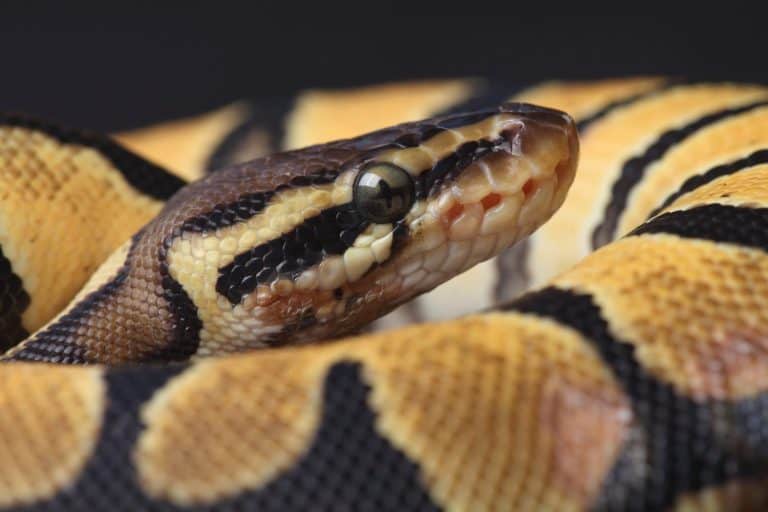
Ball pythons are one of the most popular choices for pet snakes.
©leungchopan/Shutterstock.com
“Ball pythons are usually not dangerous,” says Dr. Taylor. Many believe evolutionary instinct and portrayals in the media, religion and culture have contributed partly to people’s fear of snakes. Ball pythons, for example, typically only reach sizes of about 3.5 to 4 feet. Additionally, people know them for being small and docile. Because of this behavior, people widely keep them as pets.
“Ball pythons are small snakes. They typically max out at about 3 feet,” says Dr. Taylor. This fact alone makes them great snakes for beginners.
“They are very good pet snakes because they can do well in captivity,” she adds.
While they are small snakes, they are still constrictors, meaning that accidents can happen. “There is always a very, very slight risk,” Dr. Taylor explains. “For example, a very small child unsupervised with a ball python could be dangerous. Not because it was trying to kill the child. Sometimes they just like to hold themselves.”
Most python-related deaths occur from larger snakes, such as reticulated or Burmese pythons. However, human fatalities from pythons are very rare. In fact, they can account for an average of about one to two human deaths per year worldwide. But how are ball pythons different from the bigger snakes?
Constrictor Dynamics
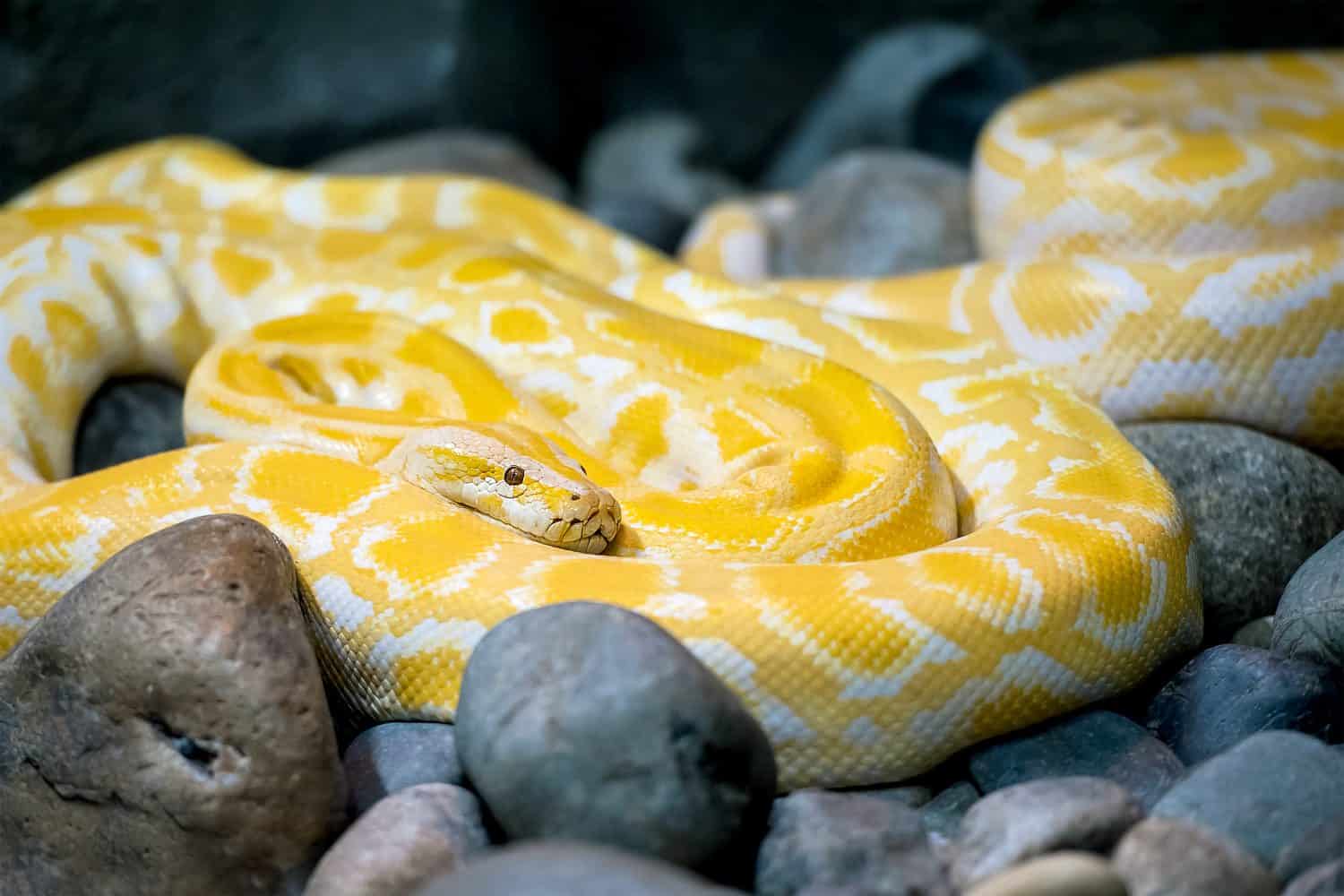
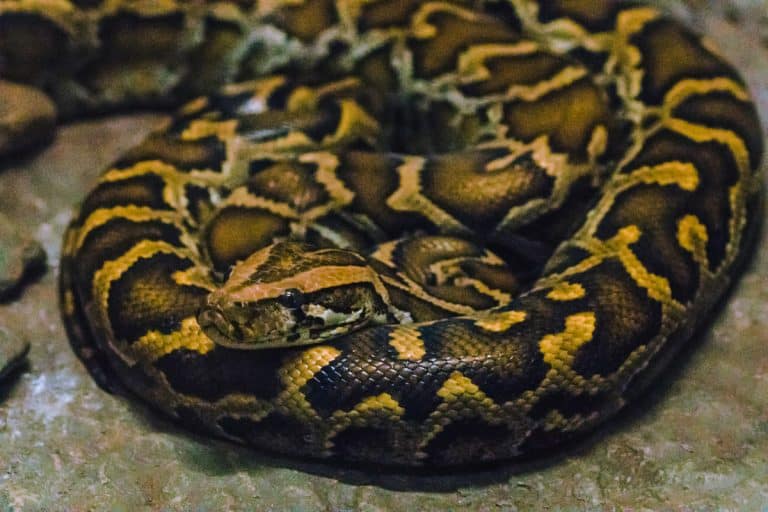
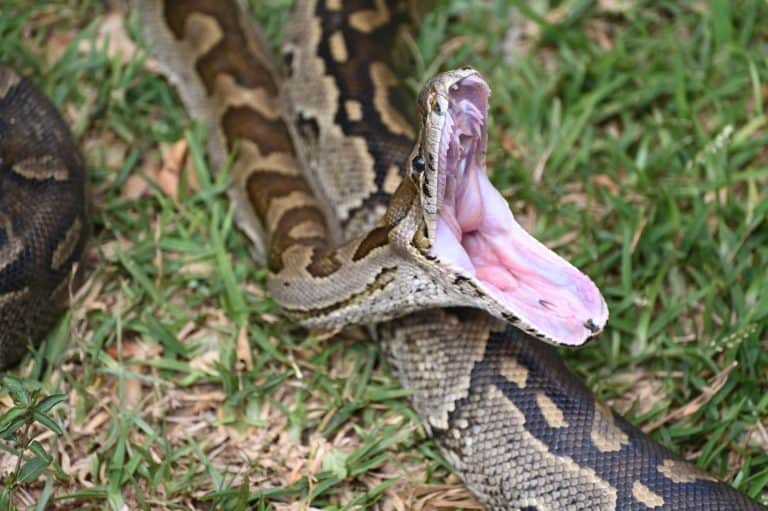
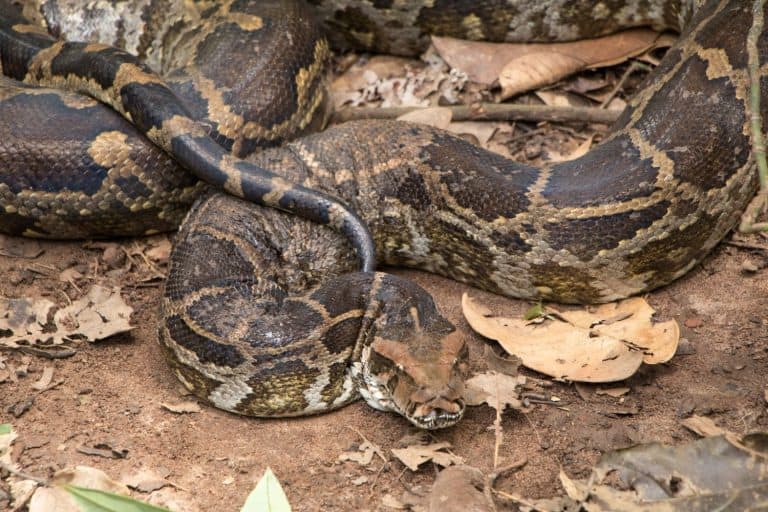
Burmese pythons are one of the largest snake species.
©PaniYani/Shutterstock.com
The major difference between ball pythons and other large species is their size and strength. While ball pythons are still constrictors, their strength is not comparable to that of larger python species. Even though larger pythons can be more dangerous, they are still kept as pets. Dr. Taylor stresses that there is much beauty and joy to be found in caring for snakes, but any constrictor requires common sense, supervision (especially for young children), and proper handling.
When it comes to ball pythons, just because they have ‘python’ in their name does not mean they are the menacing monsters many believe them to be. These small, shy, and gentle snakes grow into cute companions and usually pose no risk to humans when cared for in a responsible way. As Dr. Taylor puts it, the idea that these pythons are dangerous is simply a misconception. With the right knowledge, respect, and care, these snakes can be a fascinating part of the pet world. They also serve as a gentle reminder that not all snakes deserve the fear and punishment they so often receive.