
Quick Take
- One of North America's rarest salamanders has gone virtually undetected for decades, and the reason it stays hidden is stranger than you'd expect. Discover its hidden life →
- This salamander breathes without lungs, and that biological quirk is exactly what makes saving it so urgent. Explore its lungless biology →
- Protecting this forest took more than just fencing off land. The salamander's survival depends on a very specific set of conditions found almost nowhere else on Earth. See how habitat was protected →
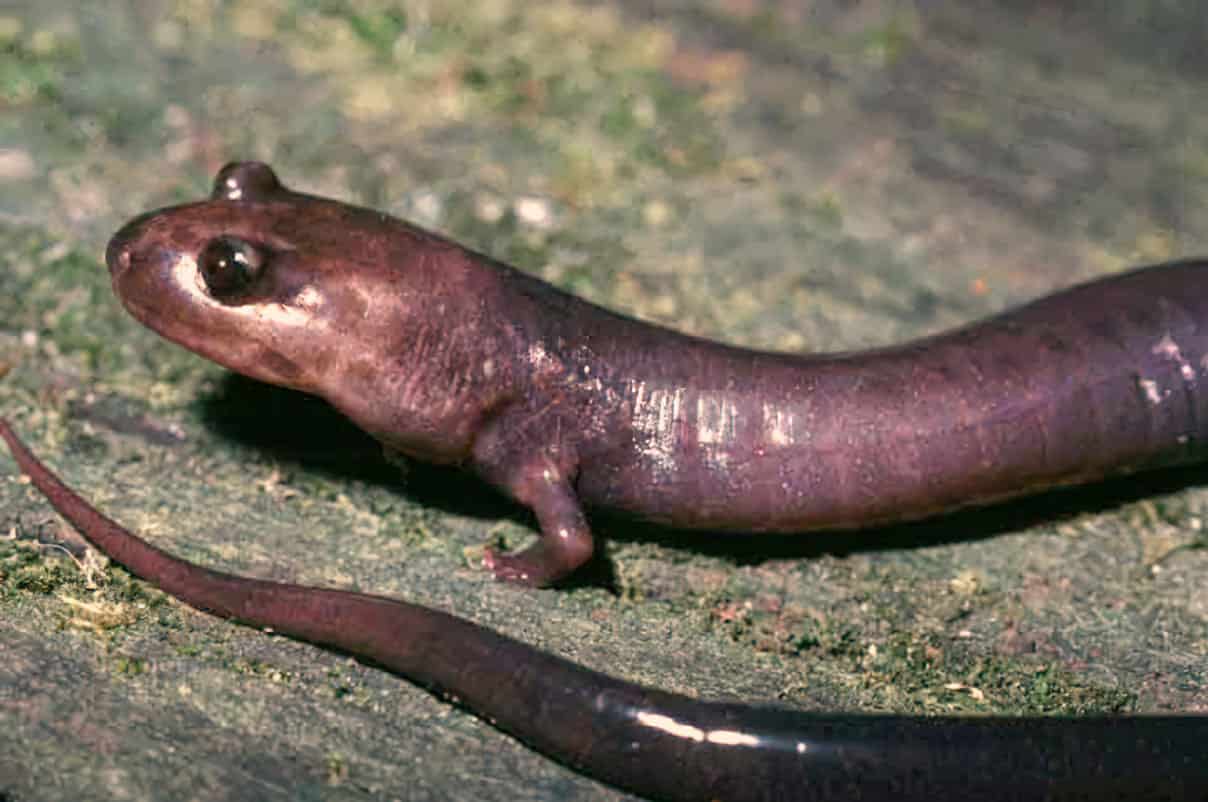
Alabama’s state amphibian just got a whole lot comfier in its native habitat. The Red Hills salamander (Phaeognathus hubrichti) is one of the rarest of its species in the U.S. It’s found only in six counties throughout the state, and sightings are elusive even to the most skillful salamander-spotters. But now, the future of this threatened amphibian is looking brighter.
A newly protected forest area, the Alabama Red Hills Salamander Forest, is safeguarding the Red Hills salamander’s native habitat. While its exact whereabouts are not entirely known, this major step for Alabama conservation may change the course of this species’ history. Its survival requirements are extremely specific, and this protected forest offers more than just shelter to its rarest amphibian.
The Legacy of the Red Hills Salamander
As the only one of its genus, the Red Hills salamander has quite a reputation among amphibian fans. Its habitat covers only a small region in Alabama, and locals could spend years searching without ever finding it. The biggest reason for this is its subterranean nature. While other salamanders are often found at the water’s edge or in damp marshlands, the Red Hills salamander is a master of hiding. Its preferred den is underground, where it remains for the majority of its life.
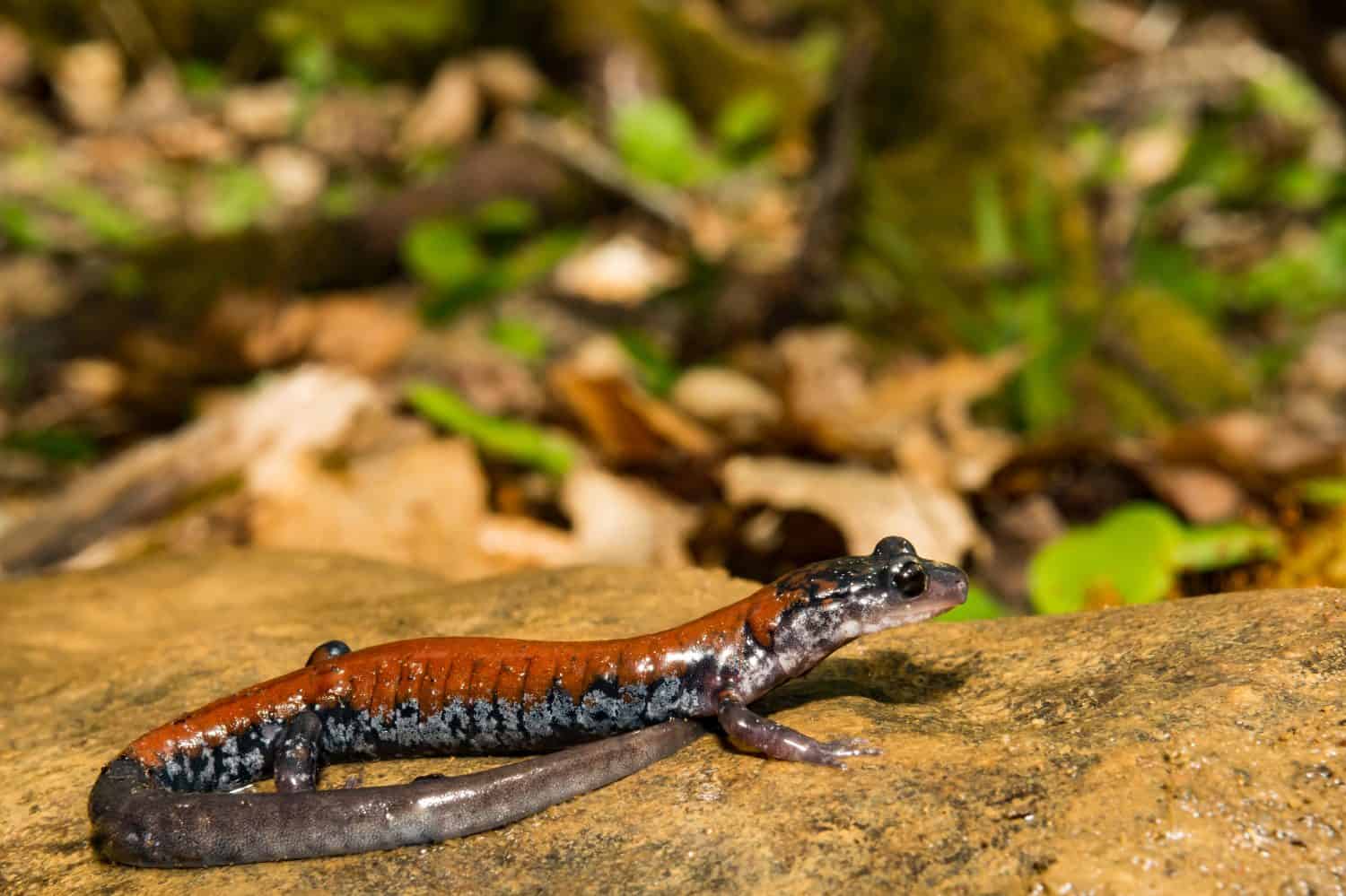
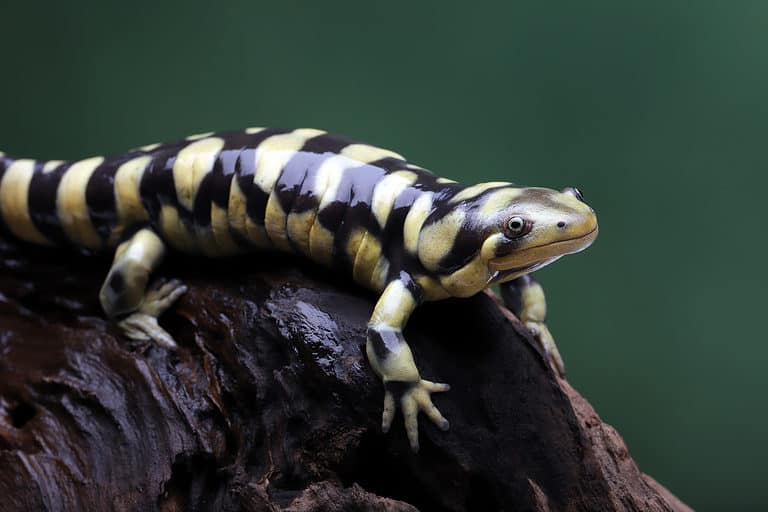
The Yonahlossee Salamander (Plethodon yonahlossee) is in the same family as the Red Hills salamander. They both survive without lungs and breathe through their skin.
©Jay Ondreicka/Shutterstock.com
In its underground habitat, the salamander doesn’t need lungs or an aquatic environment to survive. It breathes entirely through its skin as a lungless member of the Plethodontidae family. What makes this species especially unique is its size: the Red Hills salamander is one of the largest lungless salamanders, yet it is rarely, if ever, observed. At full maturity, these salamanders measure 8 to 10 inches in length. Surprisingly, their tails take up most of the length while their bodies are relatively small in comparison. Like other salamanders, their long tails help them evade and escape predators.
Its Highly Elusive Nature
Observations of these elusive creatures show that their tunnel systems can extend several feet underground. They’re typically found in ravines, making them even more challenging to locate. This has earned the Red Hills salamander the name “living fossil.” Spending most of its life underground allows the salamander to absorb moisture from the surrounding soil and obtain enough oxygen through its self-made tunnels.
Red Hills salamanders hover at the entrance of their tunnels to feed on passing insects, but rarely leave these tunnels. Their quick, darting tongues and powerful jaws help in their opportunistic hunting strategies. The species is fully self-sufficient, but only in an environment conducive to its hermit lifestyle.
The Conservation Fund Leads the Charge
Little is known about the Red Hills salamander, particularly about its movements. It has been recorded in Crenshaw, Butler, Covington, Conecuh, and Monroe counties, but wildlife experts are still uncertain of its exact whereabouts. Monroe County is among several counties where the salamander is currently confirmed to exist. This evidence fuels The Conservation Fund’s efforts to protect one of its native habitats. Together with its partners, The Conservation Fund has successfully protected more than 23,000 acres of forested land for the Red Hills salamander.
However, this goes beyond simply saving land from development and deforestation. The Red Hills salamander has very specific habitat requirements. This is part of why it is found only in one place in the world, and why protecting the species is so crucial. Without this protected land, populations would continue to decline, as they cannot survive elsewhere.
What Makes Monroe’s Forests the Perfect Habitat
The conditions of Alabama’s hardwood forests provide the ideal environment for these salamanders to thrive. A combination of several factors transforms this from an average forest into a haven, which is why protecting this land is essential. The canopy provided by its magnolia and beech trees prevents the sun from drying out the soil completely. These trees also offer shade, especially over the deep ravines these salamanders prefer. The region’s geologic formations are just as important for Red Hills salamanders, which can burrow easily in soft silt and claystone.

Hardwood forests provide shelter, shade, climate control, and plenty of moisture for the Red Hills salamander.
©William Reagan/iStock via Getty Images
The abundant moisture in this soil, combined with protection from extreme heat, has allowed the species to persist. If that were to change, it is unlikely that Red Hills salamanders would be removed from the Threatened species list. As deforestation and development threaten their habitat, there are few places for the species to go. Their lungless anatomy prevents them from adapting to other environments, and The Conservation Fund’s fight for their habitat is a significant step in the right direction.