
Quick Take
- Once an osprey locks onto a fish, a hidden anatomical feature makes escape almost physically impossible, and this feature has nothing to do with claw strength. See the gripping anatomy →
- Ospreys hunt fish in a way that looks completely unlike any other raptor, and that difference is precisely what lets them pull off catches this size. Explore osprey hunting techniques →
- Getting airborne again after plunging into open water with a heavy catch poses a problem most birds can't solve, but ospreys have a surprising answer. How ospreys lift heavy catches →
- Swordfish push well past the size ospreys are known to handle, which raises a real question about how this hunt was even possible. Check osprey size limits →
Ospreys are amazing hunters that can outfish any professional angler. With their diet consisting of 99% fish, they are perfectly adapted to dive into the water to catch their prey. This includes larger fish, such as swordfish. This Instagram post by @dailyducknc shows an osprey flying with a freshly caught fish.
Continue reading
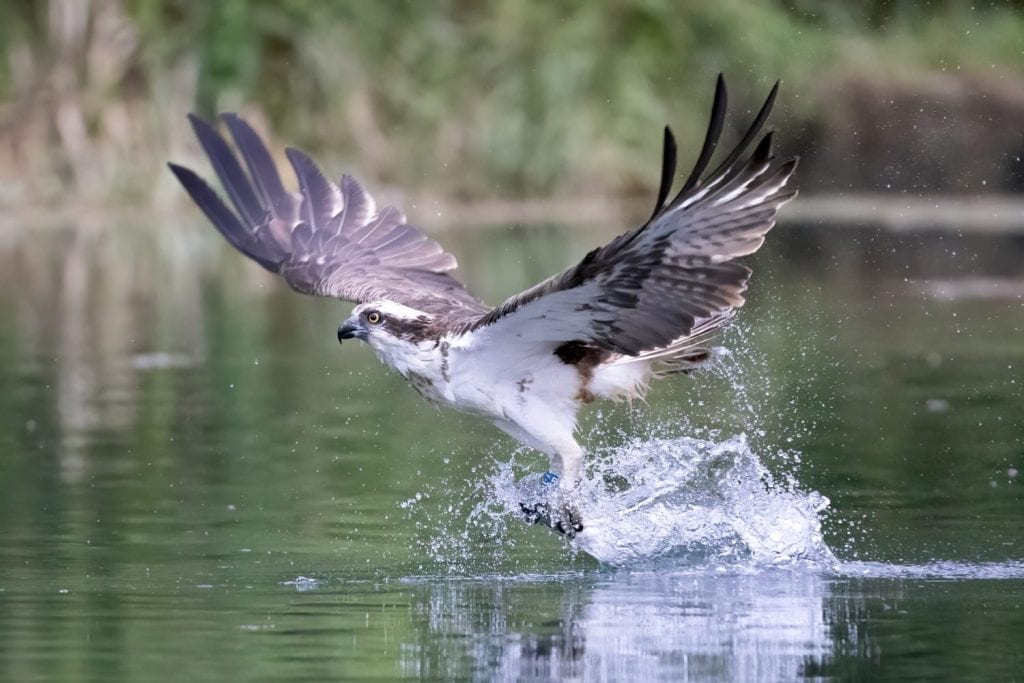
Ospreys have reversible outer toes that they can use like a pincer.
©Julie Yates/Shutterstock.com
How Ospreys Hunt
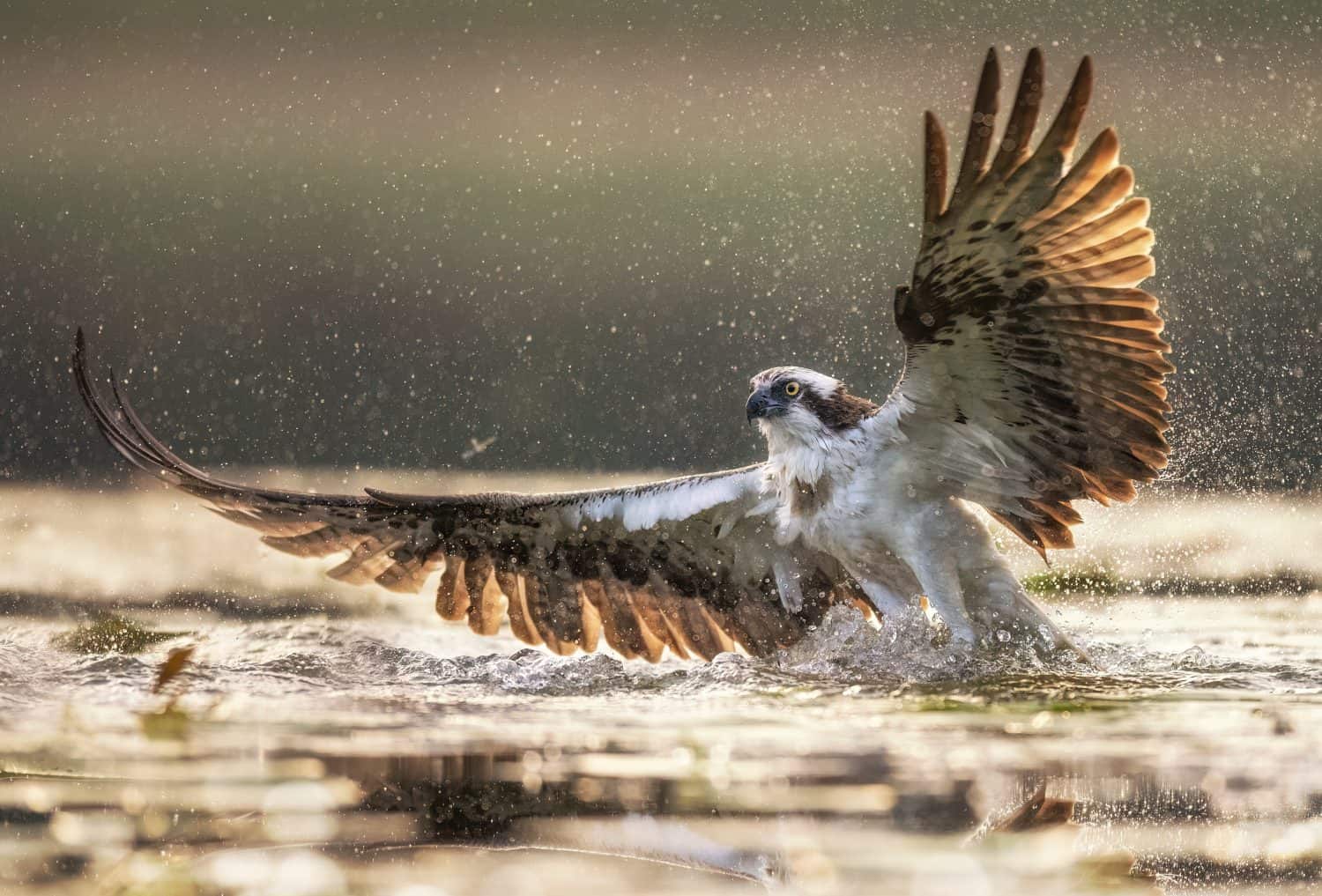
Ospreys are among the most skilled fish hunters of all bird species. Unlike other raptors, they are specifically adapted to dive into water to catch their prey with their strong talons. When hunting, they fly above the water and use their sharp eyesight to analyze the water below. When they spot a fish near the surface, they dive feet-first into the water on a vertical or diagonal trajectory depending on the location of the fish. Just before hitting the water’s surface, however, they extend their legs and talons forward, grabbing the fish.
If they become submerged, they use their powerful wings to lift themselves out of the water while holding onto their catch. Using this method of hunting, ospreys eat practically any fish that is accessible. Ospreys have been documented to eat around 80 different species, including fish such as menhaden, flounder, alewives, smelt, and pollock, as well as occasional prey like snakes, frogs, and crustaceans. While ospreys rarely take fish over 16 inches long, the diversity of species in their diet makes them remarkably adaptable hunters.
Ospreys can catch larger fish due to their specialized physical adaptations. Specifically, their talons can pierce and carry fish that would otherwise be too difficult to grab. Their feet have spicules, or rough and spiny structures, along the undersides of their toes. This helps them to grasp even the most slippery of fish. They also have a reversible outer toe that creates a pincer-like grip. So, once these birds catch a fish, it is almost impossible for the fish to escape. The video above offers just one glimpse of the countless hunts these birds perform!