
Quick Take
- Breaching looks explosive and random, but great whites are exploiting a specific vulnerability in their prey that makes the attack almost impossible to escape. See the hunting strategy →
- The world's most famous shark-watching hotspot has undergone a shocking transformation that scientists only recently confirmed.
- Great white sharks have a sensory system most people have never heard of, and this system changes everything about how they hunt. Discover their hidden senses →
- Being the ocean's apex predator offers zero protection from the threat quietly shrinking great white populations right now. Explore the population threats →
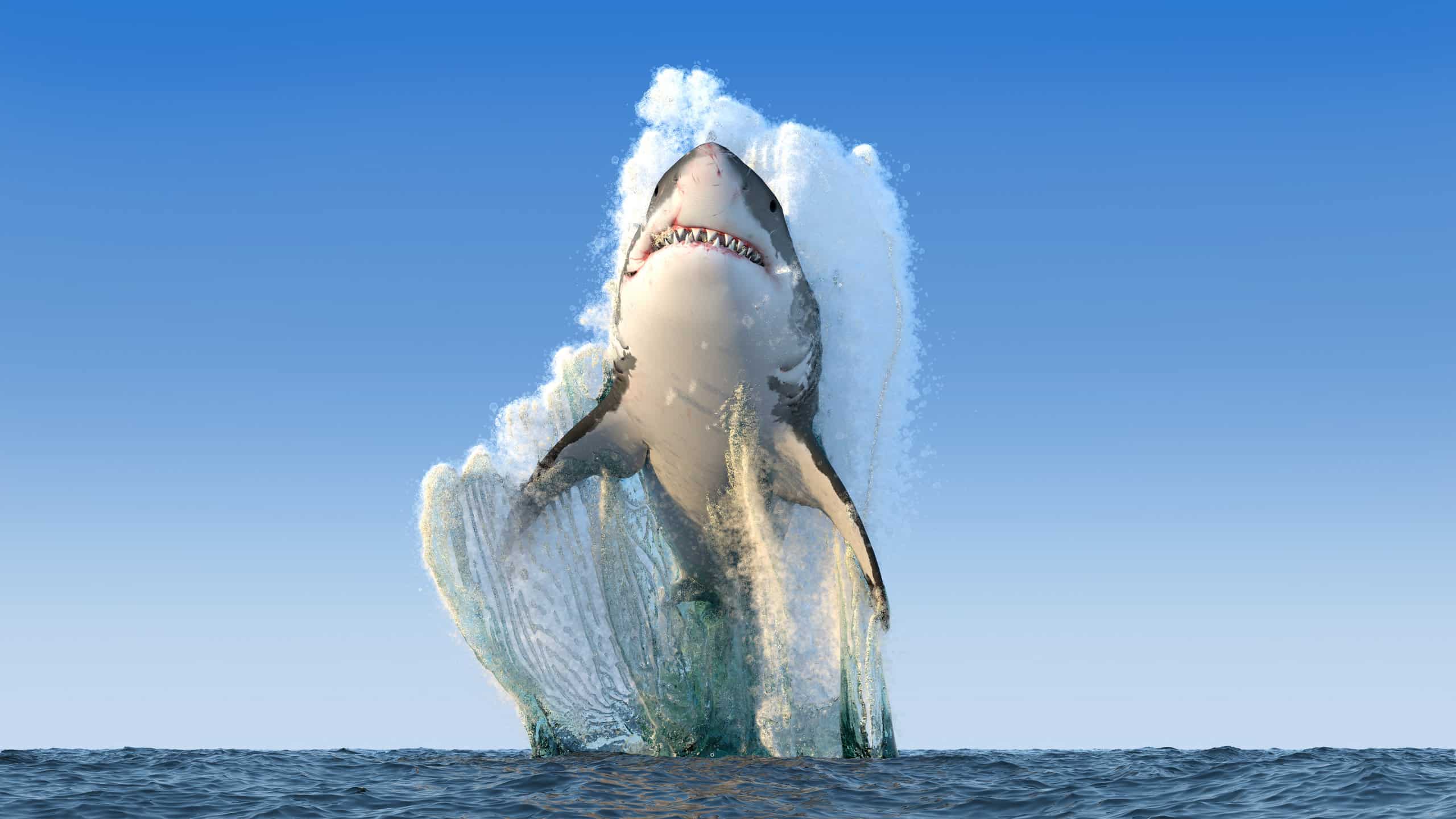
A great white shark launching itself out of the ocean is an impressive sight. One moment, the animal is hidden beneath the surface. The next, it’s airborne, propelled by a powerful burst of speed. This behavior is called breaching, and it’s one of the most dramatic hunting techniques used by these enormous predators.
But why would a shark that spends its entire life underwater suddenly leap into the air? As the video accompanying this article shows, a great white shark is capable of some extraordinary movements. And while the footage might look like something out of a Hollywood movie, there’s a fascinating biological explanation behind it.
Great whites aren’t simply swimming around looking for something to attack. They’re specialized hunters that use stealth, powerful senses, and carefully timed bursts of speed to catch prey. Let’s look at why they breach, how they pull it off, and what scientists are discovering about these often misunderstood animals.
Why Do Great White Sharks Jump Out of the Water?
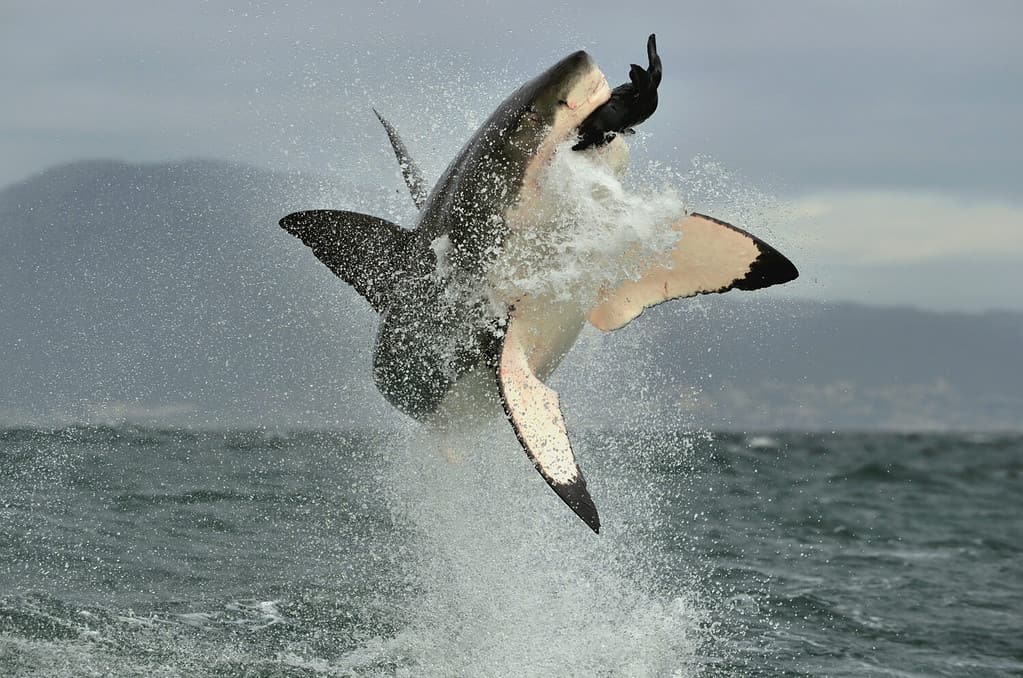
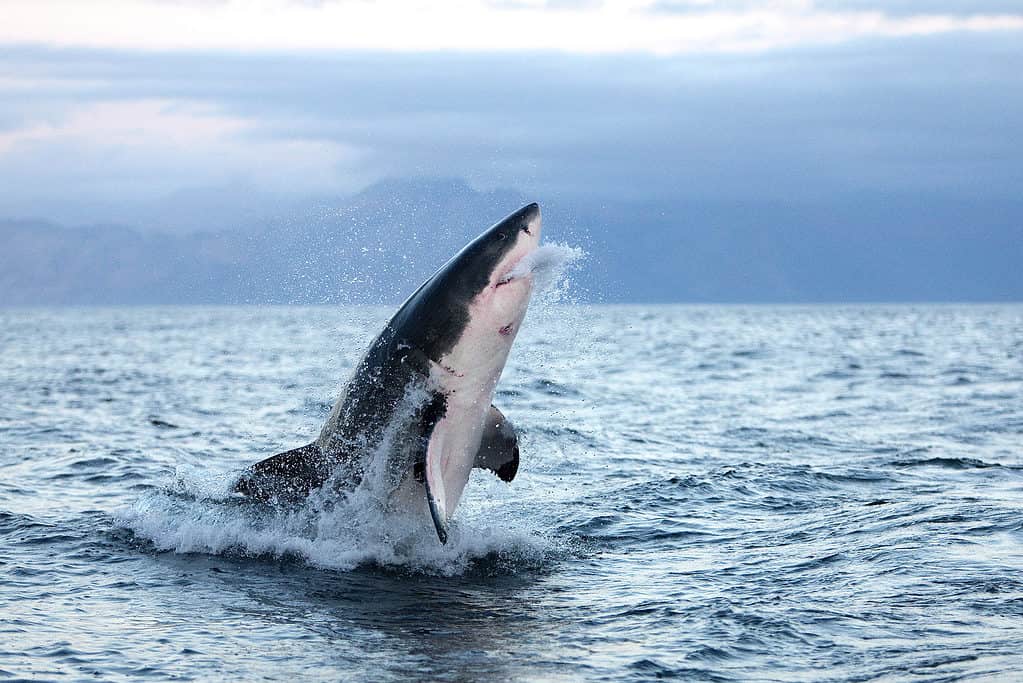
Great white sharks sometimes breach the surface during high-speed attacks on seals.
©Sergey Uryadnikov/Shutterstock.com
For great white sharks, jumping out of the water isn’t about showing off. One of the best-documented reasons for breaching is hunting. When a shark approaches a seal near the surface, it may accelerate upward from deeper water, catching its prey by surprise. The resulting momentum can carry much of the shark’s body, or sometimes the entire animal, out of the ocean.
These attacks are particularly effective because seals have very little time to react. Great whites have dark upper bodies and pale undersides, making them harder to spot against the surrounding water. By the time a seal detects a shark approaching from below, the predator may already be closing the distance. Breaching takes considerable energy, however, so it isn’t something great whites do every time they’re hungry.
Some of the most famous footage of breaching great whites came from Seal Island in South Africa’s False Bay. Interestingly, that location has changed dramatically. A 2025 study documented a major decline in white shark sightings there, with none recorded in standardized surveys since mid-2018. The hunting behavior remains well documented, but the area’s once-famous encounters have become far less common.
How Fast Can Great White Sharks Swim?
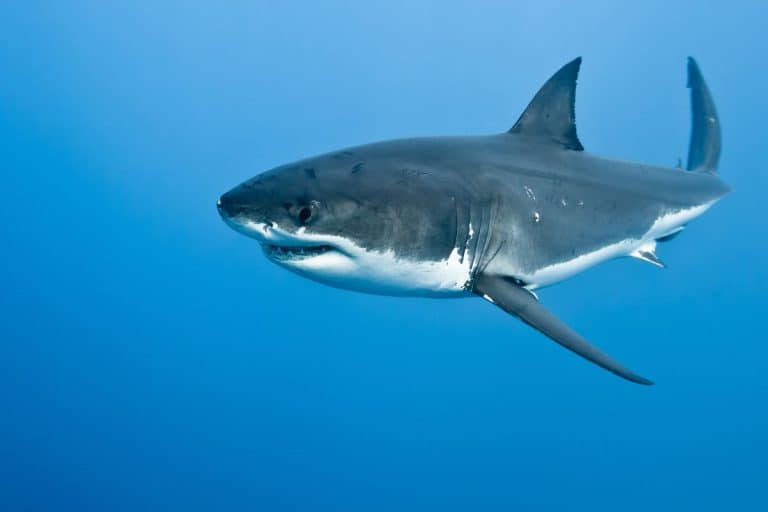
A great white’s streamlined body and powerful tail help it accelerate rapidly during an attack.
©slowmotiongli/Shutterstock.com
Great white sharks are built for short bursts of speed rather than nonstop sprinting. Their streamlined bodies reduce drag, while their muscular tails provide the propulsion needed to close in on fast-moving prey. They can also maintain parts of their bodies at temperatures above the surrounding water, an adaptation that supports their active predatory lifestyle.
You’ll see plenty of impressive speed estimates online, but measuring a shark’s exact top speed in open water isn’t straightforward. Researchers have documented remarkably fast hunting attacks, including breaches that carry sharks nearly 10 feet above the surface. What matters most during an ambush isn’t a particular miles-per-hour figure. It’s how quickly the shark accelerates, approaches from an unexpected direction, and reaches its target before the prey can escape.
How Smart Are Great White Sharks?
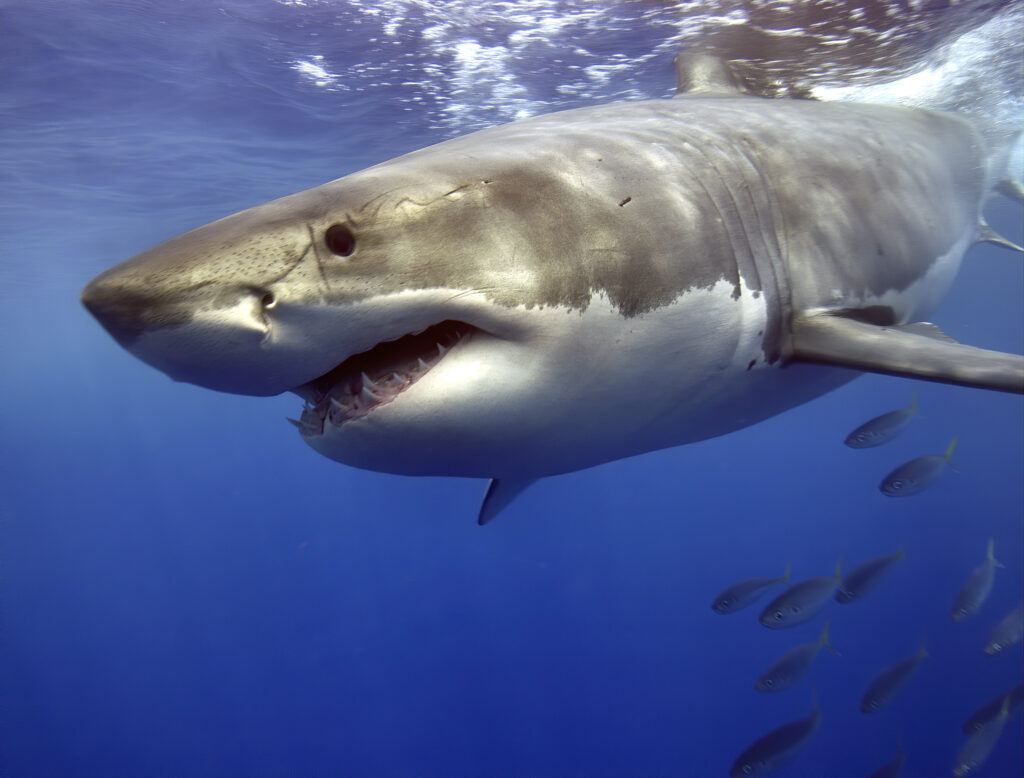
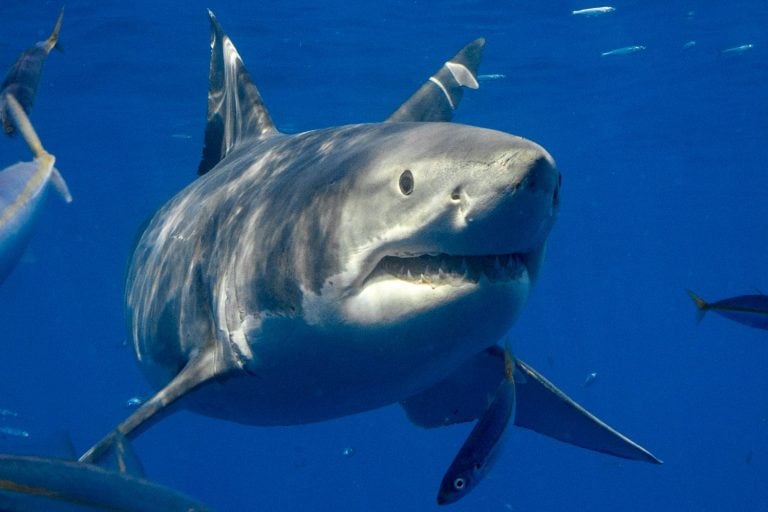
Great white sharks use specialized senses and adaptable hunting behaviors to locate prey.
©iStock.com/Martin Heyn
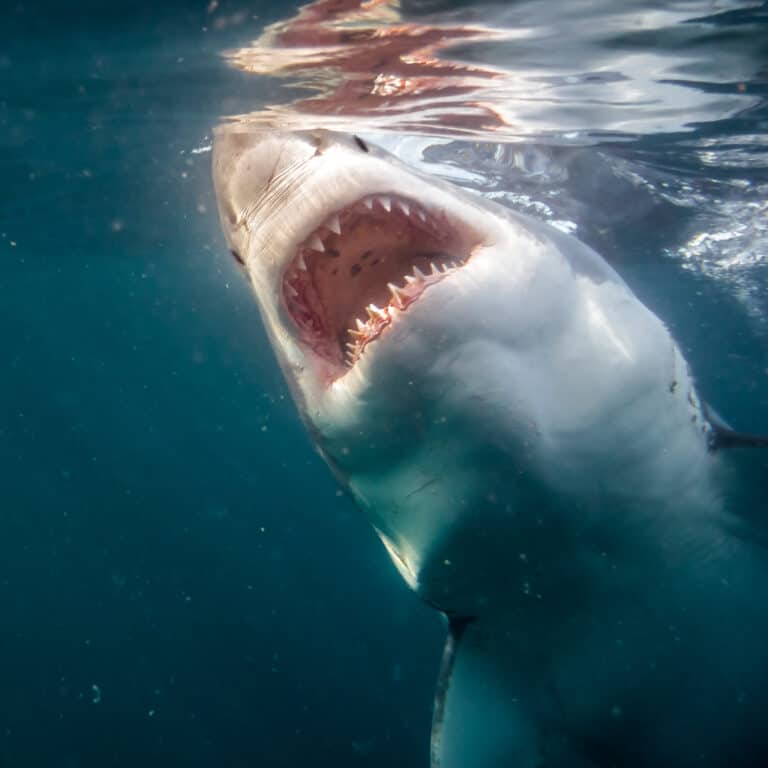
The idea that great white sharks are mindless eating machines makes for a decent movie villain, but it doesn’t hold up particularly well in the real world. These predators rely on several highly developed senses to navigate their environment and locate prey. In addition to eyesight and smell, sharks have special sensory organs called ampullae of Lorenzini that detect weak electrical fields produced by other animals. Their lateral-line system also helps them detect movement and vibrations in the water.
Researchers are also learning more about how great whites interact with one another. A 2022 study of sharks near Guadalupe Island, Mexico, found evidence of social associations, including some individuals spending extended periods near other sharks. Scientists suggested that these interactions might help sharks gather information about food, although that doesn’t mean they hunt cooperatively like a pack of wolves.
There’s still plenty we don’t understand about shark cognition. What scientists can say is that great whites display more varied and adaptable behavior than their reputation suggests. Their hunting techniques can also differ depending on the prey, location, and surrounding conditions.
Are Great White Sharks Endangered?

Despite their status as apex predators, great white sharks face serious conservation threats.
©iStock.com/Alessandro De Maddalena
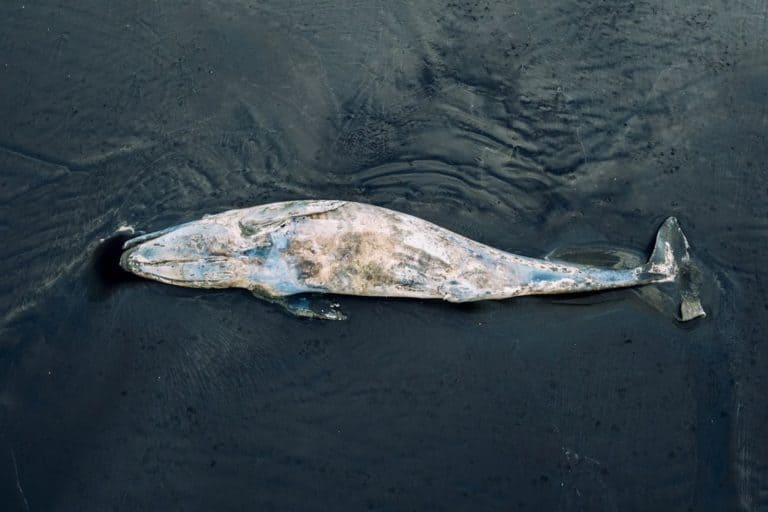
Great white sharks may be among the ocean’s most formidable predators, but that doesn’t mean they’re safe from threats themselves. The species is currently classified as Vulnerable on the IUCN Red List, rather than Endangered at the global level. Regional conservation assessments can differ, however, and some populations face particularly serious challenges.
One of the biggest problems is fishing. Great whites can become entangled in nets or caught unintentionally on fishing gear, an issue known as bycatch. Some are also deliberately killed or targeted for their teeth, jaws, and fins. Their relatively slow reproduction makes population recovery difficult when too many animals are lost. Although conservation protections exist in several countries, these threats haven’t disappeared.
And here’s something worth remembering the next time you see one of these sharks launch out of the water: great whites play an important role in marine ecosystems. Their presence influences other animals and helps shape food webs. Protecting them isn’t just about saving a famous shark species. It’s also about protecting the ocean environments that depend on healthy predator populations.
Watch the video to see a great white shark’s remarkable breaching ability in action.