
Quick Take
- Narwhals are being fitted with satellite tags that record ocean temperature, salinity, dive depth, and migration routes beneath Arctic sea ice. See how satellite tags help →
- Scientists use narwhals as “climate sentinels” because their behavior changes quickly in response to warming ocean conditions. See what deeper dives signal →
- Research shows that shrinking sea ice is already affecting narwhal migration patterns, feeding behavior, and access to prey species. Explore shifting migration routes →
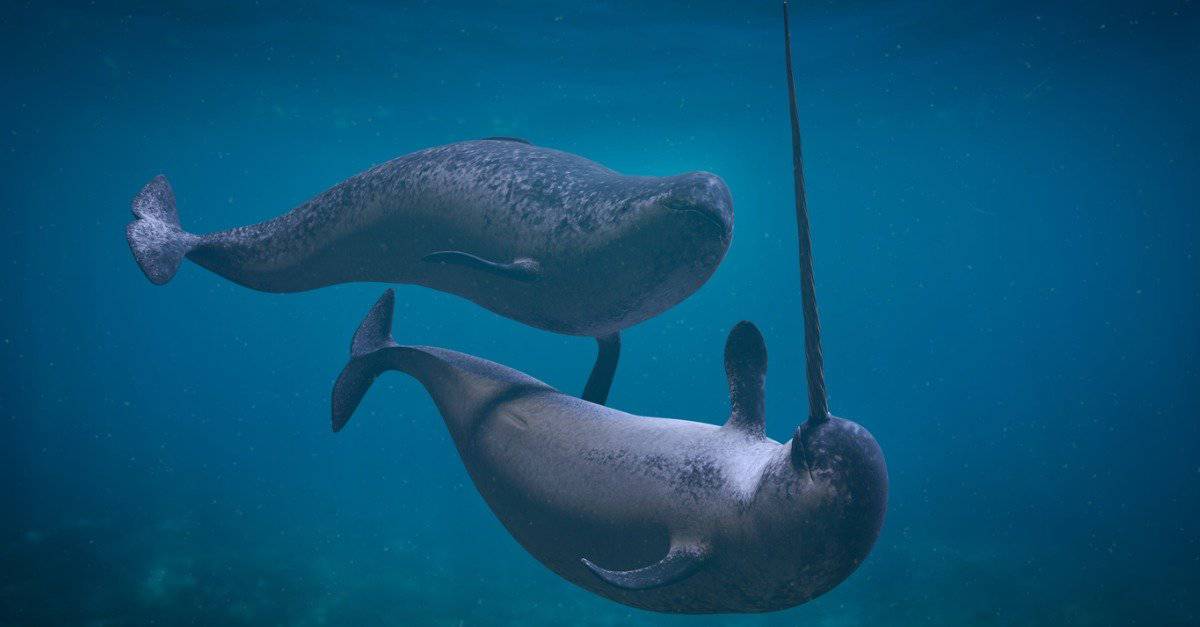
Narwhals are some of the most unusual whales in the world due to their long, spiral-shaped tusk. They inhabit the Arctic Ocean, regularly diving deep under the sea ice. Therefore, scientists are now fitting narwhals with satellite tags to help them collect information about how climate change is affecting the cold polar waters. Keep reading to discover how it works and what it reveals!
Why Narwhals Thrive in the Arctic
Although they are sometimes called “unicorns of the sea”, narwhals (Monodon monoceros) are actually small, toothed whales that inhabit the Arctic waters around Canada, Greenland, and Russia. They spend much of their lives in areas covered with thick pack ice and can dive to incredible depths—some estimates suggest up to 6,000 feet. They dive to these depths to feed close to the sea floor. Narwhals typically suck their prey into their mouths rather than biting or grabbing them. Their diet consists of animals such as Greenland halibut, Arctic cod, shrimp, and squid.
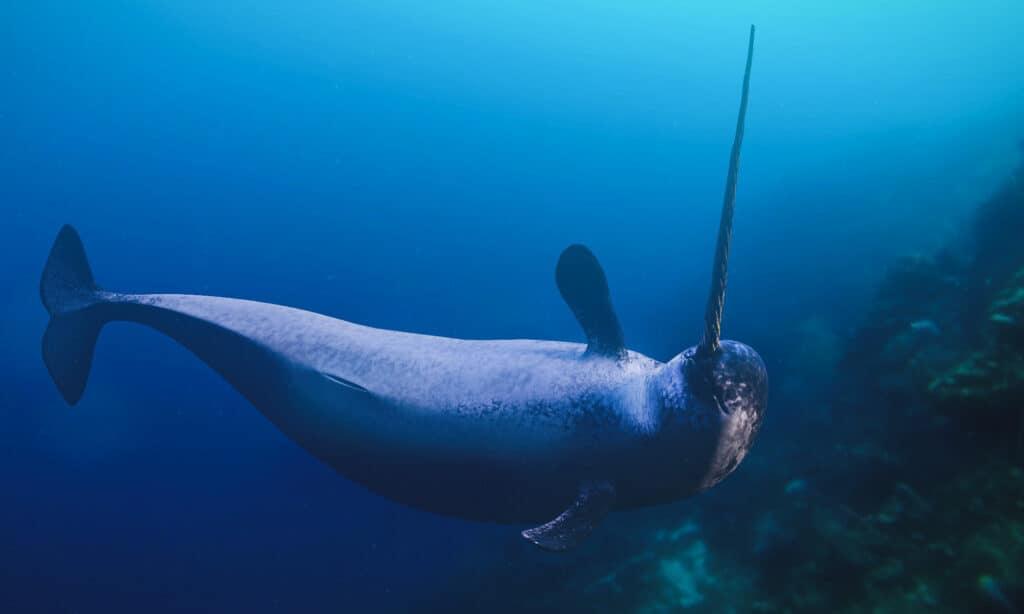
Narwhals inhabit the Arctic Ocean around Canada, Greenland, and Russia.
©Dotted Yeti/Shutterstock.com
Because narwhals spend so much time swimming under pack ice, they lack a dorsal fin. This adaptation allows them to swim just beneath the ice, close to the surface, without a dorsal fin snagging on the ice.
How Narwhals Are Collecting Data
Warming sea temperatures and the earlier breakup of seasonal pack ice are affecting narwhals’ feeding patterns and migration routes. As narwhals are so dependent on the sea ice and the cold temperatures where their prey live, they are particularly susceptible to changes in their environment. This has led to them being called “climate sentinels,” as they help reveal how quickly the Arctic is changing.
To help study the effect of these changes, scientists are tagging narwhals with a satellite tag. These tags record several pieces of information, including location, water temperature, salinity, and the depths to which they dive. Organizations such as the Greenland Institute of Natural Resources monitor and analyze the data collected by the tags.
Narwhals are valuable for collecting this information because the depths they reach under the ice are inaccessible to standard monitoring equipment like boats and drones. In addition to providing data about climate change, the tags also help scientists track narwhal migration. This helps scientists identify which areas are most important to narwhals.
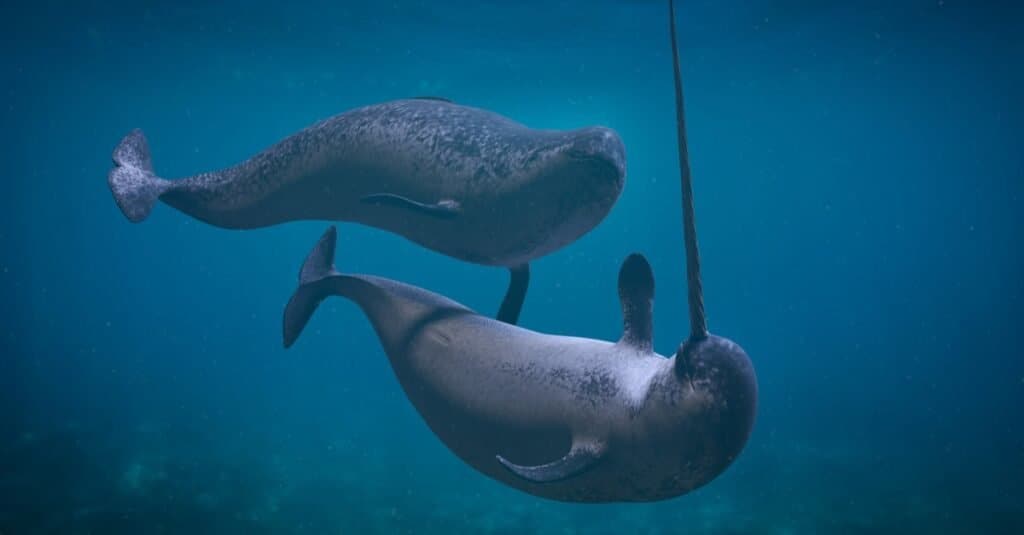
Narwhals fitted with satellite tags are helping scientists monitor changing ocean temperatures.
©iStock.com/dottedhippo
What Narwhals Reveal About Climate Change
Narwhals are already providing some interesting data via their satellite tags. So far, researchers have found that narwhals dive deeper and travel farther when there is less sea ice. This suggests that ocean temperatures are increasing, as narwhals typically dive deeper when searching for the cooler water preferred by their prey.
The data also show that shrinking sea ice is affecting narwhal migration routes. Narwhals have a seasonal migration that is tied to the formation and melting of the sea ice. They migrate to their summer nursing grounds in places such as Baffin Bay and Davis Strait when the ice begins to melt. They then return to colder regions for the winter as the ice begins to form. Rising temperatures are causing the ice to melt earlier and form later, which in turn causes narwhals to arrive at their summer locations earlier and leave later. In some cases, they are traveling to entirely new summer locations.
Changes in climate and ocean temperatures are also altering the distribution of the animals that narwhals prey on. As species such as Arctic and polar cod live in sub-zero temperatures, they are being pushed further north in search of cooler temperatures. As a result, narwhals must travel farther and deeper to find their prey or adapt their diet to include different species.