
Quick Take
- Javelinas are not pigs, despite their similar appearance.
- Javelinas have poor vision and often mistake domesticated dogs for coyotes.
- Javelinas are wild animals that present a danger to humans and their pets.
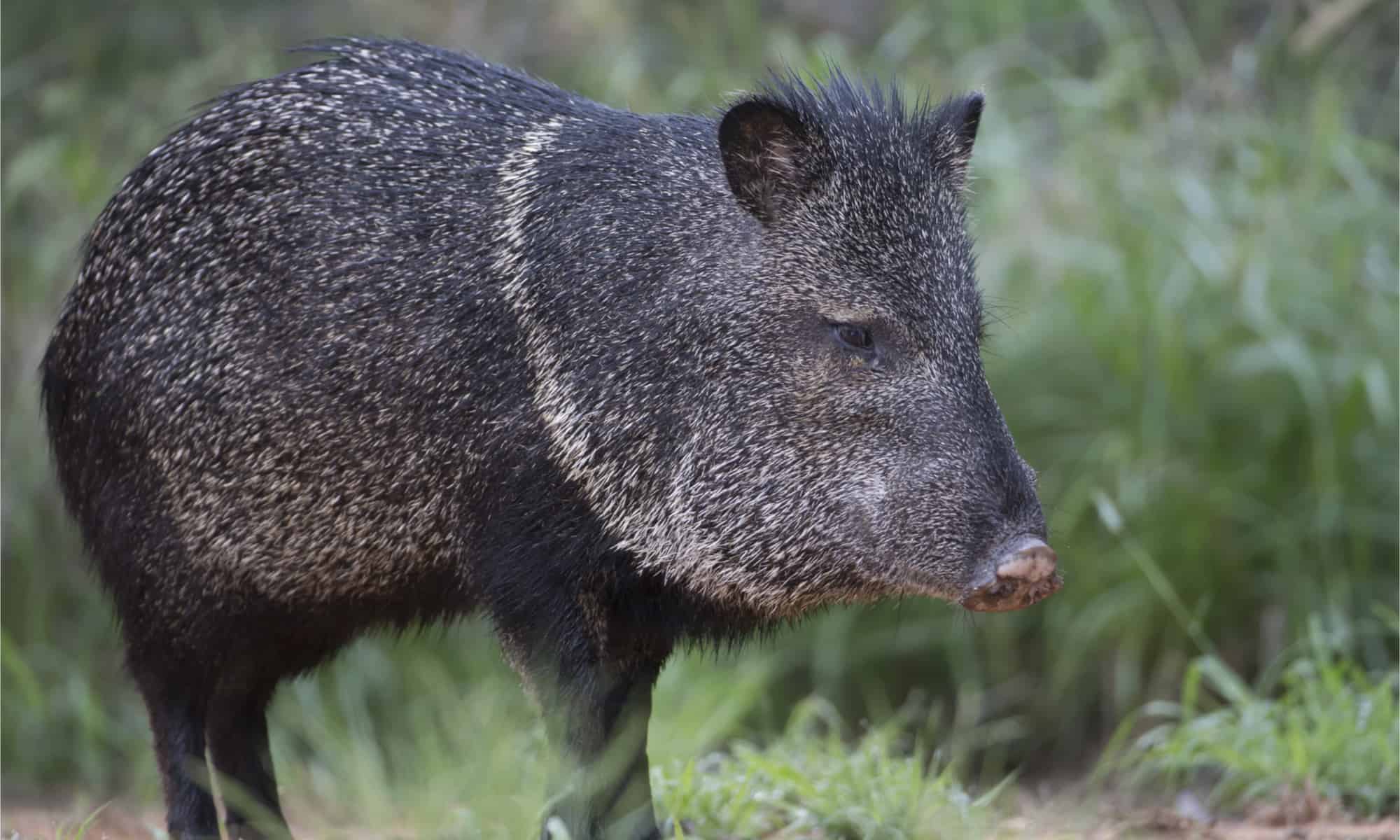
The javelina, or collared peccary (Pecari tajacu), is a social, pig-like mammal found in the Southwestern United States, Mexico, and Northern and Central South America. Javelinas weigh 35 to 55 pounds and stand 18 to 24 inches tall. They have dark, coarse hair with a collar of lighter hair around their necks. Javelinas are opportunistic omnivores that feed on both plants and animals, but they prefer grasses, shrubs, mesquite beans, and cacti.. Their incredible sense of smell makes up for their poor vision. Do javelinas pose a threat to humans? Do javelinas pose a threat to humans? Continue reading to learn more about whether javelinas are dangerous.
Are Javelinas Dangerous?
Javelinas generally avoid humans but can pose a threat and may attack if they feel threatened, cornered, or are protecting their young. Attacks are rare and often involve dogs. They can inflict serious injury with their incredibly sharp dagger-like canine tusks that protrude about an inch from their jaws.
Javelinas have an average lifespan of 10 years.
©Cburnett, CC BY-SA 3.0, via Wikimedia Commons – Original / License
Javelinas typically use their teeth and tusks for protection against predators (like coyotes), fighting within their own species, and foraging for roots, tubers, and cacti.
When javelinas feel threatened, they will create a loud, distinctive noise by grinding their tusks together. Clicking their teeth is the javelinas’ way of communicating that they feel threatened. Because of their poor eyesight, javelinas may charge as a means of escape rather than to attack, often running in a variety of directions when panicked.
What is the Outcome of a Javelina Attack?
The javelina’s poor eyesight leads them to attack dogs that they have mistaken for coyotes, their natural predators. These attacks often result in serious injuries to the dog, or in the most severe cases, the death of the dog.
While javelinas are not typically aggressive toward humans, people walking dogs are at risk of significant injuries, which can occur if they are knocked over or bitten while trying to defend their pet. Documented injuries range from bruises and scrapes to more serious wounds, including deep gashes from the javelina’s tusks and puncture bites on the legs, ankles, or arms. However, there are no documented cases of a javelina attack causing the death of a human.
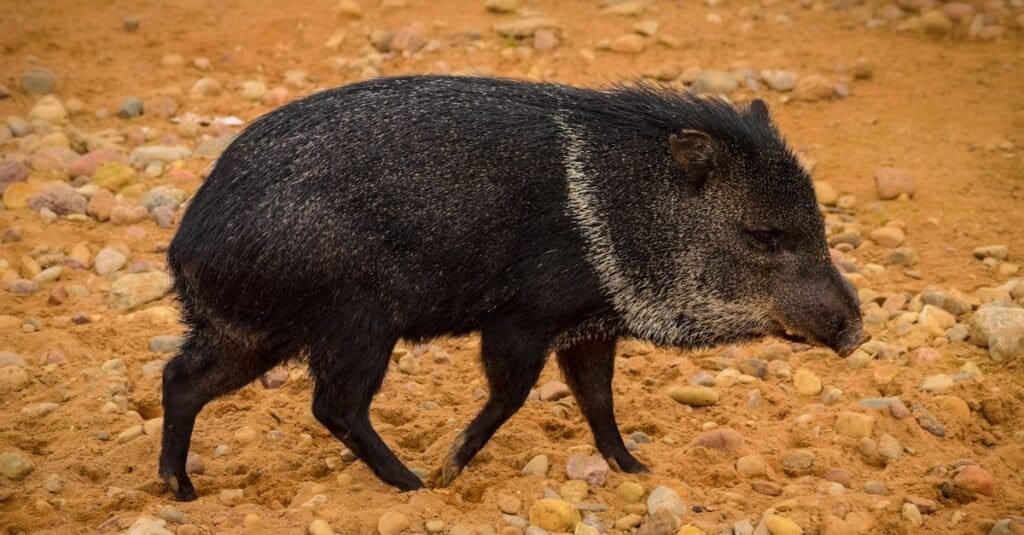
The majority of javelina attacks in the U.S. occur in Arizona and Texas, and almost always involve dogs.
©Sinelev/Shutterstock.com
If you or your pet is bitten by a javelina, immediately seek professional medical care for yourself and veterinary attention for your pet. Javelina bites can cause severe damage and carry a high risk of bacterial infection, as well as diseases like rabies or distemper.
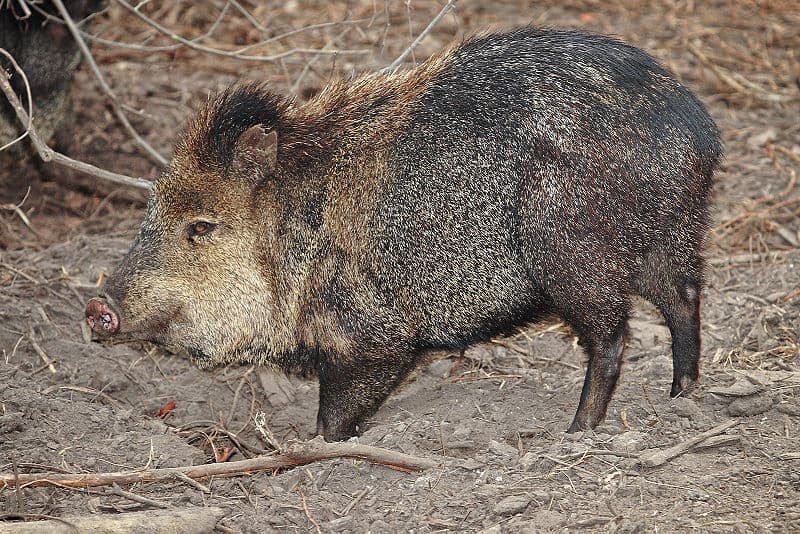
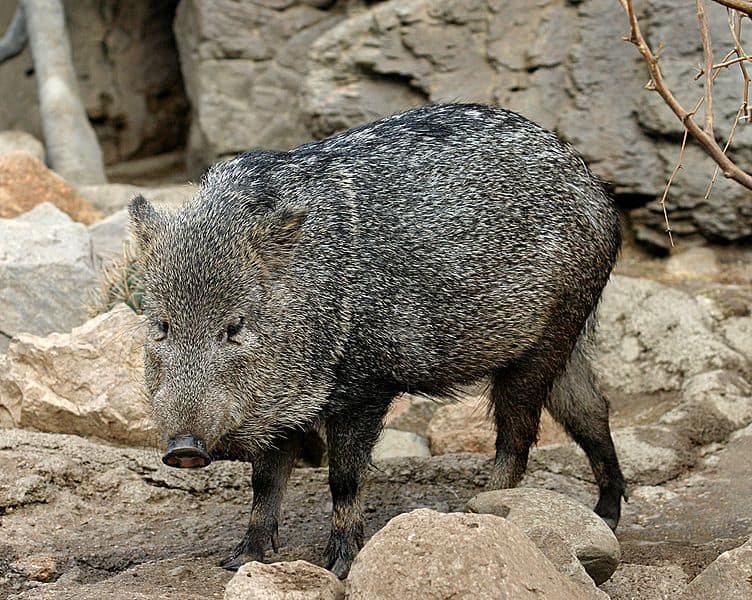
Javelinas have a very strong, unpleasant musky odor, which they emit from a scent gland on their lower back, just above the tail.
©Fir0002/Flagstaffotos / Creative Commons – Original
Do Javelinas Make Good Pets?
Javelinas do not make good pets. Javelinas are wild, territorial animals with sharp tusks and strong odors. They can carry diseases like rabies and are dangerous to people and pets.
Although young javelinas may seem docile, they can become aggressive as they mature, making them difficult to manage in a home environment. Their poor vision can lead to unpredictable and sometimes violent behavior. They also have a very strong, unpleasant musky odor. It is illegal to keep javelinas as pets in most U.S. states, and where allowed, ownership typically requires special permits for scientific or educational purposes.