
Quick Take
- Kangaroos are adaptable and survive across forests, grasslands, deserts in Australia and Tasmania.
- Kangaroos are good swimmers and use a doggy-paddle with their tails for balance.
- In freshwater they can swim just over half a mile; saltwater can cause dehydration and health problems.
Kangaroos are adaptable animals. Consequently, they can be found in a variety of environments, including forests and woodlands, grasslands and plains, and even deserts. As long as there is plenty of food, kangaroos can survive just about anywhere in their native Australia or Tasmania.
A group of kangaroos congregating in a large body of water is a rare sight. While they will stop and drink from time to time, kangaroos can go an extended period without consuming water. But an Instagram video showing a group of kangaroos in the water has created a buzz as of late, prompting many to question whether the terrestrial kangaroos are water dwellers as well.
Kangaroos Make a Mad Dash Across the Water, But Are Not Water-Dwellers
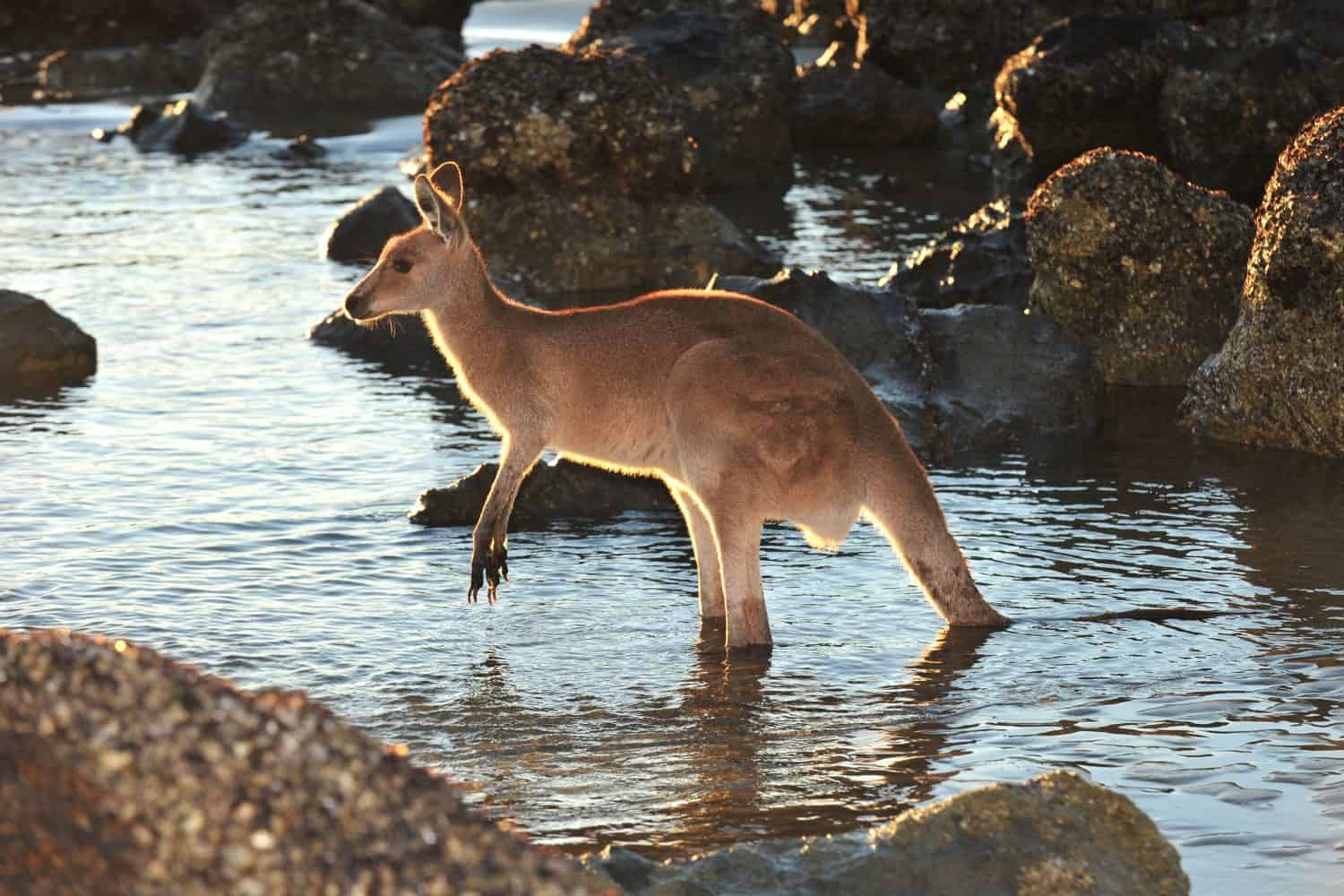
Kangaroos will go into the water if they are motivated, but they are not water-dwellers.
©Maximiliane Wagner/Shutterstock.com
Kangaroos are fascinating animals. They are different from other marsupials in a variety of ways, including their larger size. Though a few marsupials enjoy being in the water, kangaroos would prefer to stay dry, usually only approaching open water sources to take a quick sip. This begs the question of why a group of kangaroos made a mad dash across the water recently, as seen in an Instagram video that seems almost too incredible to be real.
On October 22, 2025, @aussiebucketlist posted a video originally posted by @frenchieinaussie, showing a group of seven kangaroos hopping across the water in Queensland. Initially, it appears that the kangaroos are venturing into the water’s depths from the coastal shallows. However, about 30 yards from shore, the leading kangaroo reaches shoulder deep water and stops. The rest of the mob follows suit.
There was no explanation as to why the kangaroos decided to hop so far into the water. While fascinating to watch, it leaves viewers wondering what is going on off screen, especially given that kangaroos do not particularly like water. Did the animals believe the ocean was the only safe place to be?
Kangaroos Do Not Particularly Like Water
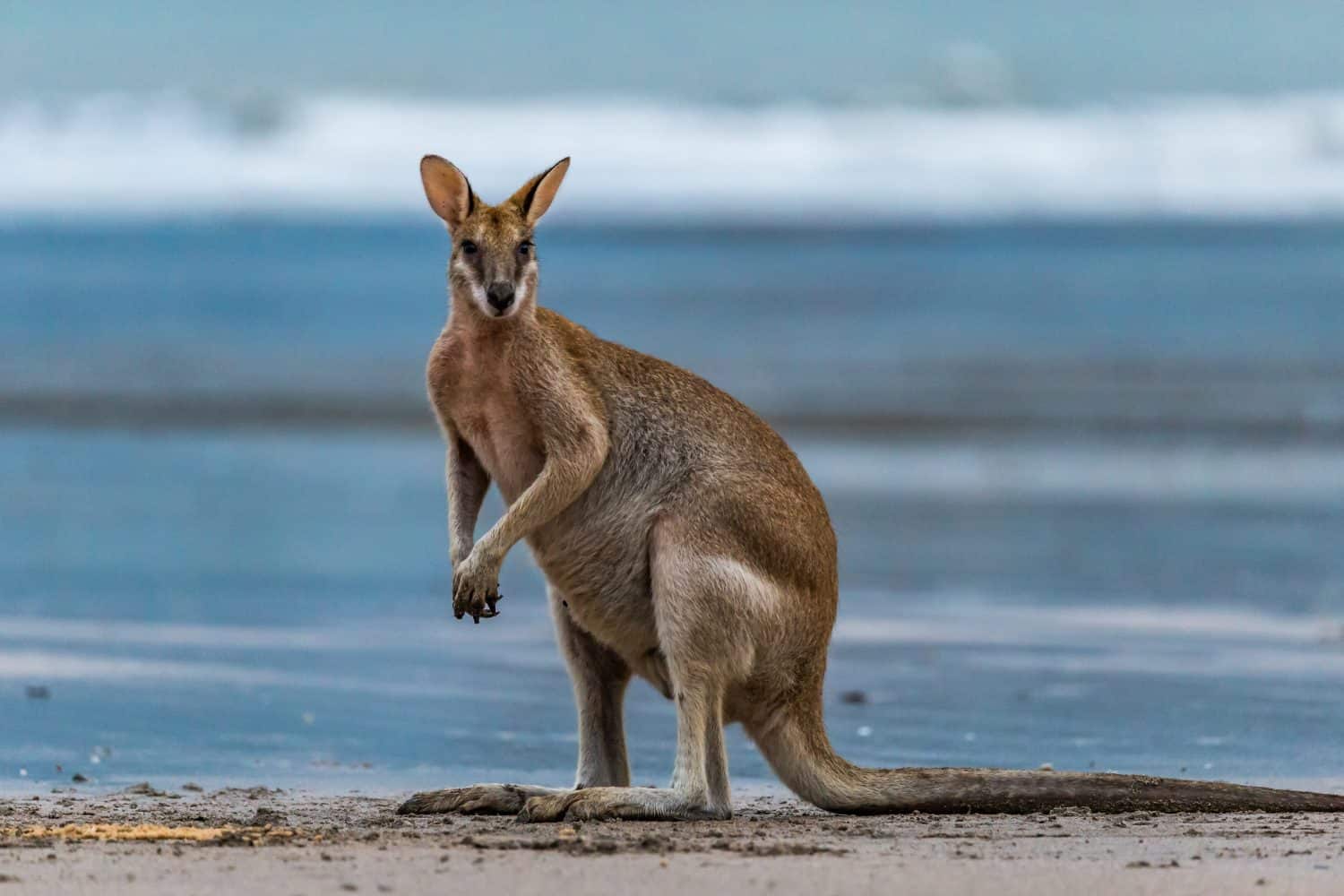
Seeing kangaroos in water is not uncommon. However, if they had their choice, kangaroos would not enter deep water.
©EagleEye Photos/Shutterstock.com
Kangaroos are built to live in an arid environment. They can go several months without drinking a drop of water and not get dehydrated. This is because the majority of their water intake comes from their diet, which is rich in grasses.
Despite still needing to drink occasionally, kangaroos do not appear to like getting wet and generally avoid large bodies of water. However, the reason is not known. Kangaroos are quite effective opponents on land, given their strength and ability to hop long distances in a single bound. Many experts agree kangaroos may simply feel too vulnerable in the water. They would still be able to defend themselves surrounded by water, but likely wouldn’t be as agile.
If kangaroos venture into a body of water, it is likely not for pleasure. So, what lies behind this unlikely choice?
Why Would a Kangaroo Choose to Go into The Water?
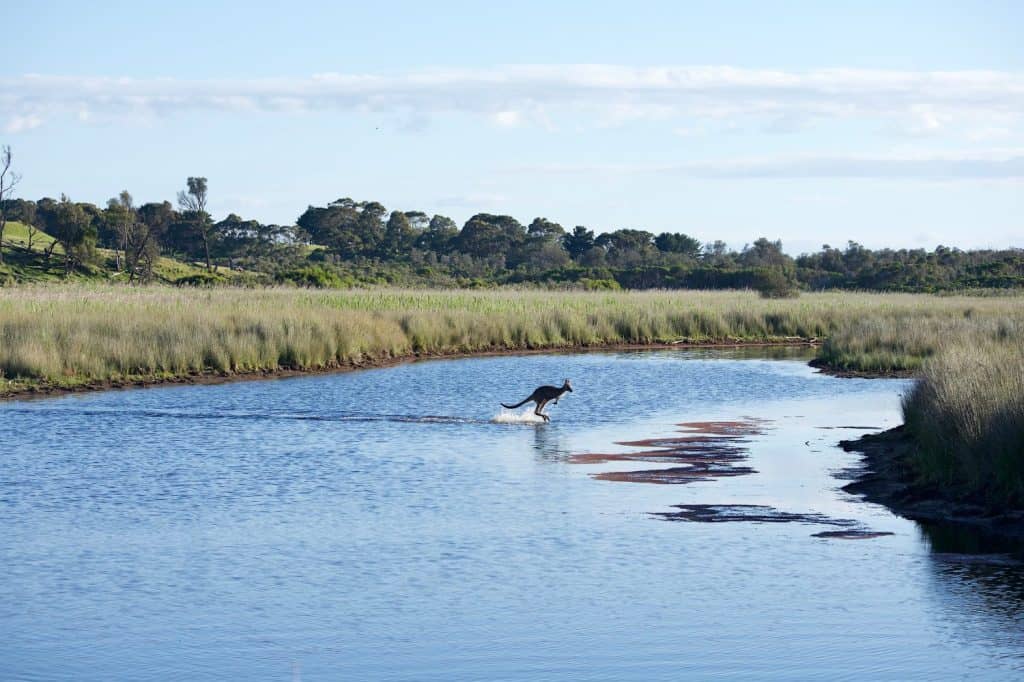
Kangaroos will go into water to cross from one side to the other, to escape predators, or go to new feeding ground.
©Mari_May/Shutterstock.com
There are specific reasons that kangaroos go into the water, some of which are more nefarious than others.
The main reasons that kangaroos submerge their bodies in a pond, lake, river, or even the ocean are to move from one location to the next, assuming the water is shallow enough. They may also flee into the water to escape predators. Given that they are herbivores, kangaroos do not hunt other animals. They eat grasses, leaves, shrubs, and flowers. However, dingoes, wild dogs, foxes, and wedge-tailed eagles hunt kangaroos. None of these predators are exceptional at hunting while swimming, though, which is why kangaroos head to the water when being pursued by any of these creatures.
On occasion, kangaroos will lure wild dogs and dingoes into water to drown them. Kangaroos have the advantage in these situations, as their height of about six feet allows them to stand in the water. The smaller wild dogs and dingoes have to swim, which prevents them from putting up a strong fight against the larger kangaroos. During these instances, their retreat to the water is an offensive move.
Kangaroos Are Good Swimmers
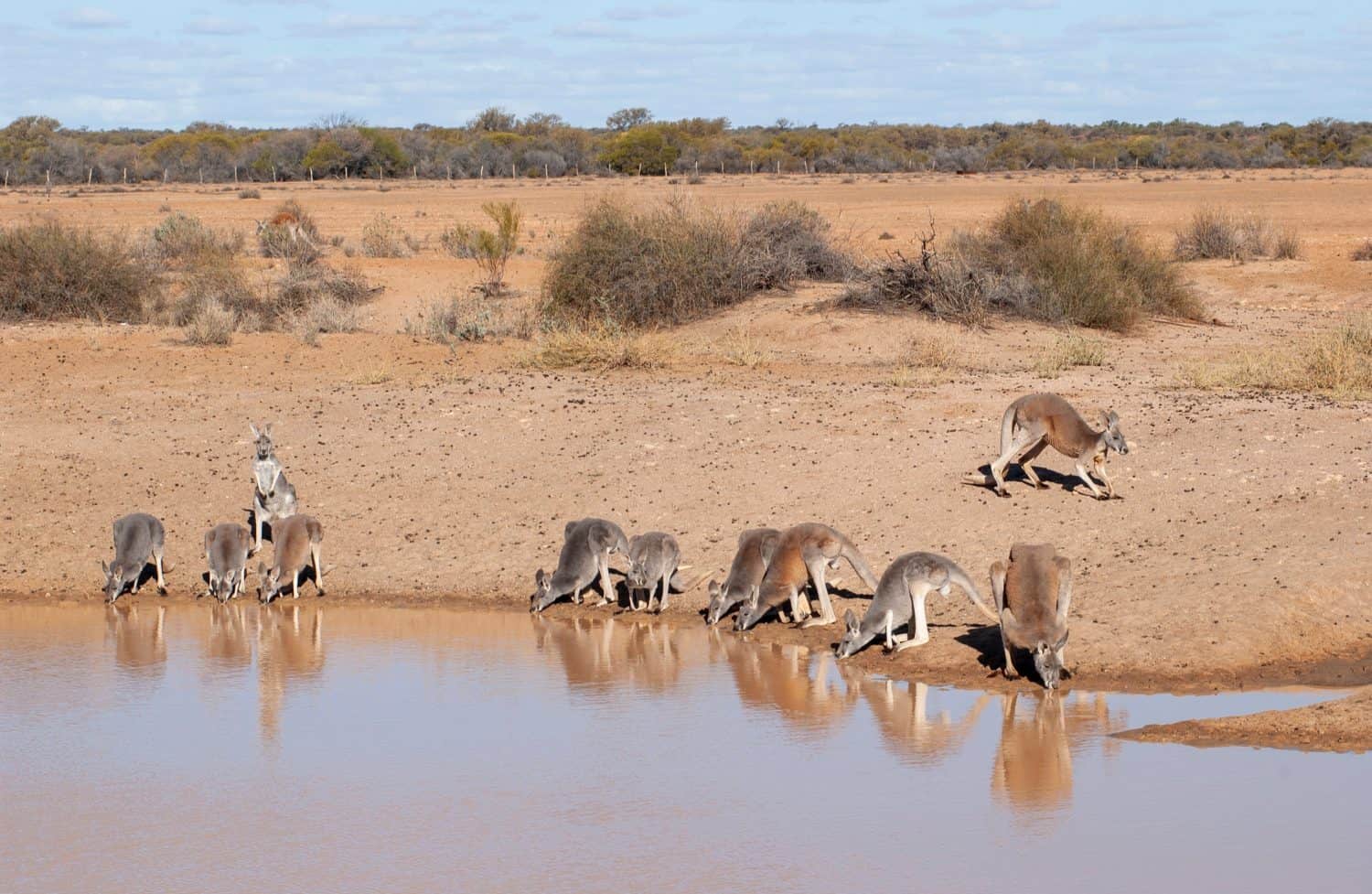
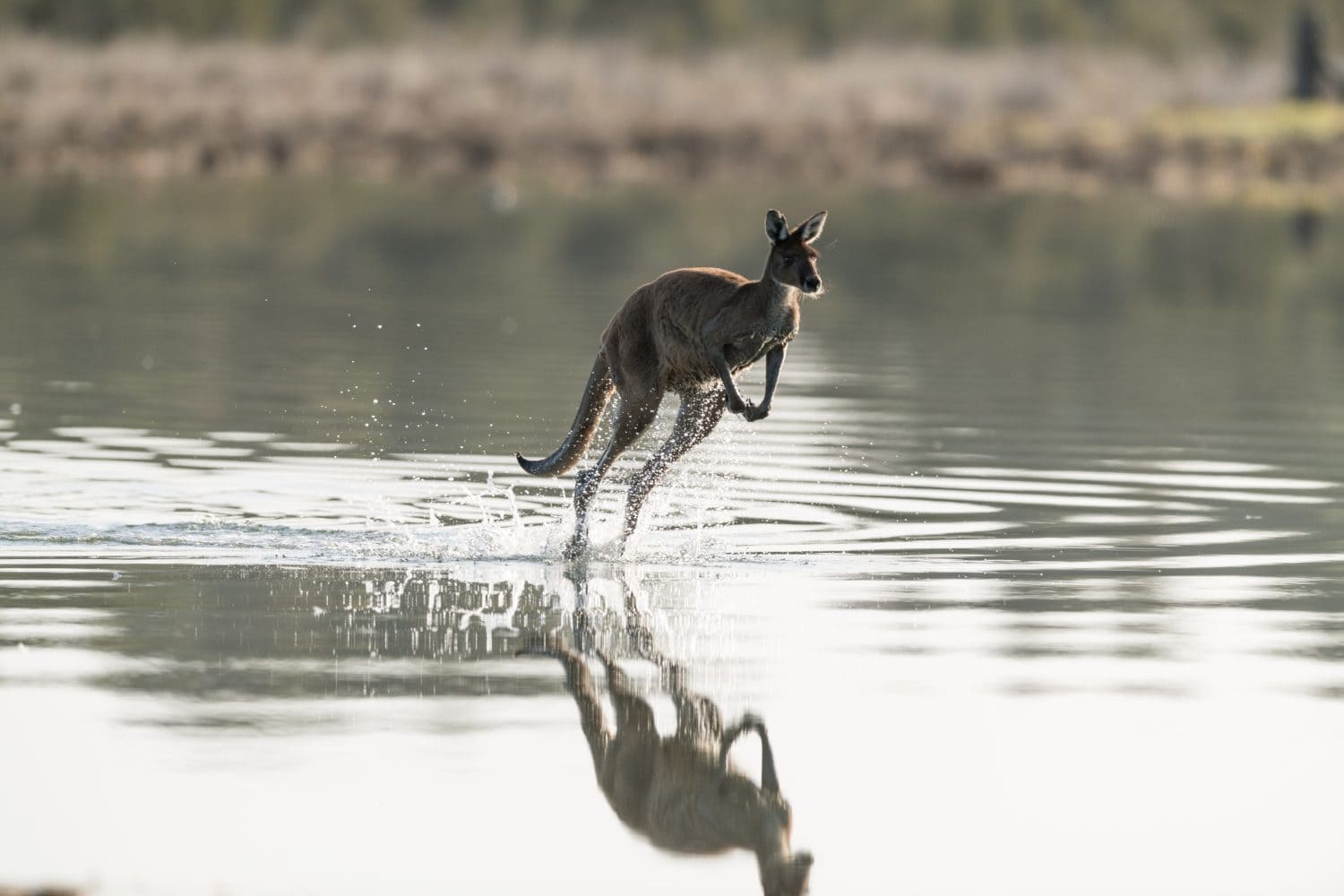
Kangaroos generally stop at bodies of water to drink, but if they must swim, they are efficient and strong swimmers.
©John Carnemolla/Shutterstock.com
Kangaroos are most often found in Australia’s grasslands. They can reach speeds of up to 56 miles per hour, making them quick on dry land. What may be surprising to learn is that kangaroos are good swimmers as well.
To move efficiently through the water, kangaroos use a doggy-paddle technique. As the arms help to navigate through the water, the legs move independently of each other. This is different from their movements on land, where the legs move simultaneously to hop up to 30 feet in one single leap.
In addition to their arms and legs, kangaroos use their tails in the water to help steer. The tail also keeps the kangaroo upright so that they do not lose balance.
Thanks to all these factors, kangaroos are overall good swimmers, especially when compared to other members of the Macropodidae family, such as wallabies, tree kangaroos, and quokkas, who are not known to be good swimmers at all.
Can Kangaroos Swim in Saltwater for Long Periods?
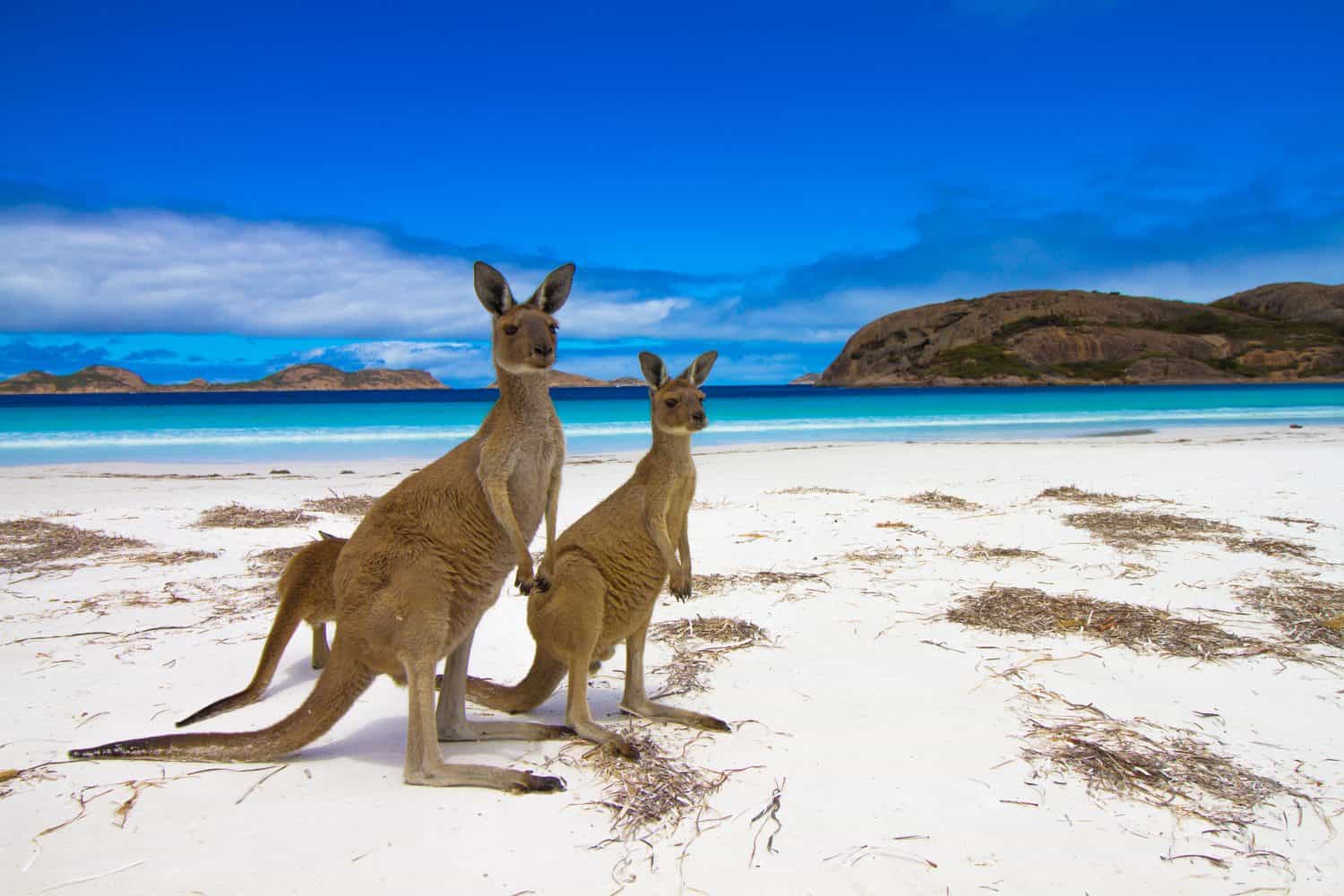
If kangaroos stay in saltwater for long periods, they become dehydrated.
©LIBIN THOMAS OLAPRATH/Shutterstock.com
Despite the fact that kangaroos are decent swimmers, they avoid staying in saltwater for too long. A number of health issues may result if they are in saltwater for extended periods.
While there are anecdotal stories of kangaroos swimming from one island to another, these instances are the exception and not the rule. In fresh water, kangaroos can successfully swim up to just over half a mile. However, in saltwater, kangaroos can suffer from dehydration, among other health problems. Therefore, observers are more likely to spot a kangaroo in freshwater than in saltwater.
What To Do If a Kangaroo Is Struggling in the Water
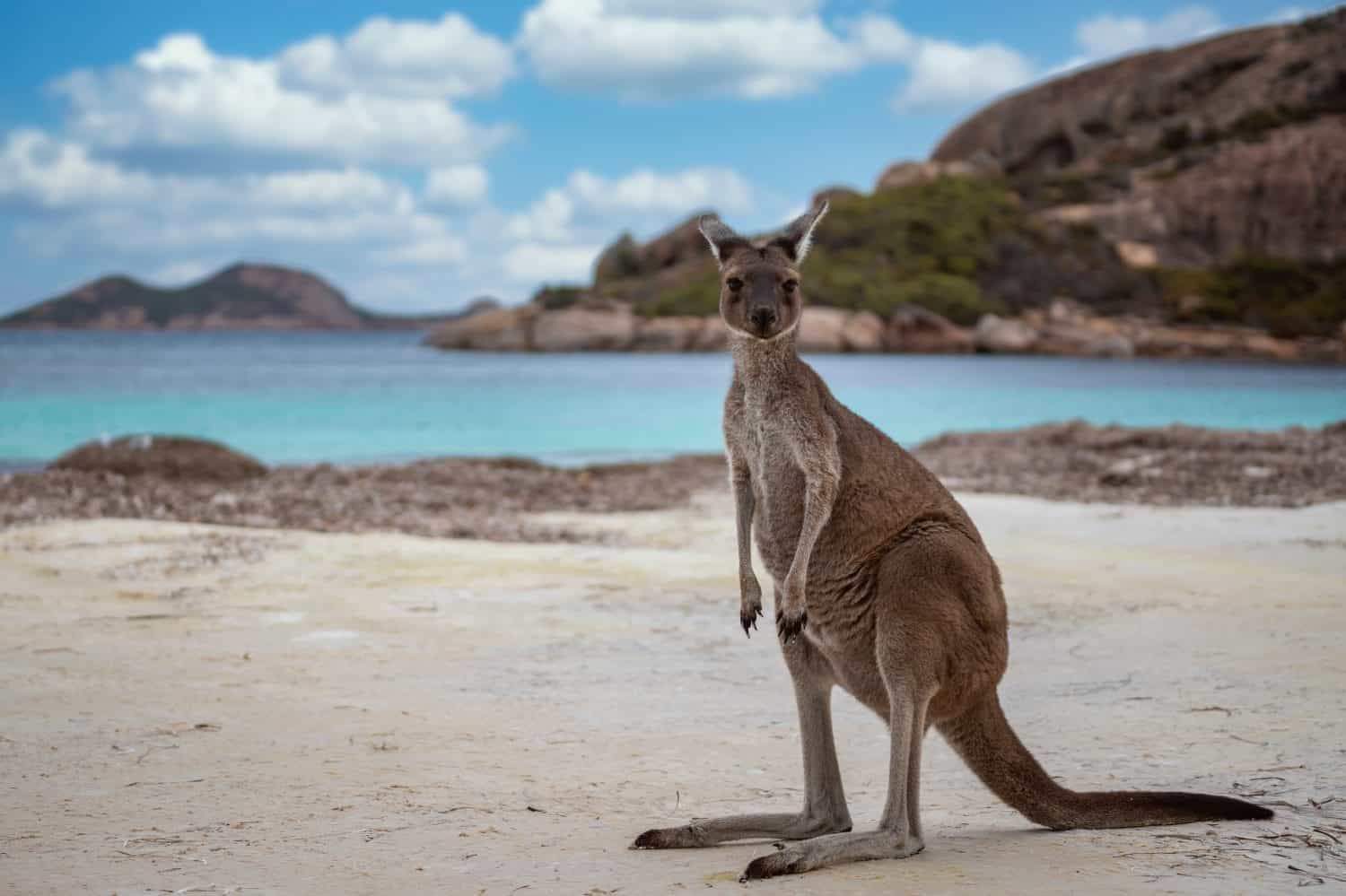
If a kangaroo happens to be struggling in a body of water, it is recommended to call wildlife rescue experts.
©anek.soowannaphoom/Shutterstock.com
Kangaroos that have been submerged for too long have a greater chance of drowning. If you were to spot a kangaroo struggling in the water, it is not a good idea to attempt to save the marsupial. Kangaroos are unpredictable and strong, which means they could easily injure a potential rescuer. The chances of a good Samaritan getting injured are high, which is why saving a kangaroo should always be left to the experts.
Does this mean the kangaroo struggling in the water is out of luck? Not necessarily. There are things bystanders can do to help save kangaroos who are at risk of drowning. The recommendations for helping a struggling kangaroo include:
- Call a local wildlife rescue who knows how to safely intervene and save the kangaroo
- Note the exact location when calling experts to the scene
- Do not approach the kangaroo