
The term “mass extinction” conjures up apocalyptic images of the world coming to an end, but a massive event like this can be a much slower process than many people realize. By definition, a mass extinction is an event that causes a widespread loss of species on Earth. Typically, this happens in a short time geologically, but that can mean decades or even centuries for those inhabiting the planet.
As extinction rates rise in 2025 and predictions look grim, some claim we are already in a mass extinction event. However, some studies are debunking this and saying there are a lot more factors to consider before prepping our doomsday cellars. In reality, determining the timeline for a sixth mass extinction event is far more complicated.
Has Another Mass Extinction Already Started?
The sixth mass extinction event, known as the Holocene or Anthropocene, is caused by human activity. Overconsumption, hunting, overfishing, pollution, deforestation, overdevelopment, and climate change all play a crucial role in the Earth’s next major extinction event. Some believe this has already started, primarily because these factors have already taken a toll on the planet. With the world’s coral reefs at a tipping point, experiencing widespread mortality and bleaching events due to human-driven climate change, it has never been clearer that human activity is the root cause of the planet’s gradual decline.
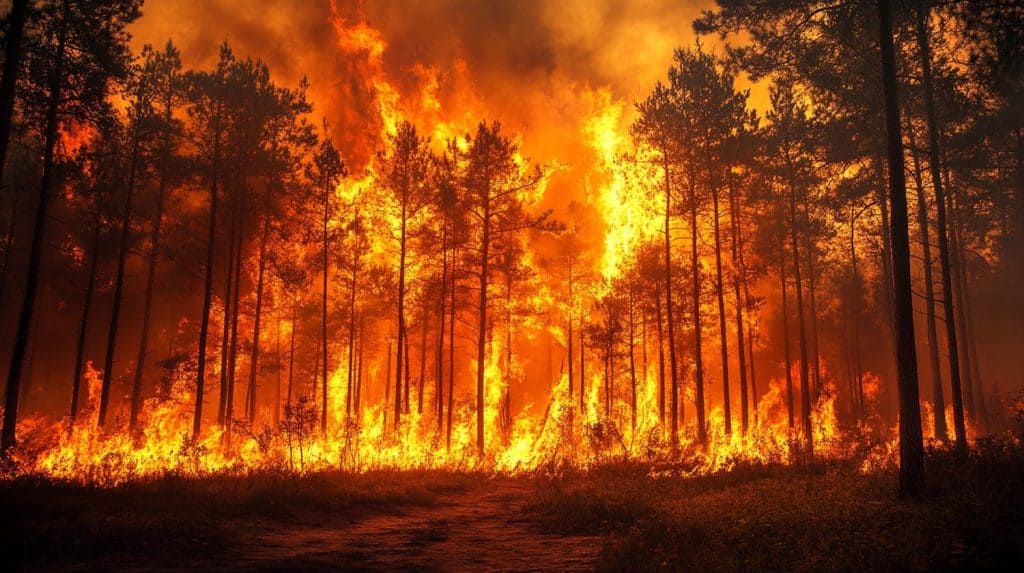
As climate change worsens, so do catastrophic events such as wildfires.
©Quantum Hydra/Shutterstock.com
However, a study recently published by ScienceDirect challenges the belief that the sixth mass extinction has already started. The only way to determine a mass extinction is to analyze the numbers from the previous five extinctions. Those include:
- Ordovician-Silurian: Global cooling and glaciation caused a significant drop in the planet’s sea levels, killing 85% of marine life.
- Late Devonian: Global cooling and widespread anoxia (oxygen shortage) were responsible for killing 70% of marine life.
- Permian-Triassic: Extreme volcanic activity led to water toxicity and killed 90%-96% of all species.
- Triassic-Jurassic: A major event killed off 70%-75% of large reptiles and amphibians.
- Cretaceous-Paleogene: A combination of volcanic events and a sizeable asteroid killed most species, while avian dinosaurs (birds) survived.
Past extinctions were due to external factors that could not be controlled, such as asteroids, volcanic activity, and extreme weather. This stands in contrast to the hypothesized sixth mass extinction, which is spurred purely by human activity. Scientists studying the numbers from these past events have noticed one significant difference: the extinction rate.
Extinctions Are Happening, But Not At the Same Rate
To qualify as a major extinction event, at least 75% of the world’s species would need to be extinct or nearly extinct. No plausible numbers have been proposed that match this statistic. According to PopScience, it’s more accurate to call this period in Earth’s timeline “biodiversity crisis.” While Earth is facing a decline in many of its species and biospheres, it has yet to reach a critical, quantitative point. According to a study by John J. Wiens and Kristen E. Saban, the last 500 years have seen fewer than 1,000 extinctions. This means the metrics do not add up to push the planet into the “mass extinction” category.
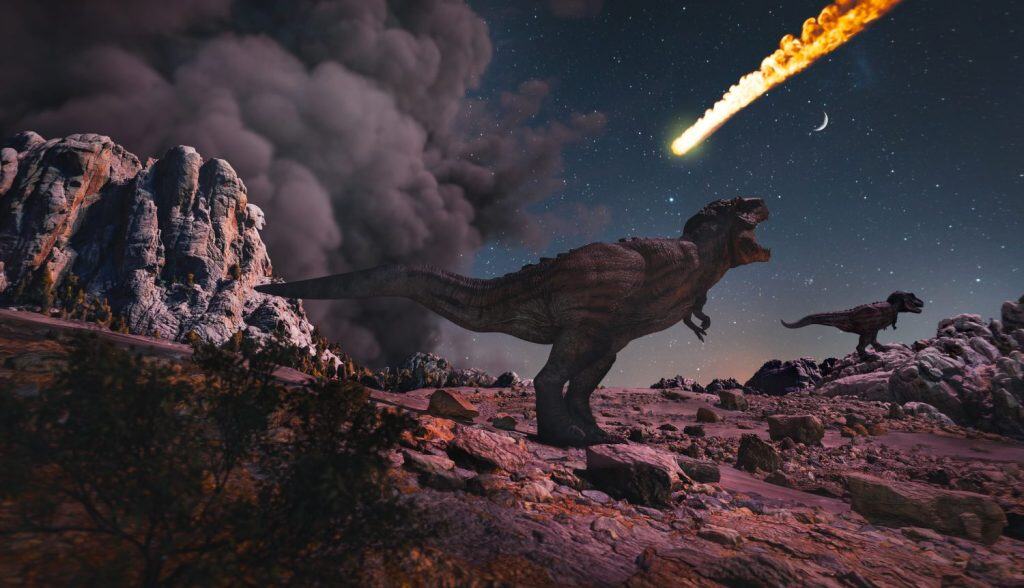
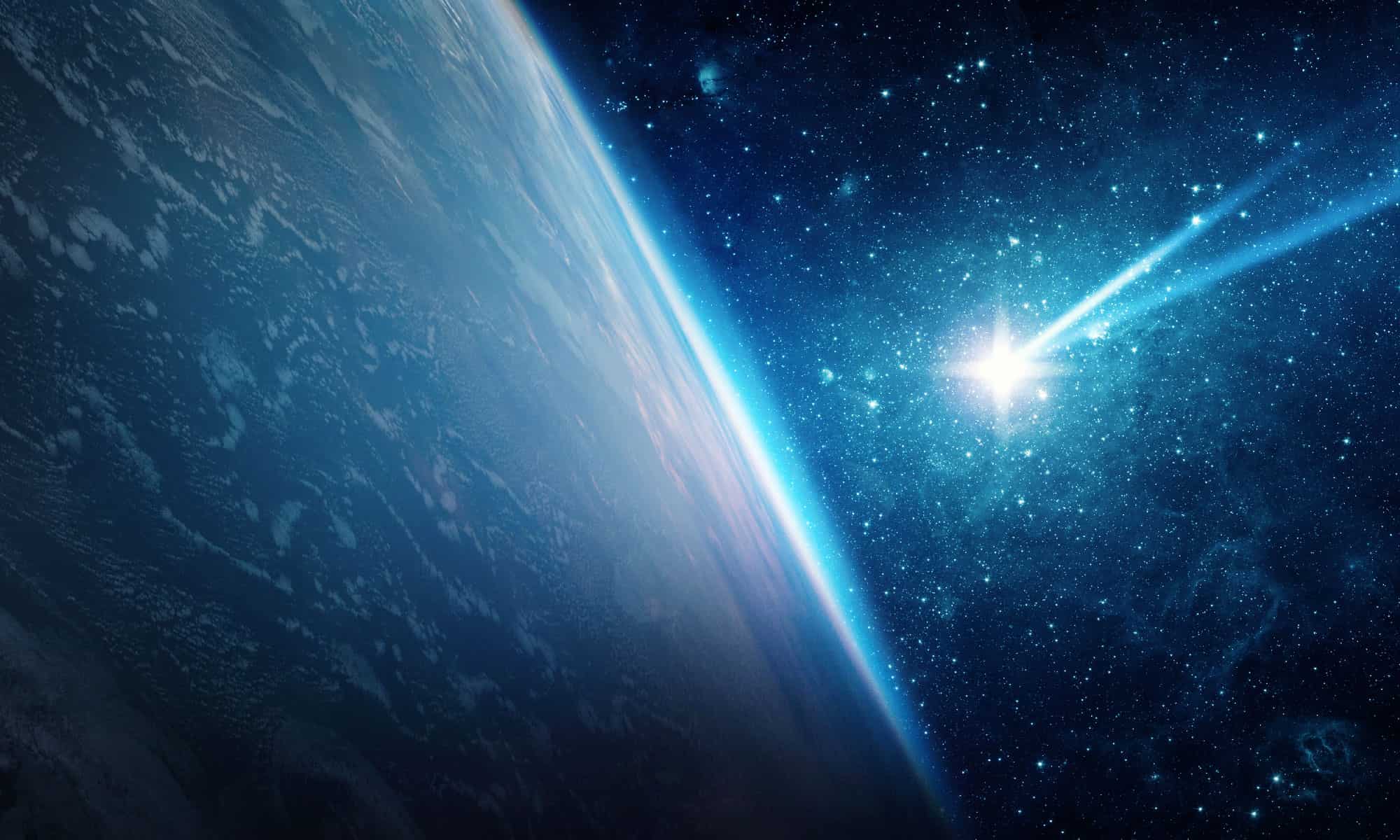
A significant asteroid was responsible for one of the planet’s mass extinction events.
©Mikael Damkier/Shutterstock.com
However, this explanation oversimplifies things. There are other factors to consider, such as scientists not yet cataloging every species on Earth. It’s estimated that roughly 86% of the world’s species are still unknown, including fungi and bacteria. There are still places that remain unexplored, such as the deep sea and locations beneath the Earth’s surface. With an estimated 1-2 million deep-sea creatures still undiscovered, this alone leaves plenty of room for skewed extinction numbers. In total, it’s believed that 7.5%–13.0% of all known species have gone extinct in the last five centuries. That is far from the necessary total of 75% needed to be considered a mass extinction event on Earth.
However, That Doesn’t Mean A Mass Extinction Isn’t Looming
In truth, there’s no definitive evidence to say that we are currently in a mass extinction event. According to that same study by John J. Wiens and Kristen E. Saban, all currently threatened species would need to go extinct within the next century for this to happen. Following that, the extinction rate would need to remain at the same level for hundreds of years. Based on the International Union for Conservation of Nature’s data on currently threatened species, there is no evidence that such species will all go extinct during this time, especially with ongoing conservation efforts.
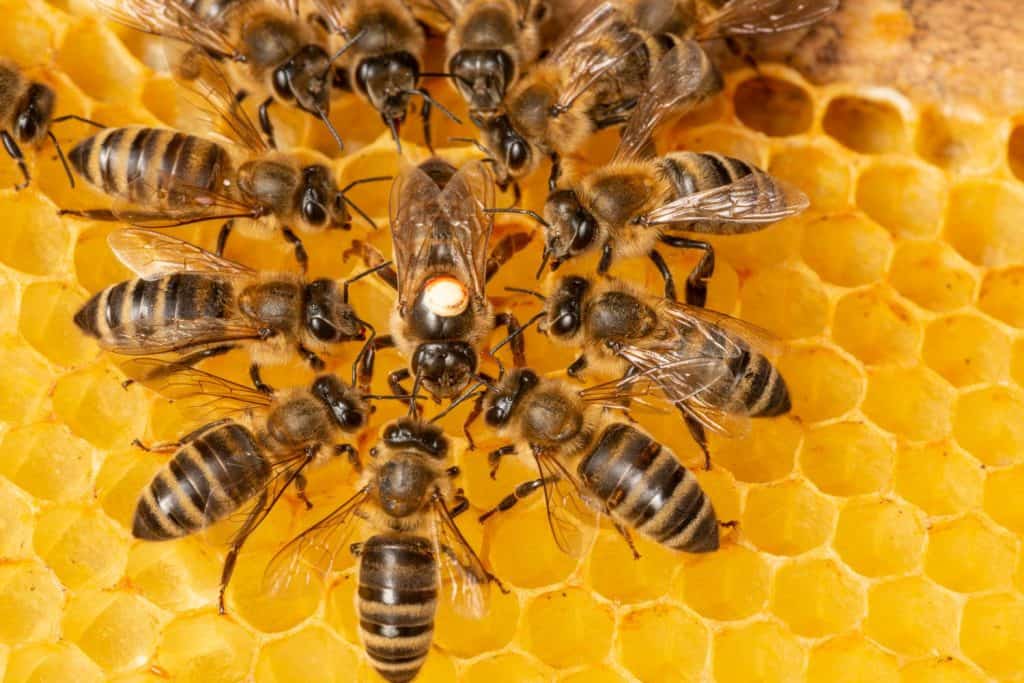
The endangerment of bees is a warning sign for the planet’s future.
©Kuttelvaserova Stuchelova/Shutterstock.com
With that being said, it doesn’t mean a sixth mass extinction event is impossible, or that we haven’t already triggered our future fate. The events that have led experts to question whether we’re already in a mass extinction have begun, regardless of whether they match previous mass extinction criteria. Issues such as habitat loss, climate change, and the endangerment of species such as bees, which are essential to the ecosystem, are setting Earth on a path. As the planet warms and more species suffer, the potential for a sixth mass extinction is worth paying attention to. While we may not be hurtling toward such a dire event within the next century, it doesn’t mean our actions now won’t have consequences later.