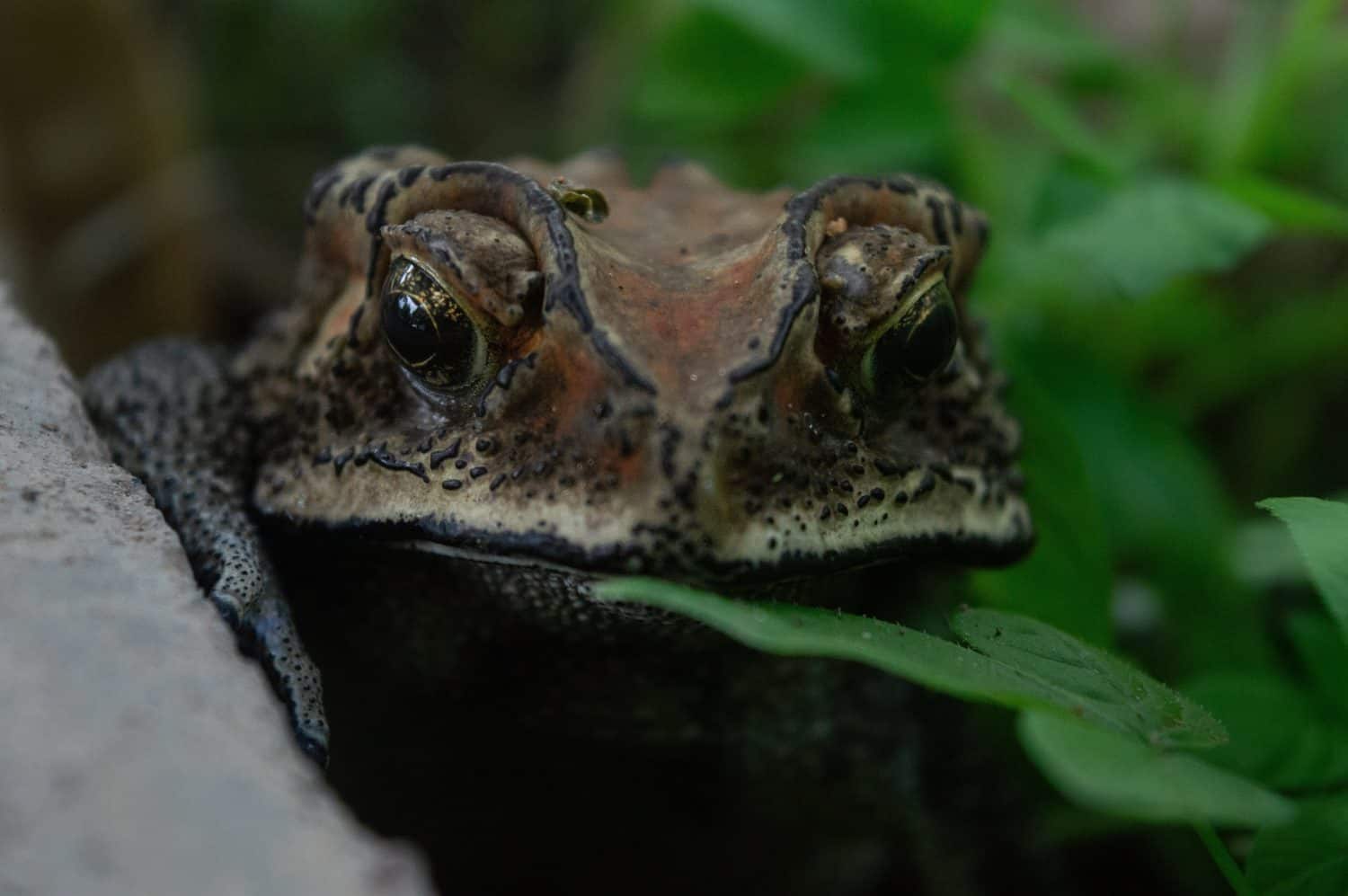

Quick Take
- A tiny toad discovered at the top of India's Blue Mountain faces a threat few other species do. See the climate threat →
- DNA analysis revealed that this toad isn’t merely a new species, but it represents a distinct evolutionary lineage that had been hiding in plain sight Explore the DNA findings →
- Scientists may have found the toad, but they're still missing answers to the most basic questions about its life. See what remains unknown →
- There's a concept called 'dark extinction,' which is the reason researchers are racing to find species before they even know they're gone. Understand dark extinction →
Researchers found a newly described species of toad among the leaf litter and patches of bamboo high in the mountains of Phawngpui National Park in Mizoram, northeastern India. The discovery, detailed in the journal Taprobanica, highlights the region’s incredible biodiversity. Called the Phawngpui Toad (Duttaphrynus phawngpui), the tiny amphibian suggests there is much left to explore in Mizoram’s high-elevation forest habitats.

Phawngpui National Park in Mizoram, India, is home to a diverse group of plant and animal species.
©Garima Singh, CC BY-SA 4.0, via Wikimedia Commons – Original / License
Researchers Found the Toad During a Mountain Expedition
A collaborative team of researchers from Mizoram University, Assam Don Bosco University, National Research & Innovation Agency (BRIN; Government of Indonesia), Indonesia, and Help Earth, Assam, discovered the previously undescribed species during a zoological research expedition to Phawngpui National Park in 2025.
The toads were living at 7,034 feet in a montane forest in Phawngpui, also known as Blue Mountain. Phawngpui is rich in biodiversity and is the highest mountain peak in Mizoram, including hosting over 300 plant species. The site is considered a Key Biodiversity Area (KBA) for its global ecological importance.
DNA Confirmed the Toad Was a New Species
When researchers identify a species that hasn’t been described yet, they do more than compare appearances to already known species. To identify the Phawngpui toad, scientists used body size and physical appearance, combined with mitochondrial DNA.
The genetic analysis revealed the new species is within the true toad family Bufonidae and genus Duttaphrynus. However, D. phawngpui represents a distinct evolutionary lineage within the D. stuarti species group. It is separated from its closest relatives by a genetic divergence of 3.8% to 5.5%.
What Makes the Phawngpui Toad Different?
The toad is about 1.8 to 2.2 inches long and yellowish brown to earthy brown. It’s covered in glandular warts and dark brown to black blotches with a narrow cream to pale yellow-colored stripe running down its back. Its closest relatives include D. stuarti, D. chandai, and D. dhara. The Phawngpui toad is unique in that it has a highly indistinct eardrum and lacks most cranial ridges.
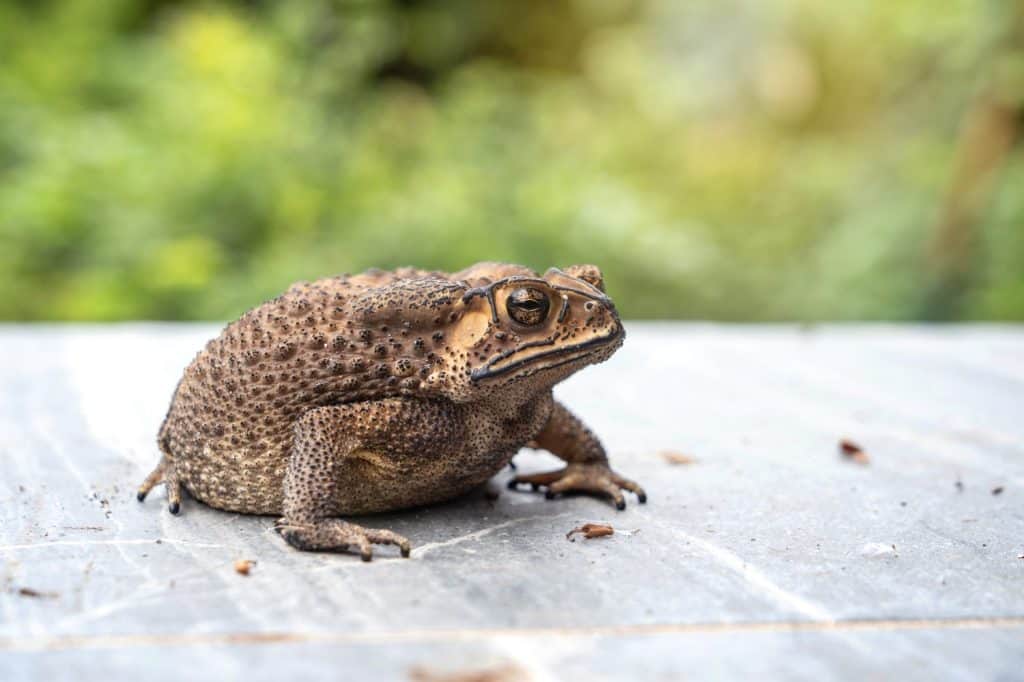
D. phawngpui is similar in appearance to D. melanostictus as seen here, but has some distinct characteristics.
©Ton Ponchai/Shutterstock.com
A Toad Living on a Mountain “Sky Island”
So far, D. phawngpui is known only from one location, at elevations above 6,500 feet on Phawngpui. This region is known as a subtropical montane pluvial. It is known for constant foggy weather, drastic temperature drops, and heavy rainfall.
Where the Phawngpui toad lives helps to explain why it evolved independently from its closest relatives. The high-elevation habitat has a distinctly different climate, temperature, and vegetation than lower elevations. The little toad has adapted to colder temperatures and mountain vegetation, unlike its close relatives, which live further down the mountain in warmer and less weather-extreme areas.
The researchers explain that the distinct mountain habitat creates a barrier between species living below, resulting in a “sky island“. This is where species experience restricted gene flow and evolve unique characteristics, unlike those found in unisolated species.
Scientists Still Have Much to Learn About the New Toad
Researchers are missing the information they need to determine the toad’s conservation status, such as population size, distribution, and ecological requirements. The researchers expressed the need to conduct more field studies to see if the Phawngpui toad only lives in this isolated area or simply hasn’t been found elsewhere yet.
Researchers found the animals on a field expedition during the day, but they hypothesize that the toads are probably nocturnal, like other closely related toads. They didn’t observe the toads eating, but believe they probably eat a diet of small invertebrates.
A Call for Conservation in Mizoram
Researchers hope their discovery will emphasize the importance of conservation at Phawngpui. Mizoram University Zoology Department head H.T. Lalremsanga told the Times of India, “The discovery is eloquent of the rich biodiversity of the state of Mizoram.”
The Phawngpui toads are particularly vulnerable to climate change because of the unique environment in which they live. As temperatures around the globe rise, higher-elevation areas grow hotter, driving suitable habitats higher up the mountain.
In turn, this drives species to move upward, following suitable temperatures and climate. But when species already live at the top of the mountain, there is nowhere left to go as temperatures continue to increase and habitats change.
The Threat of “Dark Extinction”
Scientists are racing to explore areas such as Mizoram, where new species likely lay under our feet, undiscovered, before climate change risks their extinction.
A troubling term known as “dark extinction” relates to previously undescribed species found from specimens in museums that were collected decades or even hundreds of years ago. By the time they are identified, a growing number have already become extinct.
Scientists hope to continue to explore Mizoram’s rich habitats to gain a better understanding of the species living within and the conservation measures needed to sustain them.