
Quick Take
- Beaked whales are technically toothed whales, but their teeth have nothing to do with eating. See how teeth are used →
- After diving deeper than almost any other mammal, beaked whales need almost no time to recover, which is something that defies expectations. Explore their diving feats →
- Beaked whales are missing a feature shared by virtually every other whale and dolphin, and this absence turns out to be a competitive advantage. Discover the missing notch →
- Some beaked whale species may be on the brink of extinction, though scientists have no way to know for certain. Check their conservation status →
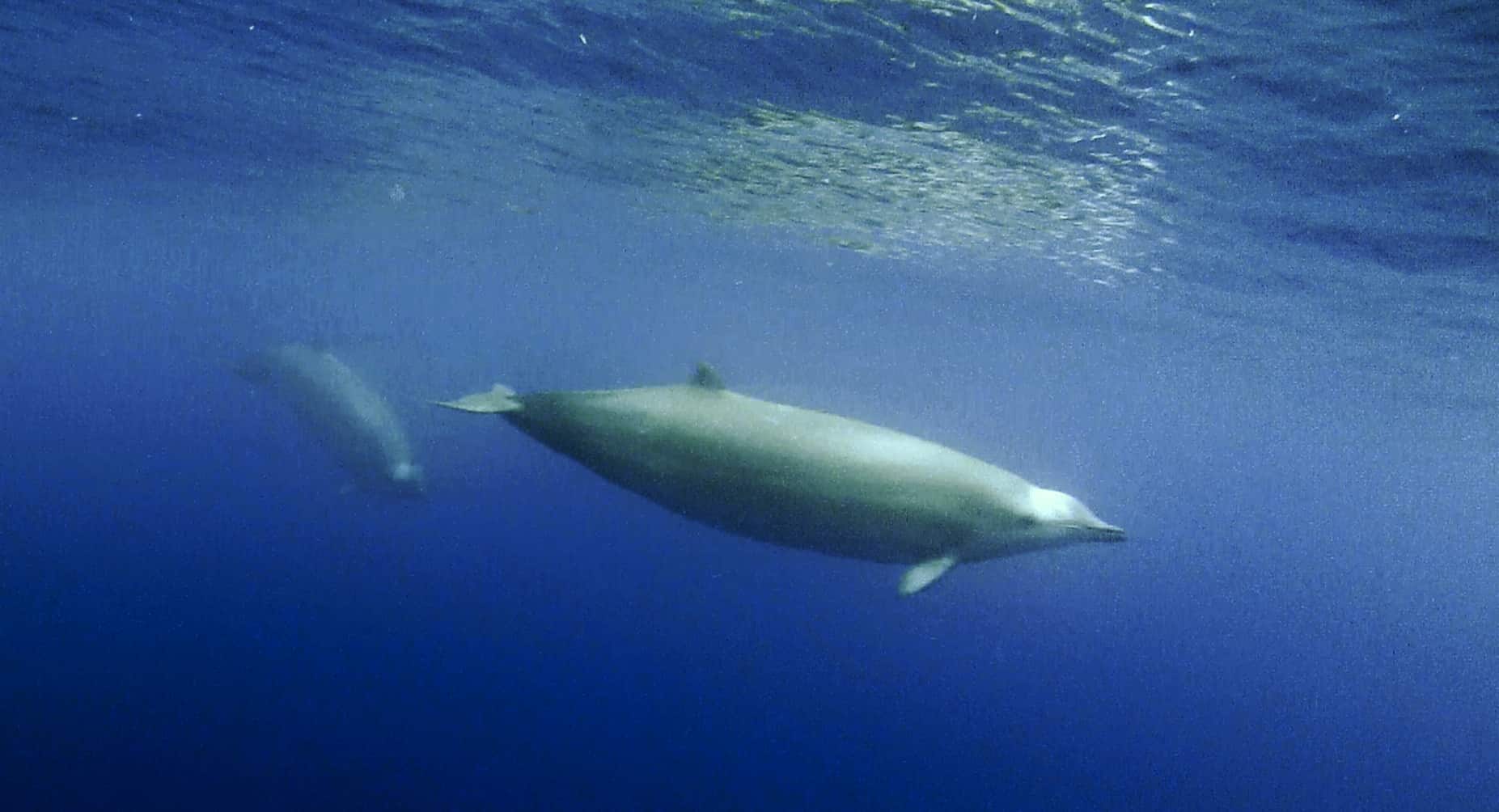
With their long, streamlined bodies, beaked whales look similar to dolphins. However, the marine mammals are their own species.
Despite ranging between 13 and 43 feet and weighing up to 15 tons, beaked whales are rarely seen. Consequently, little is known about the species. What is known, however, is what makes beaked whales so unique.
Beaked Whales Only Have Two Teeth
Beaked whales are toothed whales. Yet adult males tend to be the only ones with teeth, of which they have only two. Exceptions to this rule are the Berardius and Tasmacetus beaked whale species, which have significantly more teeth.
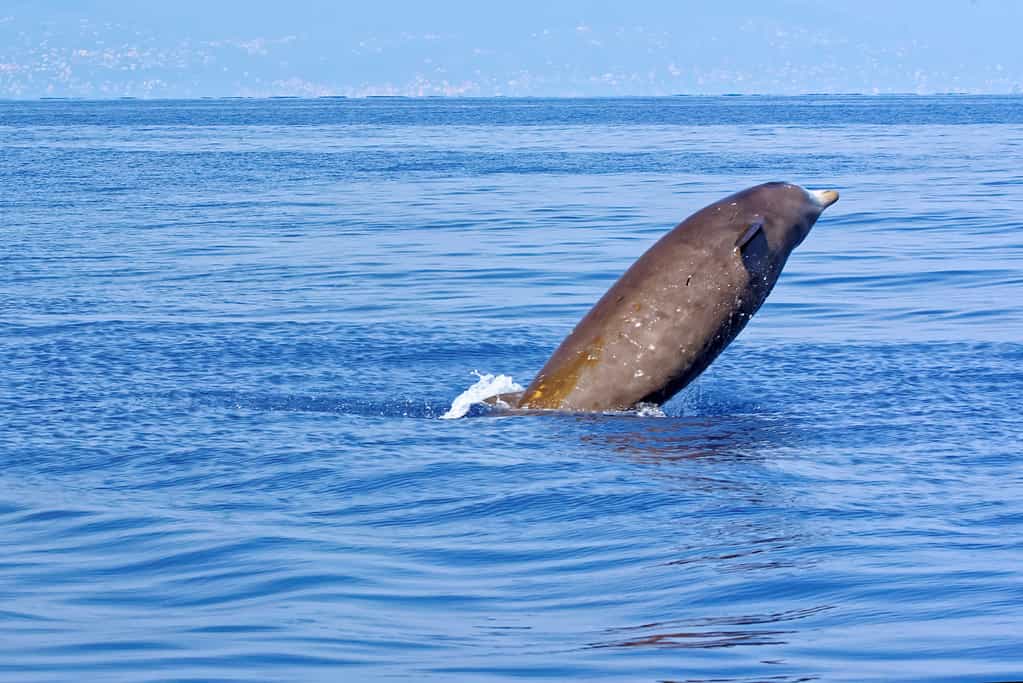
The majority of beaked whales only have two teeth.
©iStock.com/HeitiPaves
Researchers believe that beaked whales do not use their teeth to consume prey. Instead, they use their teeth to combat other males during mating season. This has been noted by the number of scars on beaked whale carcasses that have washed ashore.
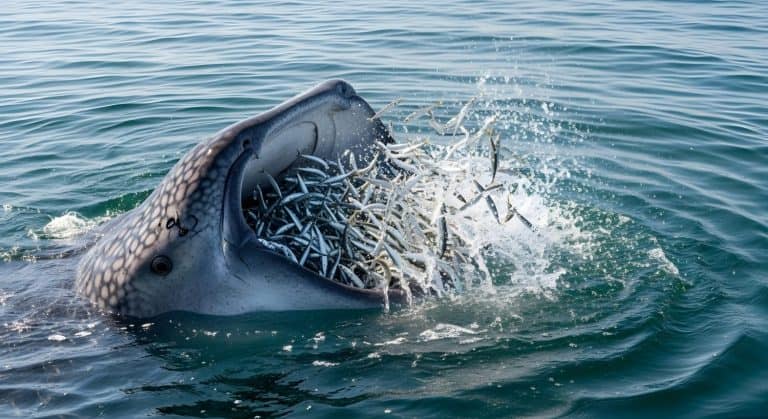
If beaked whales do not use their teeth to feed on prey, how do they eat? Beaked whales have V-shaped throat grooves that expand when prey is targeted. The expansion allows the beaked whales to suck their prey into their mouths and swallow it whole.
Deep Diving is a Beaked Whale’s Specialty
The deepest parts of the ocean are vastly unexplored, despite making up 75% of the space where creatures live. It is in these regions that beaked whales spend most of their lives, with deep diving a specialty of the species.
Beaked whales consume prey that is only found in the mesopelagic and bathypelagic zones. These zones are commonly known as the “twilight” and “midnight” depths. The pressure in these zones is 20 to over 400 times the pressure at the ocean surface.
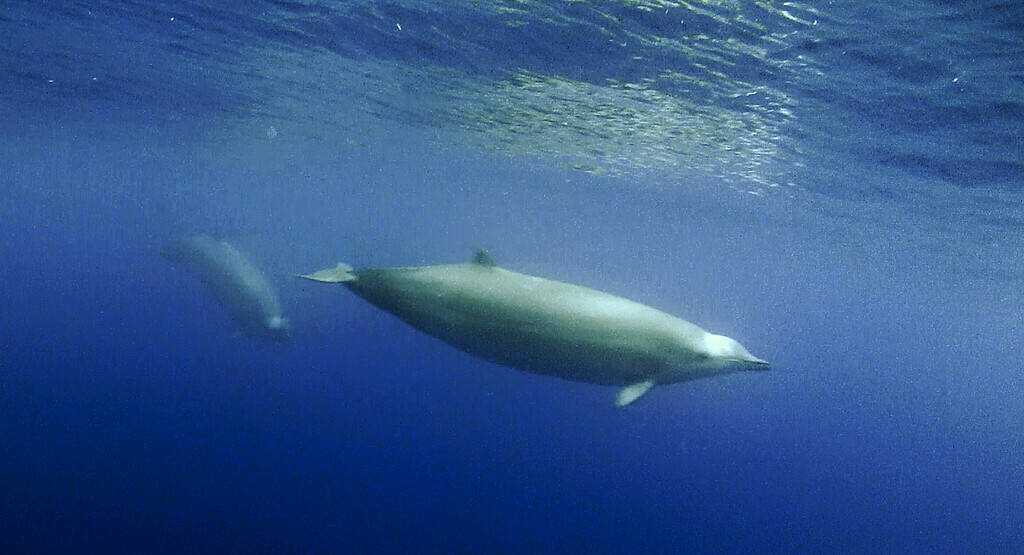
Beaked whales can spend over an hour in the deepest parts of the ocean foraging.
In spite of the darkness and immense ocean pressure, beaked whales, on average, spend 60 minutes diving. Longer dives have been recorded lasting up to 222 minutes. Remarkably, just two minutes at the surface is needed to recover after a dive, before returning to the ocean’s depths.
Why Are Beaked Whales Missing the Central Notch?
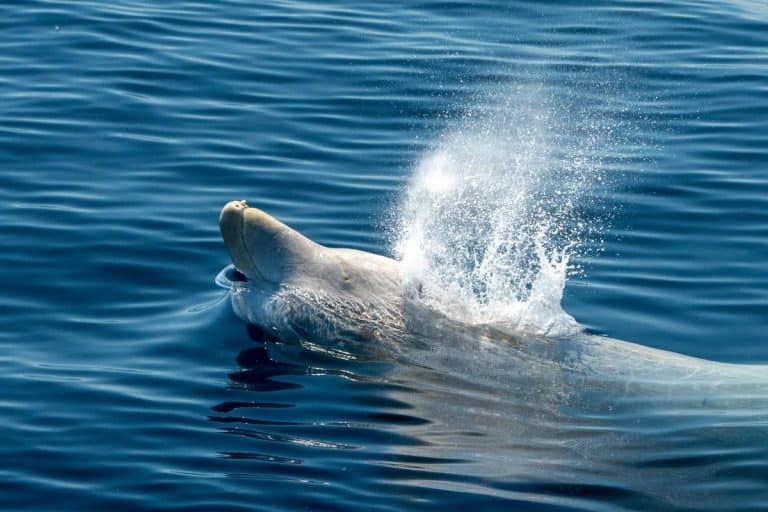
One characteristic that identifies most whales and dolphins is their central notch. Unlike the majority of such marine species, beaked whales lack a central notch. Instead, they have broad, smooth backs that allow researchers to easily identify them.
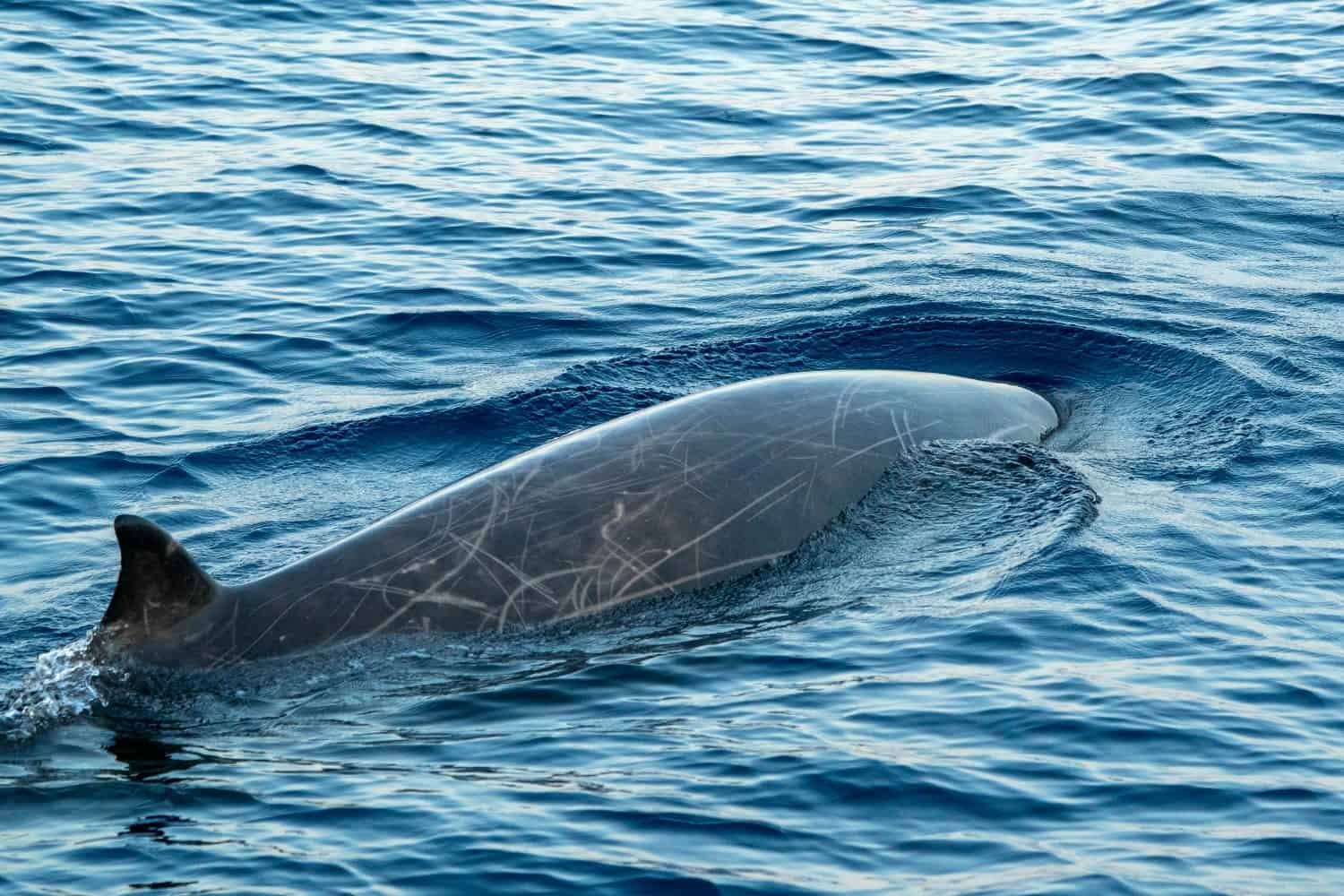
Beaked whales lack a central notch that aids in aerodynamics.
©Andrea Izzotti/Shutterstock.com
It is believed that beaked whales lack a central notch (with the exception of the Shepherd’s beaked whale) to improve their aerodynamics. Given the amount of time they spend in the deepest parts of the ocean foraging for fish and squid, beaked whales benefit from having as little drag as possible. This helps them conserve energy as they move quickly through the cold, pressure-filled water.
Beaked Whales Are Elusive
There are currently 24 known different beaked whale species. Some, such as Cuvier’s beaked whale and Baird’s beaked whale, are better known than others, given that they were targeted for their blubber in early whaling expeditions. It is due to their elusive nature, however, that beaked whales are among the least-studied marine mammals.
The reason that so little is known about beaked whales has to do with where they spend the majority of their time. Because beaked whales are deep-sea diving mammals that can hold their breath for extended periods, they come to the surface infrequently. When they do come up for air, it tends to be near the deepest regions of the ocean, rather than near the shoreline.
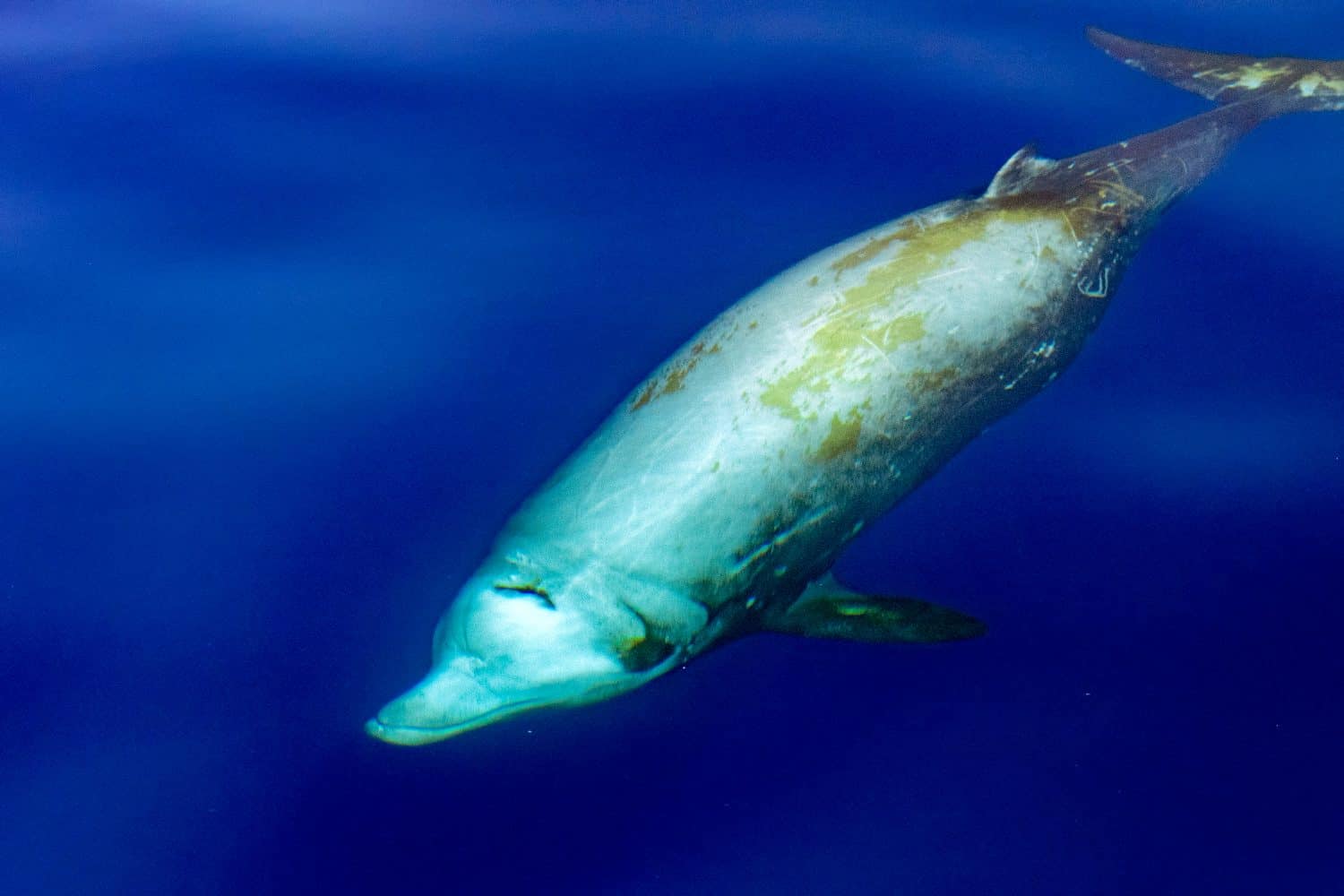
Beaked whales are elusive given how much time they spend in the deep ocean.
©Andrea Izzotti/Shutterstock.com
There are a handful of beaked whales that are classified as endangered or near-threatened by the IUCN. Others may also fall into these categories, but because there is simply not enough information about them to determine their population size, the species are instead considered “data deficient.”
If more is discovered about beaked whales, effective conservation efforts could be implemented to better protect them, particularly species on the brink of extinction. Unfortunately, due to the difficulty of tracking most beaked whales, saving them could prove difficult.