
Imagine you’re driving through the country just outside a Midwestern town. Up ahead, an animal trots across the road from the edge of the woods near a cornfield. At first, you think it’s just a house cat with a short tail—but it’s too big for that. Maybe a dog? But then you notice the ears: tufted, sharp, unlike any breed you’ve seen before. That’s when it hits you. A bobcat! Or was it a lynx? They’re the same thing… right?
Actually, no. They’re two distinct predators, each with different adaptations for survival. And if you know what to look for in those fleeting moments, you may realize you’ve just seen a rare and threatened species—an encounter worth reporting to wildlife officials and remembering for years to come.
Similar Cats
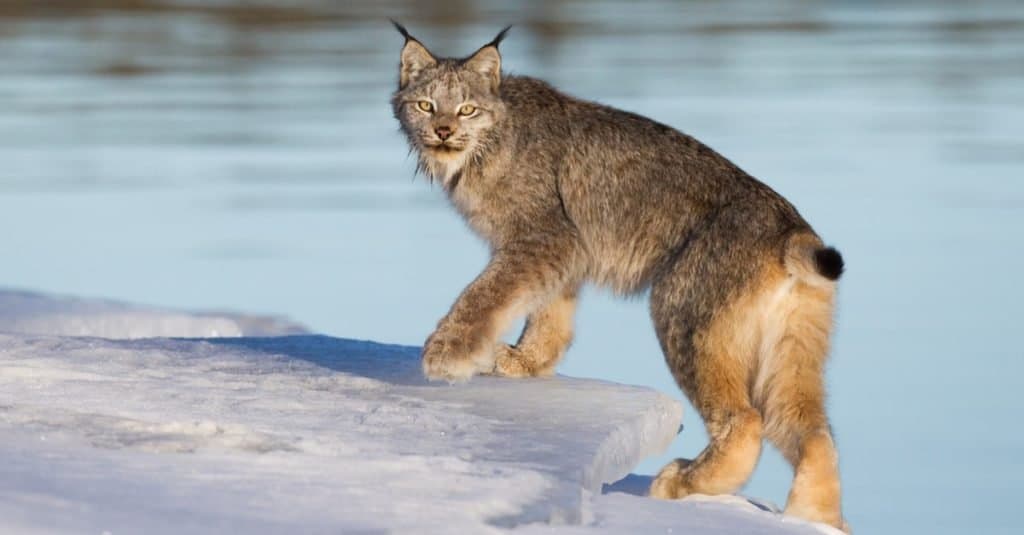
Canada Lynx on the edge of the ice along the Alaska Highway at Johnson’s Crossing, Yukon, Canada.
©Jukka Jantunen/Shutterstock.com
The bobcat (Lynx rufus) and the Canada lynx (Lynx canadensis) share more than just a family tree. Both belong to the Lynx genus, and at first glance, they look strikingly alike—medium-sized wildcats with short tails, tufted ears, and muscular builds built for ambush hunting. They live solitary lives, crossing paths with others of their species mainly in the breeding season, and both rely on stealth and sudden bursts of speed to capture prey. Mothers raise their kittens alone, teaching them to stalk and survive until they can fend for themselves. In many ways, they follow the same basic pattern of life, just in different environments. But there are significant differences between them as well, and these are important to know, especially for conservation purposes.
Habitat and Range
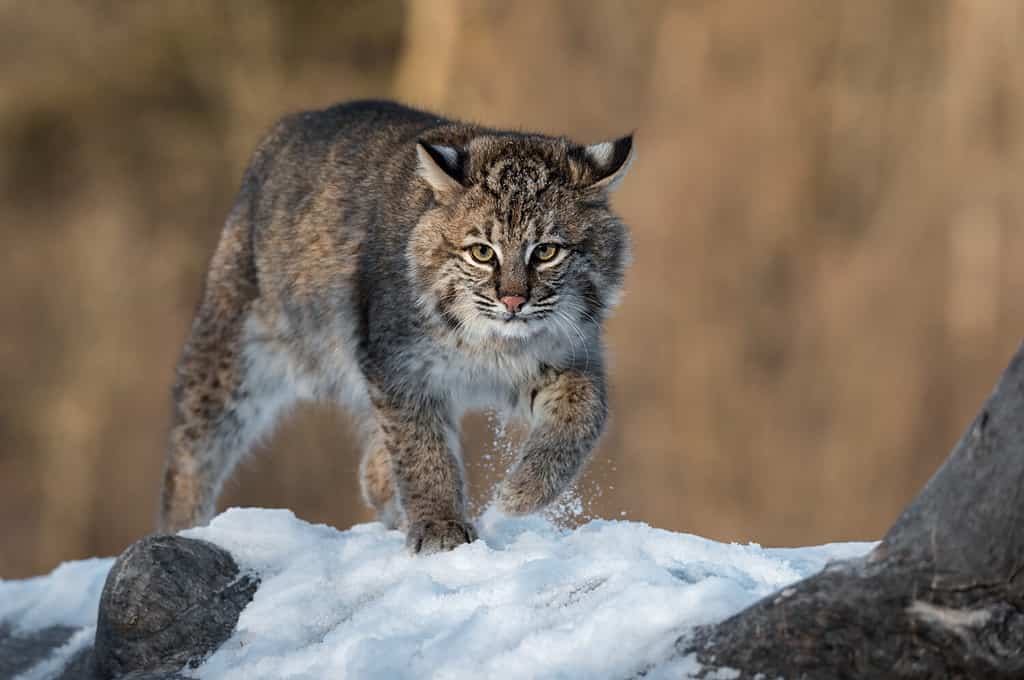
Bobcats live all the way from snowy Canada to sunny Mexico.
©Holly Kuchera/Shutterstock.com
Bobcats are the generalists, found everywhere from Canada’s forests to Florida’s swamps to Mexico’s deserts. They thrive in swamps, grasslands, and even suburban neighborhoods, adapting to nearly any setting where prey and cover are available. Lynx, by contrast, are specialists. Their strong legs and wide, furred paws make them perfectly suited to the snowy boreal forests of Canada, Alaska, and a few northern U.S. regions. They are creatures of deep snow and dense evergreens, far more limited in range than their adaptable cousins.
Coats and Tails
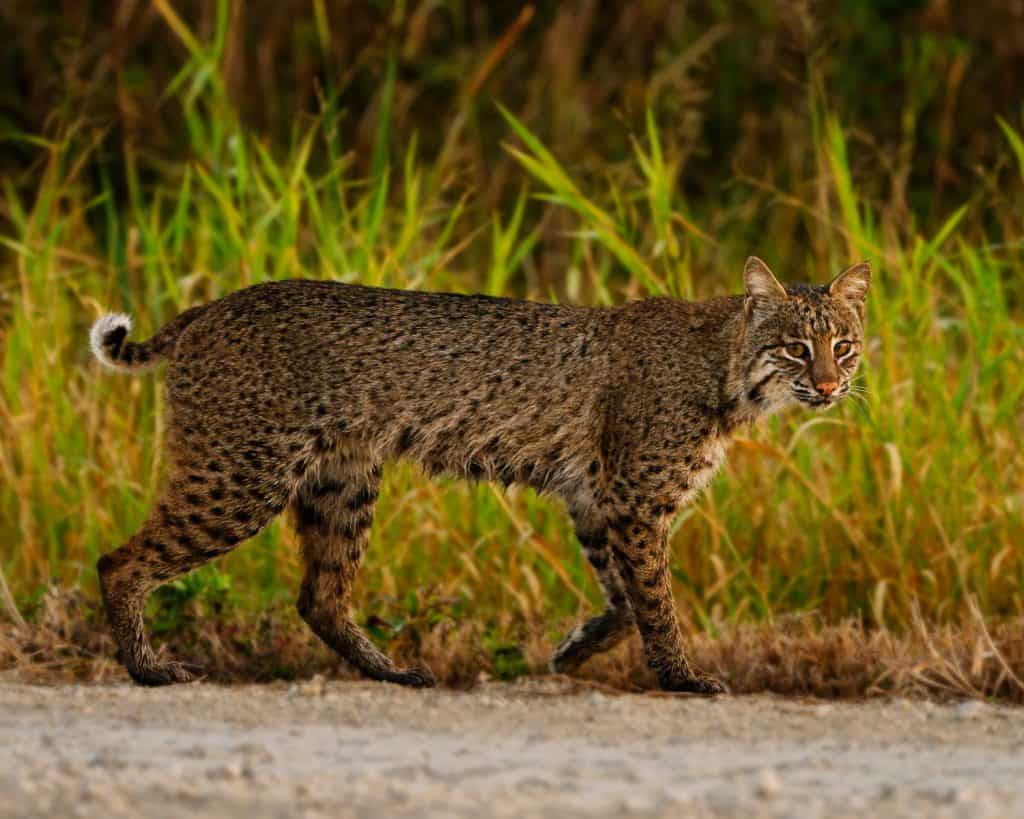
This Florida bobcat has a tail that is black on top and white underneath—a clear detail that distinguishes it from a lynx.
©WIlliam Falla/Shutterstock.com
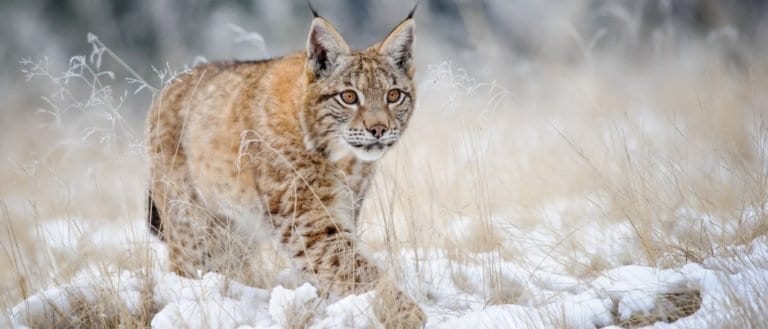
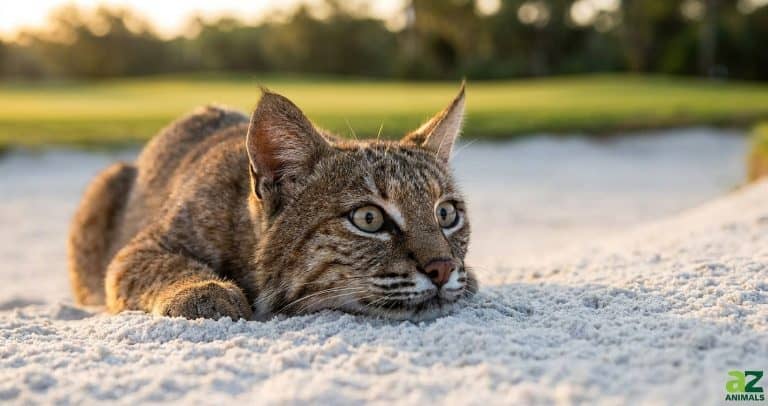
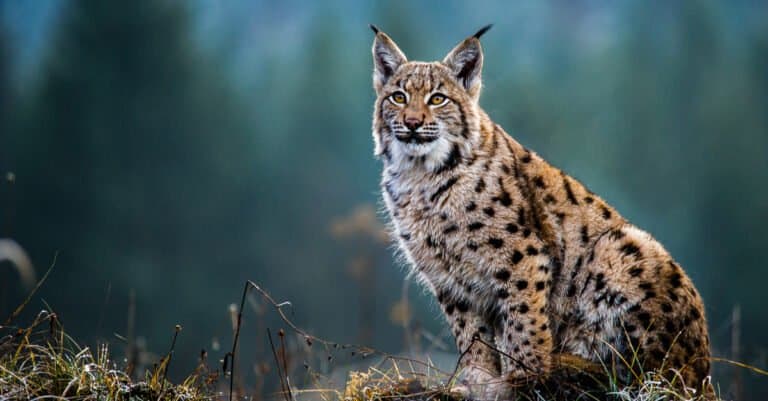
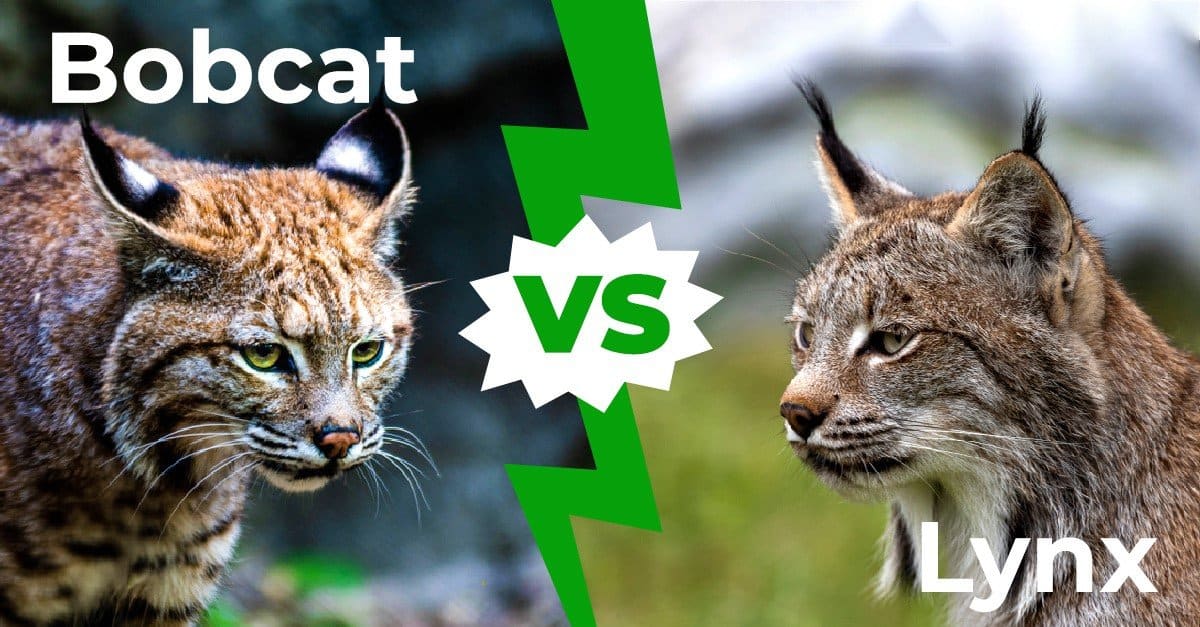
Coat patterns also help tell them apart. The bobcat’s reddish-tawny fur is streaked and spotted, with bold markings on the legs and underbelly. Their facial stripes are sharp, and their ear tufts are short and subtle, almost understated compared to the lynx. The lynx’s coat is thicker and softer in appearance, silvery-gray or yellowish-brown with faint or minimal spotting. Around the face, a full ruff of fur gives the lynx a round, bearded look, and its ear tufts stand out longer and more dramatically than a bobcat’s.
The tails are one of the clearest clues to identifying these species. A bobcat’s short tail is banded with black on top and white underneath. The lynx’s tail, by contrast, ends in a tip that is completely black all the way around. For trackers in the field, that detail tells them immediately what they’re looking at, even if it’s running away.
Size and Strength
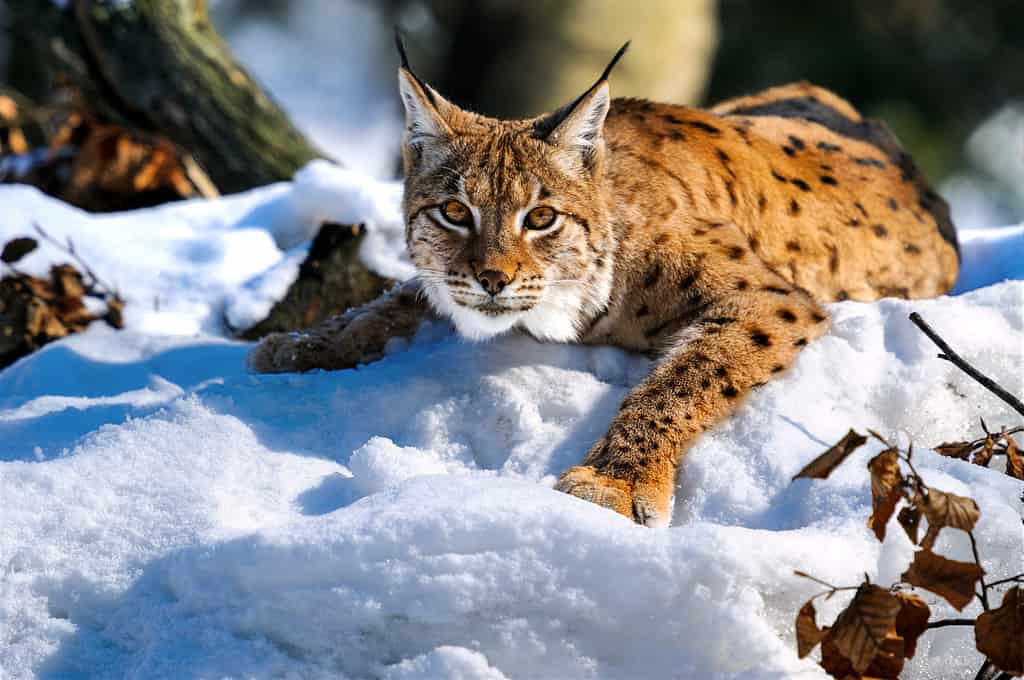
The lynx can move over snow more easily because of its broad, snowshoe-like paws.
©iStock.com/Kyslynskyy
Bobcats are compact and muscular, typically weighing between 10 and 40 pounds and standing up to two feet tall at the shoulder. They move with a low, springy posture. Their short but powerful limbs give them explosive strength for pouncing and leaping, and that sudden burst of speed is usually enough to finish a hunt in seconds.
Canada lynx, though similar in weight, look different at a glance, appearing taller and more elongated, with long legs and noticeably oversized paws. Those paws, thickly furred and round, spread their weight over the snow like built-in snowshoes, allowing the lynx to travel with ease where a bobcat would sink, stumble, and struggle to catch up.
Diet and Hunting
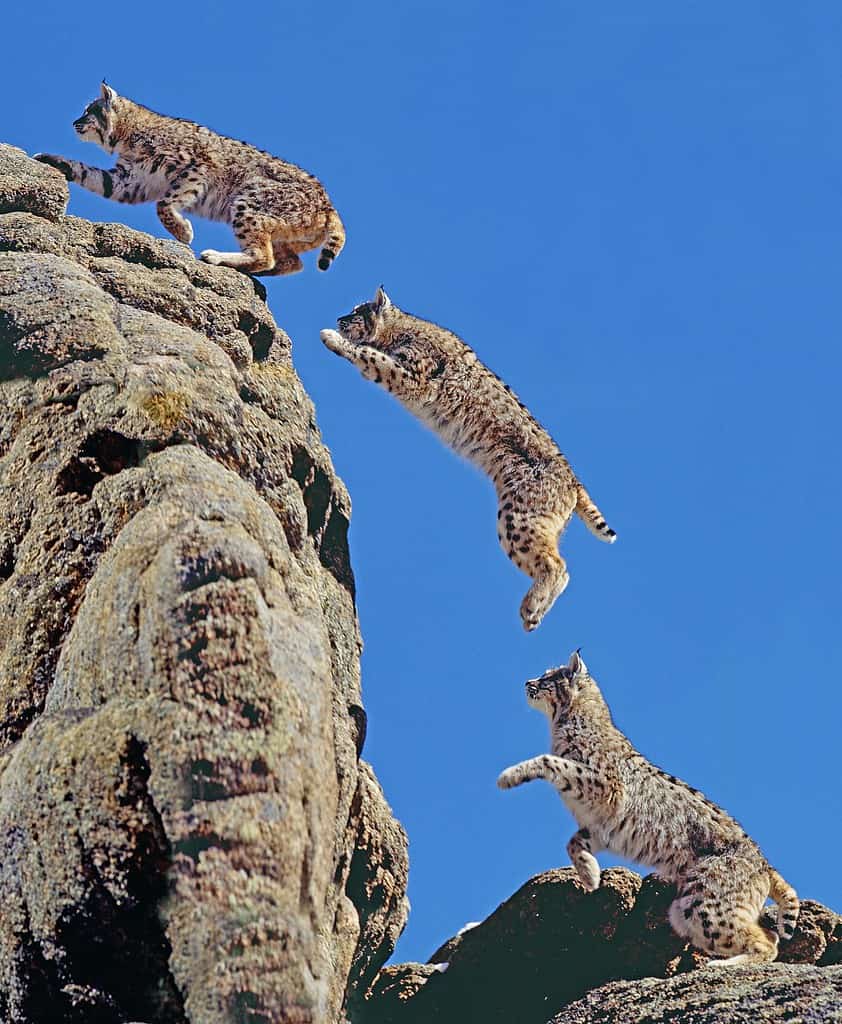
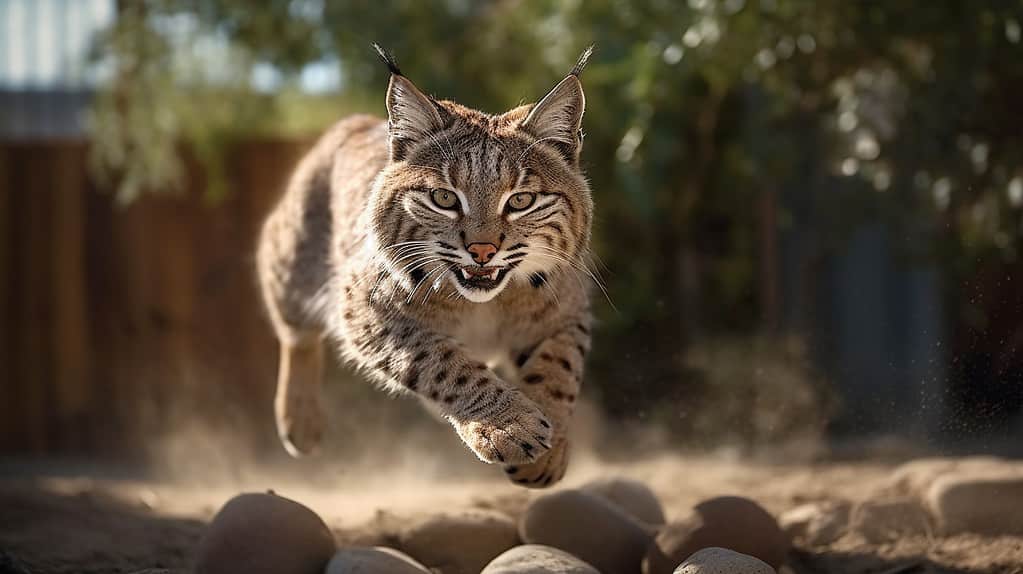
Bobcats like this one are agile, powerful jumpers in pursuit of prey.
©slowmotiongli/Shutterstock.com
Bobcats are opportunistic hunters with a varied diet. Rabbits and rodents are their primary prey, but they will also take birds, reptiles, and the occasional deer fawn if the opportunity presents itself. They prefer stealth and patience. Stalking until the moment is right, then striking with sudden speed.
Canada lynx, by contrast, are specialists. Their survival is closely tied to one species: the snowshoe hare. When hares are abundant, lynx populations flourish, and females produce larger litters, which increases the odds that more kittens survive. When hare numbers crash—as they do in natural boom-and-bust cycles—lynx may go hungry, wander further in search of food, or even skip breeding altogether. Though they will eat other small animals like grouse, their dependence on hares makes them more vulnerable than bobcats.
Social Behavior and Reproduction
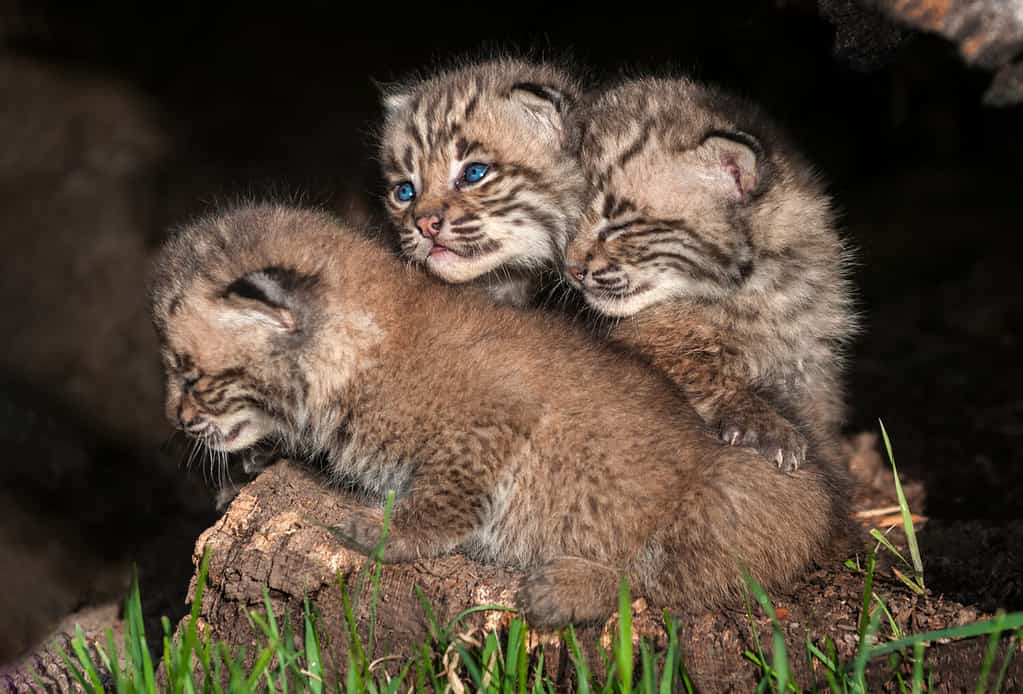
Bobcats usually have 2-4 kittens, born blind and deaf.
©Holly Kuchera/Shutterstock.com
Bobcats and lynx are both solitary by nature, crossing paths with their kind mainly during the breeding season or when mothers raise their young. They mark their territories with scent, scratches, and scat, and while direct fights are uncommon, competition can flare in areas where prey is scarce. Bobcat territories often overlap, especially when food is plentiful, but lynx tend to keep stricter boundaries, with males in particular defending their range more aggressively.
Breeding usually happens in late winter for both species. Bobcats typically have litters of two to four kittens, while lynx average the same but can produce up to eight when snowshoe hares are abundant. Their survival swings with hare populations: when hares thrive, lynx numbers surge; when hares crash, lynx breeding drops off sharply. This makes them more vulnerable to extinction and has allowed bobcats to take over their former range south of Canada.
Conservation and Human Interactions
The bobcat is currently listed as a species of Least Concern. Its adaptability has allowed it to withstand pressures like habitat loss and road collisions better than many other predators. In some regions, sightings have even increased, as bobcats move closer to the edges of cities and towns. The Canada lynx is also considered Least Concern globally, but in the lower 48 states, it is officially recognized as threatened. Its reliance on cold climates and snowshoe hares makes it especially vulnerable to climate change and habitat disruption.
Bobcats sometimes turn up near farms and neighborhoods, where they may prey on chickens, rabbits, cats, or small dog breeds. They tend to avoid larger dogs, so if you want to keep them away from your property, take a trip to an animal rescue and get yourself a farm dog. Direct encounters with people are uncommon. Lynx are even more elusive; most people who see them do so only by chance in remote snowy forests, or by following their distinctive, round paw prints in the snow. The few times people have been attacked by either species are situations where the animal is feeling cornered and threatened, or worse, when it is rabid. But these situations are exceedingly rare and should not cause panic if you see one of them; that is just keeping a safe distance and going about its business.
Competition and Predator Status
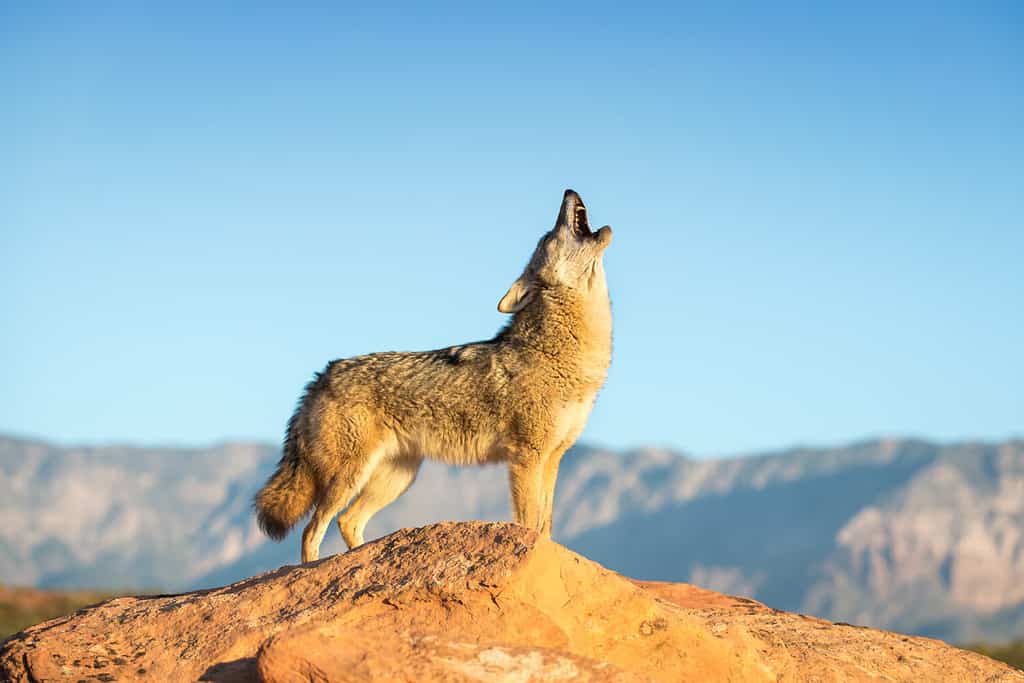
Coyotes are among the biggest competitors to both the bobcat and the lynx.
©Warren Metcalf/Shutterstock.com
Bobcats aren’t the kings of the food chain, but they hold their own. They compete most with coyotes, which go after the same rabbits and rodents and, running in packs, sometimes push bobcats off kills. Mountain lions can also be a threat where ranges overlap, though bobcats usually avoid them by sticking to smaller prey and hunting closer to human edges. A newer threat to bobcats in Florida is invasive Burmese pythons that have caused severe declines—up to 90% for some mammal species in parts of the Everglades—drastically reducing available prey for bobcats in those areas.
Lynx face different rivals up north. Wolverines, fishers, and coyotes can all cause trouble, especially when snowshoe hares are scarce. Wolves are the biggest danger, since they dominate much of the same territory. Lynx aren’t true apex predators, but in deep snow, they carve out a niche where few others can match them.
Why the Distinction Matters
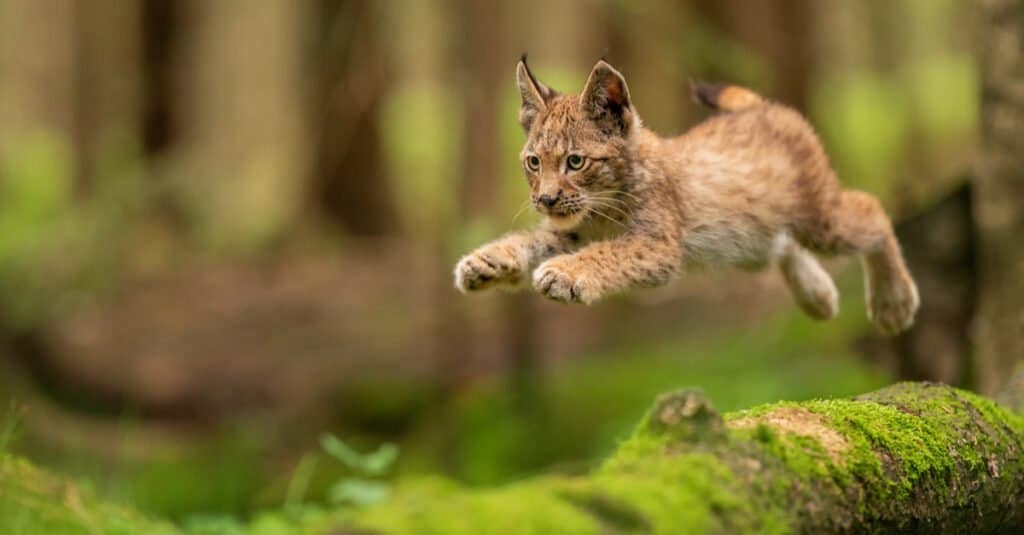
The lynx, like this pouncing kitten, is a threatened species in the lower 48 United States.
©Stanislav Duben/Shutterstock.com
Telling a bobcat from a lynx is more than a matter of trivia. The Canada lynx is considered threatened in the lower 48 states, while the bobcat remains widespread and stable. For wildlife managers and researchers, knowing which species have been spotted provides critical information about population health, habitat needs, and the success of conservation efforts.
Hikers, hunters, or homeowners near wild areas should report sightings of either species to local and state wildlife agencies. Lynx sightings are so rare in most U.S. states that it could help scientists map the edges of the species’ shrinking range. Bobcat sightings are also important information for local farmers and pet owners if a predator like this is prowling around the edges of their property. Being able to describe the species you saw as accurately as possible is crucial information, especially if you were not able to get a good picture of it.
Seeing either species is a thrilling and maybe once-in-a-lifetime experience for many people. In a world that sometimes seems predictable, dull, and tame, there’s a primal thrill in realizing that powerful wild things still stalk the dark woods on the edges of civilization.