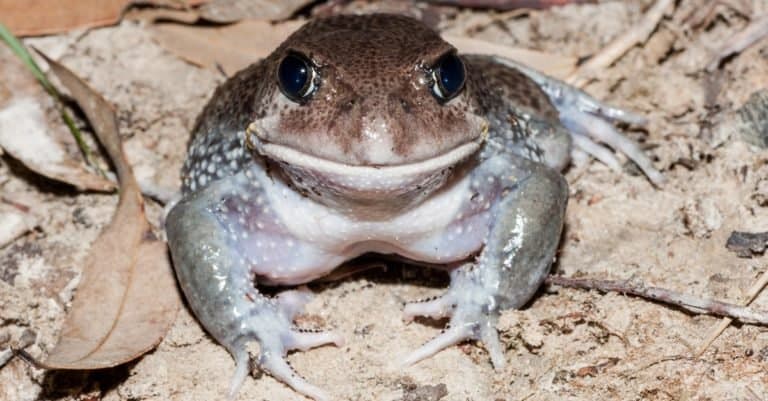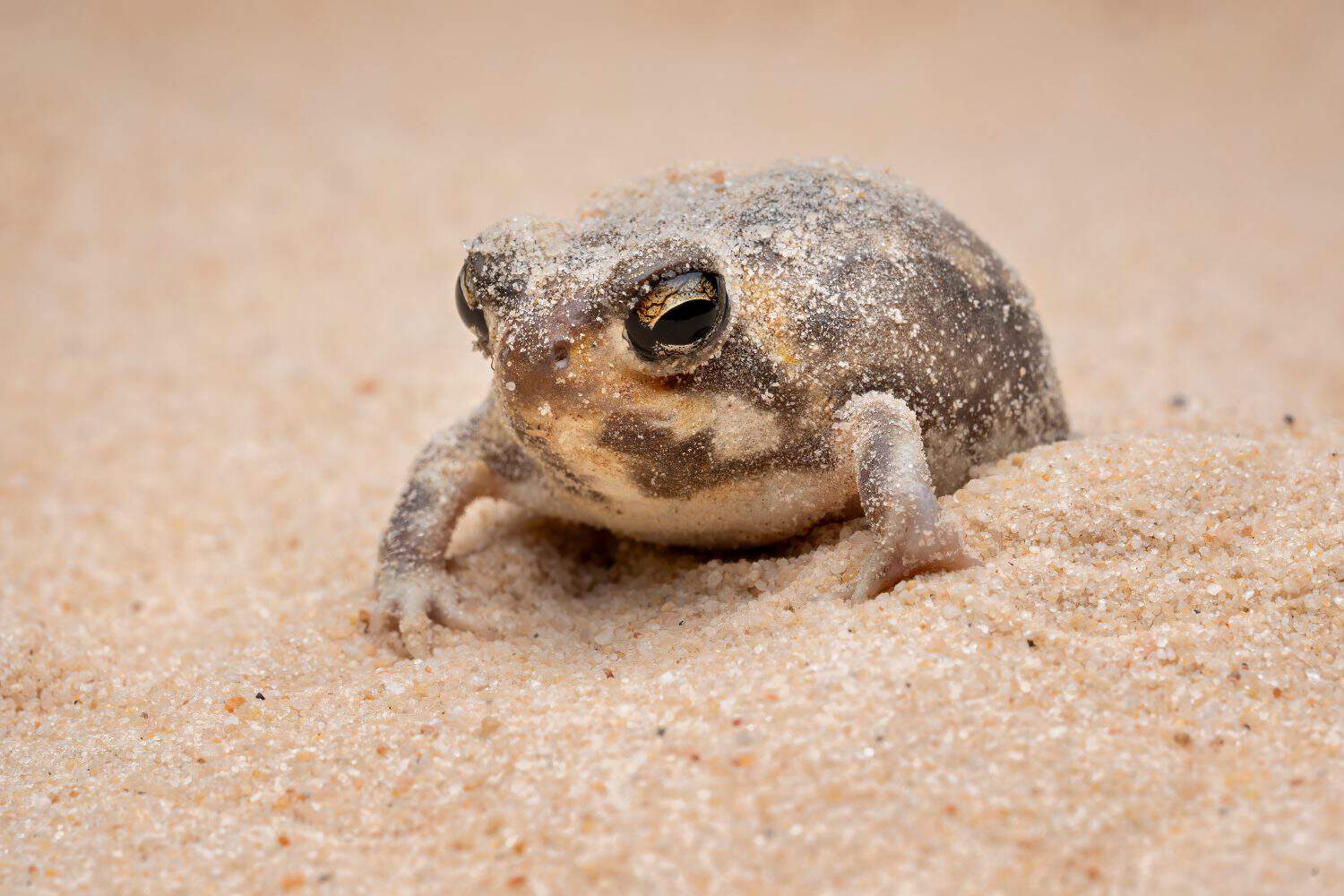

Have you ever heard of the rain frog? While it may sound like a frog native to rainforests, these frogs instead inhabit deserts! One of their unusual behaviors is a distinctive yelp they can emit when threatened. This YouTube Short by @creatures-scoop features a rain frog and its unusual yelps. Read here to learn more.
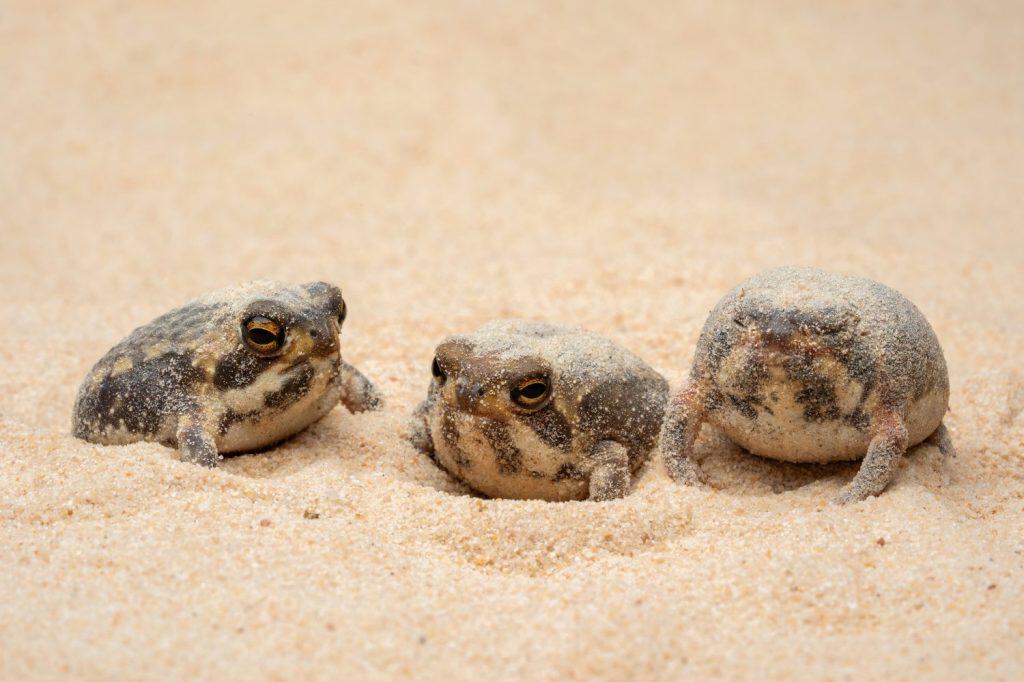
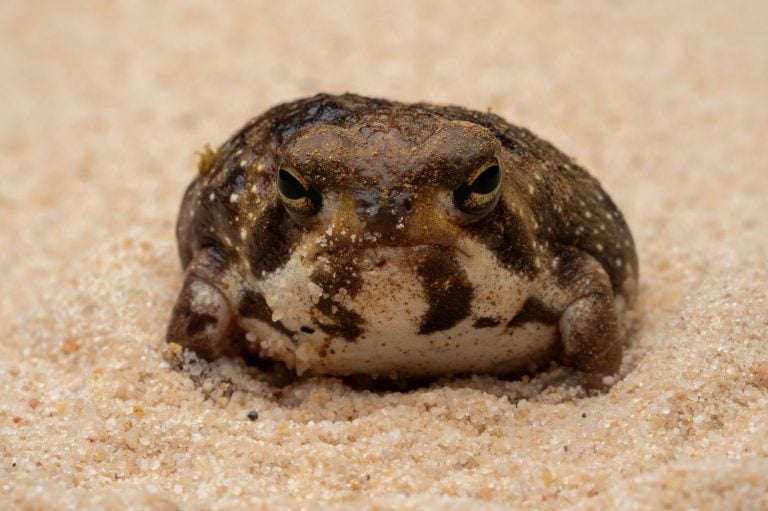
The desert rain frog is native to a small strip of land in Namibia.
©Lauren Suryanata/Shutterstock.com
About the Rain Frog
The rain frog, also known as the desert rain frog, is an endemic species found in a specific part of the world. The desert rain frog is native to a narrow coastal strip, less than 6 miles wide, in Namibia and South Africa. Most frogs in the world live in wetlands and rivers, as they rely on water for their lifestyle. However, the rain frog has adapted to drier climates, allowing it to survive on damp dunes near the ocean. They survive these warm climates by remaining underground. During the day, when the sand is at its driest, the rain frog will stay underground, only coming up when it is cooler outside.
So why are they called rain frogs? The term “rain frog” commonly refers to members of the genus Breviceps, a group of frogs that live underground and whose behaviors are often linked to weather patterns. Rain frogs get their name as they emerge during rainfall. Similar to how other frogs enjoy wet environments, these frogs do too. So when it rains and the sand is softer, the frogs will emerge to make the most of the high humidity. The more people observed the frogs, the more it appeared that they only emerged during rain, hence the name we use today.
Why Do They Burrow?
Desert rain frogs are fossorial, a term that refers to animals that spend most of their lives underground. Using their strong back legs, these frogs burrow backwards into the ground. They do this by using their webbed feet to scoop the sand outwards, burrowing around four to seven inches deep. Given that the frogs are only roughly two inches in size, this depth is perfect for them. The moist sand helps the frog retain moisture and prevents dehydration. The frogs emerge at night to hunt insects. Because they spend so much time compressed underground, these frogs are rounder and chubbier than other species. Instead of hopping, they waddle to get around.
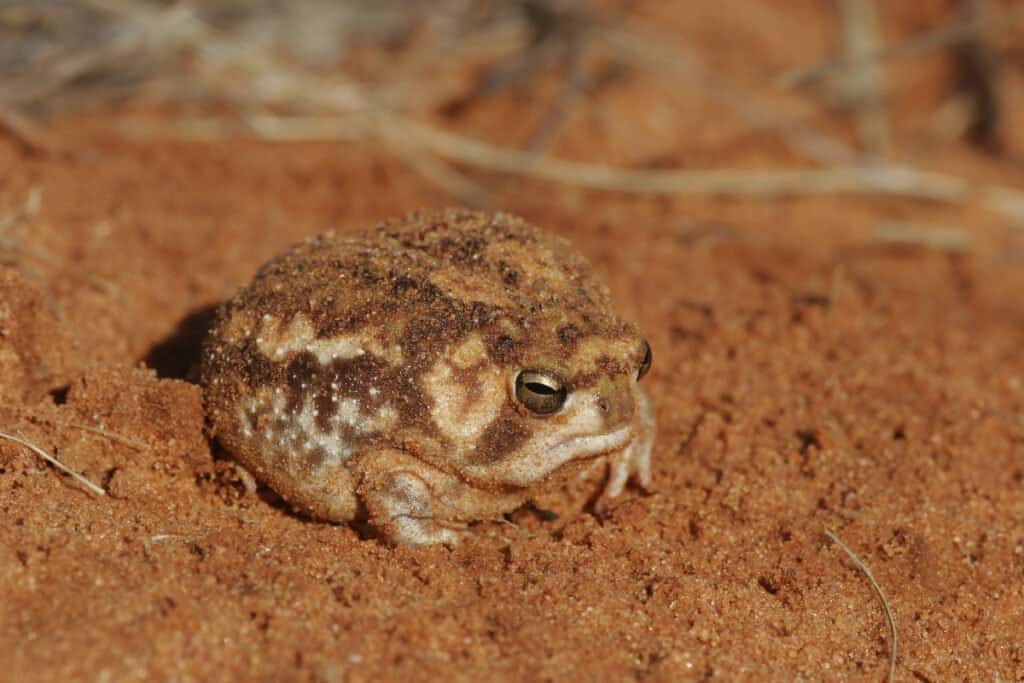
These round, chubby frogs recently went viral for their high-pitched calls and grumpy yet cute expressions
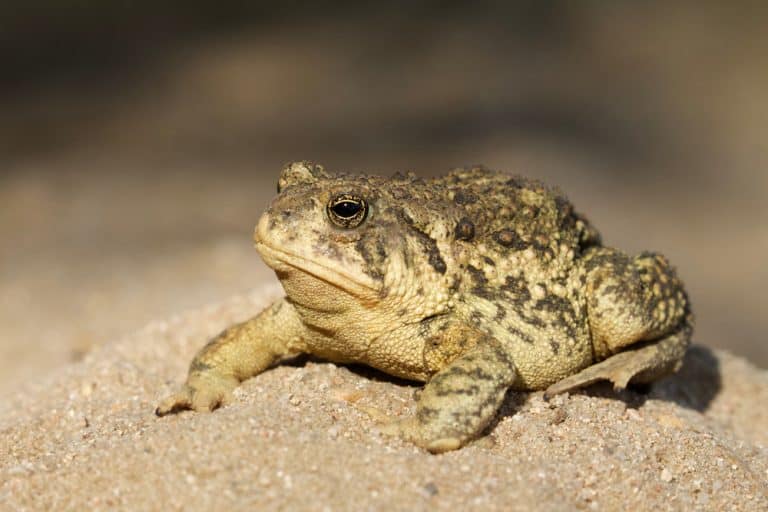
©Bildagentur Zoonar GmbH/Shutterstock.com
Rain Frog Squeaks
One of the most notable features of the rain frog is its high-pitched squeaks. As seen in the video above, rain frogs inflate their bodies when threatened and let out their sharp squeaks, almost like a dog toy. Their squeaks serve as a defense mechanism to deter predators, but given their size, this strategy might not always be successful. However, if their squeaks can distract a predator long enough, the frogs have time to burrow back underground to safety, surviving another day. Their tiny squeaks have made them popular on the internet, but these sounds also serve important practical purposes.