
Quick Take
- A new study tested whether crickets feel pain, and the way they responded to injury might change how you think about every bug you've ever squashed. See the study details →
- We freely sympathize with cats and dogs, but scientists are now asking whether that instinct has a blind spot with a serious ecological cost. How we devalue insect lives →
- That cricket hopping across your kitchen floor might be doing more for your garden than you realize, and new research suggests that killing it carries a hidden consequence. Rethink killing insects →
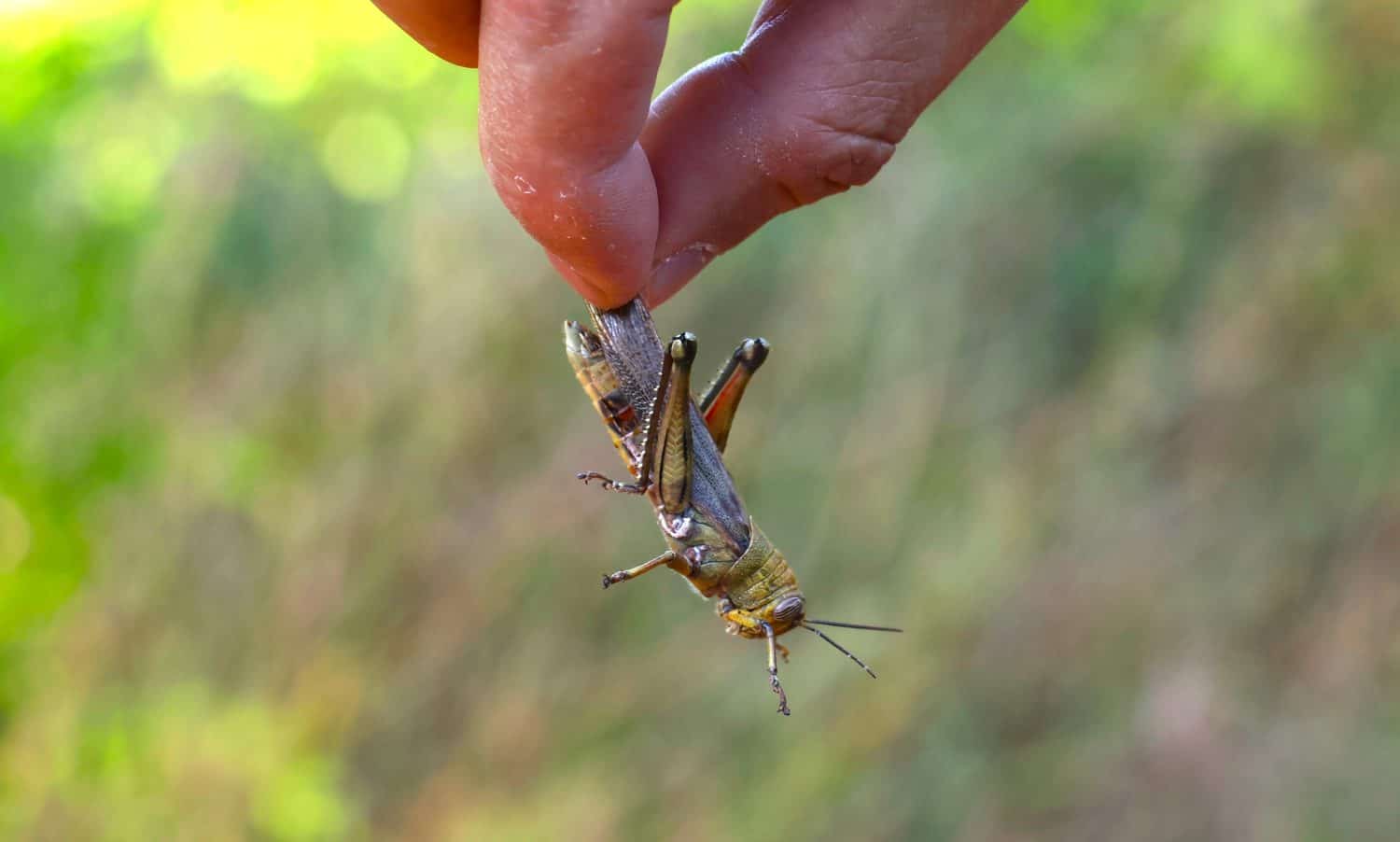
Somewhere along the way, most humans were taught that killing insects is not only common but occasionally even good. We’ve all squashed our fair share of spiders, trapped ants, and slapped wasps. But now, one study could provide evidence that all those bugs we’ve been stepping on actually feel pain. Even more, they could potentially suffer long-term damage as a result of our carelessness.
While crickets were used in this study, they represent hundreds of thousands of insects that are killed each day. When we stop valuing any lives, even those far smaller than ours, we stop viewing them as living things. Scientists are rightfully asking: Why do cute animals get a free pass, while the cricket that hops across your kitchen floor does not?
Can Crickets Feel Pain?
The Royal Society published the study, which details the trials run on crickets by entomologists at the University of Sydney. During these experiments, the crickets were subjected to a series of sensory tests. The goal was to determine if the crickets felt anything at all and whether they reacted to painful stimuli. Since insects don’t behave like humans or other animals, scientists had to study their behavior closely.
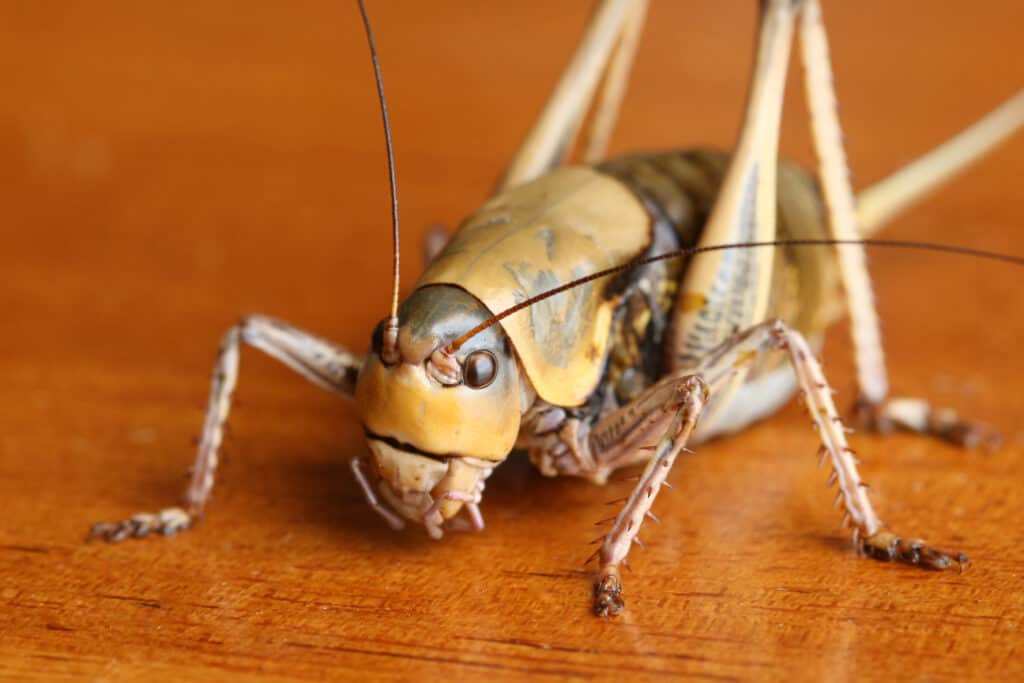
Crickets may not vocalize their pain, but evidence proves they react to it.
©iStock.com/Triggermouse
To do this, they used a soldering iron set to 149 degrees Fahrenheit. Although it sounds cruel, it’s crucial to remember that thousands of crickets are killed every day. Some are farmed for food in certain countries, while others are just the unfortunate victims of someone’s shoe. While 149 degrees won’t kill the crickets, it’s high enough to cause discomfort and trigger the responses scientists were observing.
Scientists exposed the antennae of one cricket group to the soldering iron for five seconds before removing it. In another group, the crickets were exposed to a cool (not on) iron, while the last group remained a control and was simply held. The results were sobering. The study adds important evidence to the ongoing debate about what insects are capable of feeling.
Nursing Their Wounds
Thomas White, an entomologist at the University of Sydney and study co-author, said the results were overwhelming. He was quoted in an interview with The Guardian, saying that the injured crickets spent a significant amount of time nursing their antennae. Compared to the control groups, these crickets favored the side with their burned antennae, spending more time grooming than the others did.
This group spent about four times as long grooming their affected antenna compared to the others.
Philosopher and University of Sydney biologist Kate Lynch said they weren’t surprised to see these results. However, people reading about these findings at home likely would be surprised. We often extend sympathy to animals, and this is even more true when those animals are “cute” or “friendly.” It’s easy to forget that while we anthropomorphize cats and dogs, we unintentionally devalue the lives of insects.
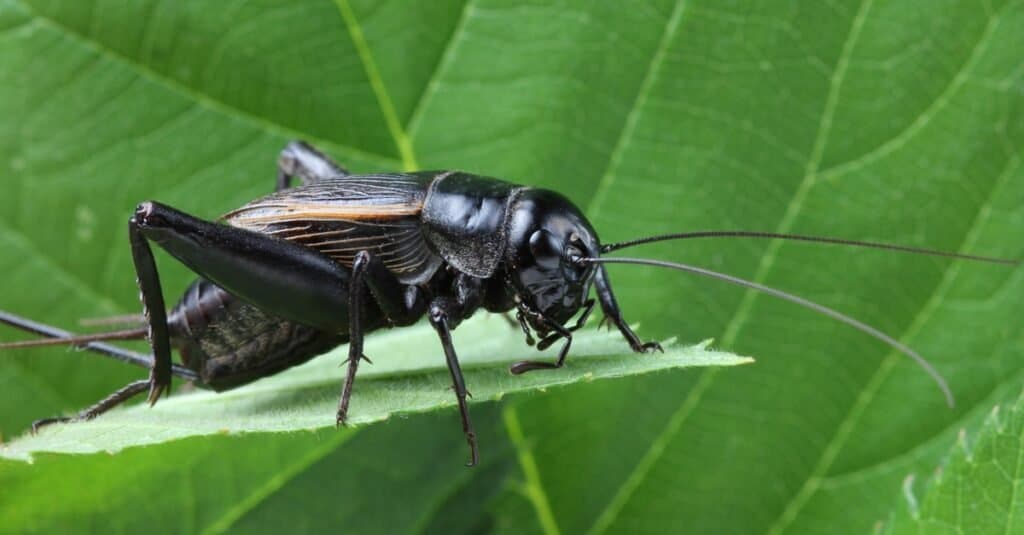
You’re more likely to hear a cricket before you see it, and it takes just as much energy to scoot it out the door as to squash it.
©Alexander Sviridov/Shutterstock.com
Bugs of all kinds are seen as unwelcome guests in our homes, often earning the label of “pests.” We associate diseases, bites, and stings with certain species, but conveniently forget that a family pet or farm animal can injure us just as easily. By making the distinction that insect lives don’t matter as much as those of other animals, we also disregard their ability to feel pain or sensation. Crickets may not have the same pain receptors as humans or other animals, but they react similarly to negative stimuli.
Scientists Hope This Evidence Changes Our Outlook
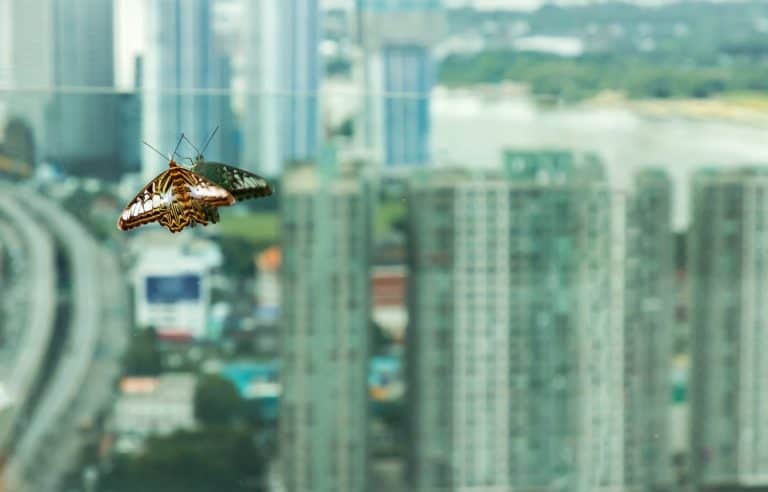
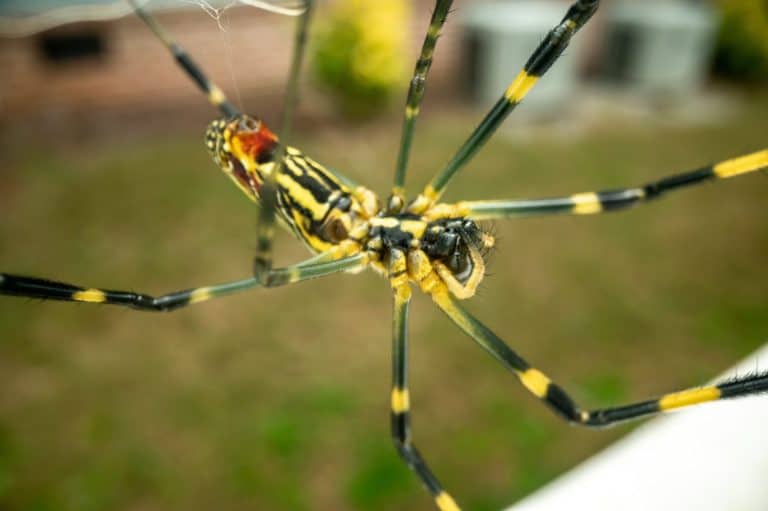
It’s the hope of the study’s team that these results will alter the way we view our world and those who share it. Entomologists have spent decades studying insects that most people fear or run from. But fundamentally, these living organisms make up a significant part of our ecosystem. Not only do some—such as bees and butterflies—pollinate our world, but others, like spiders, help control pest populations naturally.
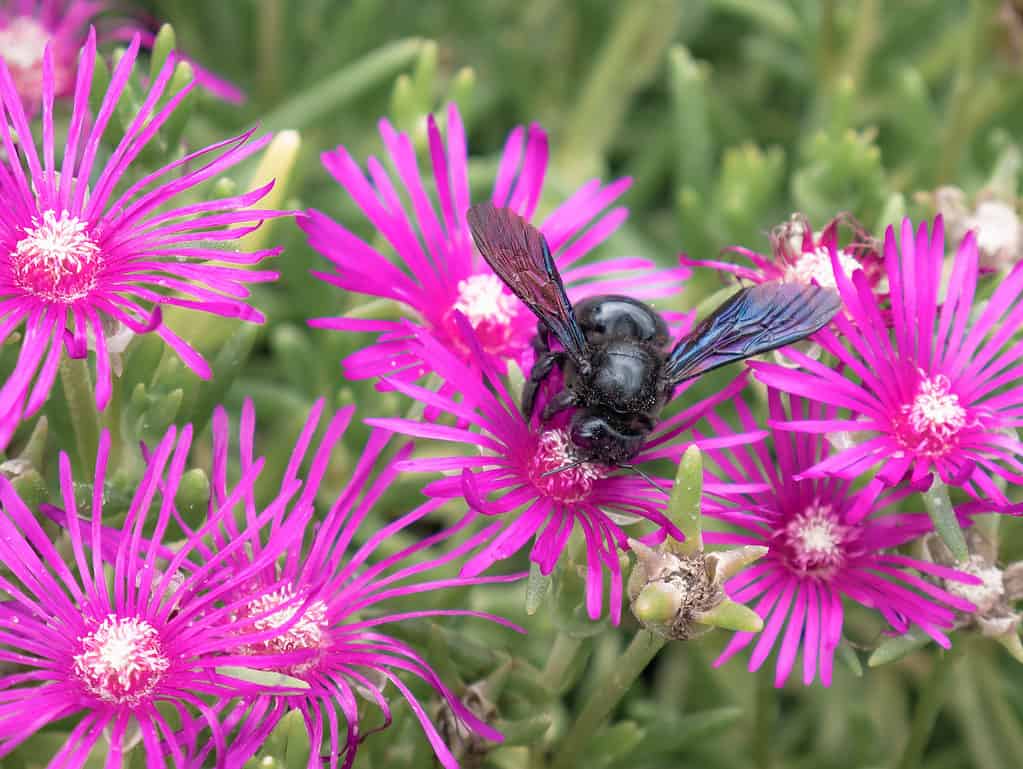
Insects are vital to our world, even those we consider “pests.”
©iStock.com/Dudbrain
The Florida Museum recently published an article highlighting the role insects play in ecosystems worldwide. They make up roughly 80% of all animal species, and many species are rapidly declining due to climate change and habitat loss. As insects experience these declines, they don’t lash out or display visible signs of distress. Instead of supporting insect populations, many people still choose to kill those they see as insignificant. Some research suggests that certain insects may experience lasting, chronic pain after injury. As a result, this could affect their ability to play their part in the local ecosystem.
The next time you hear a cricket chirping in your house, consider this: that same cricket might be responsible for the rich soil in your garden. It could become a food source for an endangered bird species, or it could consume the aphids and ants threatening to invade your picnic table.