
Quick Take
- Adding another cat raises costs and space needs, with annual care typically $350–$1,575 per cat depending on care.
- Litter box management scales with cats; one box per cat plus one extra prevents stress and misbehavior.
- The right number depends on time, money, space, and social fit; most vets say you should never exceed your ability to provide care.
I have three cats. I think about getting a fourth all the time. Honestly, if I had the time, space, and money, I’m not sure there’s a limit to how many cats I’d get. But at a certain point we have to be practical. I’m not set up to have that many cats. In fact, picking up a third may not have been the wisest choice—though I don’t regret it for a second. But my little cat hobby is nothing compared to that of my friend Angela.
Angela, whose name I’ve changed for the sake of privacy (but she knows who she is…), is contemplating getting her ninth cat. Nine! On the one hand, I’m incredibly envious that she gets to be surrounded by that much feline all the time, but on the other hand… nine cats! Seriously, Angela? Her argument is that if she has eight already, what difference will a ninth make? A counterargument might be that if she already has eight what the heck does she need a ninth for? But it doesn’t matter. She’s set on it. Once Angela gets the cat bug there’s no stopping her. She’ll have that ninth kitty by the end of the week.
Angela might be a bit of an extreme case, but adding cats to the family can be kind of addicting once you get going. As Angela would say, “Ah, what’s one more?” Sure, if it were nothing but cute faces, baby purrs, and little head butts, extra cats would be fine. But there’s much more to pet ownership than the adorable tidbits. If you’re considering adding another cat to your menagerie—and admit it, you know you want to—it’s crucial to step back and look at the bigger picture before that next whiskered roommate moves in. What are the real impacts on the home environment, existing pets, finances, and the overall happiness of everyone involved? Not to mention the litter box!
The Real Costs

Each additional cat means additional expenses, which can add up quickly.
©gatostock/Shutterstock.com
It’s exciting to bring home “just one more” cat or kitten. Then the costs start adding up. The adoption fee plus initial exams/vaccinations are going to run you in the neighborhood of $200-$500. But that’s only the beginning.
- Food: If you feed your cat a diet of a mixture of wet and dry food, depending on the quality of the food you can expect to budget up to $5 per day, which could total $150–$170 per month or more.
- Basic vet care: Routine exams range from $75–$125 per visit, not including vaccinations or tests.
- Emergency medical care: It happens. And these costs vary widely but can enter the hundreds or thousands of dollars depending on the severity of the situation.
- Litter and supplies: Litter alone can run $70–$150 per year per cat. And keep in mind that you’ll need multiple boxes for multiple cats.
- Toys, scratching posts, and enrichment: Expect to spend $20–$75 or more annually on accessories. More, if you’re the type to spoil them—which you probably are.
In total, estimates suggest it can cost $350 up to $1,575 or more per cat per year depending on the quality of care, food preferences, and health needs. Depending on your income, that could be a drop in the bucket, or it could mean tightening your belt in other areas of life to afford it. And if you keep doubling or tripling these figures for multiple cats, it’s not hard to see how significant the financial burden can be—particularly with unexpected vet bills or pet emergencies.
Space and Living Conditions
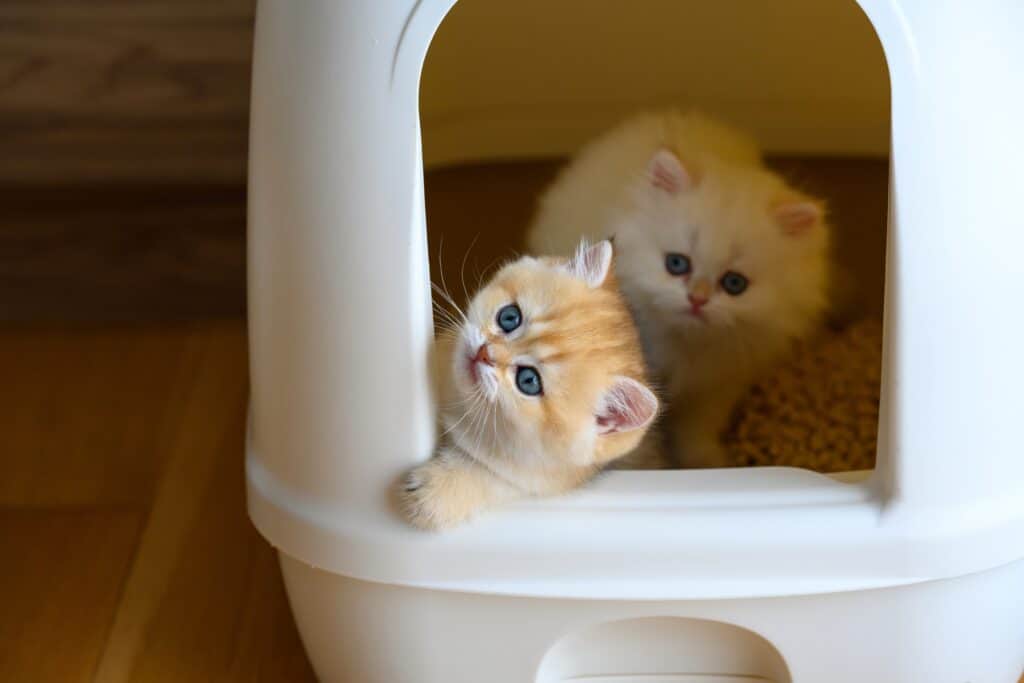
More cats mean more litter boxes–ideally one per cat plus one extra.
©lowpower225/Shutterstock.com
Cats are territorial animals, even those that appear friendly with their housemates. Their comfort and stress levels are strongly tied to the amount of space and resources they have.
Litter Boxes
This is critical. One of the earliest challenges in a multi-cat household is litter box management. Experts recommend:
- One box per cat, plus one extra. Two cats need three boxes; three cats need four, and so on.
- Boxes should not all be clustered in one room. They should be in different locations throughout the house to reduce territorial guarding and competition.
- Daily scooping and regular deep cleaning to keep odor and bacteria levels low.
Without proper litter box distribution and hygiene, behavioral problems like marking outside the box and stress-induced aggression can increase.
So for Angela, that’s TEN LITTER BOXES spread out all over her house that she needs to scoop EVERY SINGLE DAY. Wowzers.
Food, Water, and Space Distribution
Cats also benefit from having multiple feeding stations, resting places, and vertical territory such as cat trees and shelves. In multi-cat homes, dispersing these resources helps reduce competition and conflict.
Space isn’t just floor area, it’s about whether each cat has:
- A quiet place to eat away from others
- A personal nap spot
- Access to climbing structures or hiding retreats
- A comfortable area to retreat when stress arises
Without adequate space and resources, multi-cat households can become a stressful environment rather than a happy one.
The Social Nature of Cats

Cats definitely bond with other cats, but the opposite is often true as well.
©Mariya Ilmaz/Shutterstock.com
There’s a common misconception that cats are solitary loners who don’t appreciate company. But the truth is more nuanced.
Cats Can Form Bonds, But Not Always With Every Other Cat
Some cats are social and enjoy the company of other felines, while others prefer solitude or limited interaction. Introducing another cat can create tension, especially if personalities clash or if existing cats view newcomers as a threat to their territory.
Before bringing home another kitty, it’s a good idea to consider:
- The temperament of current cats: Are they generally relaxed and sociable?
- How they’ve reacted to visitors or short stays with other animals in the past
- Whether introductions can be made slowly, with scent exchange and supervised face-to-face meetings
This is important. Rushing this process can lead to fighting, hiding, or anxiety in existing cats—outcomes that aren’t fair to either the new arrival or the residents. I made the mistake of simply bringing home my third cat and dropping him into the environment with no controlled introduction. Let’s just say my original two kitties didn’t handle it well. They’re mostly over it, but years later they still have a bit of mistrust toward the new guy.
Time and Attention

The more cats you have, the less time you have for one-on-one attention with each one.
©EkaterinaShcherbakova/Shutterstock.com
Cats can be relatively low-maintenance pets compared to dogs, but each still demands time, attention, and care. With one or two cats, it’s easy to spend quality time playing, grooming, and bonding. But as more cats are added:
- One-on-one time decreases
- Some cats may become jealous or stressed
- Signs of anxiety (like overgrooming or hiding) may increase
Even if your current pets are getting along well, adding more can dilute the human attention each receives, potentially impacting their emotional wellbeing.
Travel and Pet Sitting

You’re probably not taking multiple cats on a trip with you, so if you’re traveling, arranging sitting or boarding can be complicated and/or expensive.
©iStock.com/humonia
Traveling becomes exponentially more complicated with each additional pet. When you ride solo, you might be able to ask a neighbor to stop by, hire a pet sitter, or board your cat at a facility. But once you’re responsible for multiple pets, logistics get far more complicated.
For one thing, you’ll add additional costs to those already discussed: pet sitters usually charge more for extra animals, and if you’re boarding, those costs will stack up quickly. Coordinating feeding, litter cleaning, and playtime takes more time. Even if you’re just going to be gone a couple days, asking your neighbor to swing by and look in on them is a small favor when it’s just one kitty, but even the kindest neighbor isn’t going to want to come by and scoop ten litter boxes!
Before adopting another cat, it’s wise to think about your travel style and budget for pet care when you’re away. If frequent travel is part of life, ensure you have a reliable support system to maintain consistency for your pets.
Legal and Ethical Considerations

Many states actually have limits to how many pets a person can own.
©Nastya Revva/Shutterstock.com
You may not have even considered this, but many cities and towns have limits on how many pets an owner can have without a special permit or zoning requirements. These limits vary widely, with some locales allowing no more than five pets per household before requiring additional paperwork.
Exceeding these can result in fines or the perception of pet hoarding—a serious concern when animals cannot be given proper care. Responsible ownership means not only providing for the pets physically but also respecting local laws and humane standards.
How Many Is Too Many?

How many cats is the “right” number of cats depends on each individual’s unique situation.
©Arwen Matthijssen/Shutterstock.com
There’s no universal “magic number” for how many cats one person or household should have. The right number depends on all the factors mentioned above. For people like me, caring for two or three (okay, maybe four) cats is manageable with proper planning and resources. But as we start inching toward the higher end (say, six or more) we start increasing the risk of behavioral issues, health problems, stress, competition, reduced individual attention and affection. And that’s just for the cats. Humans are likely to run into problems of budget, sanitation, space, time, etc.
Everyone’s situation is different, but most vets and pet professionals agree on this basic logic: you should never have more pets than you have the time, money, and space to care for responsibly.
Love Isn’t Enough: Responsibility Is Key

Before going out and getting that next cat, ask yourself if you have the resources and support to give it the care it needs and deserves.
©iStock.com/ES3N
I’ve been teasing Angela a bit here, but honestly, if anybody’s equipped to handle nine cats, it’s her. She has the time, resources, and support to responsibly care for them. But most people, I would guess, are not in Angela’s position. Before acquiring that third, fourth, ninth kitty, it’s important to remind yourself that each new cat is not just another purring pillow; it’s a lifelong commitment to ongoing expenses, time, attention, and environmental management.
Before adding another furry family member, ask yourself:
- Can I comfortably afford all the associated costs?
- Do I have enough space and quiet areas for another cat?
- Can I commit the time for socialization, grooming, and play?
- Have I considered how travel care will work with more pets?
If the answer is yes in all these areas, then another cat might be a wonderful addition. If not, it may be kinder to focus on giving even more love and enrichment to the pets already in your care. Ultimately, responsible pet ownership means giving each animal a life worth living. Difficult as that may be, it can sometimes mean knowing when to say no rather than yes.