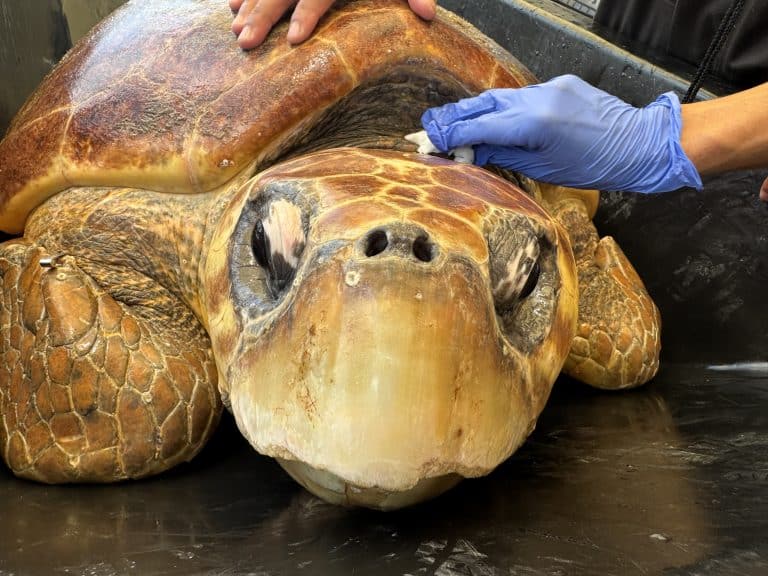
This Instagram post by @marathonturtlehospital shows Topper the turtle, who was taken in by Marathon Turtle Hospital to help him recover from a strange mass on his eyes. To understand how to treat this type of issue, it’s important to first identify the underlying cause. Read below to learn about the cauliflower-like mass on Topper’s eyes and how veterinarians can effectively treat these tumors.

©wasan bunchusuphakit/Shutterstock.com
What’s Infecting the Turtle?
The condition shown in the video is most likely caused by a tumor known as fibropapillomatosis. Although the name is complex, this disease primarily affects sea turtles by causing tumor growth.
The tumor creates a cauliflower-like growth on the skin that can appear anywhere on the turtle’s body. For Topper, the tumors unfortunately reached his eyes as well, creating difficulty seeing. The tumors are not just external; they can also grow internally on the organs of the sea turtle, leading to serious complications. Tumor size also varies, with some growing large enough to cause debilitation or even death.
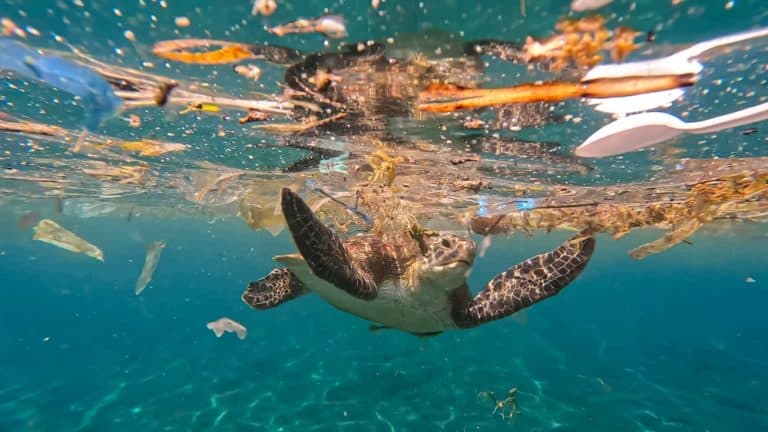
Green turtles are the most affected by fibropapillomatosis. Within green turtle populations, fibropapillomatosis is considered relatively common, with prevalence rates exceeding 50% in some regions, although these rates vary widely depending on the location. While green turtles are most affected, other turtle species experience the disease less frequently and severely. Tumors develop after a turtle is infected with a herpesvirus, but the reason this virus causes tumors in sea turtles remains largely unknown. Recent research has shown that human pollution, particularly in urbanized and degraded coastal environments, is a significant contributor to the increased prevalence of these tumors.
©Sakis Lazarides/Shutterstock.com
How to Treat Fibropapillomatosis
When a sea turtle is infected, the outcomes and treatment options depend on the severity of the disease. Small tumors that are not located on vital internal organs or the eyes do not pose a major threat to the turtle’s life, but should still be treated. Larger tumors are dangerous as they interfere with important organs and eyesight, potentially leading to death. In some cases, tumors can regress on their own, but the mechanism behind this is not well understood. Recent studies indicate that spontaneous regression of fibropapillomatosis tumors is relatively uncommon, with some research reporting regression rates as low as 17.5%.
Research on fibropapillomatosis has been beneficial in helping sea turtles, but environmental management, such as reducing pollution in coastal areas, has been identified as a potential strategy to help lower infection rates. Reducing ocean pollution can help support sea turtle populations, along with other conservation methods. Surgery is a viable option for removing tumors that pose a danger to sea turtles. Recent advances have introduced new treatment methods, such as topical chemotherapy (5-fluorouracil) and improved surgical techniques, alongside ongoing research into additional therapies.