
Quick Take
- Eggs laid in May can produce hatchlings in early fall, which is something the biological reason behind it tends to catch most beachgoers completely off guard. See the incubation timeline →
- One feature of nearly every coastal resort actively steers hatchlings away from the ocean, something most guests never realize. Discover the lighting threat →
- Real data from a single nesting season exposes how many hatchlings never reach the water, a startling number even when conditions look favorable. View the 2022 season data →
When we plan our summer vacation to popular Southeast beaches, we rarely think about wildlife migrations. But for those booking a September beach trip, you might find the sand a little more crowded than usual. However, instead of finding the perfect spot on the dunes, these four-legged beachgoers prefer being a little close to the shoreline.
The end of the summer is a peak time for sea turtle hatchlings as they make their way to the water. While typically active in August, emergence can extend into September and October. On the Carolina, Georgia, and Florida coasts, the survival of hatchlings depends on many conditions.
The First Days of a Sea Turtle’s Life End with Migration
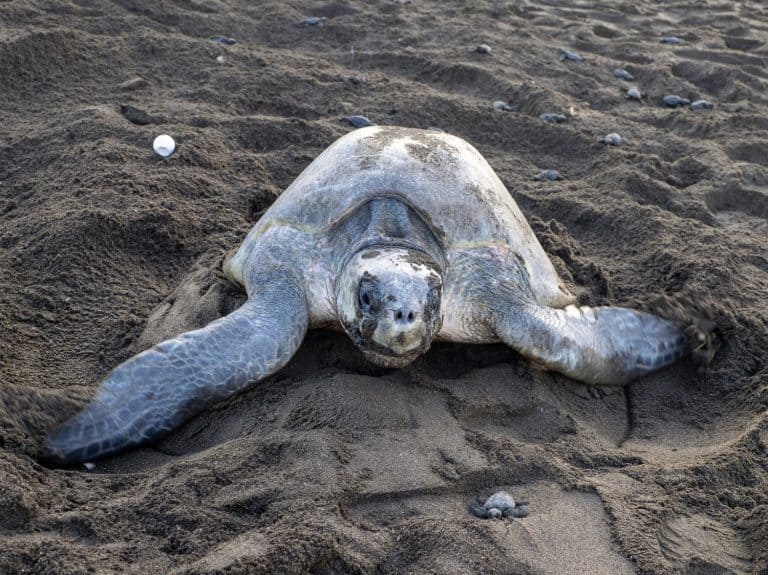
The life of a sea turtle is nothing short of a miracle. Even at such a young age, their instincts guide them to the water, which marks the beginning of their hopefully long life. It all begins with a female, who lays between 50 and 200 eggs per night. This happens over several nights, when females crawl out of the ocean after dark. While some turtles time their nesting with the moon and emerge during full or new moons, others do so at random.
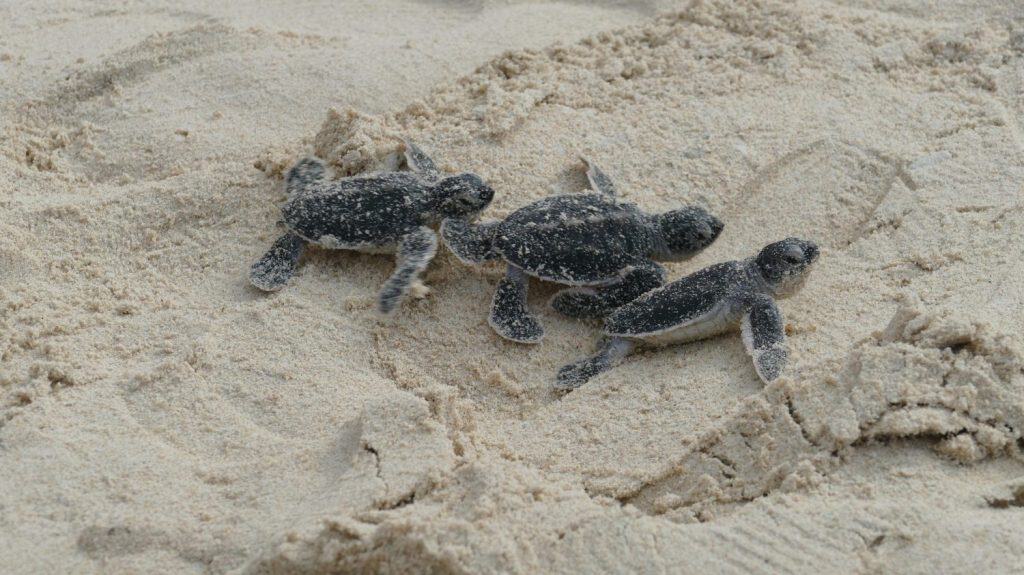
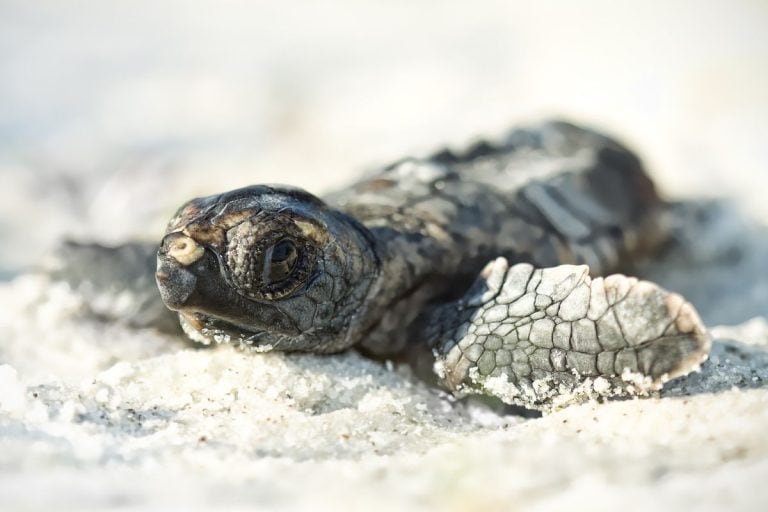
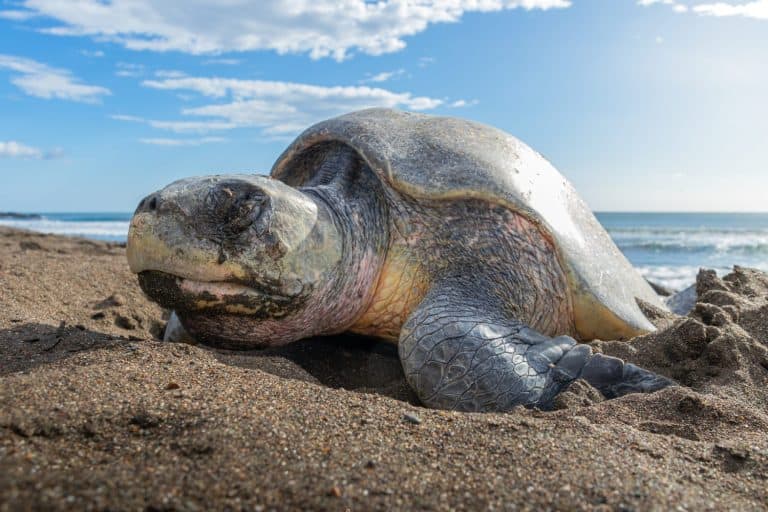
Sea turtles lay eggs in May, but hatchlings don’t emerge until late summer or fall.
©El Paco 33/Shutterstock.com
For the next two to three months, eggs remain buried safely in the sand. The temperature of these nesting sites determine sex, with warmer sand producing more females and colder sand producing more males. Eggs remain hidden for up to 70 days before it’s time for the hatchlings to emerge.
This is also where some confusion begins regarding the timeline. For many nests, September can mark the 60-day point in sea turtle incubation. At this point, they’re ready to hatch, despite nesting occurring much earlier in the summer. Many people are surprised to learn that eggs laid in May might not hatch until early fall.
Cape Lookout National Seashore Documented Unusual Late-Season Events
In 2022, Cape Lookout National Seashore recorded data from 431 sea turtle nests. During this time, female sea turtles laid eggs starting on May 6, and hatchling activity continued through September 6 and into the fall. This report is proof enough that sea turtles are highly active in September. In fact, it is a crucial month for them to complete their hatchling life cycle.
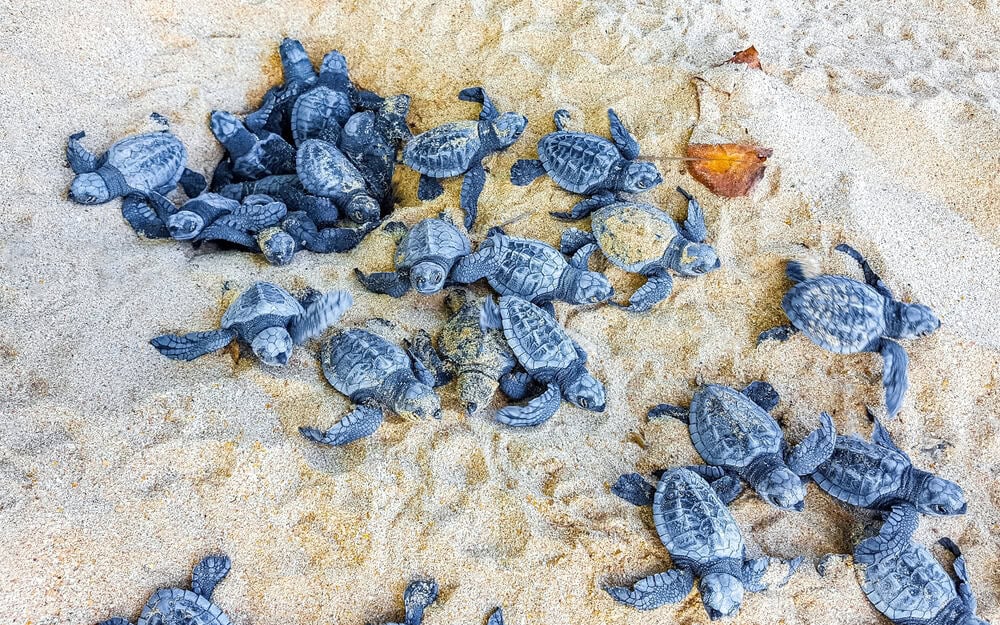
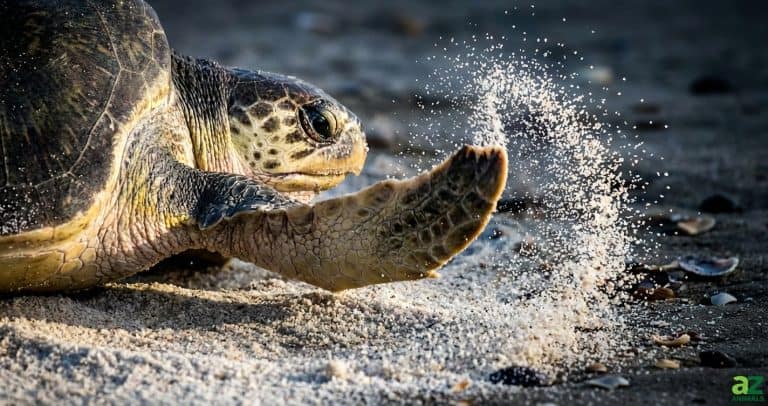
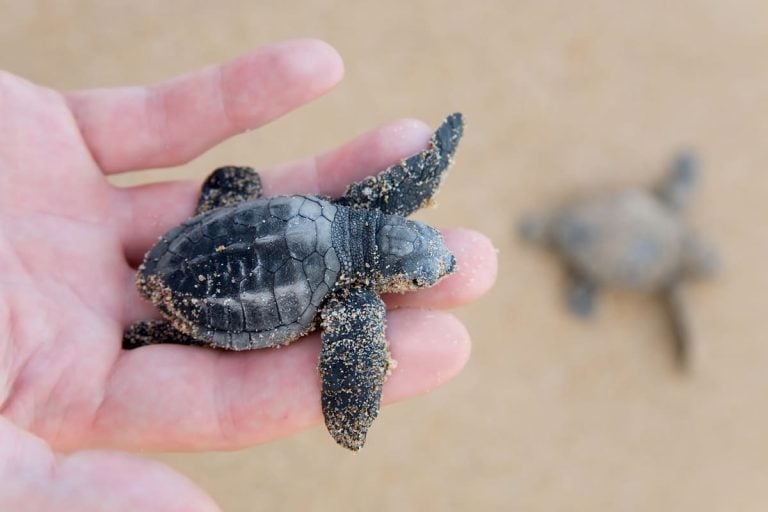
A single clutch can hold up to 200 sea turtle eggs.
©Arkadij Schell/Shutterstock.com
During this time, the average clutch– or number of sea turtle eggs–was roughly 112 per nest. Within these nests, the park service recorded several species of sea turtles, including:
- 423 loggerhead
- 4 green
- 3 Kemp’s Ridley
- 1 leatherback
During the five-month period, additional details were recorded. Researchers observed a 68% success rate for hatchlings that emerged and reached the ocean, while 71% hatched in total, though not all survived. Adding to this, 24 nests were washed away by high tide events from three recent hurricanes, while another 139 nests were flooded. By the end of the season, Cape Lookout National Seashore counted 279 stranded turtles. However, these hatchlings weren’t stranded only because of high or low tide.
Human Activity and Artificial Lighting Impact Hatchlings
Cape Lookout National Seashore’s sea turtle hatchlings faced a number of threats during the 2022 season. Park staff and volunteers monitored sites daily, protecting nests against natural predation. Staff also relocated 42 nests, which boosted the turtles’ survival rate by roughly 3%. Despite all of this, 32% of hatchlings still did not make it to the water.
Artificial light plays a major role in whether hatchlings reach the ocean. They rely on low-light reflections from the moon and stars to navigate, a process also timed to the moon and the tides. This cycle is integral to their internal compass but can be disrupted by artificial light at night (ALAN). Lighting from nearby homes or resorts can trick hatchlings into crawling backward, away from the open ocean, leaving them stranded.
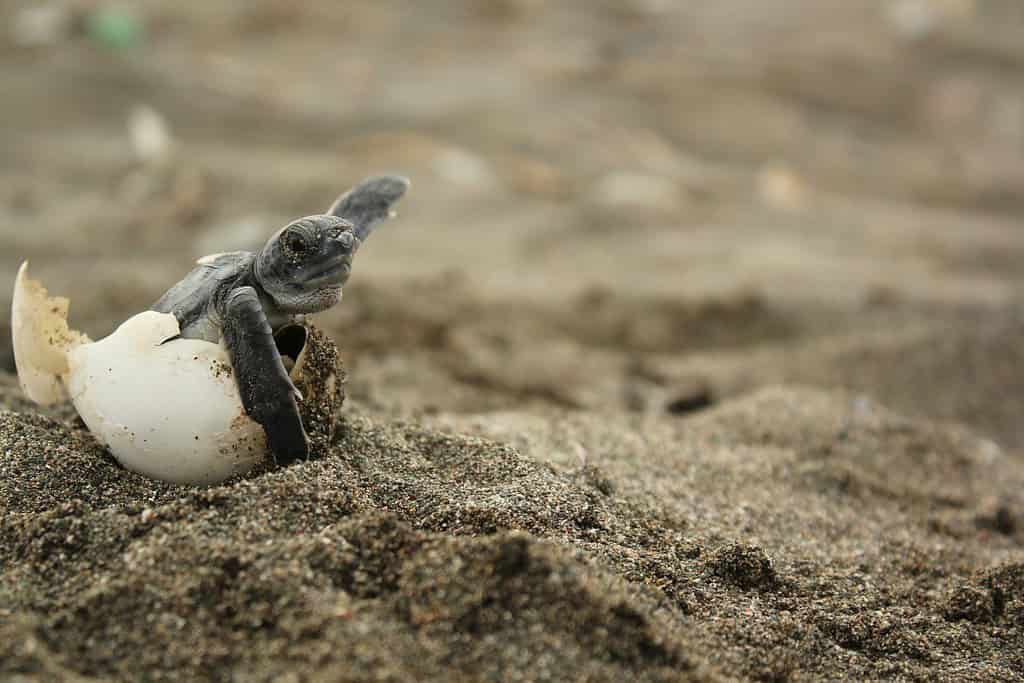
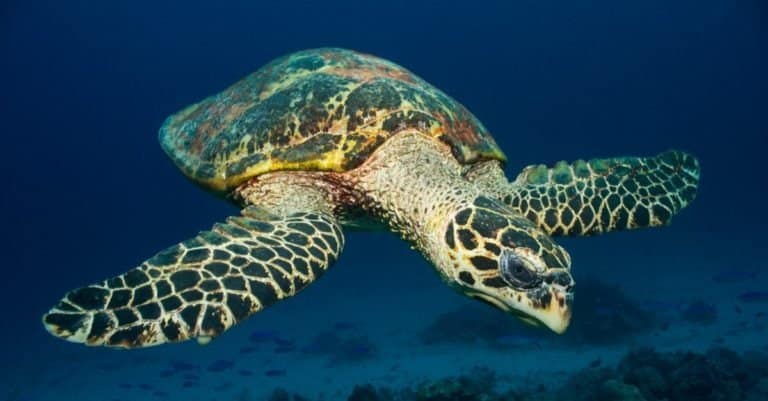
Artificial lighting can confuse hatchlings, causing them to crawl in the wrong direction.
©Mesut Eksi/Shutterstock.com
Cape Lookout National Seashore’s 2022 report demonstrates how storms can affect sea turtles. However, eroding beaches, climate change, and development also determine a hatchling’s fate. The less shoreline available, the fewer places females have to lay their clutch. As shores erode, hatchlings also have an increased risk of being washed away.
All of these factors support how crucial it is for tourists and locals to remain sea turtle-aware through September. Hatchling activity can extend into the fall, meaning juvenile sea turtles remain at risk from both natural and human threats during this period.