
Quick Take
- The researchers weren't even looking for hammerheads, yet they stumbled into making history anyway. See the unexpected sighting →
- The first hammerhead they found couldn't be tagged, but a second shark changed everything. Read about the historic tag →
- Hammerheads once almost never appeared in New England waters. Climate change is rewriting that reality, and the consequences go beyond migration. Explore the climate connection →
Atlantic Shark Institute researchers got more than they expected during a recent shark-tagging excursion. Since studies began off the coast of Rhode Island, more than 50 individual sharks have been identified. This year included an 8-foot-long juvenile great white, along with a larger 15-foot shark off the coast of Block Island that was lured by a whale carcass.
And as if this year couldn’t get more exciting, two new sharks have appeared: hammerheads.
A Surprising Sighting Off Block Island
The Atlantic Shark Institute (ASI) didn’t anticipate tagging a smooth hammerhead when their Rhode Island excursion began. ASI’s original mission was to tag sandbar sharks, which are the most commonly sighted around Rhode Island. Their activity peaks in the summer, as higher temperatures bring warm waters farther north into New England. That makes late July a prime time to find, tag, and collect data on this large species.
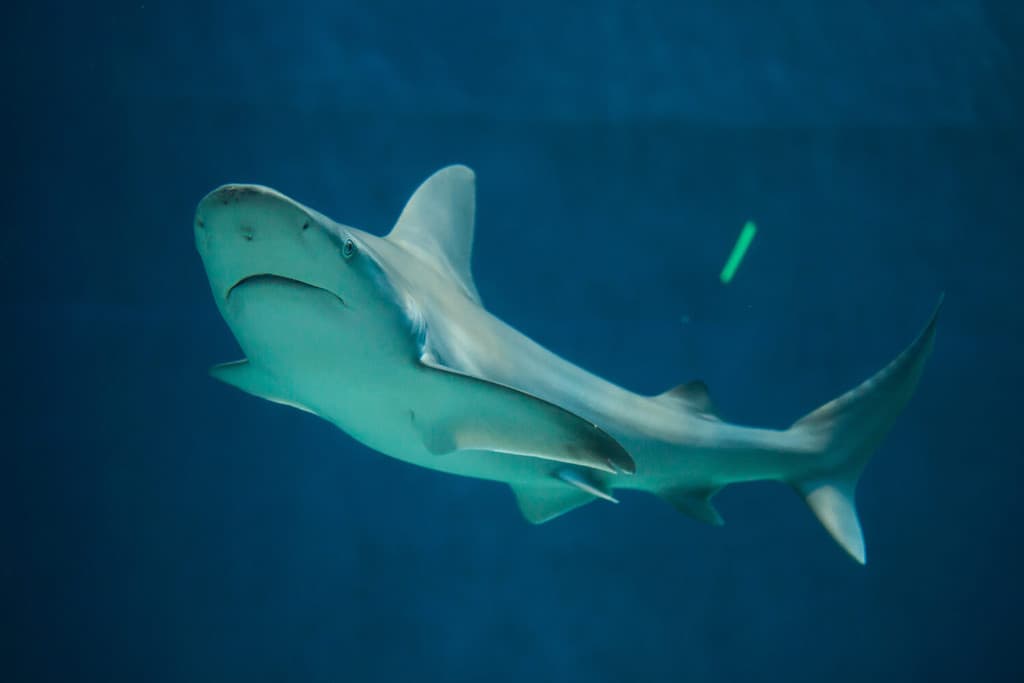
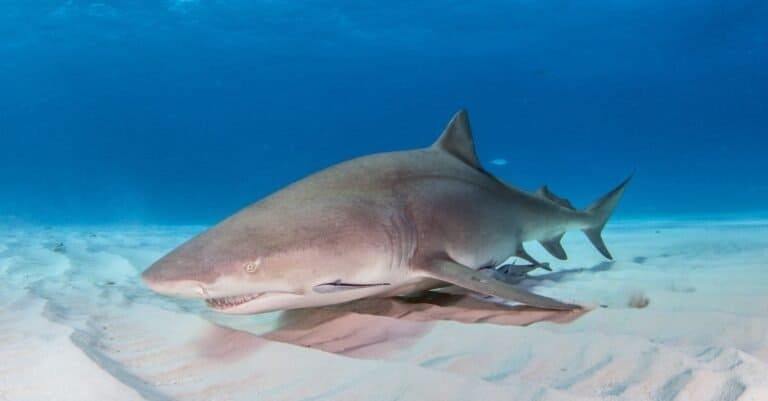
Sandbar sharks travel north during the summer and are often found in New England’s shallow bays and harbors.
©Vladimir Wrangel/Shutterstock.com
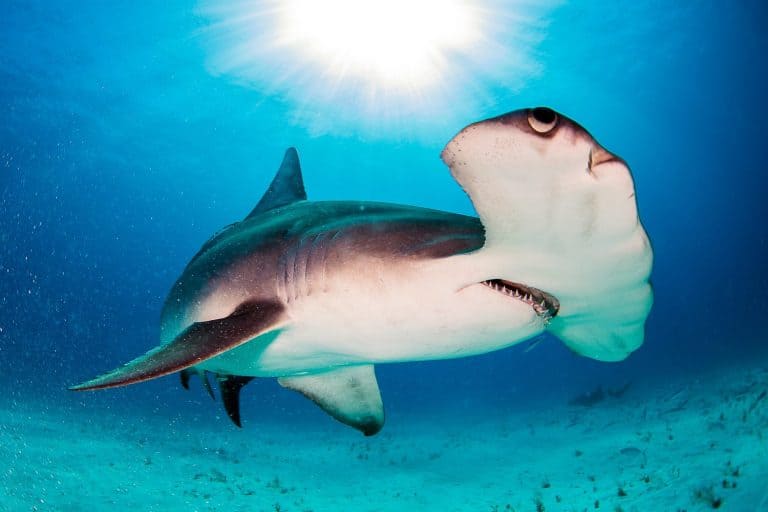
But while researchers observed the water from a drone, they captured a rare sight. Swimming just below was a scalloped hammerhead shark. While there’s no definitive measurement for the shark, researchers described it as massive. “Hammerhead sharks are among the ocean’s most iconic predators, and documenting this first-ever tagging event by the ASI is an exciting opportunity to showcase the groundbreaking research taking place right here in Rhode Island,” Tomas Koeck of Silent Flight Studios said of the encounter.
Not One, But Two
The surprises didn’t stop there for researchers at ASI. They attempted to tag the scalloped hammerhead but, unfortunately, the tag wouldn’t take. Little did they know, a second hammerhead was not far behind—and this one would be a success.
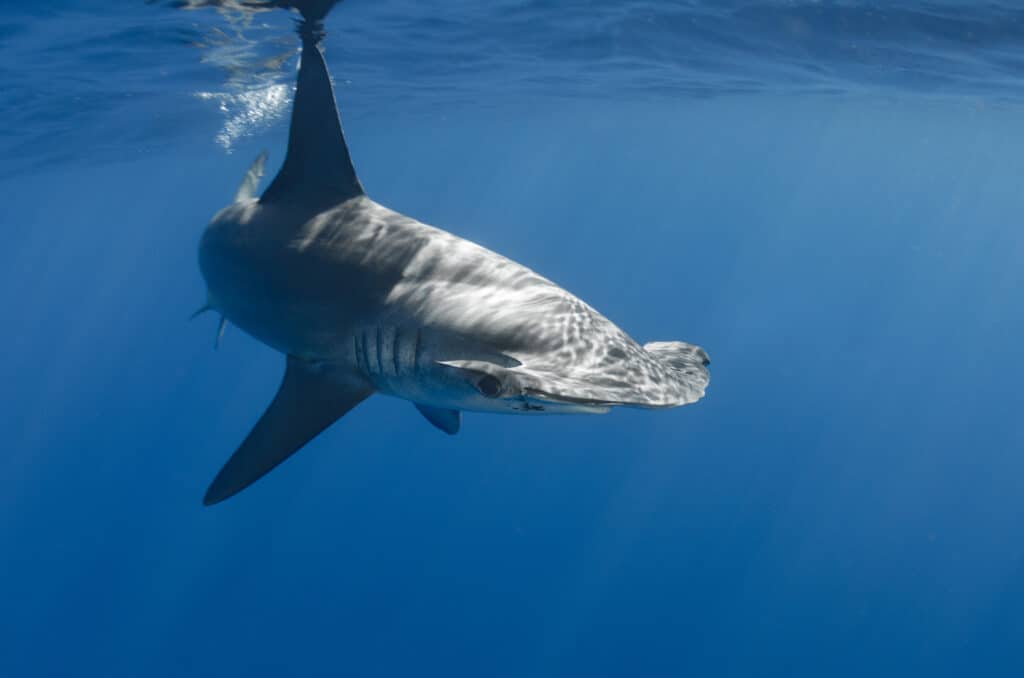
Atlantic Shark Institute researchers placed a long-term satellite tag on a smooth hammerhead, which can track its movements for a decade or longer.
©iStock.com/Michael Zeigler
As researchers continued to observe movement in the water, a 6-foot-long female smooth hammerhead appeared on the scene. This time, researchers were successful in tagging her. This made history as the very first hammerhead shark tagged off the coast of Rhode Island by the Atlantic Shark Institute. According to ASI, this tagging will allow them to track, study, and record the hammerhead’s movements as it migrates up and down the coast.
More Hammerhead Sightings In New England
As water temperatures rise due to climate change and shifting weather patterns, so do the migration routes of marine species. The hammerhead, once an extremely rare sighting off the coast of New England, is now becoming a more frequent visitor. While scalloped hammerheads are incredibly rare due to their shorter range, smooth and great hammerheads are occasionally observed by anglers.
Most Rhode Island sightings happen near Block Island and Newport, but smooth hammerheads have also been sighted in Massachusetts. There are also sporadic recorded sightings around Buzzards Bay, Martha’s Vineyard, and Nantucket, particularly during unseasonably hot summers. As climate change reshapes the landscape of northern regions, these sightings are likely to be more common than ever before.
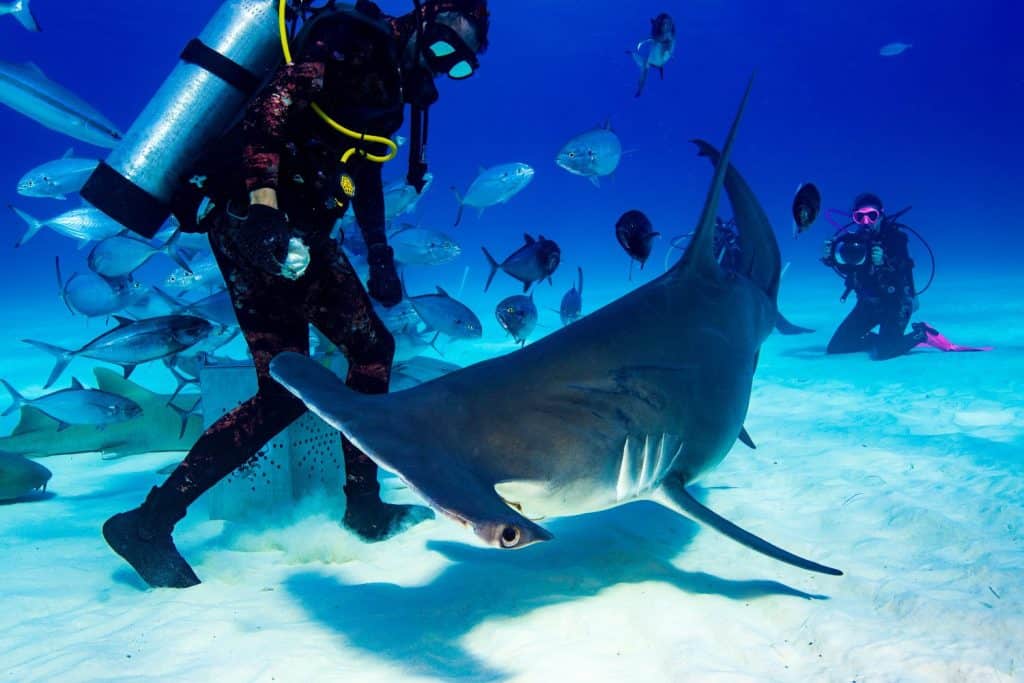
Only two types of hammerheads have been found in New England’s waters: smooth and scalloped.
©bcampbell65/Shutterstock.com
Despite changing migration patterns, this hammerhead tagging marks significant progress for ASI. Hammerheads typically migrate north from tropical waters near the Galapagos and Costa Rica. As they travel farther north, researchers can now track their exact routes. Previously, this species was heavily associated with Florida and the Bahamas. But if weather patterns continue to change, they may become more abundant in New England’s coastal waters.
A Scalloped Hammerhead Sighting Is Unique
Data collected by tagging hammerheads in New England can also provide crucial information about their breeding habits. Scalloped hammerheads travel north to temperate waters off the coast of Central America to lay their eggs. This migration is heavily influenced by moon phases and tidal patterns, but climate change may alter these behaviors.
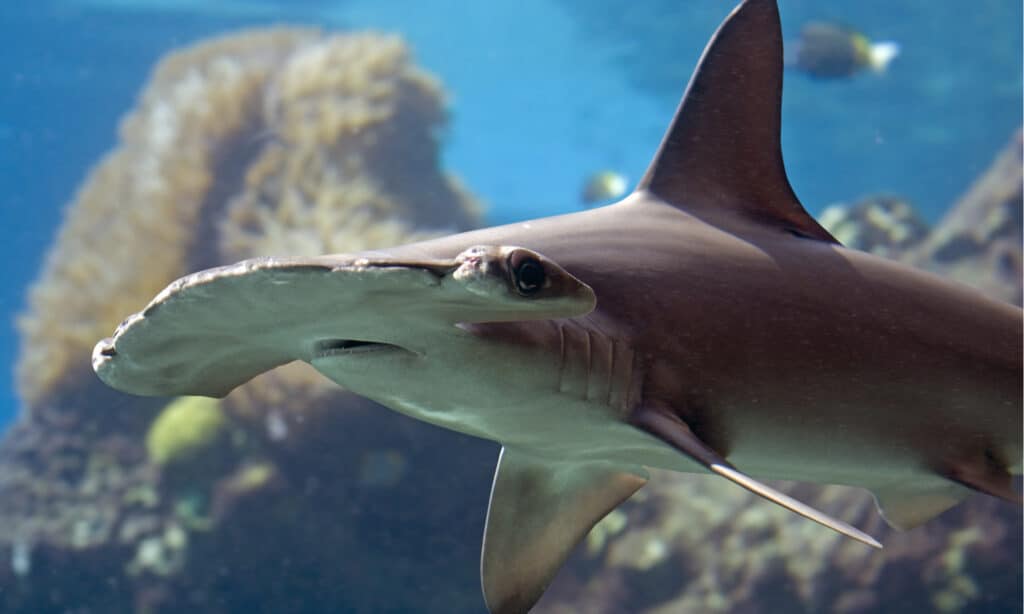
Scalloped hammerheads were once rare off the coast of New England, but warm water temperatures move their migrations further north.
©Ian Scott/Shutterstock.com
The corridor along this route was declared an “Ecologically and Biologically Significant Area.” This means it’s protected against human-based threats to keep the next generation of sharks safe. However, as waters in this corridor heat up, it is uncertain whether scalloped hammerheads will continue to lay their eggs here or move farther north.
Should the latter happen, data tracking by organizations such as ASI will provide pivotal details regarding the species’ travel habits. Researchers can detect even the slightest deviations, which will hopefully continue to provide insight into the lifestyle of a rarely-seen hammerhead species.