
Quick Take
- Ducks maintain their core temperature even though their feet are colder.
- A countercurrent circulation system in their feet exchanges heat from warm arteries to cooler veins.
- Duck feet also have fewer muscles and nerves than the rest of their body.
Have you ever watched a bird wading in icy water and flinched? How can they possibly do that without getting frostbite in their feet? Ducks and other waterfowl have very special circulation in their feet that helps them survive the colder weather. We investigated how it works.
How Can Ducks Withstand the Cold?
Waterfowl, including ducks, reside in wetlands, which can be pretty bleak in the winter months. The ducks stay there because this is where their food is, but when temperatures drop, it can be a challenge. Ducks have evolved several ways to keep themselves warm. Just like humans, they sometimes shiver when they are cold.
Also, they fluff up their feathers, which gives great insulation. These pockets of air are trapped around the duck’s body, which prevents heat loss. Ducks will sit on their feet to keep them warm and tuck their bills into their wing feathers to further reduce heat loss. However, their cleverest strategy is hidden in their feet.
Feet Countercurrent Keeps Ducks Warm
Ducks can achieve regional heterothermy, which means they can stand on ice yet still maintain a warm core temperature. It would use up a lot of energy to keep their feet warm, so ducks allow their feet to drop to near-freezing while still maintaining a blood supply.
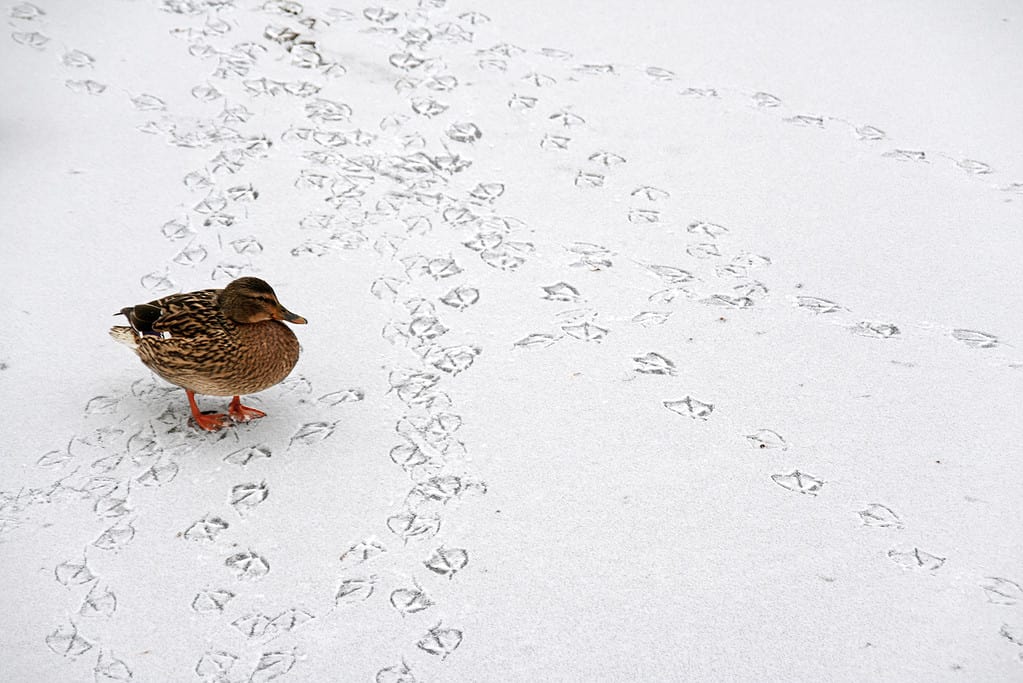
Duck feet are mostly tendon and bone.
©iStock.com/MirAgareb
The blood vessels in their feet are arranged in a countercurrent heat exchange system. In this system, veins carrying cool blood away from the feet are positioned close to arteries carrying warm blood toward the feet. The heat is transferred from the warm arteries to the cool veins.
This works very effectively to maintain heat in the core. Birds periodically increase blood flow to their feet in a regulated manner to prevent tissue from freezing. Duck feet contain less muscle and fat than other parts of their body. Instead, they are made up mostly of tendons, bones, blood vessels, and connective tissue, all covered by a tough, scaly exterior. This composition, along with the countercurrent heat exchange system, helps minimize heat loss.