Quick Take
- Sea otters forage in kelp forests for fish and marine invertebrates.
- They use a special underarm pouch to carry spare food to the surface.
- The otters use rocks to smash open hard shells.
- They have favorite rocks, which they may keep in their underarm pouch for extended periods.
Sea otters are surprisingly good at using tools. If they come across a particularly tough clam shell and they are desperate to reach the meat inside, they have a plan. They deploy their trusty rock to do the job for them. These otters even have favorite rocks! The only problem is, where can they keep them?
Sea Otter Diet
Sea otters (Enhydra lutris) inhabit temperate coastal waters. They love the offshore giant kelp forests, where they spend most of their active time foraging. Sea otters are carnivores and will eat nearly any fish or marine invertebrate they encounter. However, their diets are mainly made up of sea urchins, sea stars, limpets, coast mussels, chitons, and scallops. Some also eat crabs and squid. The otters locate their prey using their sensitive whiskers. Then they use their forepaws to grab it and pull it apart.
Using Their Armpit Pouch
Sea otters have a special pocket under their armpit. This is essentially a flap of loose skin, but it is extremely useful! If there is too much food for them to carry while hunting, they tuck it into the pouch and eat it once they reach the surface.
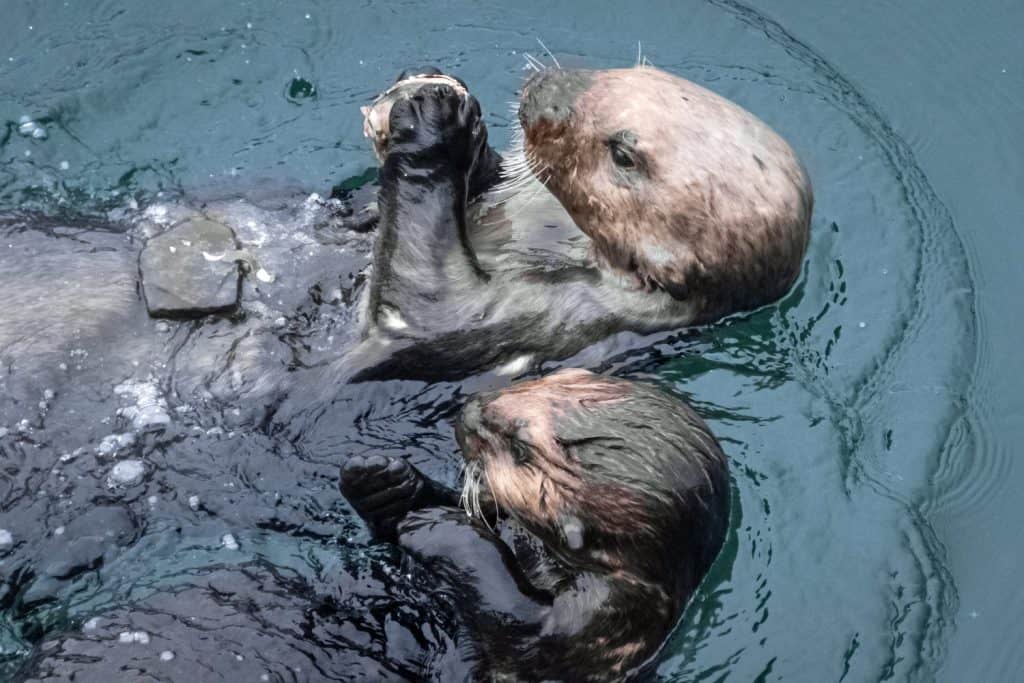
Sea otters hit clams with their favorite rock.
©Alaskan Wildlife/Shutterstock.com
But that’s not the only use for the pouch. Some of their prey have hard shells or exoskeletons that the otters cannot break open with their paws or teeth, so they use a rock tool. They may hold the rock on their chest and strike the prey against it, or place the prey on their chest and hit it with the rock. Importantly, not just any rock will do. Otters prefer a particular shape of rock that helps them open shells most efficiently. Once they find a favorite rock, they keep it in their special pouch as well. Some otters are observed to keep a favorite rock in this way for a long period. This simple flap of skin serves as both a food storage container and a toolbox!