
Quick Take
- Coyote mating season typically occurs from January through early March.
- Coyotes may expand their home ranges during breeding season, sometimes traveling several miles beyond their usual territory
- Frequent howling is a tool used to attract mates during the season.
- Strategic den-site scouting is vital for ensuring pup survival against apex predators.
On a cold late winter night, a sudden chorus of high-pitched howls can haunt a quiet neighborhood. Those sounds often mean local coyotes are in the middle of mating season, a short period when they travel more, call more, and defend space more actively. Rather than signaling that coyotes are overrunning an area, this window of time reflects ordinary breeding behavior for a native predator that has learned to live near people but might go unnoticed at other times of the year. Understanding what occurs during this time helps explain why sightings increase and why these animals behave a little differently than they do during warmer months.
From Prairie Predator to Nationwide Neighbor
Coyotes historically occupied the grasslands, deserts, and open woodlands of central and western North America, particularly the Great Plains and regions west of the Mississippi River. For much of the 19th century, their range was limited by the presence of larger predators such as wolves and aggressive extermination policies that targeted coyotes after the larger predators had been removed.

Historically, the Great Plains provided an ideal coyote habitat.
©Wirestock/iStock via Getty Images
However, as landscapes changed through farming, logging, and urban growth, and public policy became less intent on control them, coyotes adapted quickly. The removal of wolves and the spread of edge habitats, like fields mixed with woods and roads, opened new territory that coyotes were well suited to use. They could also migrate at night along highways and railroad tracks to new territories.
An Urban Species
Today, coyotes live in every state (except Hawaii) and much of Canada and Mexico and are successfully transitioning into an urban species. They occupy rural farmland, suburban neighborhoods, and major cities, adjusting their behavior to match local conditions.

Research in Chicago shows just how successful this expansion has been. Biologists have tracked thousands of individual coyotes in the metro area over several decades, documenting stable territories, long lifespans, and limited conflict with people. New York City has stable packs, regularly sighted in Central Park, the Bronx, and Queens. One pair, nicknamed “Romeo and Juliet,” have particularly captured the hearts of New Yorkers, being sighted even in daytime in Central Park. These findings confirm that coyotes are no longer just a rural species, but a permanent part of modern landscapes at nearly every scale.
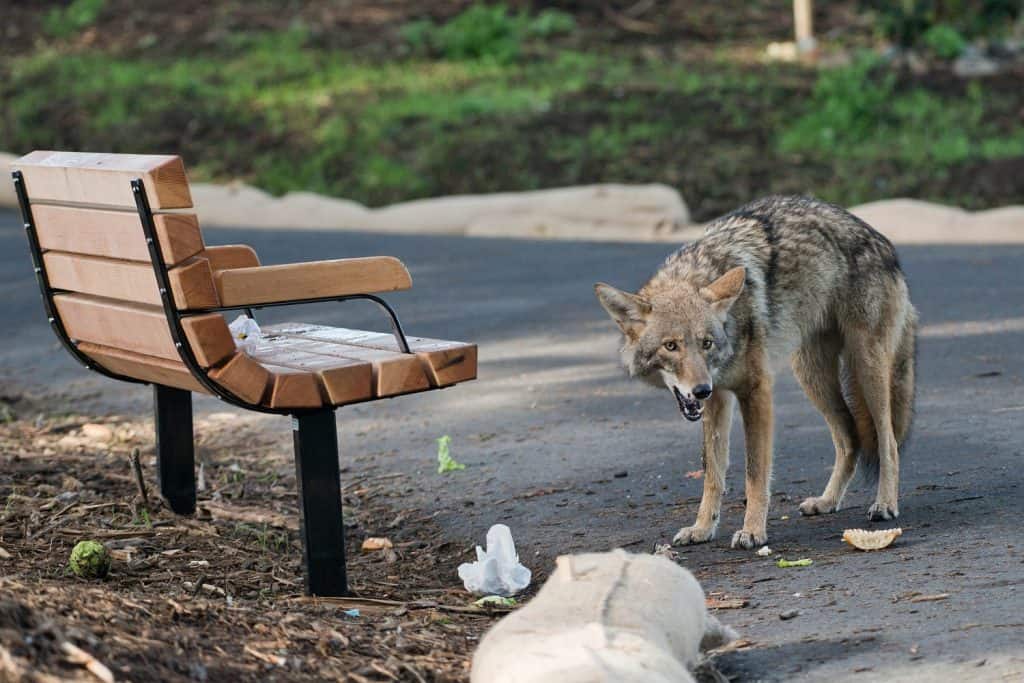
Urban coyotes often make a good living as scavengers.
©Matt Knoth/Shutterstock.com
When Coyotes Breed
Across most of North America, coyote mating season runs from January through early March. The highest level of breeding activity often occurs in February. Coyotes have one breeding cycle each year, unlike domestic dogs that may come into heat more than once.
After mating, pregnancy lasts roughly 60 to 63 days. Pups are usually born in April or May. Their dens are often located in brush piles, old burrows, rocky slopes, or eroded ground. Because this timing repeats consistently, late winter reliably brings more visible movement. It’s a time when coyotes search for mates and prepare territory before pups arrive.
Pair Bonds and Seasonal Travel
Coyotes are socially monogamous. This means a male and female often form a long-term pair, staying together for multiple breeding seasons. During mating season, these pairs travel more widely within their home range, checking scent marks and reinforcing boundaries. Young adults that left family groups in fall may still be searching for space and partners. As a result, they often roam farther than established pairs. This increase in movement raises the chances that people will notice a coyote crossing a road, moving along a fence line, or passing through a neighborhood green space during hours when they are usually less visible.

Coyotes form lifelong pair bonds.
©Project Coyote
Vocal Activity During Breeding
The howls, yips, and barks that echo through neighborhoods in winter serve several purposes. Coyotes use sound to locate partners, warn intruders, and signal that a territory is occupied. During mating season, these calls occur more often as adults coordinate movements and defend space.
A single pair can sound like many animals because overlapping calls echo over terrain and buildings, creating the impression of a larger group. Biologists refer to this as the beau geste effect. For nearby residents, frequent nighttime calling gives the impression that coyote numbers have suddenly increased, even though the population has remained stable.
Daylight Sightings Explained
Seeing a coyote during the day often raises concern, but daylight movement alone does not indicate sickness or aggression. In natural settings, coyotes may hunt at any hour. During breeding and later during pup care, adults sometimes stay active longer to patrol territory and secure food. In urban and suburban areas, coyotes usually shift more activity into nighttime to avoid people. However, daytime travel still occurs as they move between resting spots or check den areas. A healthy coyote on daytime patrol typically moves at a steady trot. Coyotes tend to show little interest in humans unless approached closely.
Territorial Behavior in Late Winter
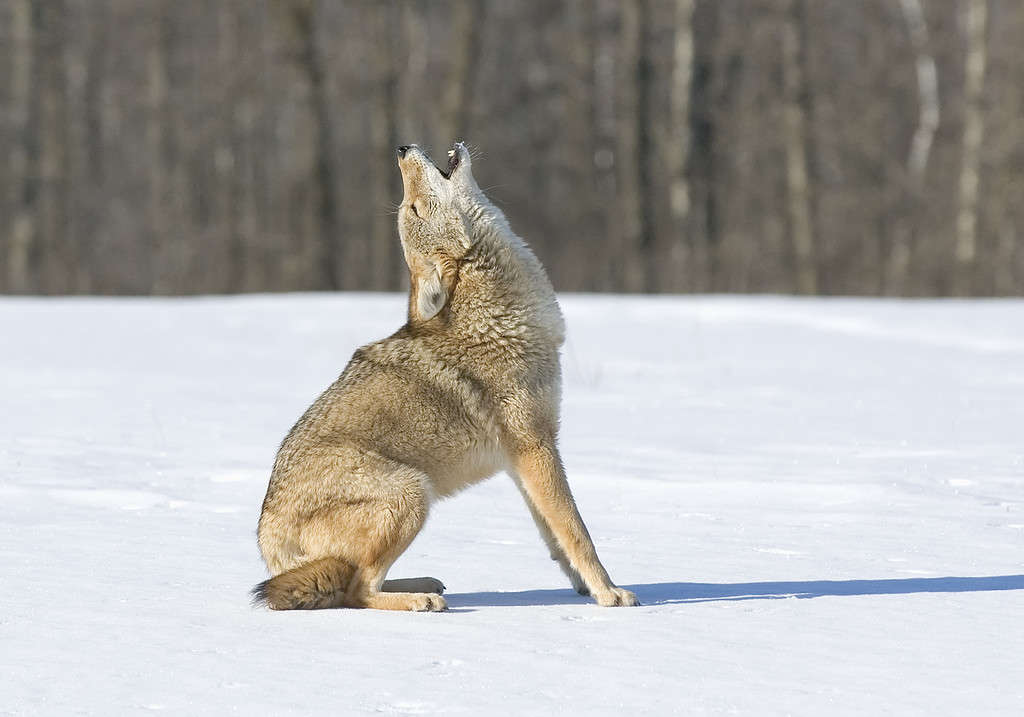
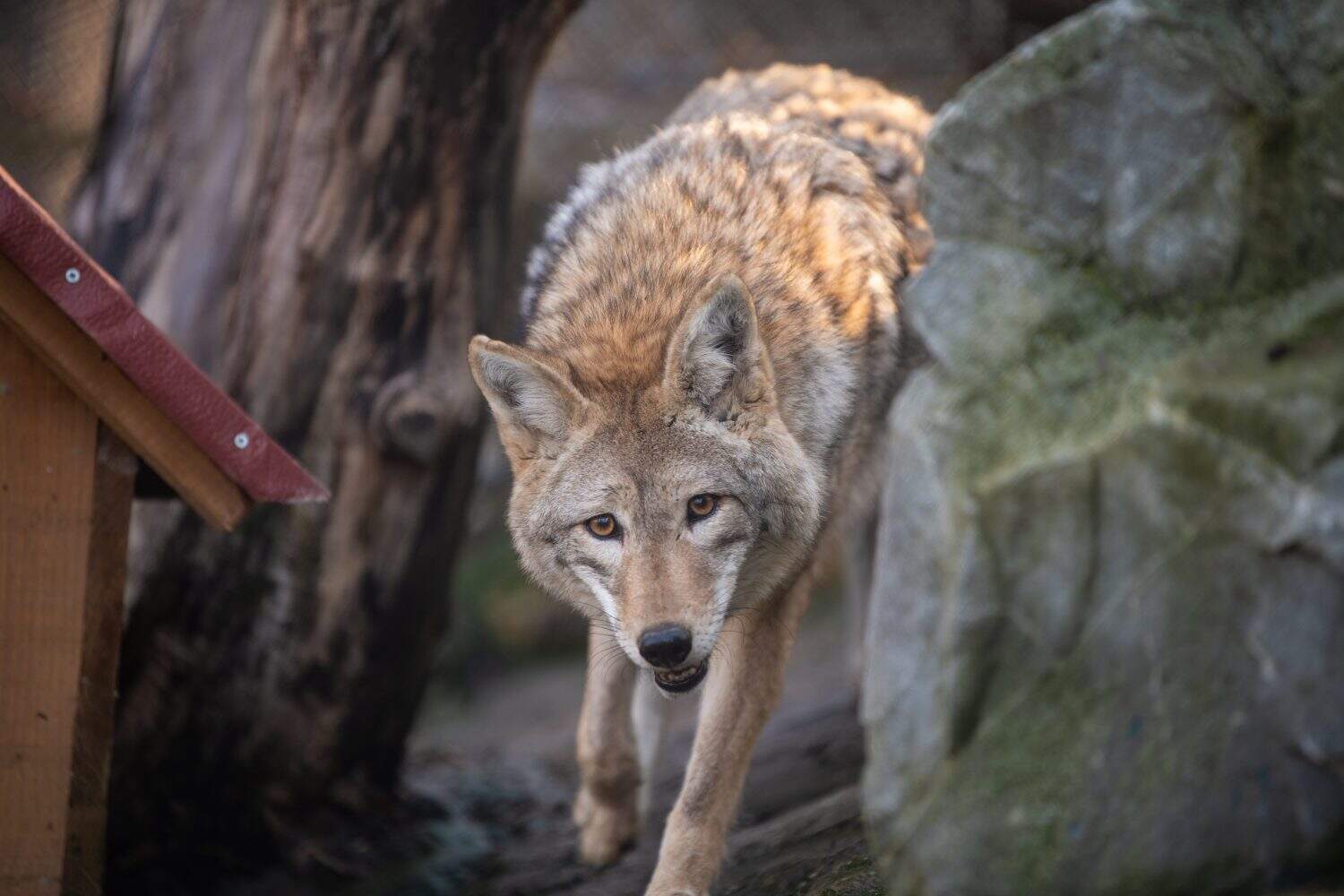
Coyotes howl more during breeding season as territorial defense.
©John Pitcher/iStock via Getty Images
Late winter conditions make wildlife easier to notice. Bare trees, snow cover, and shorter days reduce visual cover, so moving animals stand out against open ground. At the same time, coyotes expand their travel to find mates and defend territory, which increases the chance that their paths cross with roads and neighborhoods. Cold, quiet evenings allow howls to carry farther, adding to the sense that coyotes are suddenly more present than usual, even though these patterns are temporary.
Territorial defense becomes more noticeable during mating season. Coyotes rely on scent marks, travel routes, and vocal signals to define their home range. Urine marks and scat placed along paths and visible landmarks signal that an area is claimed. When a rival appears, resident coyotes may respond with barking, howling, or short chases meant to drive it away. These displays can look intense, but they are usually directed at other coyotes rather than people. Wildlife officials note that what appears to be rising aggression is mainly about protecting mates and space during a sensitive part of the breeding cycle.
After Mating Season Ends
Once breeding concludes, attention shifts to raising pups. Pregnant females select den sites in sheltered locations where pups will be born in spring. For several weeks after birth, the mother remains close to the den while the father and sometimes older offspring bring food and help guard the area. As pups grow through summer, the family range expands. By fall, many young coyotes disperse to find their own territory, continuing the annual cycle that shapes coyote behavior across seasons.
Coyotes, Pets, and Risk
Interactions with dogs and pets account for most tense encounters during mating season. Medium and large dogs may be seen as rival canines defending territory, which can trigger barking or brief rushes that usually stop once a human intervenes. Small dogs and outdoor cats face higher risk because their size resembles natural prey, especially in late winter when food is limited. Despite alarming stories, attacks on people remain rare and are most often linked to coyotes that have been fed or have lost fear of humans, not to normal breeding behavior itself.
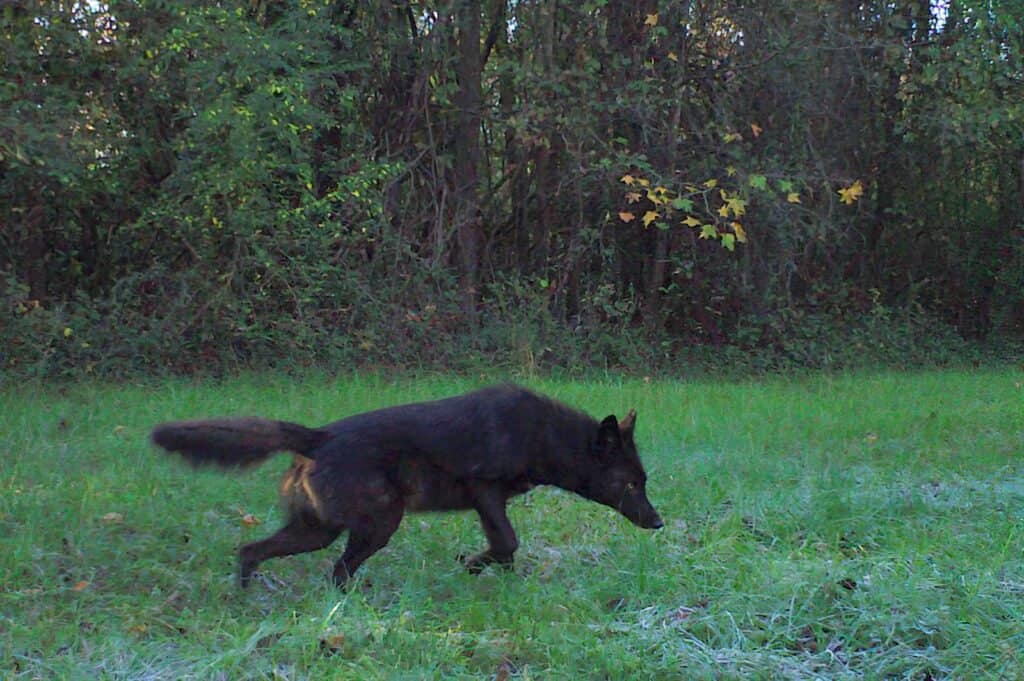
This black creature is a coydog, but, because of its uncharacteristic color, it could be easily mistaken for a domestic stray and not treated with appropriate caution by a well-meaning dog lover.
The presence of coyotes is also another reason to spay and neuter pets, especially those that spend time outdoors. Hybridization between coyotes and domestic dogs is rare, as their breeding cycles don’t sync, but it does happen and has been confirmed with DNA analysis of captured wild “coydogs.” The resulting hybrids have unpredictable temperaments, and they can look like stray dogs when they are actually very much a wild species. This can raise the risks of dangerous misunderstandings with people who might not observe the caution they would normally associate with a dog that looked and acted more coyote-like.
Reducing Conflict and Responding Safely
Most coyote encounters can be prevented by limiting attractants and responding calmly. Feeding pets indoors, securing trash, cleaning up birdseed, and removing fallen fruit reduce reasons for coyotes to linger near homes. When a coyote appears nearby, standing upright, making eye contact, and using loud noises such as clapping or shouting usually encourages it to leave. Picking up small dogs and calmly exiting the area helps avoid escalation while reinforcing a coyote’s natural caution toward people.
The Kindness of Teaching Stranger Danger
It is critically important for people with a soft heart toward wildlife and dogs to understand this: feeding or being friendly toward a coyote does not tame the animal or turn it into a domestic pet. What it actually does is teach a wild animal—like a bear or bobcat—that humans are safe and that food comes from people. Full stop. Once that lesson is learned, the animal may begin approaching other humans, some of whom may harm it. In other cases, the animal may approach campsites or picnics expecting to be fed and react with confusion or aggression when food is present but denied. Animal lovers often believe they are helping, but in reality, they are training the animal to trust humans in a world where it is not safe to do so. Wild animals need to learn “stranger danger” to survive safely alongside people.
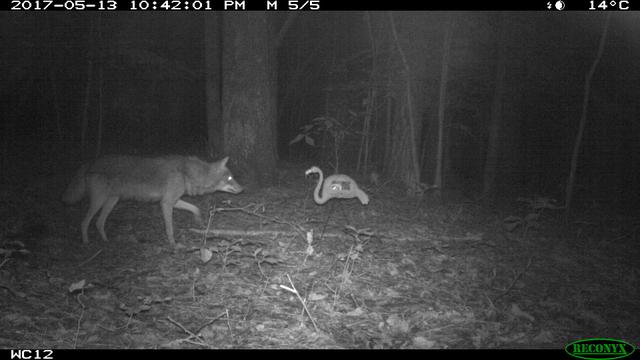
A coyote approaches a plastic lawn flamingo in a research project. These are naturally curious animals.
©Stephanie Manka
Living Alongside Coyotes Through the Season
Coyote mating season can feel unsettling, but understanding what drives these behaviors makes coexistence easier. Late winter brings a temporary increase in movement, vocal activity, and territorial displays as bonded pairs secure space for future families. These changes rarely translate into direct danger for people who supervise pets and manage food sources. Viewing coyotes as adaptable wildlife rather than threats helps communities respond calmly while allowing this native predator to continue its role in local ecosystems.