
Quick Take
- The rival swan has a connection to the nesting pair that makes her intrusion far stranger than it first appears. Meet the odd rival →
- Watching a swan stomp across her own eggs looks like disaster, yet the science of what actually happens to those eggs is deeply counterintuitive. See why eggs survive →
- The male's behavior the moment his mate gives chase reveals something about mute swan pair bonds that the 'lifelong monogamy' reputation completely glosses over. Discover the pair bond truth →
- 'Mute' swan is a name that fundamentally misleads you about what these birds actually do during a fight. Hear what mutes actually do →
When you think of swans, often the images that come to mind are those of graceful and soothing creatures. They glide along the water, heads held high. However, all dignity falls by the wayside when one swan infringes on another swan’s nest holding a fresh clutch of eggs.
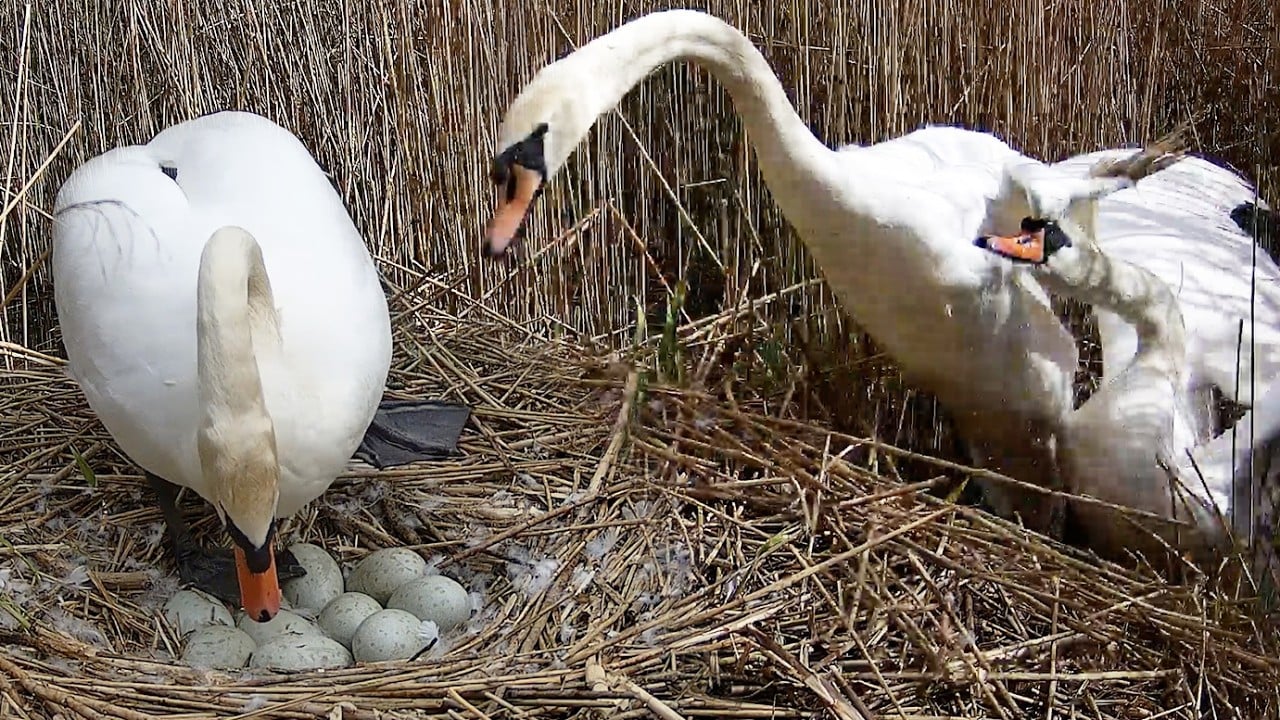
In this video, a female mute swan incubating ten eggs in Yorkshire does something that looks reckless on camera. When a rival female approaches her nest, she rises, hisses, and gives chase, stomping directly across her own clutch as she launches into pursuit. The eggs survive. The intruder, a one-winged swan nicknamed Floppy, is driven off across the lake. The male, called the cob, returns to inspect the eggs and settles in to keep them warm until his mate comes back.
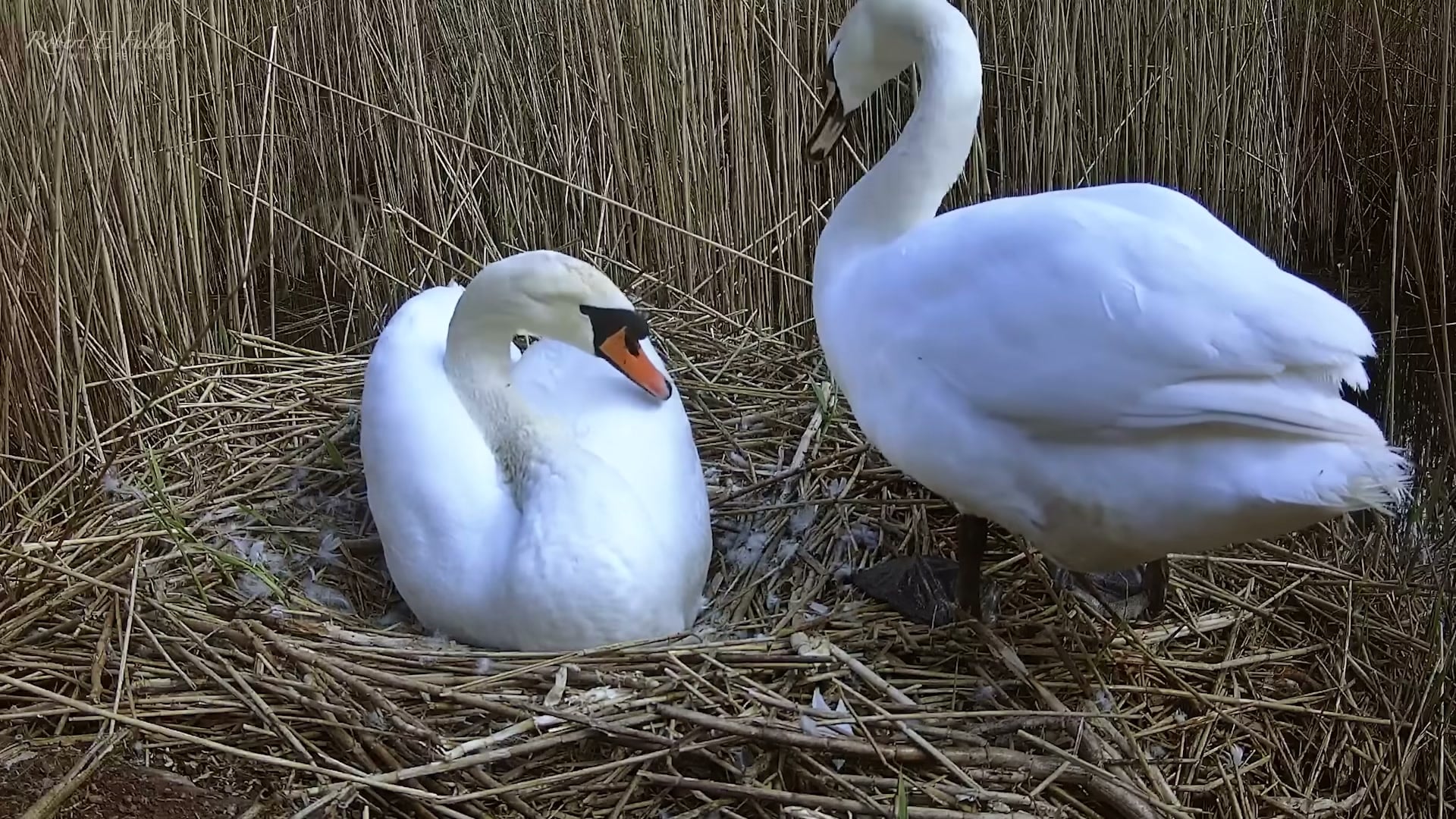
Clean two-swan nest shot, sharp, good lighting and framing
©Robert E Fuller via YouTube — used under fair use – Original / License
The footage, filmed by wildlife artist Robert E. Fuller, captures a behavior that is well-documented in mute swans (Cygnus olor) but rarely seen this close. Mute swans are among the most territorially aggressive waterfowl in Europe. Breeding pairs defend nest sites with a stereotyped repertoire of threat displays: the busking posture with wings arched over the back, loud hissing, and direct pursuit of intruders on water or in flight. According to the British Trust for Ornithology, territorial defense intensifies sharply during incubation, when both members of a pair will attack other swans, geese, and occasionally humans who approach too closely.
An Odd Rival
The detail that makes this clip unusual is the identity of the rival. Fuller notes that Floppy is one of the pair’s own cygnets from their 2023 brood. Mute swan parents typically drive their offspring out of the natal territory before the next breeding season, a behavior described in long-term studies of the species at sites such as Abbotsbury Swannery in Dorset, where mute swan colonies have been monitored for centuries. Young birds that linger or attempt to return are treated as any other rival. Kinship offers no immunity. The mother in this footage is not recognizing a daughter. She is recognizing a competitor near her nest.
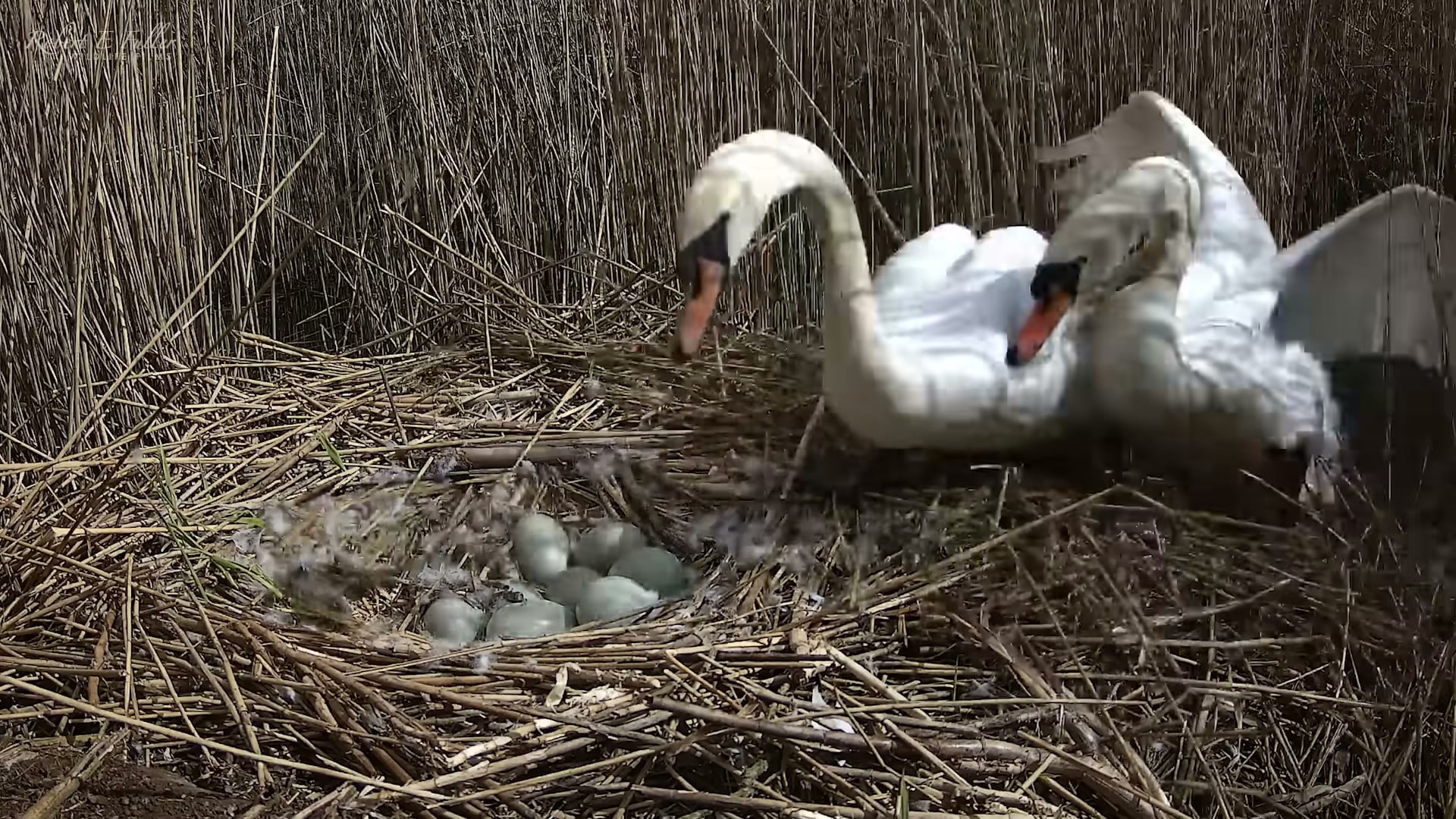
The swan’s eggs are more durable than they appear.
©Robert E Fuller via YouTube — used under fair use – Original / License
The cob’s apparent courtship of the younger female fits within what researchers know about mute swan pair bonds. The species is often described in as monogamous for life, and long-term pairings are indeed common, with divorce rates estimated at around three percent per year in stable populations. Extra-pair behavior does occur, particularly when younger unpaired birds drift into established territories. Pair bonds in mute swans are best understood as durable but not absolute.
The Kids are Alright
The moment when the she tramples her own eggs looks alarming, but waterfowl eggs are more robust than they appear. The shells of mute swan eggs are thick enough to support the weight of an adult bird shifting position during the roughly 35 to 41 day incubation period. Brief exposure to cool air during a territorial chase is also unlikely to harm developing embryos, provided incubation resumes promptly. Studies of incubation behavior in waterfowl, including work summarized by the Cornell Lab of Ornithology, show that short recesses of several minutes are normal and well tolerated, particularly in mid to late incubation when embryos generate some of their own metabolic heat.
The cob’s behavior after the chase is also typical. Male mute swans share incubation duties to a limited extent, taking over for short periods while the female feeds or bathes. His inspection of the eggs in the footage, followed by settling onto the clutch, reflects a coordinated parental role rather than anything unusual. Both parents will later escort cygnets and defend them aggressively for months after hatching.
Don’t Let the Name Mislead You
One common misconception worth addressing: mute swans are not silent, despite the name. They produce hisses, grunts, and a distinctive throbbing wingbeat in flight that carries for considerable distances. The name refers only to their lack of the loud bugling calls made by whooper and Bewick’s swans. The hissing heard during territorial encounters like this one is part of a graded threat display, escalating from posture to vocalization to physical attack if the intruder does not retreat.
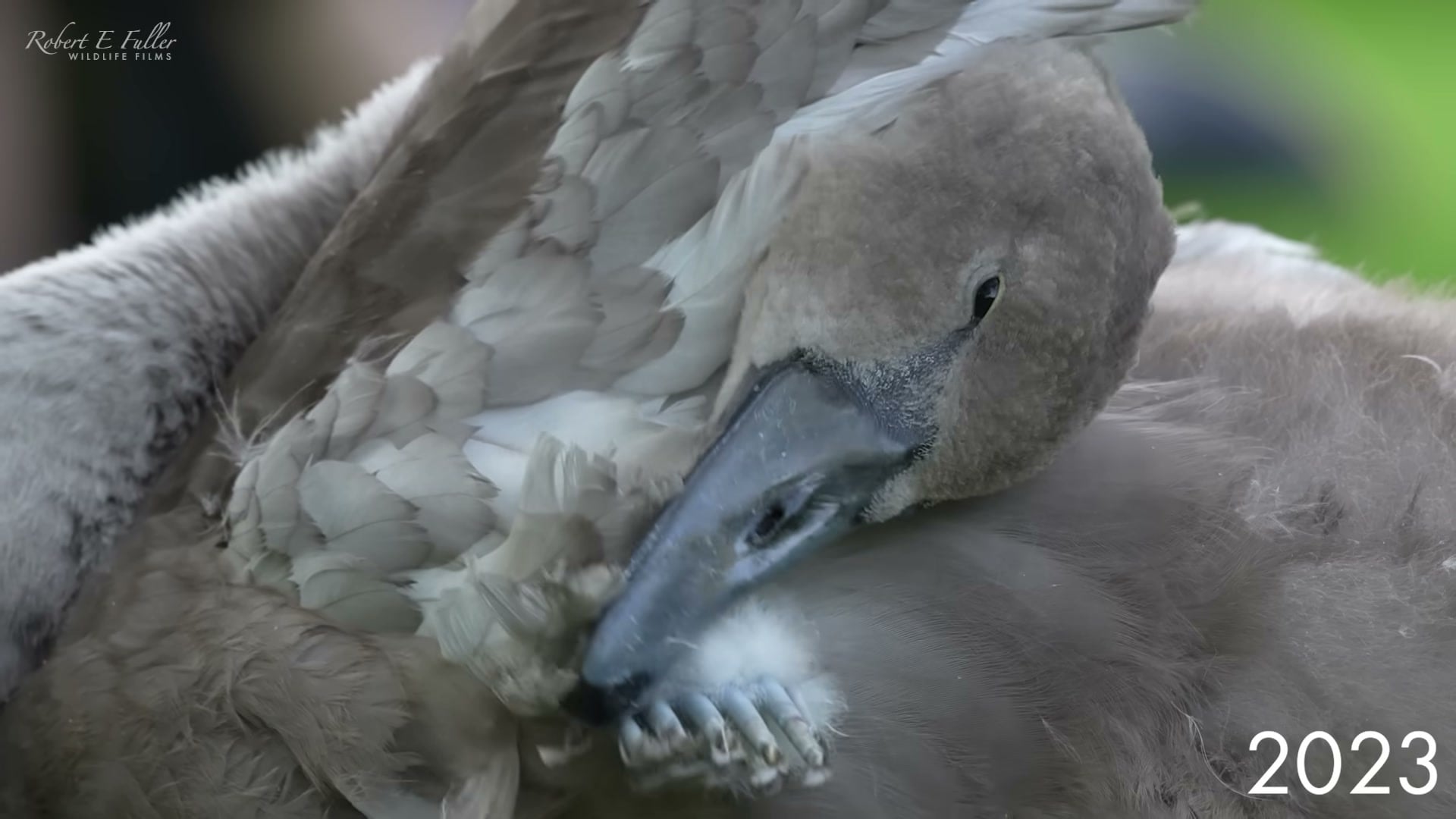
The must swan is counter-intuitive. They are not silent at all. In fact, they make a variety of sounds.
©Robert E Fuller via YouTube — used under fair use – Original / License
For the pair on Fuller’s livestream, the encounter ended without lasting damage. The eggs remain viable, the rival has been chased off, and the pair has resumed incubation. Whether Floppy returns, and whether the cob’s interest in her persists once cygnets hatch, are the kinds of questions long-term nest cameras are uniquely placed to answer.
References and further reading: British Trust for Ornithology species account for mute swan; Cornell Lab of Ornithology, All About Birds; Birkhead and Perrins, The Mute Swan (1986); Abbotsbury Swannery research archives.