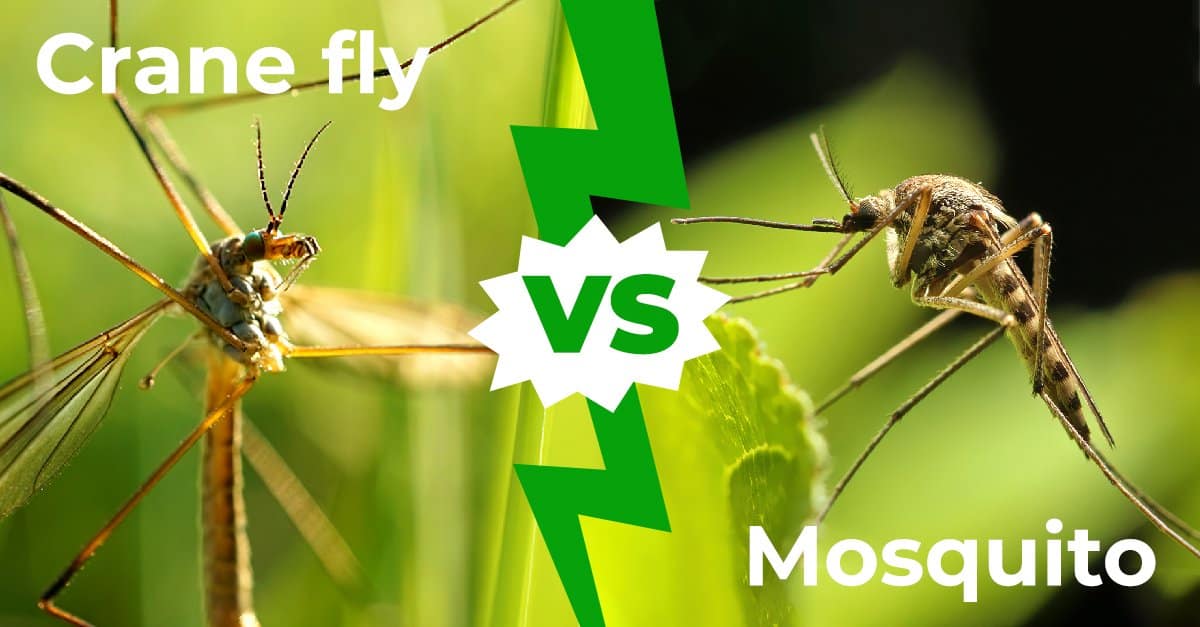

Mosquitoes and crane flies are often confused with one another because they look similar at first glance, and they live in comparable habitats. However, the truth is that they are two completely separate species. What sets these two insects apart? One is much bigger than the other and has much longer legs, while one has two pairs of wings and the other has only one pair. But perhaps the most important difference is that one is completely harmless, while the other is a vector for deadly diseases. Continue reading to discover all of the differences between the crane fly and the mosquito.
Comparing Mosquitoes and Crane Flies
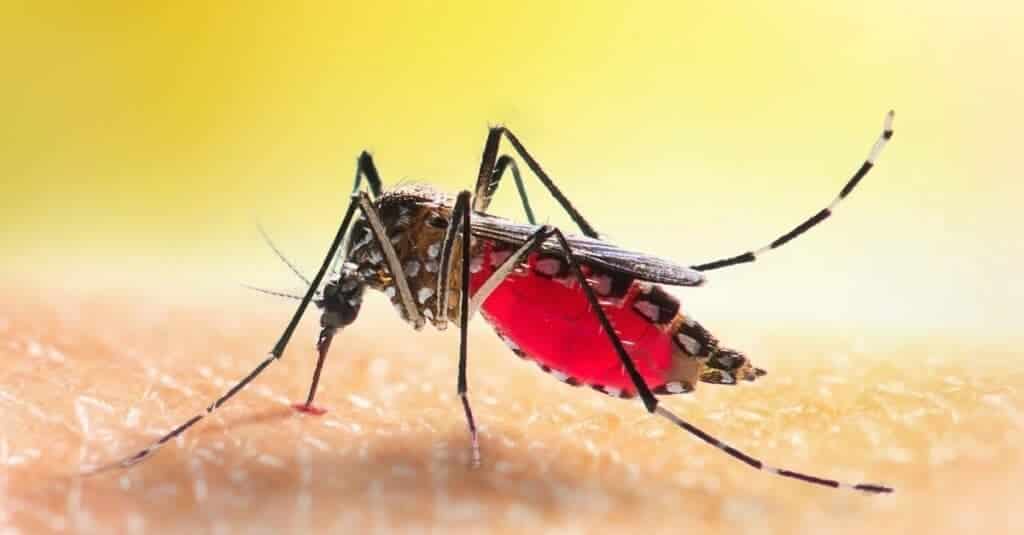
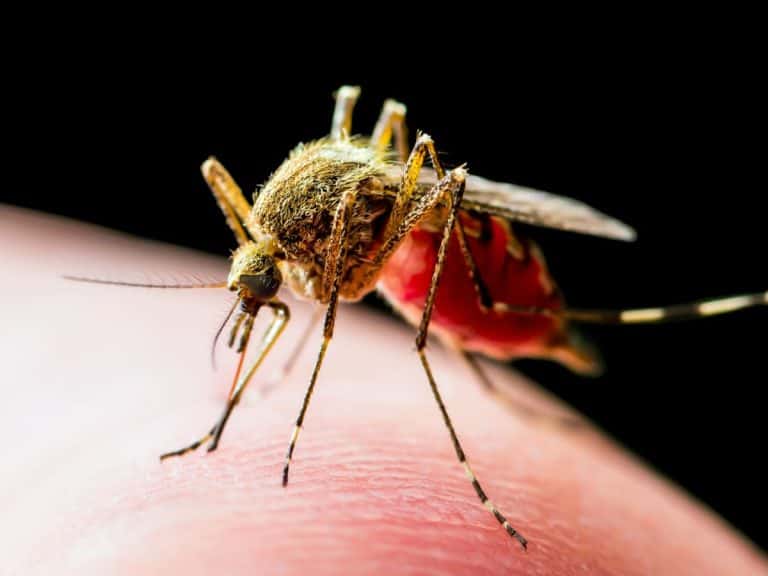
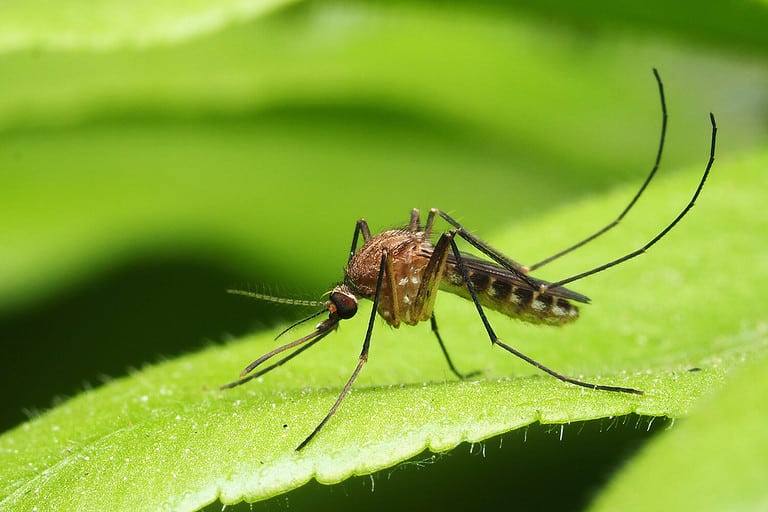
Mosquitoes can deliver painful or itchy bites that may carry disease.
©iStock.com/panom
Mosquitoes (Culicidae) and crane flies (Tipuloidea) are flying insects with long legs. They have the same habitats and lay their eggs near water. However, despite these similarities, crane flies and mosquitoes are very different upon close inspection.
Mosquitoes vs. Crane Flies: Table of Key Differences
| Mosquito | Crane Fly | |
|---|---|---|
| Size & Shape | Between 0.15 and 0.4 inches long. Have a bent thorax and abdomen. Have a needle-like mouthpart for sucking blood | Around 1.5 inches long. Straight bodies. Females have an ovipositor on their abdomen for laying eggs |
| Legs | Long and thin | Around twice the length of their bodies (much longer than mosquitoes) |
| Wings | Two pairs – one for flying, and a second, much smaller pair. Wingspan around 0.94 inches | One pair. Wingspan usually between 0.5 and 2.5 inches |
| Antenna | Hairy | Not hairy |
| Diet | Both males and females feed on nectar and other plant juices, but females also feed on human and animal blood | Do not eat in the adult stage. Larvae feed on flowers, grass roots, algae, etc. |
| Threat | Females feed on blood and can pass on harmful diseases such as malaria | Completely harmless to humans – don’t bite or sting |
| Time most active | Crepuscular — most active at dawn and dusk | Nocturnal but attracted to lights |
| Lifespan | Males live 6 to 10 days, while females typically live 2 to 6 weeks, though up to 5 months is possible in rare cases. | 10 to 15 days |
Size & Shape
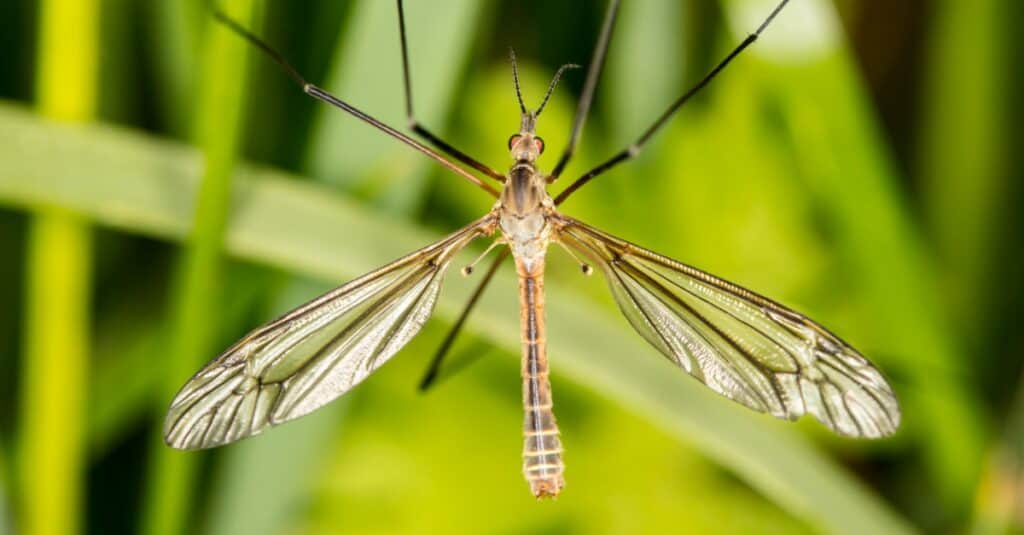
Crane flies are larger than mosquitoes.
©iStock.com/maselkoo99
One of the most noticeable differences between crane flies and mosquitoes is the difference in their sizes. Crane flies are much larger than mosquitoes. They have long, straight bodies that are around 1.5 inches long. Females also have an ovipositor at the bottom of their abdomens, which is used for laying eggs on the ground. Mosquitoes are only between 0.15 and 0.4 inches long and have a bent thorax and abdomen, which gives them a hunched appearance. They also have a needle-like mouthpart, called a proboscis, which is used for sucking up blood.
Legs
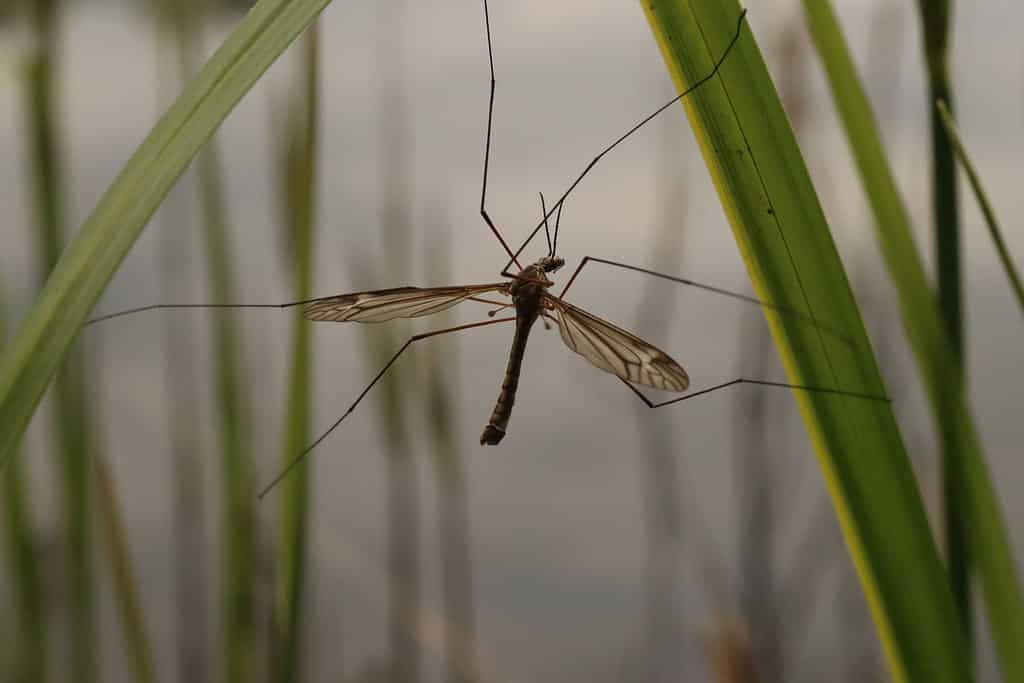
Crane flies have extraordinarily long legs.
©Wirestock/iStock via Getty Images
Although mosquitoes have fairly long legs themselves, they still don’t come close to the incredible length of those of a crane fly. Crane flies have legs that are about twice the length of their bodies. Therefore, it’s not surprising that they are also sometimes called daddy longlegs, though that name is more commonly associated with harvestmen spiders (Opiliones) and cellar spiders (Pholcidae).
Wings

Mosquitoes have two pairs of wings, while crane flies have but one.
©Courtesy of The Other 95%, CC BY-SA 4.0 – Original / License
Another major difference is their wings. Mosquitoes have two pairs of wings: one pair of wings for flying, while the second pair is reduced to small structures called halteres, which help with balance. Their entire wingspan is only around 0.94 inches. Crane flies have one pair of wings. Their wingspan is usually between 0.5 and 2.5 inches, though some rare species can reach up to 4 inches.
Diet
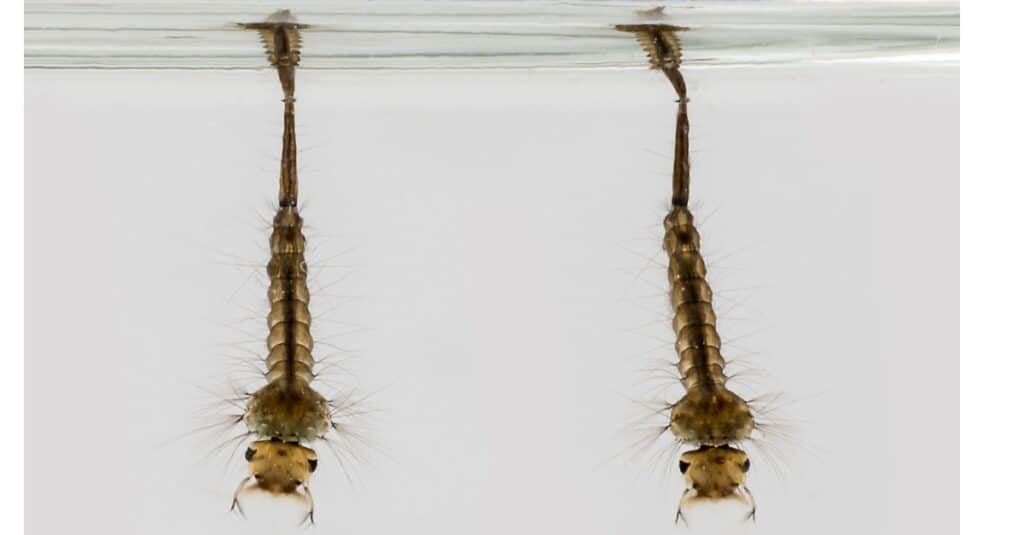
Crane fly larvae (pictured) are aquatic or semi-aquatic, while mosquito larvae are aquatic.
©iStock.com/Janny2
Adult crane flies don’t eat at all, but larvae feed on plants, crops, seedlings, grass roots, and algae. Both male and female mosquitoes feed on nectar and other plant juices. However, the big difference is that female mosquitoes feed on both human and animal blood.
Threat
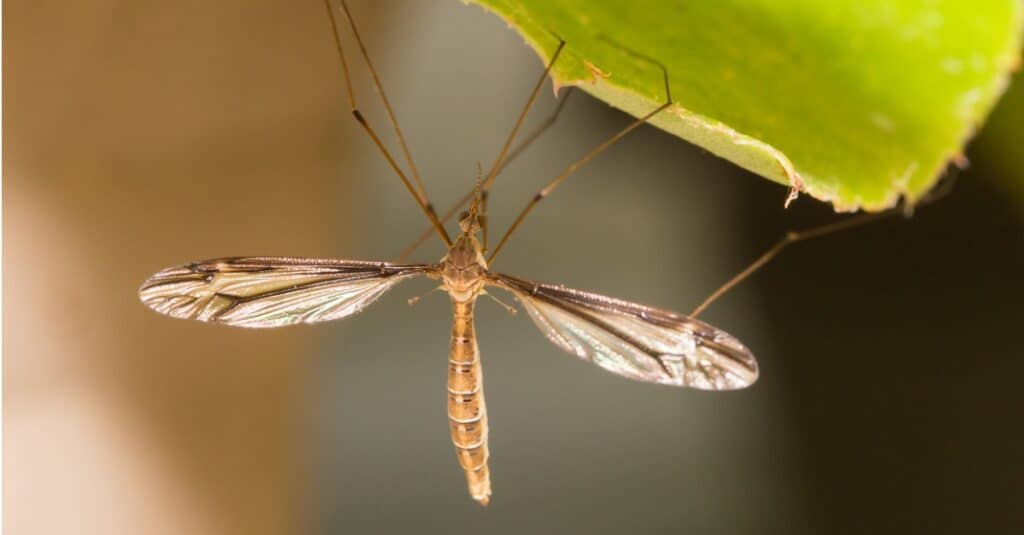
Crane flies are harmless.
©iStock.com/Aschen
One of the biggest differences between crane flies and mosquitoes is how dangerous they are. As we’ve already mentioned, female mosquitoes feed on blood, and this allows them to transmit harmful diseases such as malaria. Crane flies, on the other hand, are completely harmless. Crane flies don’t feed during their adult stage, nor do they bite or sting.
Nocturnal vs. Crepuscular
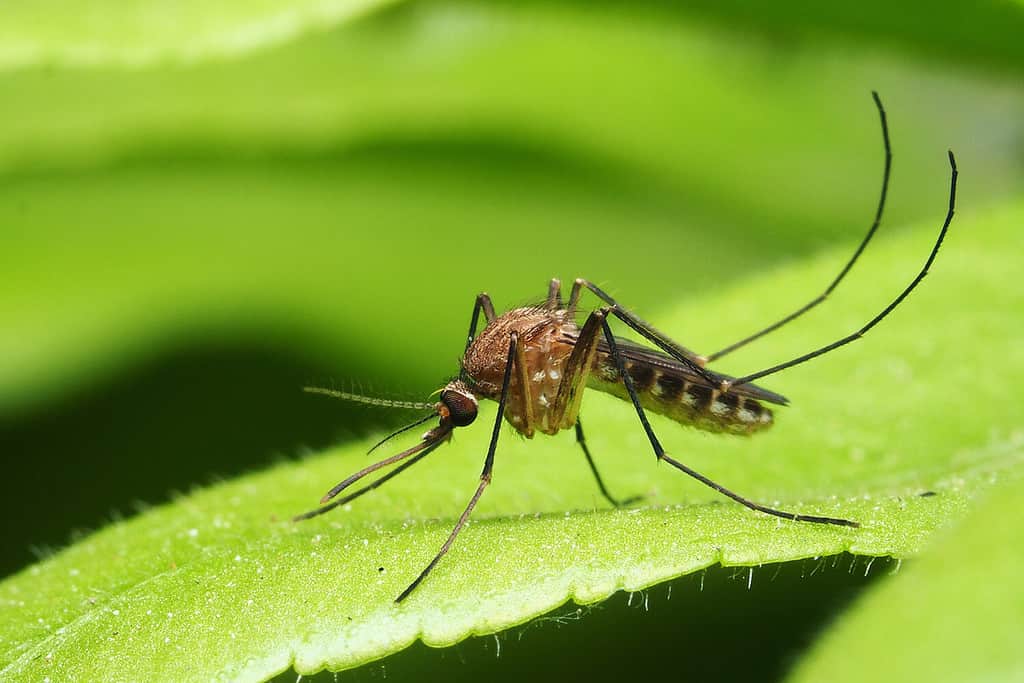
©jiade/Shutterstock.com
Mosquitoes are crepuscular, which means that they are most active during the twilight hours — dawn and dusk. Mosquitoes tend to avoid direct sunlight as it can quickly dehydrate and kill them. During the day, mosquitoes are often found in shaded wetland areas. Crane flies are nocturnal, meaning they are most active during the night. However, they are attracted to lights, which is why they are often found around porch lights.