
Hiking is one of the most popular pastimes for people who love exercise, nature, and the opportunity to incorporate a bit of adventure into their busy lives. However, like many activities, hiking requires care and caution, and planning ahead is essential. A case in point is the sad news story about a hiker who was bitten by a snake, with unfortunate results. We’ll tell you more about what happened. We’ll also use this example to illustrate the importance of learning about dangerous snakes and the necessity of hiking safety every time you hit the trails.
A Tragic Incident
On August 8, 2024, an unidentified hiker visited Savage Gulf State Park in Tennessee for a day trip. According to emergency professionals in the area, it was during that hike that the traveler was bitten on the hand by what was believed to be a timber rattlesnake.
The incident was observed by witnesses who saw the hiker approach the venomous snake and attempt to pick it up. The snake struck quickly and bit his hand. Paramedics arrived and tried to save the man by administering CPR. They then brought him to the hospital, where he passed away. It’s unclear if the man had an allergic reaction to the bite. Full details are still being investigated. Regardless, it’s a sad story that likely could have been avoided through planning and caution. The whole story is a tragedy, but there are many lessons we can all learn from this event.
The Timber Rattlesnake
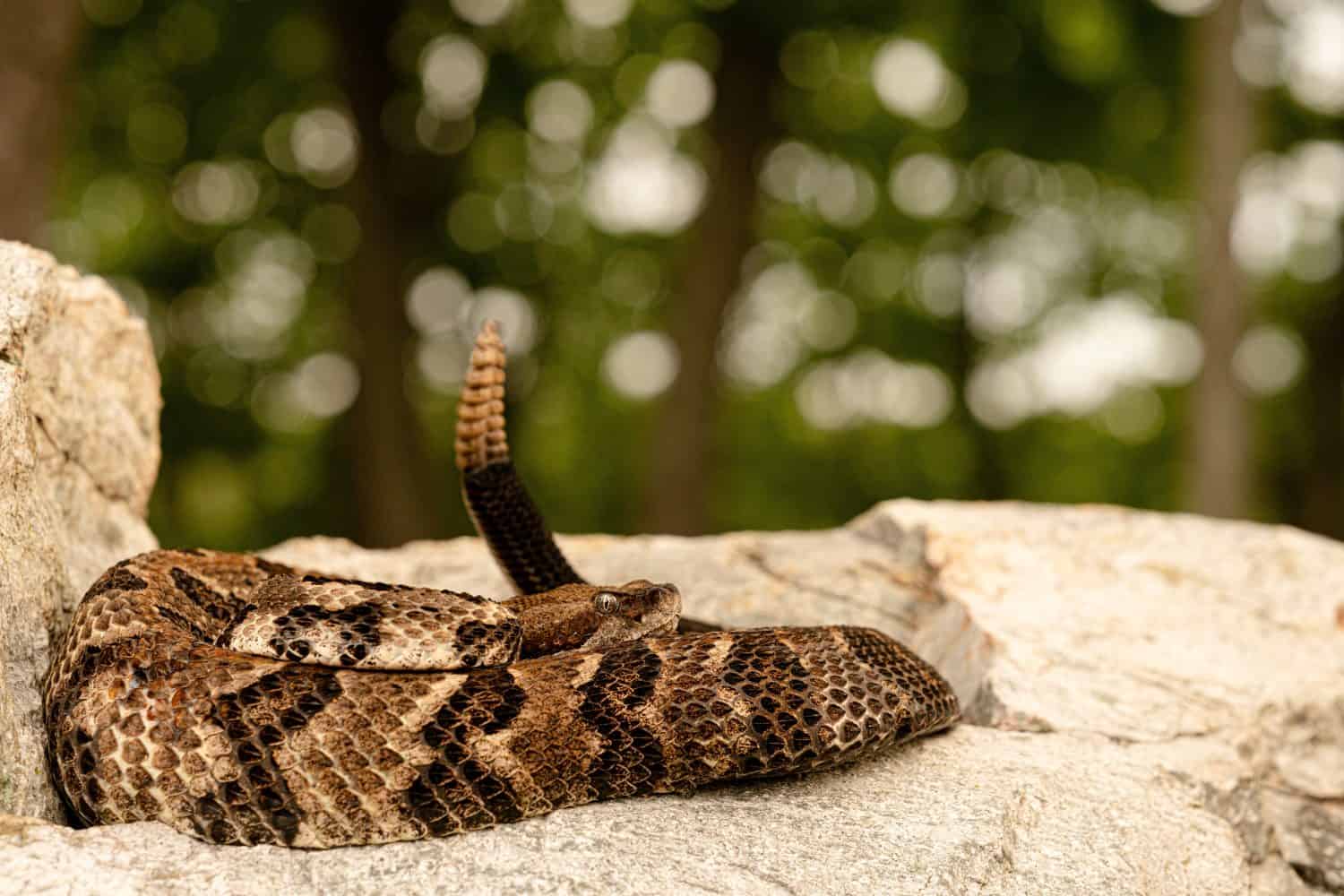
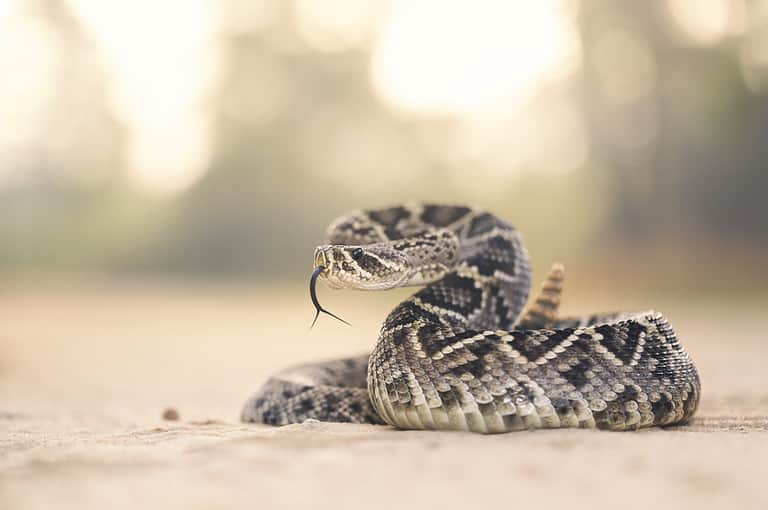
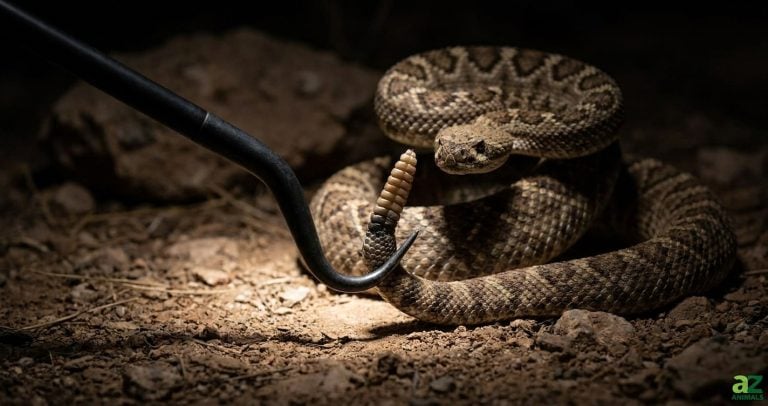
The timber rattlesnake is one of the more common pit vipers in the country. Watch for it during your hike.
©Radiant Reptilia/Shutterstock.com
Based on witness testimony and descriptions, it’s widely believed that the snake that struck the man was a timber rattlesnake (Crotalus horridus). The snake is part of the pit viper family, which consists of various snake species. Most pit vipers are venomous and thus quite dangerous. They get that name because the species has “pit organs” between each nostril and eye. The pits are heat-sensitive, allowing it to more accurately strike warm-blooded prey. Needless to say, it’s quite dangerous and a skilled hunter when it’s hunting or protecting itself against predators.
The timber rattlesnake and other pit vipers are found in many places across the United States. You may run across them during hikes in states from New York to Texas. In addition to being found in many states, pit vipers are also comfortable in many habitats. You can spot them anywhere from hilly woodlands to lowland forests. They often make a home near swamps and streams where they can find refuge.
Your average timber rattlesnake will be between 2.5 and 5 feet long. Though some can get as large as seven feet, they are typically gray or brownish and often have a stripe down their back. While you can identify the snake by this pattern, it’s also a very effective camouflage that allows it to blend in very well with the vegetation on the ground, so you need to watch your step.
Signs a Snake May Strike
If you do happen to stumble upon the snake or invade its space, you’ll usually know it. In response to your arrival, the snake will likely prop itself up and shake its “rattle.” That rattle is really made up of miscellaneous clumps of the substance keratin. That’s the same material that human fingernails are made from. It sounds like a baby rattle. That’s your warning. Do not try to grab or touch the snake. Walk away. The good news is that timber rattlesnake bites are rare. In most cases, the snake will stay coiled or remain stretched out on the ground with the hope that you’ll keep moving.
What to Do If Bitten by a Snake
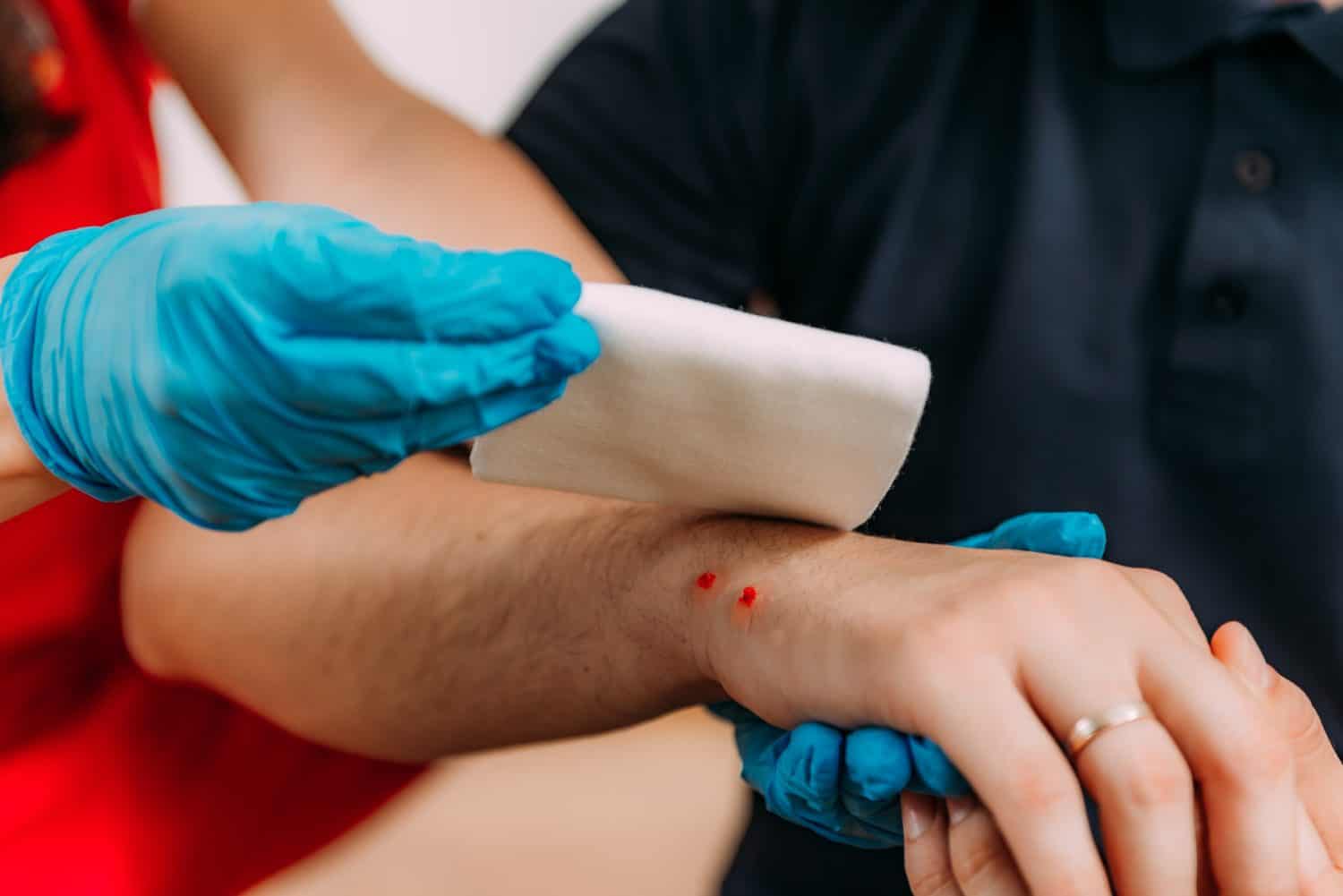
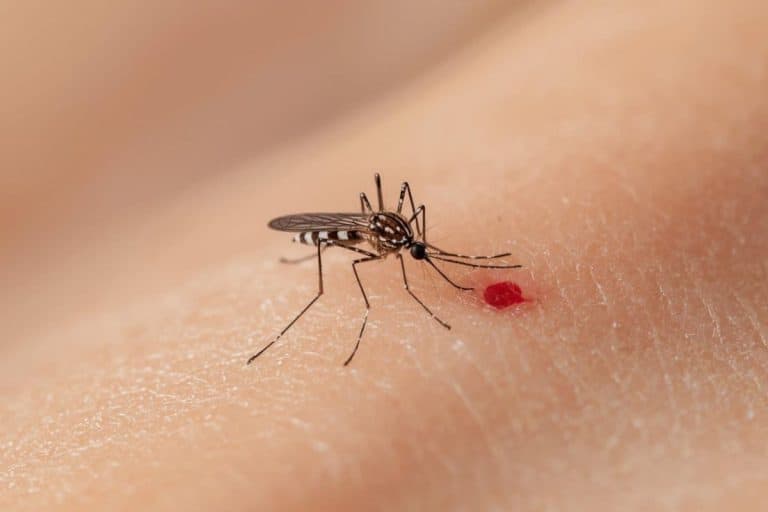
If you know you’ve been bitten by a venomous snake, emergency care is required.
©Microgen/Shutterstock.com
If the snake were to bite you in any way, it’s considered a medical emergency. You need to seek help right away. In the meantime, do your best to keep the part of your body where you were bitten at the same level as your heart. That will most likely be your arm or leg. If you’re alone and walking to safety, do the best that you can to keep the bite elevated. Also, try to remove any tight clothing, jewelry, or watches from the area to avoid making the issue worse. If possible, you can try to gently wash the area with water and soap. Finally, if you have your phone and reception, call the poison control hotline at 800-222-1222.
What Not to Do
The other side of hiking safety is just as crucial. It’s knowing what not to do if you see a snake. For starters, ignore most of the advice you heard in the past. Especially when it comes to capturing the snake so the doctor can identify it. Instead, get out of the situation. You do not want to risk the chance that the snake may try to bite you again. At most, you might try to take a picture of it, but do so while staying out of additional danger.
Additionally, it’s essential to be aware of outdated first aid techniques that should be avoided. Do not cut the wound or try to suck out the venom. Additionally, avoid applying a tourniquet to the area, as this can isolate the venom to that limb. Although it may seem like a good idea, it actually complicates medical treatment. Doing so can also lead to permanent disfigurement or other potential long-term consequences. It’s also not recommended to put ice on the affected limb. That act can also concentrate the venom and cause the same issues, while also slowing your circulation.
How to Avoid Snake Bites
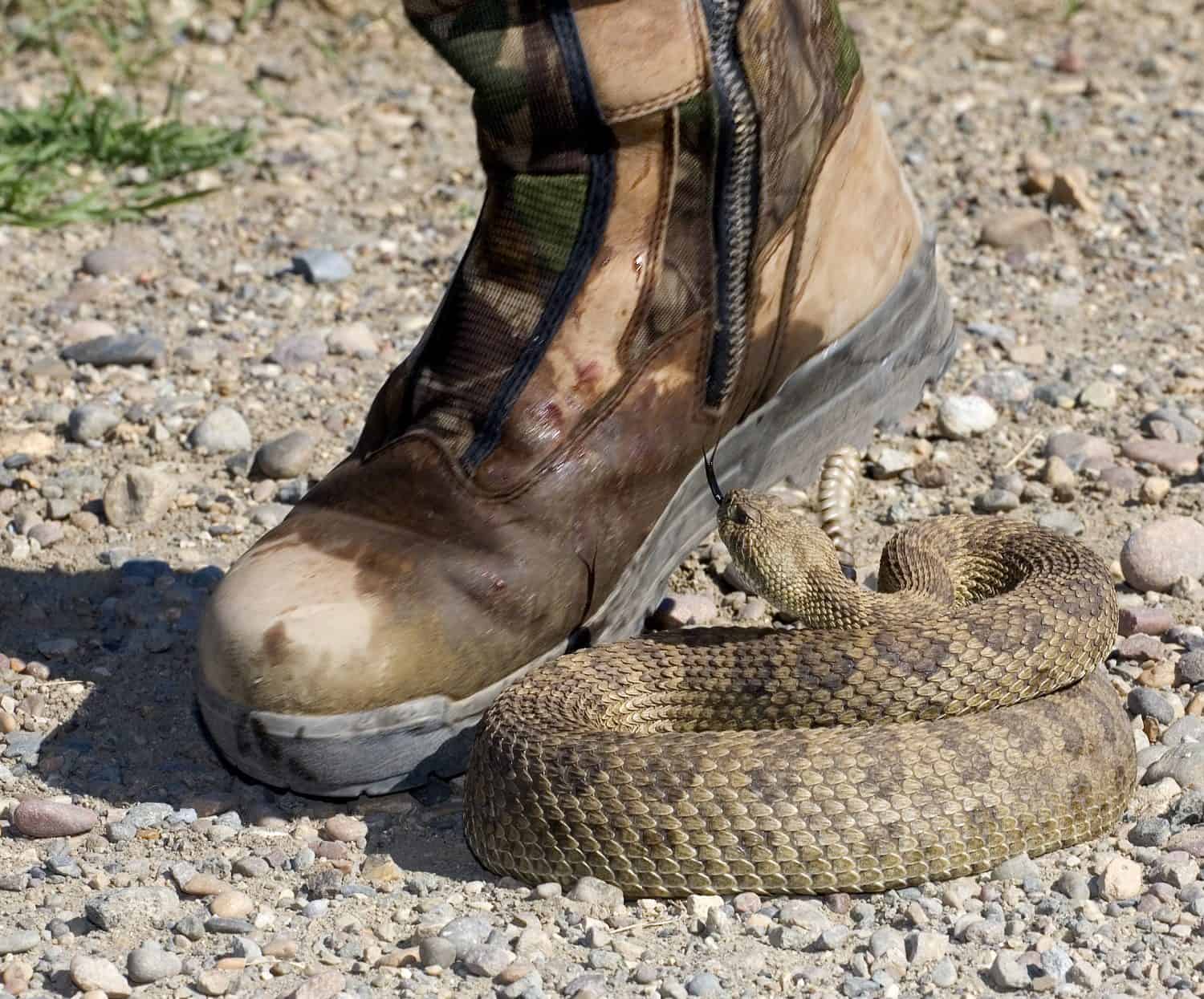
Always wear hiking boots that go up past the ankle in case of snakes.
©Guy J. Sagi/Shutterstock.com
Perhaps the best tip to know about hiking safety for snake bites is knowing how to avoid getting bitten in the first place. Wearing proper hiking attire is key. Though it may be hot when you hike, it’s wise to wear long pants with loose fabric. That’s so you can quickly get the snake out of your pants if it makes its way inside. Pair the pants with suitable hiking boots that go up past the ankle. The boots will make it more difficult for the snake to pierce your skin if it tries to strike.
If you’re hiking a trail and you happen to see a snake in your path, give it space. Walk elsewhere if it’s safe to do so. Avoid trying to move the snake with a stick. It may see that as a threat and could be tempted to attack. Finally, it’s important to research your area or where you plan to hike to determine if venomous snakes are common there. You can do so by going online and searching for specific snakes in your city. Another idea is to call your state’s wildlife department or visit their website. You can also visit websites like Crofab and search multiple states from one place.
Essential Hiking Safety Tips
Snakes are only one of the considerations to keep in mind when it comes to hiking safety. Before you hit the trails, there are numerous tips to keep in mind:
- Research your route – The best way to avoid getting lost on the trail is to obtain a map of the area so you can explore and get home safely. Bringing a compass that you can read is also advisable. Finally, always stay on marked trails.
- Check the conditions – It’s important to check the weather. Not only to know in advance if it will snow and rain, but also to learn about the temperature. If it’s too hot, you may want to wait until the temperatures are mild.
- Drink water – Bring a lot of water and drink it throughout your hike to avoid dehydration.
- Protect yourself from the sun – Even if it’s not too hot, hiking under the glaring sun without protection can lead to heat exhaustion. So, wear a hat and bring sunscreen.
Hiking is an incredibly thrilling pastime that can allow you to see the true beauty of our natural world. However, though it’s fun, staying safe is key. Research the local snakes and take all necessary precautions before you head out on your next adventure.