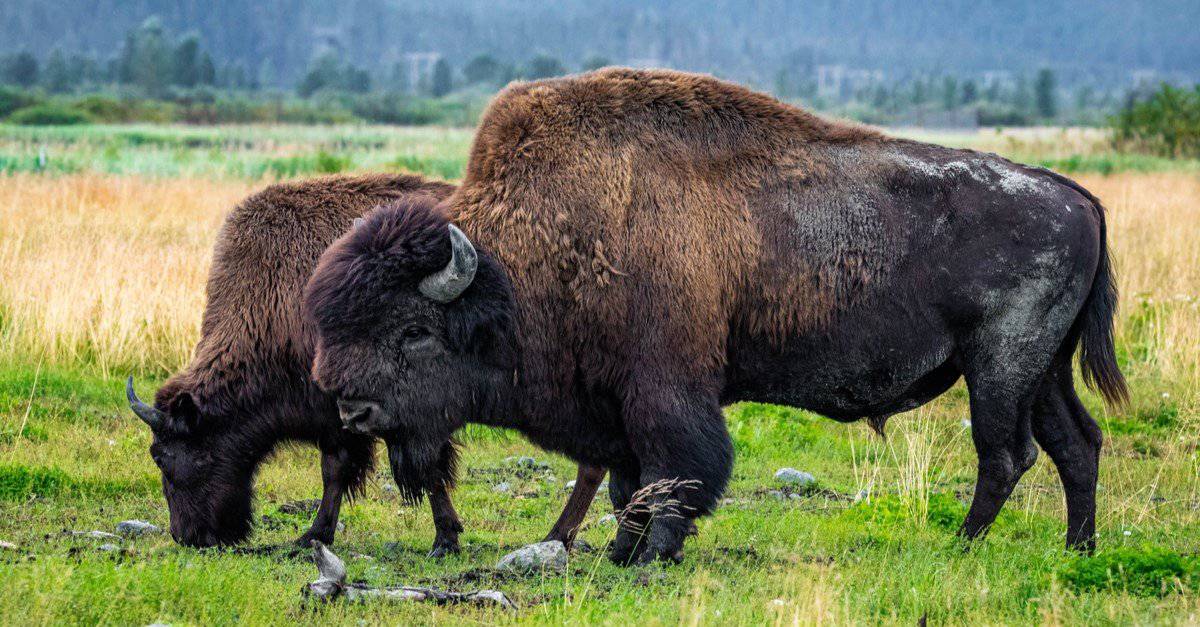

In North America, bigger is often considered better. Both Canada and the United States are among the 10 largest countries in the world by area. In these big countries, there are many very big animals. From bison grazing on golden plains to polar bears traversing barren ice fields, incredibly large animals are found throughout North America. Continue reading to learn about the 5 largest mammal species in North America.
5. Roosevelt Elk
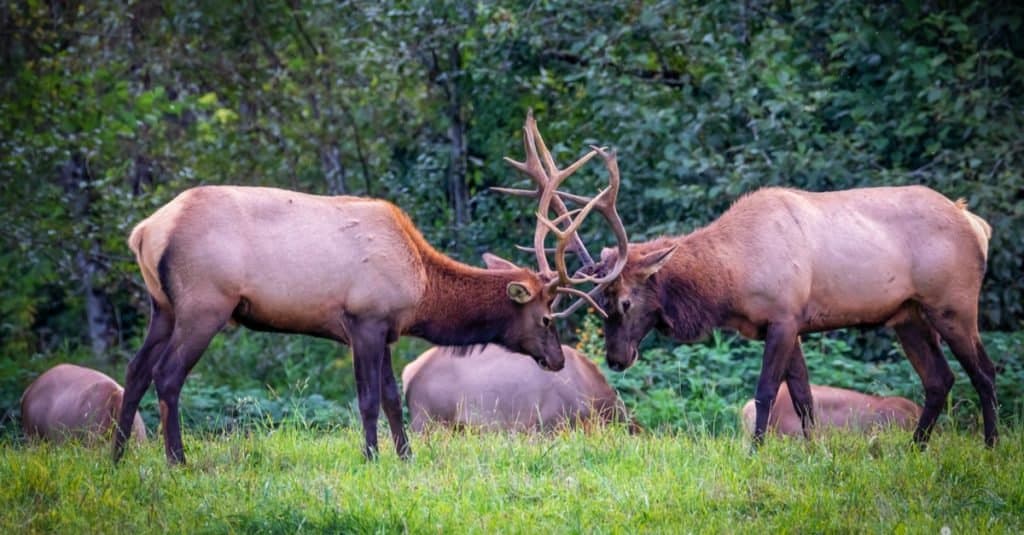
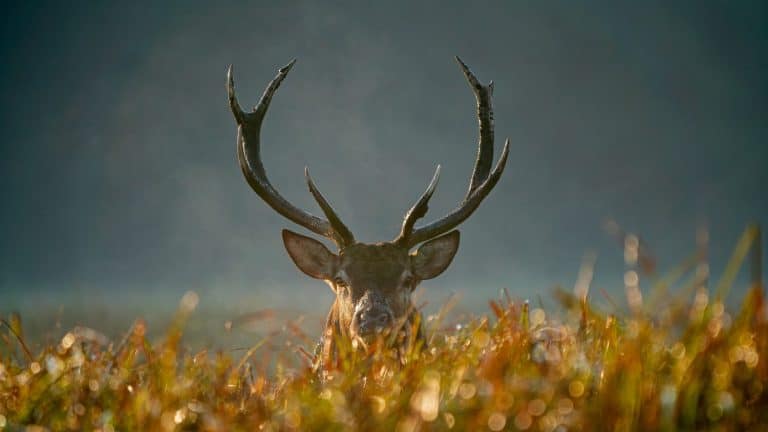
The Roosevelt elk is named for President Theodore Roosevelt and is the largest subspecies of elk in North America.
©Mark A Lee/Shutterstock.com
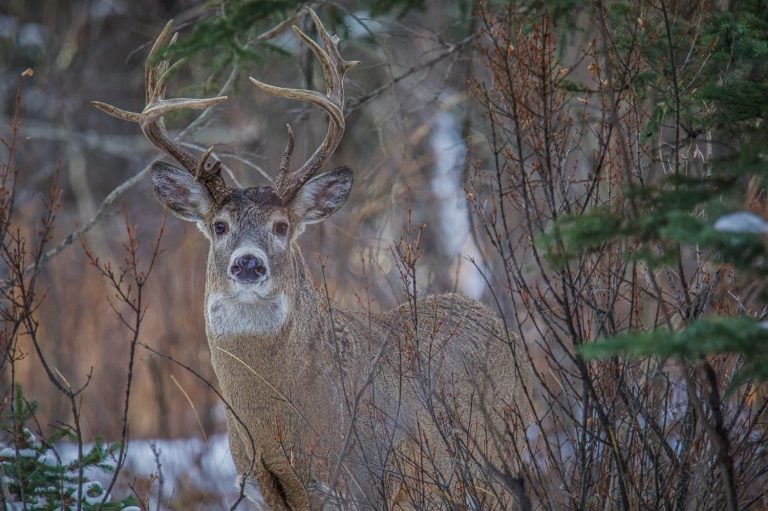
The Roosevelt elk (Cervus canadensis roosevelti) is the fifth-largest land mammal in North America, weighing 700 to 1,200 pounds. This makes the Roosevelt elk the largest extant subspecies of elk in North America. These majestic animals live in the temperate rainforests of the Pacific Northwest, including the Hoh Rainforest in Washington state.
Female Roosevelt elk and calves live in groups of approximately 20 individuals, while males live alone or in small groups with other males. The species was named after President Theodore Roosevelt. They are classified as Least Concern by the IUCN.
4. Kodiak Bear
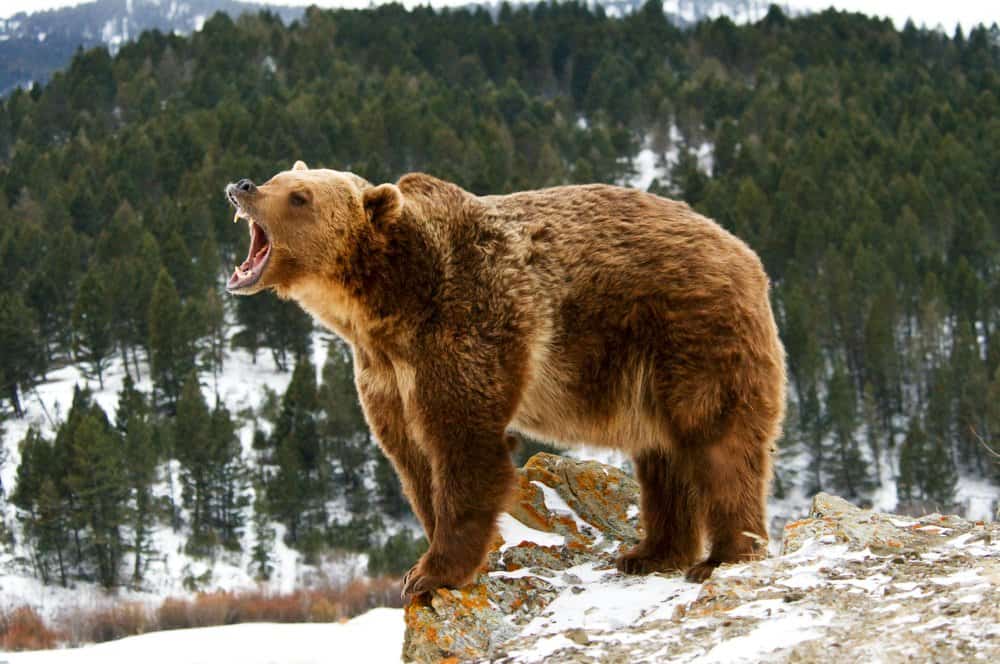
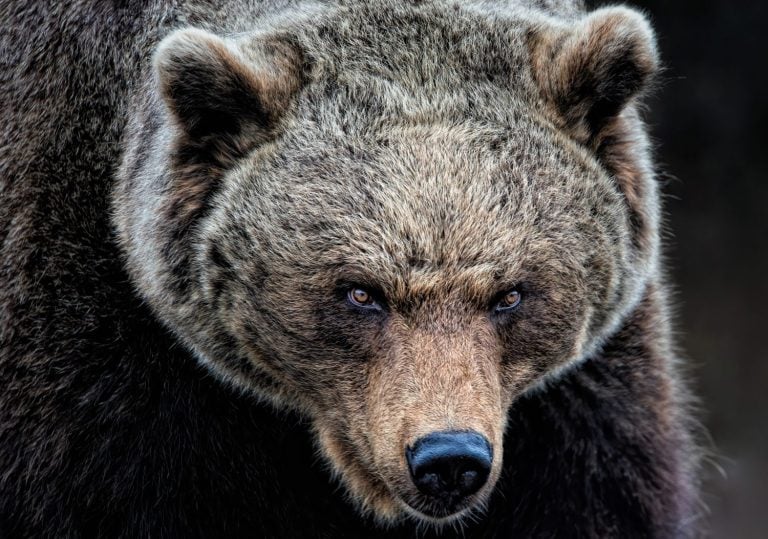
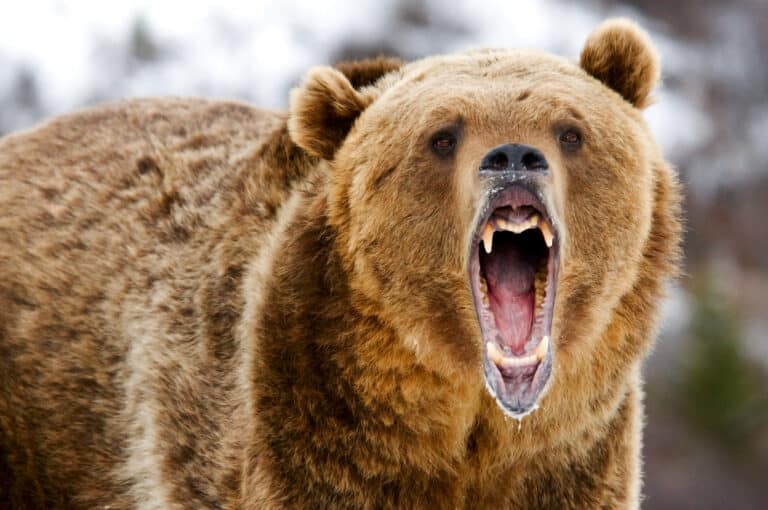
Kodiak bears are the largest subspecies of brown bear.
©Scott E Read/Shutterstock.com
The Kodiak bear (Ursus arctos middendorffi) is the fourth-largest North American land mammal, weighing 660 to 1,320 pounds. Kodiak bears are a subspecies of brown bear that inhabit the islands of the Alaskan Kodiak Archipelago. They are the largest subspecies of brown bear and are the second largest bear after polar bears (Ursus maritimus).
There is a long history of hunting the Kodiak bear, and regulations are now in place by the Alaska Board of Game. All non-residents who receive a permit (only a third of applicants are approved) must attend an orientation and be accompanied by a guide during their hunt. All legal kills are inspected by regulators before pelts and meat can be removed from the islands. The conservation status of the Kodiak bear is Least Concern.
3. Polar Bear
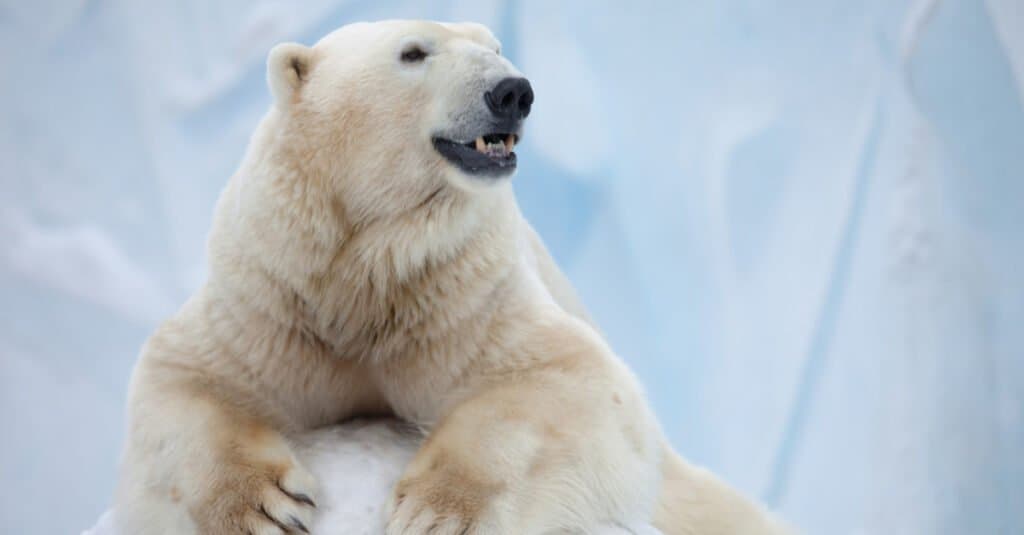
The largest polar bear ever recorded was found in Alaska and weighed 2,209 pounds.
©Zhiltsov Alexandr/Shutterstock.com
A male polar bear (Ursus maritimus) can weigh 770 to 1,540 pounds. Polar bears are the largest extant species of bear in the world. The largest polar bear specimen ever recorded weighed 2,209 pounds. There are 13 subpopulations of polar bears living in North America, ranging from Alaska and Canada’s Northwest Territories to the Arctic Ocean’s Beaufort Sea and Hudson Bay in Northeastern Canada.
Polar bears are classified as Vulnerable and are at risk of becoming endangered unless preventive intervention occurs. Large-scale ice melting has caused habitat loss, requiring polar bears to swim longer distances. Although polar bears are incredible swimmers, with a record distance of 400 miles, these longer swims put them at risk of drowning.
2. Moose
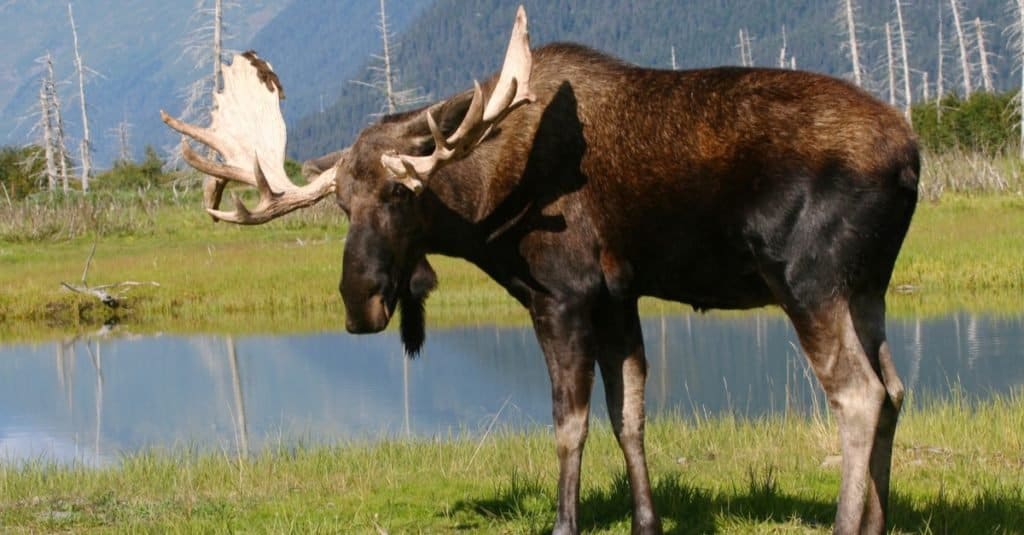
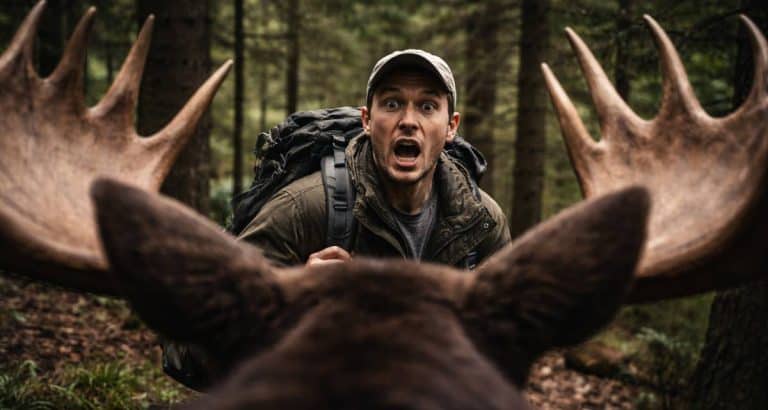
A male Alaskan moose holds the record for the heaviest antlers at 79 pounds.
©Steve Bower/Shutterstock.com
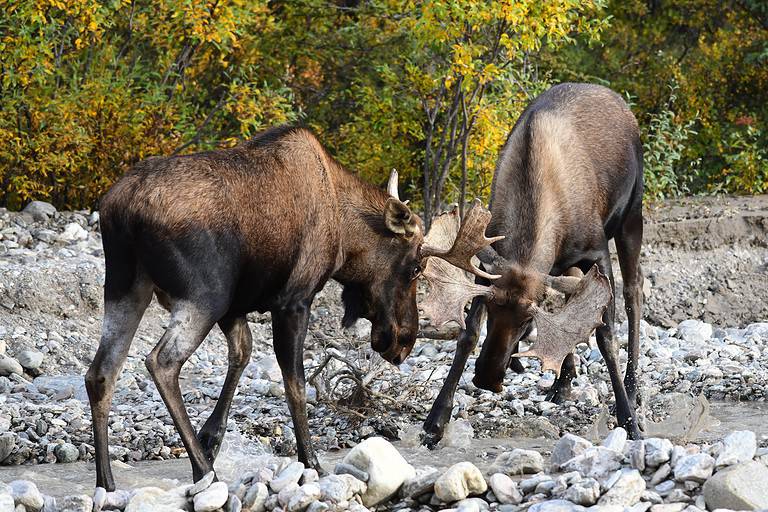
The second largest land mammal in North America is the 838 to 1,543-pound moose (Alces alces). The largest confirmed moose was hunted at the Yukon River in 1897; it weighed 1,808 pounds. There was a report of a 2,299-pound moose in 2004, but this has not been verified. An Alaskan moose (Alces alces gigas) holds the record for the heaviest antlers at 79 pounds.
Moose are often involved in fatal vehicle collisions in North America. A moose’s center of mass is higher than the hood of most vehicles. In a collision, the moose can crush the windshield, front roof beams, and the driver and passenger inside the vehicle. The IUCN classifies this animal as Least Concern.
1. American Bison
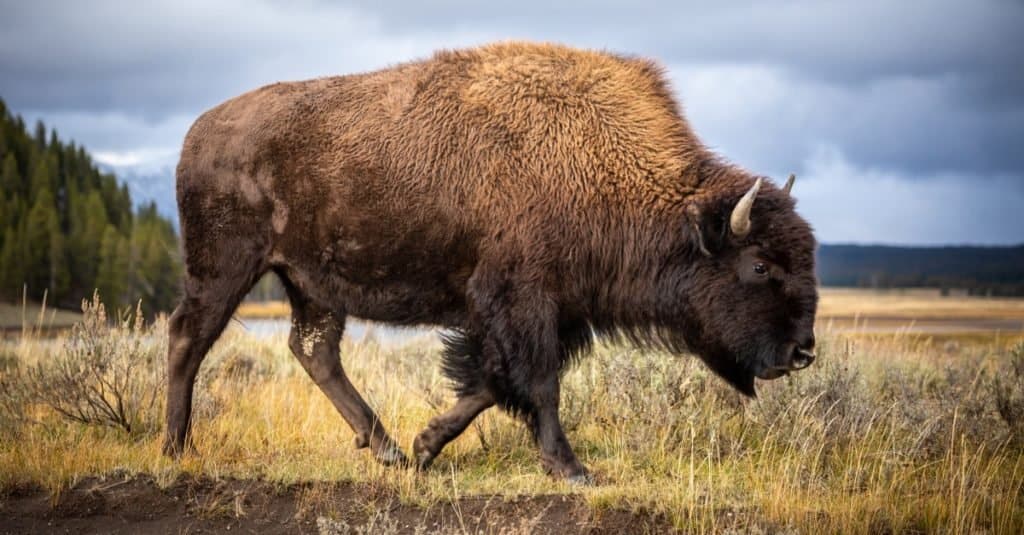
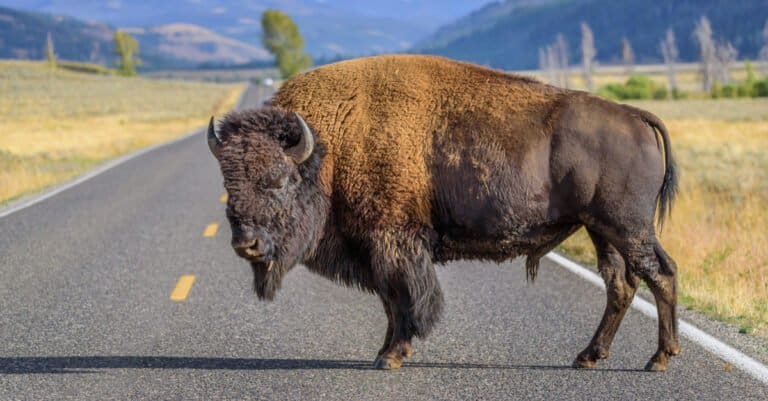
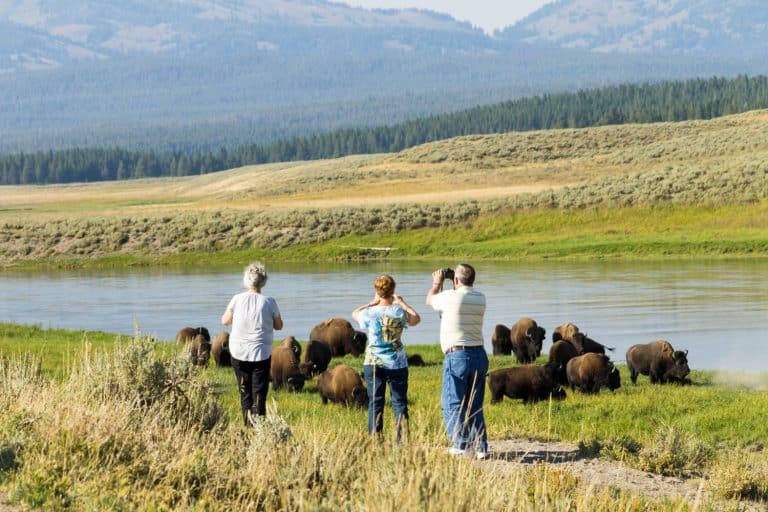
American bison roam throughout Yellowstone National Park, Wyoming.
©jack-sooksan/Shutterstock.com
The largest land mammal in North America is the American bison (Bison bison). The American bison was designated the national mammal of the United States in 2016. This beast weighs 701 to 2,599 pounds. While examples in captivity have been difficult to verify, the American bison can grow to incredible sizes, with reports of individuals weighing well over 2,000 pounds.
Today, the American bison is a Near Threatened species. Repopulation efforts have been successful in raising the number of bison from its population of 1,091 individuals in 1890. However, many of the bison that exist today are actually hybrids with domestic cattle. Only two populations, one in Yellowstone National Park and one in Elk Island National Park, are genetically pure American bison.