
When you think about crabs, you probably picture an angry little creature shuffling sideways while pinching its claws in the air. However, these sideways walks are not the only form of movement of which the crustacean is capable. This YouTube video shows an adorable crab swimming in the water — a common practice for some types of this crustacean.
Do Crabs Swim?
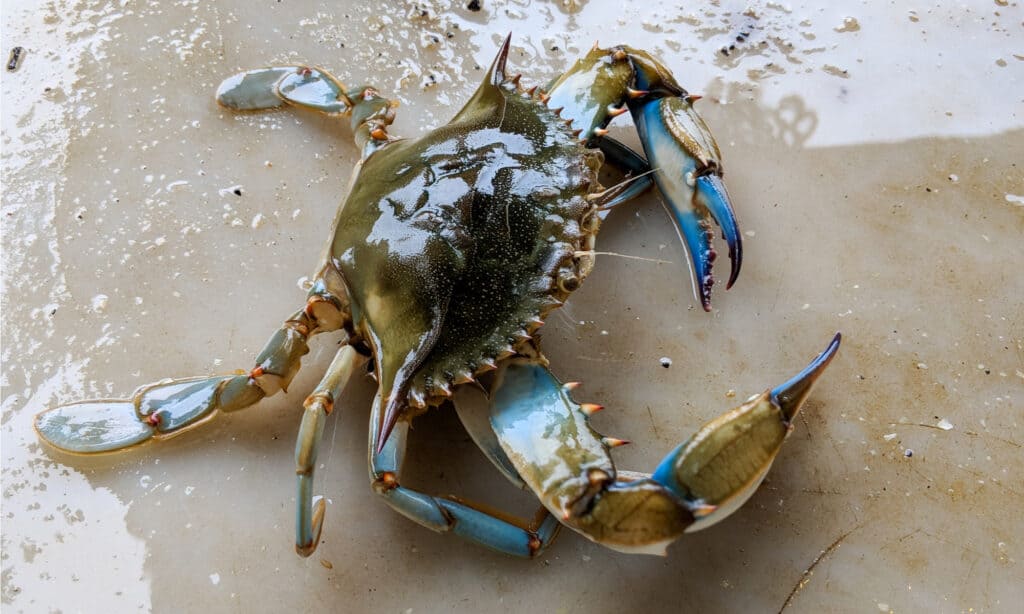
The blue crab’s back legs are used for propelling itself through the water.
©P. Dorman/Shutterstock.com
Yes, many crabs can and do swim. In fact, there’s even a type called the “swimming crab.” However, not all crabs have this ability. Some, including spider crabs and stone crabs, only walk or run on the bottom of the water or the ocean floor, typically moving sideways. If you’ve ever gone crabbing, you’ve likely seen crabs move in this way. However, for those crabs that can swim, this ability helps them escape predators or hunt prey. Additionally, this ability can help a crab reach deeper depths and glide through the water more efficiently.
How Do Crabs Swim?

The speckled swimming crab is often found in the Western Atlantic Ocean.
©Sergey and Marina Pyataev/Shutterstock.com
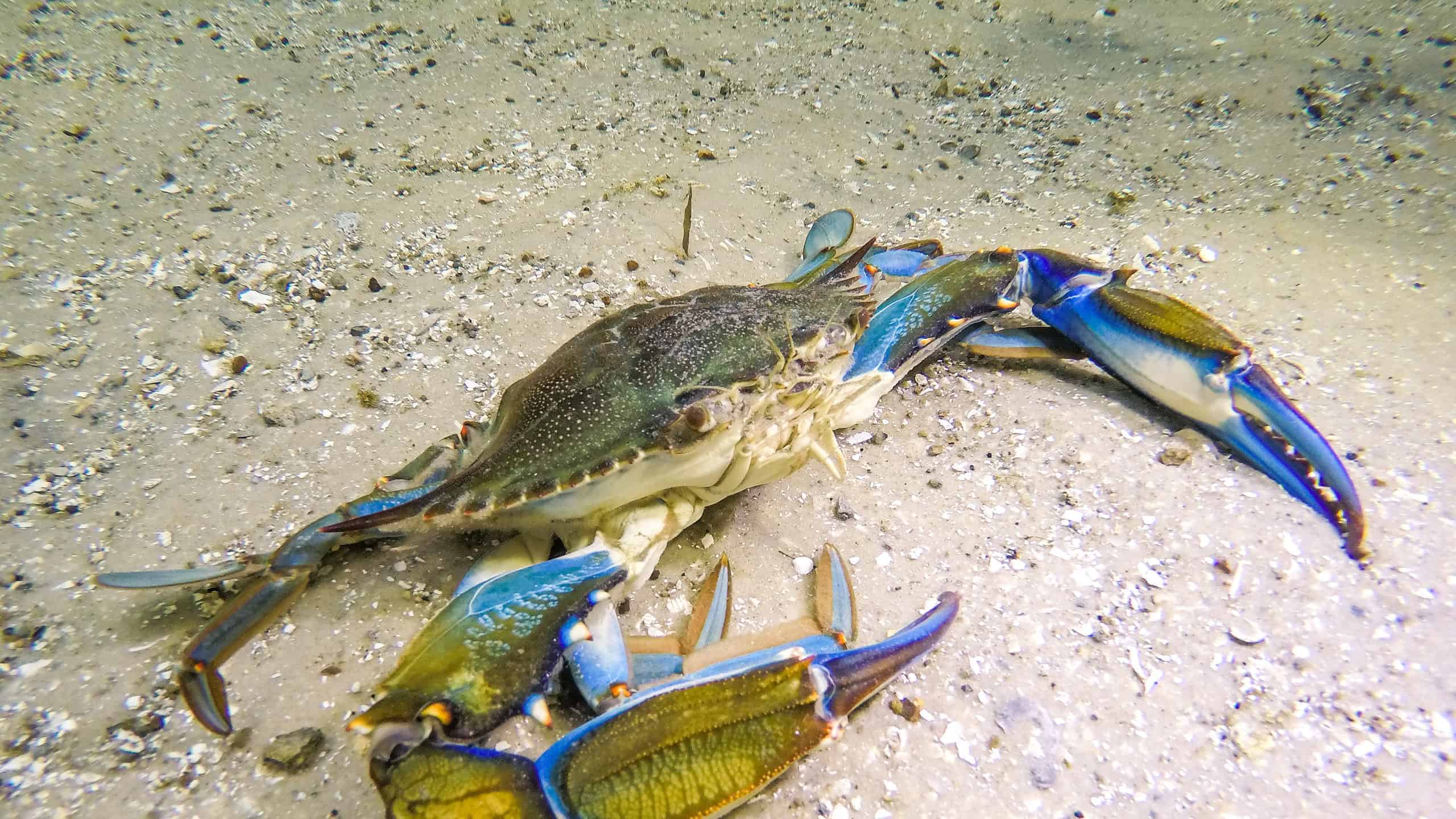
According to the Florida Fish and Wildlife Conservation Commission, Portunidae crabs — like the blue crab — use one pair of back legs to glide through the water. Their legs rotate at 20 to 40 revolutions per minute in an almost helicopter-like motion. As shown in the YouTube video, the legs propel them forward. In contrast, Matutidae crabs, also called moon crabs, use all five pairs of their legs to swim. These legs are flat and operate similarly to paddles. Moon crabs also often use their legs to dig.
Other families of crabs also have this ability, operating similarly to those mentioned previously. For example, according to Guinness World Records, the fastest-swimming crustacean is Henslow’s swimming crab (Polybius henslowii). This crab is native to the eastern Atlantic Ocean. In captivity, its speed was measured at 1.3 meters per second. However, experts noted that the crustacean likely can swim even faster in the wild. Like members of the Matutidae family, Polybius henslowii uses all four of its flattened walking legs to propel itself through the water.