Quick Take
- A single anatomical quirk is why this cuttlefish walks instead of swims, and the workaround is stranger than most ocean adaptations. Why it walks instead →
- The body parts this cuttlefish uses as legs aren't legs at all, a fact that becomes clear when you watch it move and reconsider everything you thought you knew about cephalopod anatomy. See the unusual locomotion →
- Its dazzling color display isn't for hiding. It's broadcasting a lethal secret to anything that gets too close. Unpack the toxic warning →
- Two of this cuttlefish's appendages function less like body parts and more like biological harpoons. Discover the hunting arms →
Flamboyant cuttlefish have a lifestyle as extraordinary as their name. These captivating cephalopods walk across the sea floor and display vibrant colors when threatened. Here’s what makes them so unusual.
All About the Flamboyant Cuttlefish
The flamboyant cuttlefish (Metasepia pfefferi) is a member of the class Cephalopoda and is therefore related to squid. You will find them in tropical Indo-Pacific oceans, especially along the coasts of northern and western Australia, and extending to the southern edge of New Guinea. However, you will not find them swimming around. These bottom-dwellers prefer to live at depths between 9 and 280 feet, mainly on sandy and muddy substrates. Their cuttlebone is approximately two-thirds to three-quarters the length of their mantle. The gas-filled cuttlebone usually keeps these creatures afloat. In this cuttlefish, however, the cuttlebone is too small to hold much gas. Therefore, they cannot swim for very long because it uses a lot of energy. They prefer to walk!
How Can Flamboyant Cuttlefish Walk?
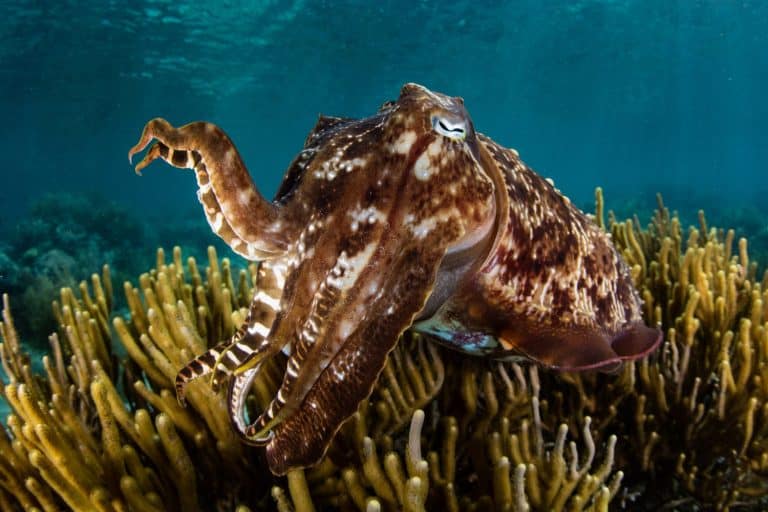
A cuttlefish’s mouth is surrounded by ten appendages. Two of the appendages are tentacles, and eight of them are arms. The arms are broad and blade-like. Their locomotion strategy is fascinating! They use their ventral arms as forelimbs and their ambulatory flaps as hindlimbs to produce a kind of slow strut. Occasionally, they can propel themselves into the water using jet propulsion, but they soon sink back down.
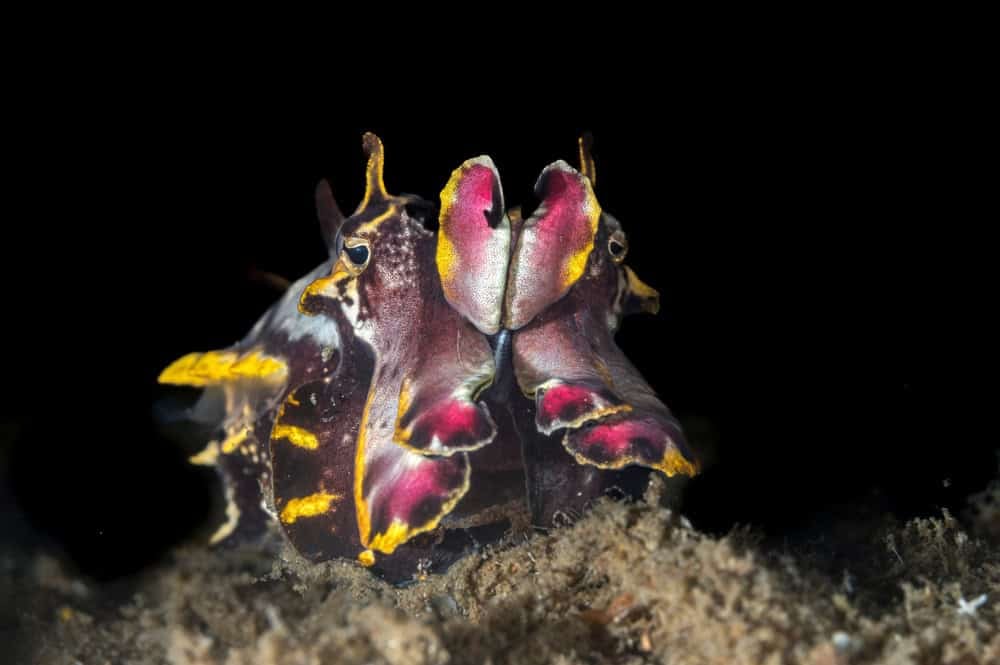
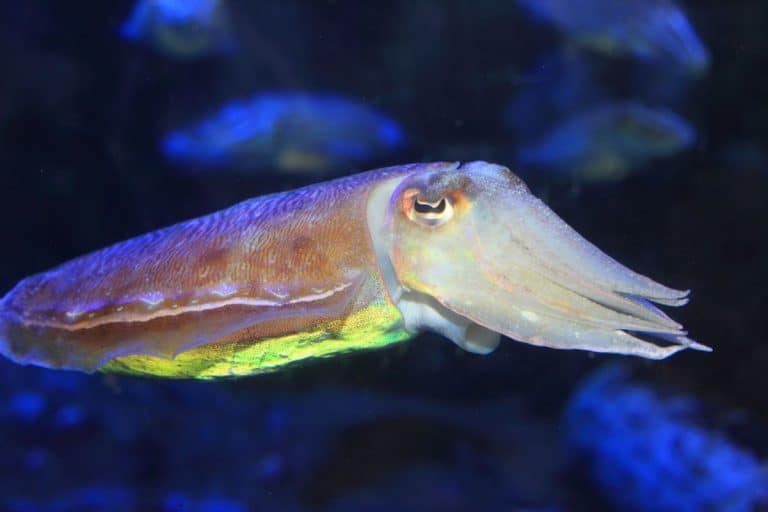
The flamboyant cuttlefish can create vibrant colors.
©Jack Pokoj/Shutterstock.com
However, life on the ocean floor has its advantages. Their bodies give them great camouflage so they can’t be seen by predators. Also, they get to hunt the small shrimp, crabs, and fish that live there. They hunt using their two rapid-fire feeding tentacles, which shoot from their mouths like harpoons.
Flamboyant Coloration
These cuttlefish get their name from the magnificent color show they can put on when they feel threatened. Their skin contains many chromatophores, which are pigment cells that can be manipulated to change colors. Their skin undulates in constantly moving, vibrant, and hypnotic patterns. They do this as a warning sign to predators (seals, dolphins, and fish) that they should be left alone. It’s a warning that they are poisonous if eaten!