
Quick Take
- Most sea slugs can barely move, but the Spanish dancer escapes danger with a skill no one expects from this type of creature. See how it swims →
- Divers who spot one for the first time are often left stunned, and the reason has nothing to do with its color. Discover its surprising ability →
- Its fiery red body doubles as a warning sign, telling predators exactly what happens when they ignore it. Learn about its toxicity →
- The Spanish dancer gets its venom from something it eats, and the source is weirder than you'd guess. Explore its venom source →
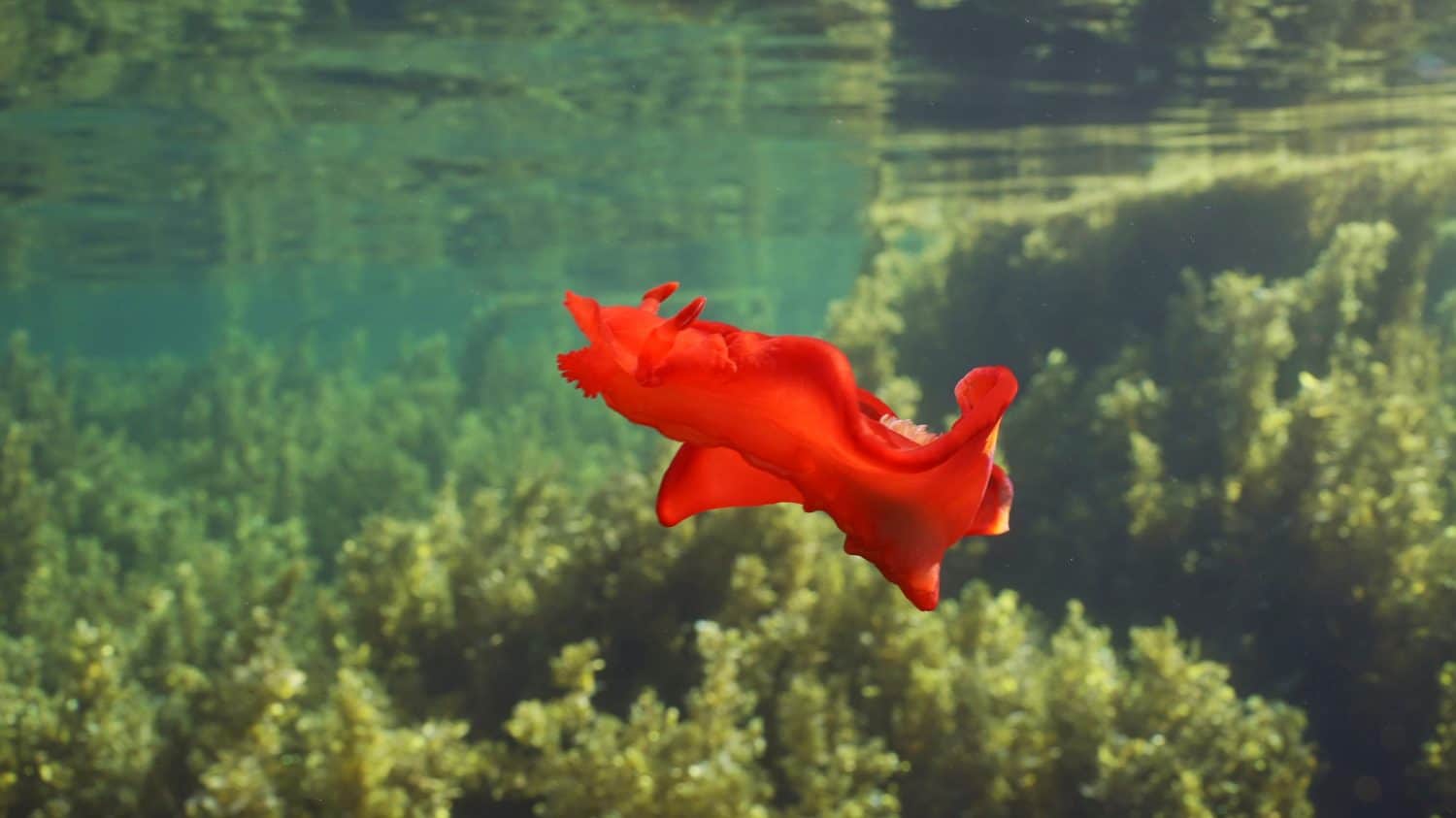
The ocean is full of many fascinating creatures, some of which you may have never heard of before. One example is the Spanish dancer sea slug. These sea slugs are named for their resemblance to Spanish Flamenco dancers, particularly when they float gracefully through the water. This Instagram post by @paditv shows a Spanish dancer swimming through the ocean with their body flowing beautifully. Read here to learn more.
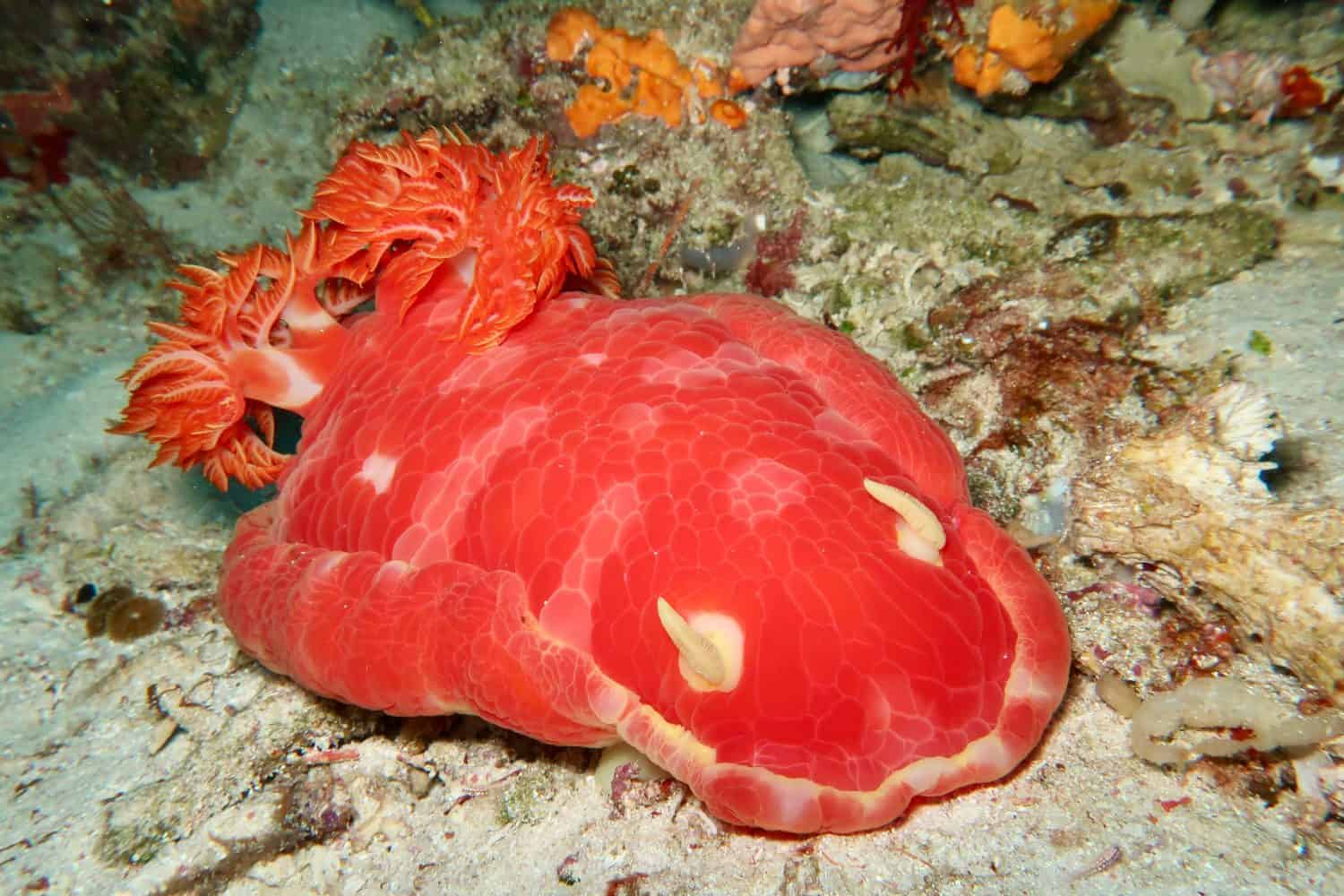
Spanish dancers have bright red bodies with frilled edges along their sides, which look similar to the skirts worn by Flamenco dancers.
©Ute Weeren/Shutterstock.com
About the Spanish Dancer
The Spanish dancer is one of the most unique sea slugs in the world. When moving, their jelly-like bodies sway, resembling the flowing skirts of Flamenco dancers. These sea slugs are formally known as nudibranchs, and they live throughout the tropical waters of the Indo-Pacific region, including Southeast Asia, the Pacific Islands, and Eastern Africa. While nudibranchs are typically on the smaller side, the Spanish dancer is one of the largest species.
Most adults grow to between 10 and 16 inches long—about the size of a house cat! This impressive size can surprise divers who aren’t expecting to encounter such a large sea slug. Another fun fact about these sea slugs is that they are poisonous. When they feed on sea sponges in coral reefs, they store compounds that make them unappealing and toxic to predators, keeping them safe. However, one of their most effective defense mechanisms is their ability to swim, as demonstrated in the video above.
Most sea slug species have very limited mobility, usually maneuvering by crawling. However, Spanish dancers are among the best swimmers of all nudibranchs. They usually move by crawling slowly across the sea floor and coral reefs, but when threatened, they can swim away with a graceful, dance-like motion. These nudibranchs typically swim when they are disturbed or threatened and need to escape quickly. They do so by spreading out their ruffled edges and propelling themselves through the water. As seen in the video above, this results in an elegant movement that truly resembles the swishing skirts of a Flamenco dancer. Their bright red color, acting as a warning sign that these sea slugs are toxic, also adds to their Flamenco-like appearance.