
For a species to be classified as endangered, it must be at risk of extinction within the foreseeable future throughout a significant portion of its native range. The federal government has a list of endangered animals established by the Endangered Species Act. As of 2025, 76 species on the federal government’s endangered and threatened species list are found in Georgia. The Georgia Department of Natural Resources maintains a separate list of state-specific species in need of protection. Conservation efforts are underway to protect these species and promote their recovery. Continue reading to learn about six species in Georgia that are considered Near Threatened to Critically Endangered.
1. Blue Shiner
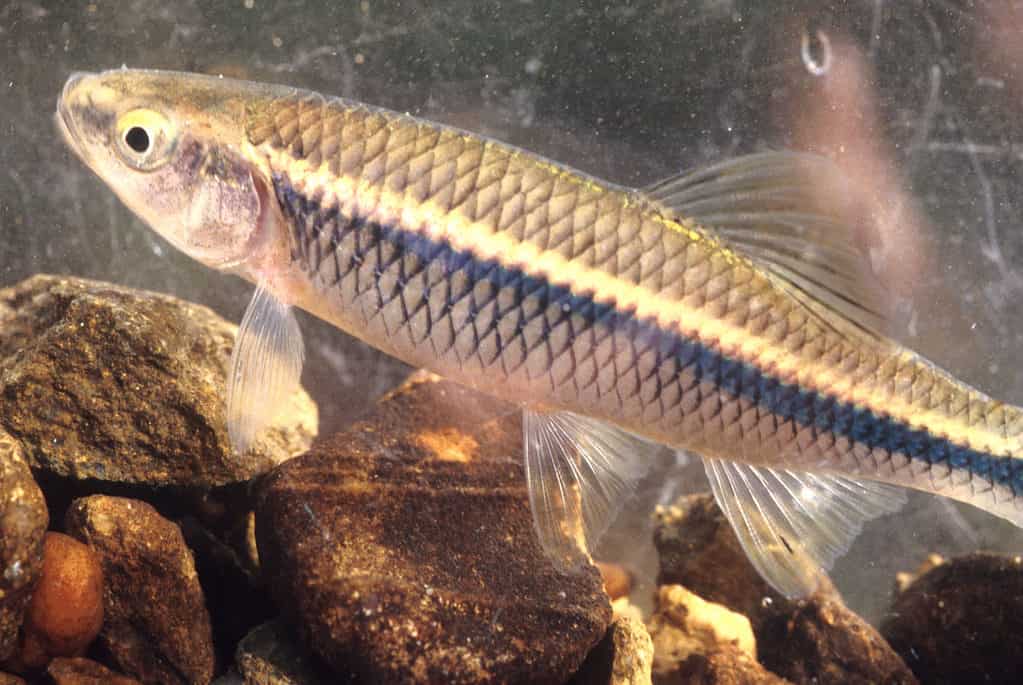
The blue shiner can only feed in clear water.
©Dick Biggins, USFWS, Public domain, via Wikimedia Commons – Original
The blue shiner (Cyprinella caerulea) is an Endangered fish species primarily found in the Oostanaula and Conasauga Rivers in Georgia. The species is also found in Tennessee and other rivers in Alabama. Blue shiners live for around three years. These fish are visual drift feeders; they can only feed on floating invertebrates in clear waters. This unique feeding habit is one of the reasons the species is currently struggling to survive. Excess sediment and pollution in Georgia’s waterways make it difficult for the blue shiner to feed. Additionally, this makes reproduction difficult for the species, as females can only attract males to mate in clear water. Efforts are ongoing to preserve the fish population by improving water quality and reducing construction along waterways.
2. Conasauga Logperch
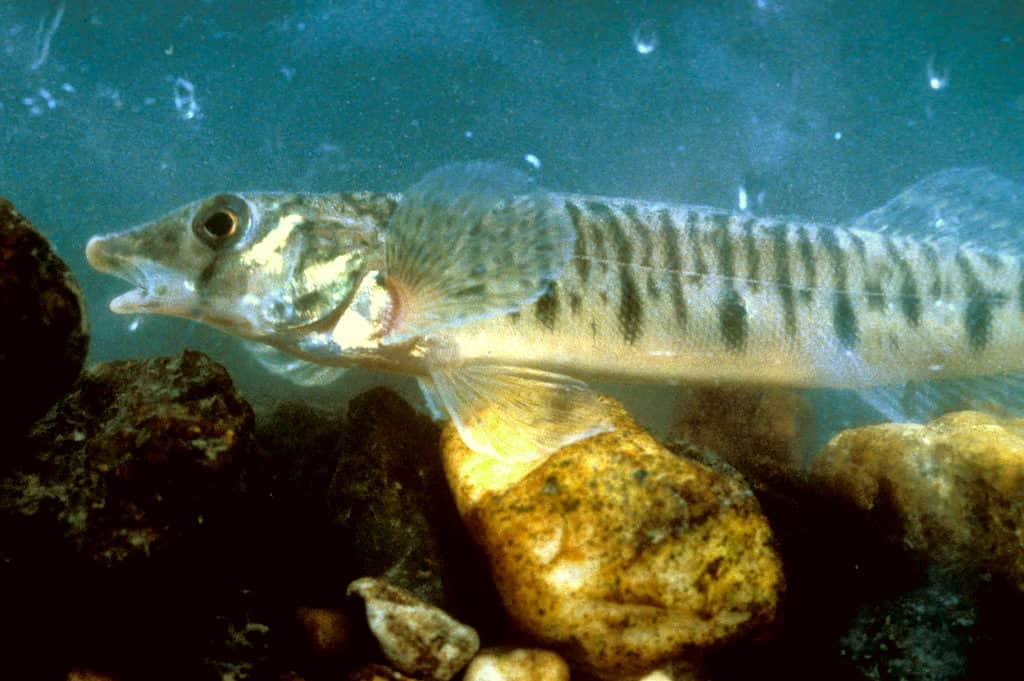
The Conasauga logperch is struggling because of polluted waters and predators like brown trout.
©Dick Biggins, USFWS, Public domain, via Wikimedia Commons – Original
The Conasauga logperch (Percina jenkinsi) is a species of ray-finned fish. This fish has a distinct yellow color with bold, dark tiger stripes. The logperch is a slender freshwater fish found downstream in the Conasauga River. It preys on fish eggs, limpets, mayflies, and other aquatic invertebrates. Juvenile logperch primarily eat microcrustaceans. This species spawns during the spring and lays its eggs in river sediments for safety.
Like the blue shiner, clean water is essential to the Conasauga logperch’s survival, and polluted water is the primary threat to the species. The logperch has been considered endangered since 1985. Its status as Critically Endangered means that it is one major event away from extinction. Runoff from developed regions pollutes their natural habitat. Additionally, predators like brown trout (Salmo trutta) actively prey on this fish, making it difficult for the species to recover.
3. Coosa Moccasinshell
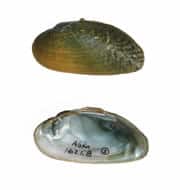
The Coosa moccasinshell (Medionidus parvulus) is a rare species of freshwater river mussel. This 1.5-inch-long bivalve mollusk has a thin, brown, rhomboid shell. It is found in flowing water with gravel to sandy-gravel substrates in Georgia. In its larval stage, this mussel is a parasite that attaches itself to a host fish.
The Coosa moccasinshell is already locally extinct in Alabama and is on Georgia’s list of endangered species. It has been on the federal list of endangered animals since 1993. Channelization, mining, agriculture, and construction have polluted the aquatic ecosystem where this mussel lives. This negatively impacts the host fish for the larval stage and even the adult Coosa.
4. Edmund’s Snaketail
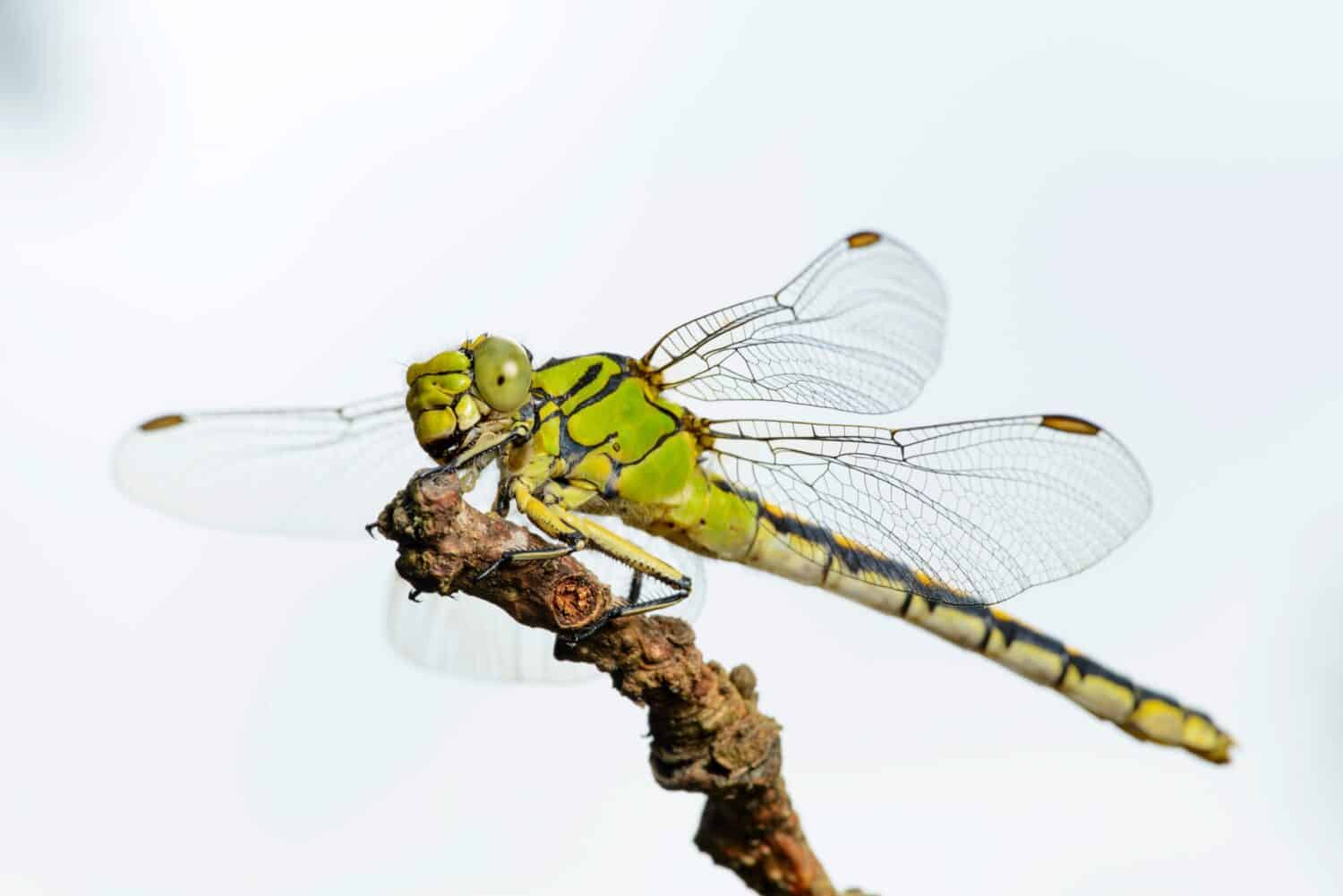
This Ophiogomphus cecilia is from the same genus as Edmund’s Snaketail, Ophiogomphus edmundo.
©vblinov/Shutterstock.com
Edmund’s snaketail (Ophiogomphus edmundo) is a Near Threatened dragonfly species with a distinct appearance. This insect has a bright green head, bluish-green eyes, and a matching thorax. Females have thick abdomens with yellow slanty markings on all segments. This insect can measure up to 1.9 inches long as an adult.
Edmund’s snaketail has a limited range. It is only found in a few states, including Georgia, Tennessee, and South Carolina. Even in the few Georgia counties where it is found, it does not have a thriving population. In fact, experts thought the species had gone extinct in the 1970s, but they recently discovered a small population. Industrial and residential development, as well as various agricultural practices, have put the species on the verge of extinction. Bank destabilization, sedimentation, and poor water quality make it difficult for the larval stage of this dragonfly to survive.
5. Gray Bat
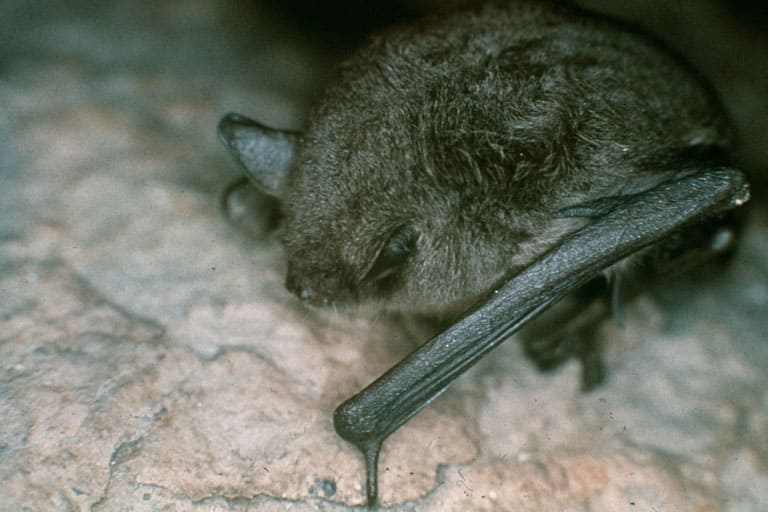
Anthropogenic disturbances of the gray bat’s habitat contribute to its declining population.
©Jerry A. Payne, USDA Agricultural Research Service, Bugwood.org, CC BY 3.0 US, via Wikimedia Commons – Original / License
Gray bats (Myotis grisescens) are medium-sized flying mammals that prey on insects like moths and flies. This bat has a wingspan of approximately 11 inches, with grayish fur that turns reddish brown during the summer. Gray bats are typically found in karst regions where the dissolving of the bedrock creates sinkholes, sinking streams, caves, and springs. They hibernate in Northern Alabama, Kentucky, Missouri, and Arkansas. The species, however, migrates to Northwestern Georgia and other locations during other times of the year.
Gray bats are on both the federal and Georgia state lists of endangered and threatened animal species. The destruction of caves for mining and inexperienced cave exploration has contributed to this species’ decline. These factors interfere with the bats’ natural sleep cycle and alter their physiology. These disturbances can also cause female bats to abandon their babies, and the young bats are unlikely to survive when left on their own. They are listed as Vulnerable by the IUCN.
6. Piedmont Blue Burrower
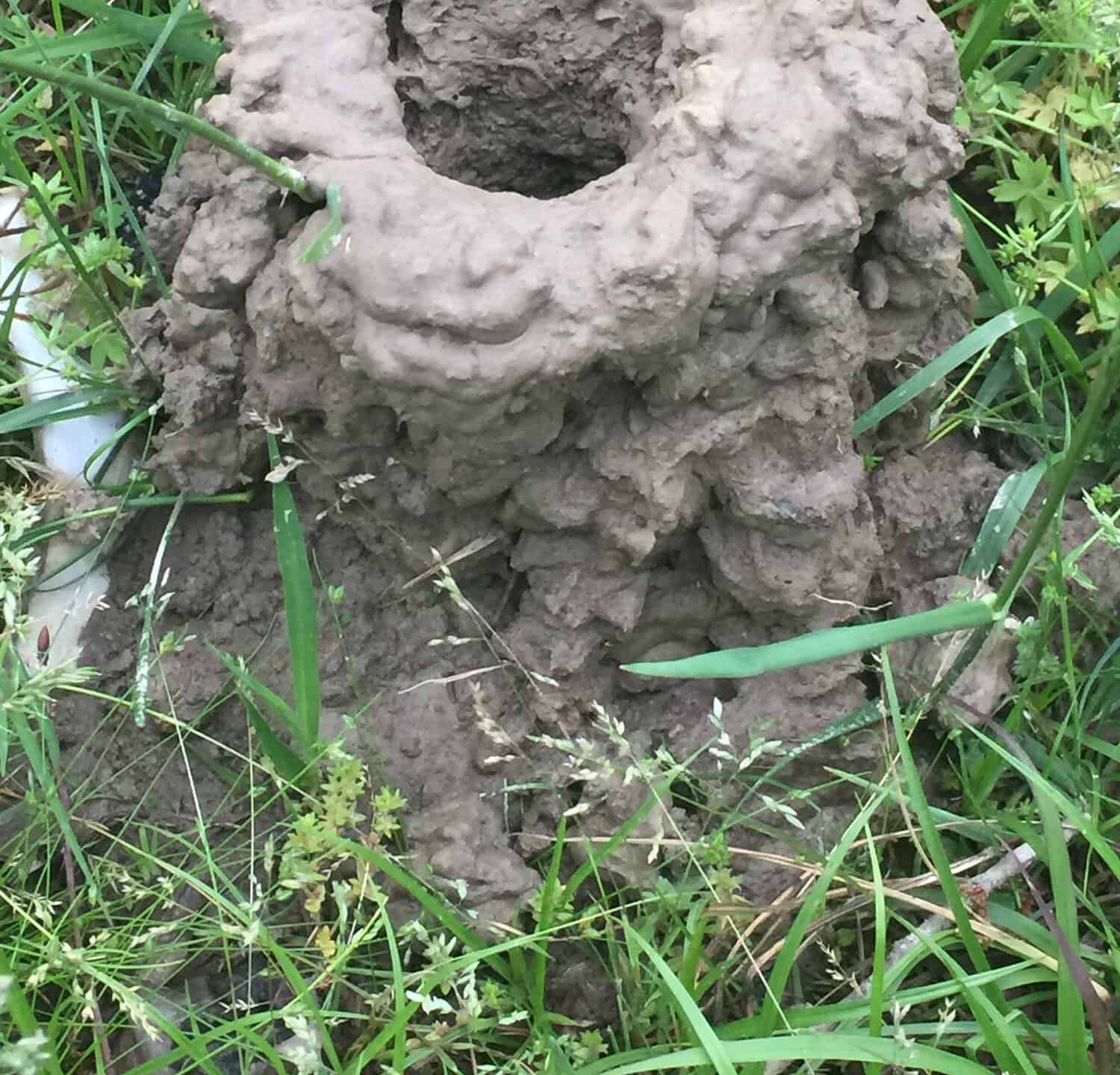
Crawfish burrow chimneys are vulnerable to soil disturbance.
©mosaiclou/Shutterstock.com
The Piedmont blue burrower (Cambarus harti) is a species of crayfish endemic to Georgia. The IUCN reviewed the species’ conservation status in 2010 and has listed it as Endangered ever since. This crayfish is deep blue in color with a narrow abdomen and large claws. They measure up to 3 inches long. The Piedmont blue burrower lives in burrows and shallow waters in just two localities within Meriwether County in Georgia. The relatively small range of the Piedmont blue burrower makes it vulnerable to extinction. Soil disturbances and pollution from human activities interfere with the burrowing activities of this species. Georgia law considers it an endangered species in need of protection.