
Quick Take
- Hachikō the Akita dog is a prime example of a dog’s deep devotion to its owner.
- Dogs are highly emotionally intelligent creatures that respond to human emotions and cues.
- While a dog’s breed can influence its devotion, most dogs are capable of bonding with humans if provided with the right love and care.
Have you ever heard the devastating story of Hachikō the dog? Referenced in this post, the Akita pup was a loyal pet to Professor Hidesaburō Ueno, a Japanese agricultural scientist. One day, unexpectedly, Ueno passed away from a brain hemorrhage (cerebral aneurysm) while at work.
For almost ten years—and up until his own death—Hachikō waited for Ueno at Shibuya Station in Tokyo, Japan. Of course, the poor pup was unaware that his owner would never come home. The Akita dog became so well-known that people who learned of his story would stop to feed him. Now, decades later, a statue stands in his place outside Shibuya Station.
This incredible display of devotion is a testament to the dog’s love and loyalty toward his deceased owner. In fact, it provides a glimpse into dogs’ emotional capacity and ability to bond with humans.
Emotional Intelligence in Dogs

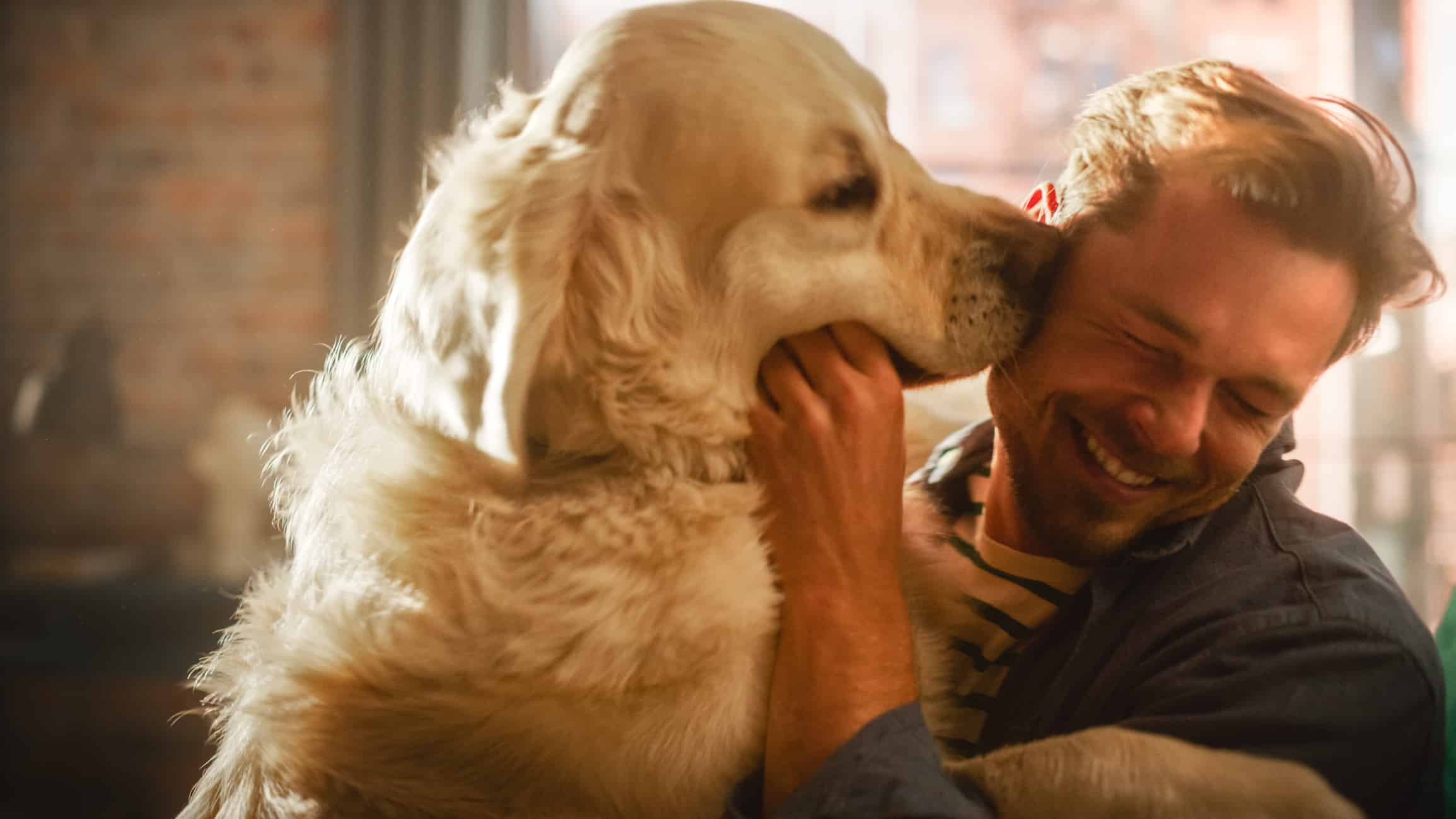
Pets, especially dogs, are often in tune with their owners’ emotions.
©Lucigerma/Shutterstock.com
Dogs are emotionally intelligent creatures that can pick up on human emotions and even changes in our hormones.
“Dogs are incredibly sensitive to human emotions, body language, and social cues due to the effects of thousands of years of domestication (unlike wolves, who take very little or no direction from humans),” says Alexandra Bassett, founder and head trainer at Dog Savvy. “They read our facial expressions and tone of voice to understand how we’re feeling and then respond accordingly.”
Has your dog ever comforted you with a nudge or cuddled while you were crying? If so, you’ve likely witnessed their emotional intelligence in action.
“Dogs experience many of the same primary emotions that we do and have the same logic and reasoning power [as] a human toddler,” Bassett continues. “Their ability to understand our emotions is a big part of why dogs are so valued as pets, because they actively tune in to and respond to our feelings.”
Suzana Gartner, J.D., LL.M., author of A Voice for Animals: The Social Movement that Provides Dignity and Compassion for Animals and a retired animal rights lawyer, echoes the same sentiment.
“We already know that dogs experience a wide range of emotions, including happiness, sadness, fear, joy, and unconditional love,” Gartner says. “Anyone who has shared their life with a dog can attest to how deeply they feel and how clearly they express those emotions … When dogs and humans connect, both experience a physical response through the release of oxytocin, the hormone associated with bonding.”
A dog’s ability to bond with its owner cultivates devotion and loyalty.
They read our facial expressions and tone of voice to understand how we’re feeling and then respond accordingly.
Alexandra Bassett, founder and head trainer at Dog Savvy
How Breed Can Influence Devotion
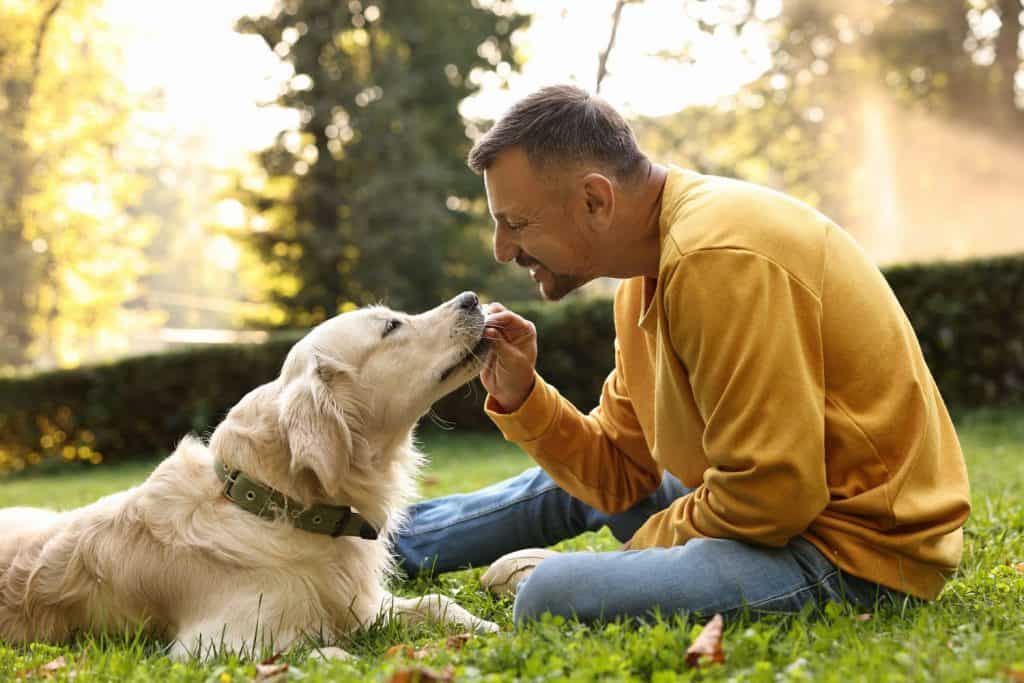
Golden Retrievers typically bond well with humans.
©New Africa/Shutterstock.com
A dog’s specific breed does not limit its devotion or ability to connect with humans. However, some breeds might be more tuned in to human emotions or cues than others.
“All dog breeds are capable of forming strong attachments, but some breeds may respond to human communication like facial expressions (for example, a knit brow = my owner is upset), body language like pointing, or tone of voice more readily because of their socialization history or genetics,” says Bassett.
For example, some biddable breeds, like Golden Retrievers and Labrador Retrievers, might be more attentive than primitive dog breeds, such as Huskies and Akitas. Still, Hachikō—the prime example of a dog’s devotion—was an Akita. Some breeds might just express their love and loyalty differently.
“Certain breeds have a strong evolutionary history of bonding closely with humans,” Gartner adds. “Herding breeds are a great example, as they traditionally worked side-by-side with people. Our family dog, Lily, a beautiful German Shepherd, was very emotionally in tune with us. She seemed to sense when we were sad and would even cry with us, and she showed genuine happiness during joyful moments.”
That being said, temperament and personality also influence a dog’s loyalty and willingness to bond.
“Throughout my time as the Executive Director of Programs and Operations at a Humane Society, and from volunteering in shelters, I met countless dogs with unique histories,” Gartner shares. “Some were fearful or shut down at first, yet with patience, tenderness, and proper guidance, many became incredibly emotionally responsive and deeply connected to their caregivers … So while breed can play a role, I believe environment, kindness, and consistent care play an even greater one.”
Are All Dogs Devoted?

Most dogs have the capacity to be devoted.
©Sorapop Udomsri/Shutterstock.com
If you raise your dog with love and support, it will be more likely to bond with you. This, in turn, cultivates deep devotion.
“All dogs have the ability to display emotional intelligence when they are given the right environment and the opportunity to express themselves,” Gartner says. “Just like humans, dogs have different personalities, past experiences, preferences, and levels of confidence, and these factors shape how they interact with people.”
Just because they can become devoted, however, doesn’t mean every dog will become devoted. Especially if deprived of the proper care, dogs can essentially unlearn their sense of loyalty.
“Devotion grows when a dog feels safe and valued,” Gartner explains.
Additionally, like humans, each individual dog expresses their devotion differently.
“Some dogs may crave attention and affection, or only want the attention of their owners (showing no interest in other people or family members), making their devotion very obvious (and upsetting for family members who they ignore),” Bassett says. “Some dogs don’t enjoy affection like petting or sitting in your lap, and may prefer to be near you but not touching you. So, their devotion may show up differently, like being attentive, listening to you when you ask them to do things, or following you from room to room, as opposed to displaying physical forms of reassurance like snuggling or spooning with you.”
Signs of a Devoted Dog
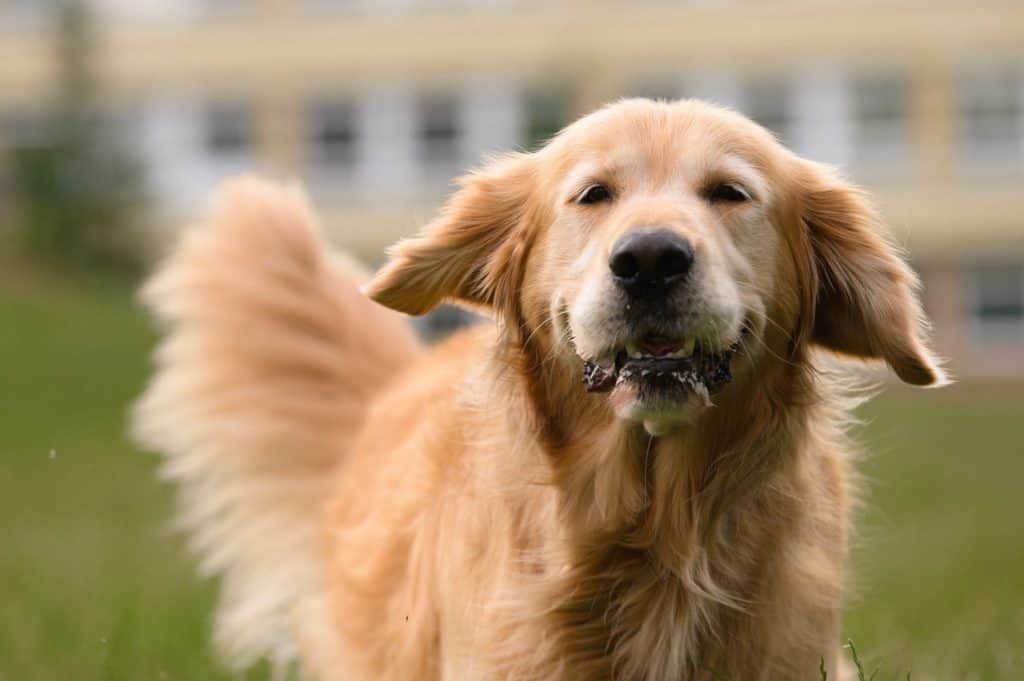
When your dog wags its tail when greeting you, it’s basically displaying its devotion.
©V_Lisovoy/Shutterstock.com
A devoted dog is typically a well-cared-for, loving animal who’s deeply bonded to its owner. Take Hachikō, for instance.
“One of my favorite true stories that I share in my book is that of Hachikō, an Akita who displayed extraordinary emotional intelligence and loyalty,” Gartner says. “He waited at a train station every day for more than nine years for his guardian, not knowing he had passed away. His story illustrates the profound love and devotion dogs are capable of.
A dog’s devotion might not be as grand or obvious as Hachikō’s decade-long display. However, it often shines through in the small moments.
“Devoted dogs show it through their behavior,” Gartner says. “They greet you with excitement, follow you around the house, wag their tails when you walk into the room, and sometimes bring you their favorite toys. Devotion often shows up in the small, everyday moments.”
According to Bassett, some other examples include heightened vocalizations, resting at your feet, sleeping nearby, paying attention to your movements, responding to cues and mood changes, and offering protection when necessary.
How Devotion Affects a Dog Emotionally
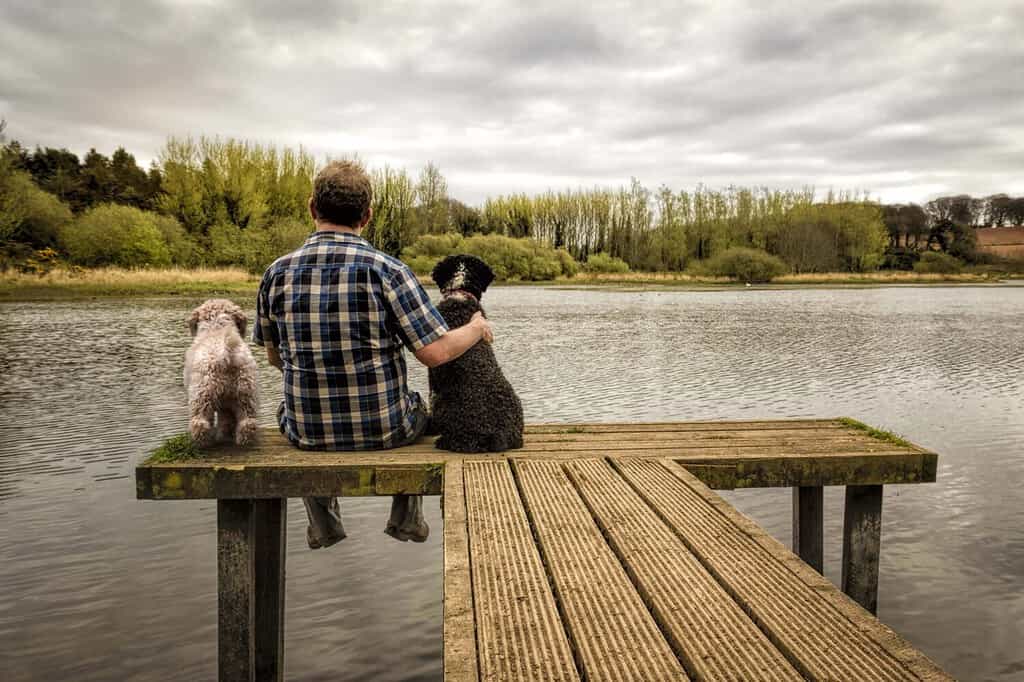
Dogs truly are man’s best friend.
©Daz Stock/Shutterstock.com
When a dog is deeply devoted to a human, it often experiences emotional safety, increased security, and positive physiological changes.
“Dogs are pack animals and biologically designed to form strong bonds with their families,” Bassett says. “Understanding and nurturing this devotion not only supports your dog’s emotional well-being but also strengthens the human-canine bond. Dogs that have positive interactions with their owners are generally more devoted, happier, secure, and fulfilled.”
Of course, this can lead to stress and separation anxiety when the dog is away from its owner. For example, Hachikō was very clearly affected by his owner’s death. His lifelong devotion proves just how deep a dog’s loyalty lies.
“If a dog is neglected, it can lead to emotional instability and the development of nuisance behaviors,” Bassett continues. That being said, “people should really think long and hard if they are ready for the daily commitment of taking care of a dog before they adopt one.”