
Quick Take
- Chimpanzees, despite being far closer to humans cognitively, failed the same test that goats passed. The reason why reveals something unexpected about intelligence and domestication. See how chimps compared →
- One chimp did succeed, though its success came down to a very specific detail about how it was raised. That exception changes what the findings actually mean. Read about the exception →
- Researchers hid the human entirely from the goats, and what happened next surprised even the study's own team. See the hidden-human test →
- The real question the researchers still can't answer: is this skill something goats earned through thousands of years alongside humans, or did they always have it? Explore what comes next →
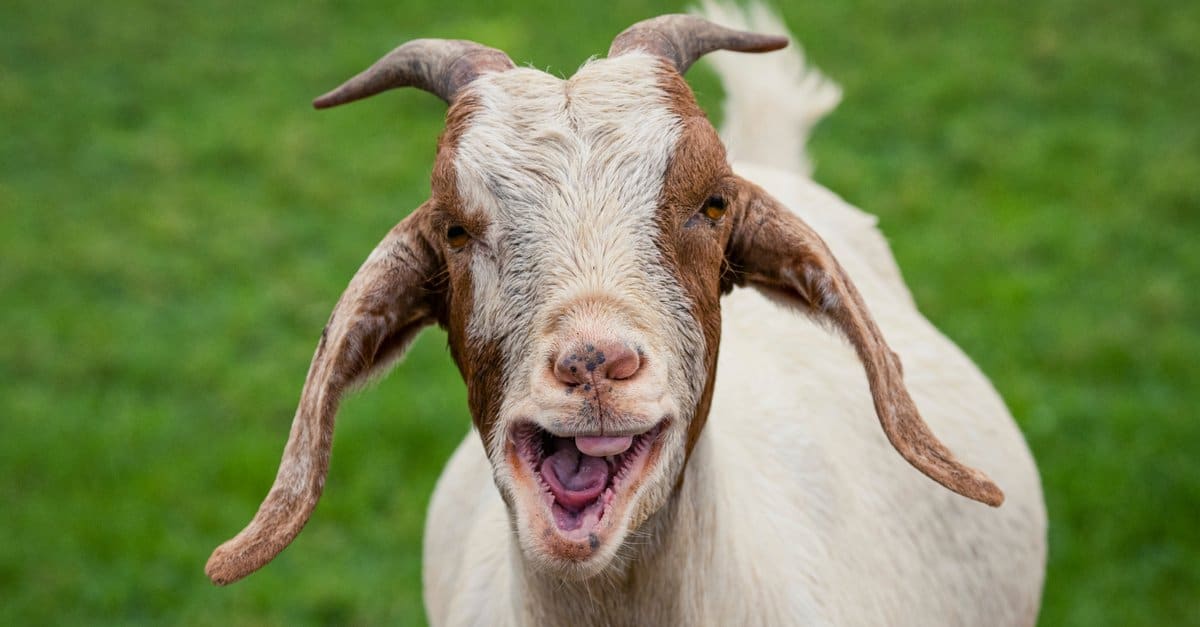
When it comes to being the greatest of all time, domestic goats may actually be the GOAT—at least among barnyard animals.
It turns out that common barnyard goats share an unusual ability with babies and dogs. And it all has to do with following human cues. Those findings were announced in a new study published in the journal Royal Society Open Science.
What the Study Found
Researchers from the University of Zurich discovered that, just like young children, goats can follow the direction of a human voice to find a reward. One of the study’s senior authors, in a recent news story announcing the findings, likened it to a vocal form of pointing.
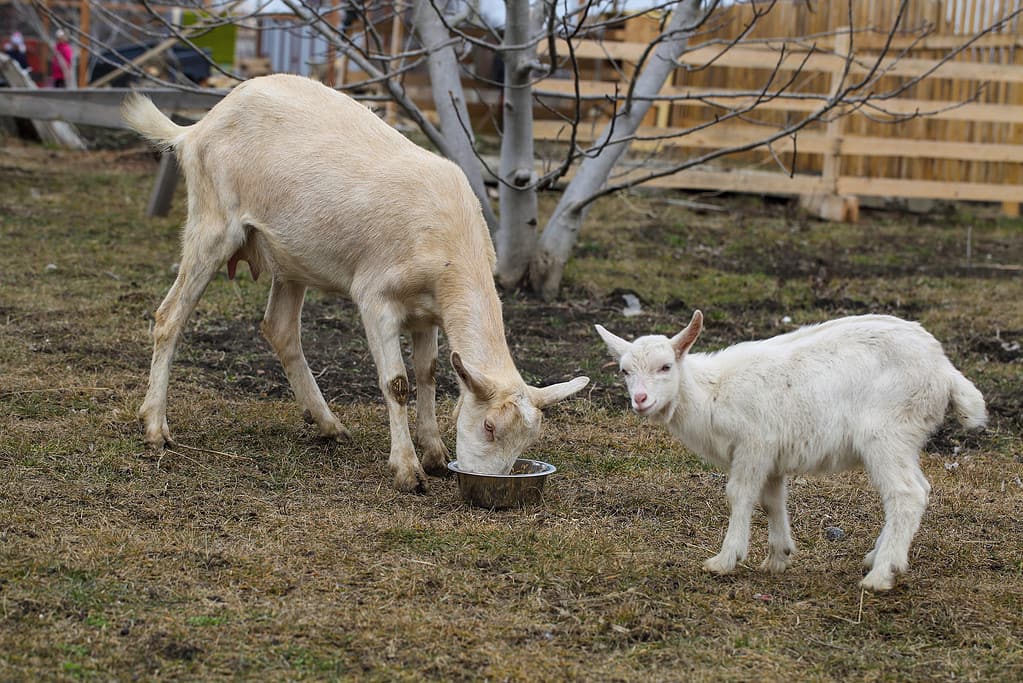
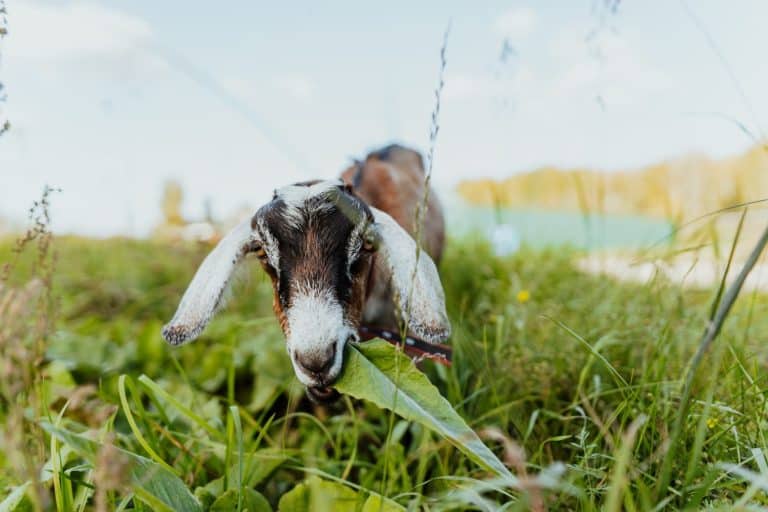
The study involved 29 domestic goats at a UK sanctuary.
©Pretti/ via Getty Images
The research team noted that the ability to make decisions based on vocal cues is found in only a few other species—human babies and domestic dogs. Research had previously tested the ability in chimpanzees with no success. The research team now believes the skill itself may be tied to domestication.
The research team employed a novel approach to test their theory on goats, one of the oldest domesticated species in the world.
How Researchers Conducted the Study
To run the experiments, the team tested 29 domestic goats at a sanctuary in the United Kingdom. To familiarize the goats with the general testing setup, researchers placed two identical buckets on either side of a wooden screen, while another researcher hid behind the screen. The team called each goat by name while filling one of the buckets as the goat watched.
Once the goats were accustomed to the process, the researchers altered the experiment. They ran three variations of the test, all of which included filling the buckets without the goats watching.
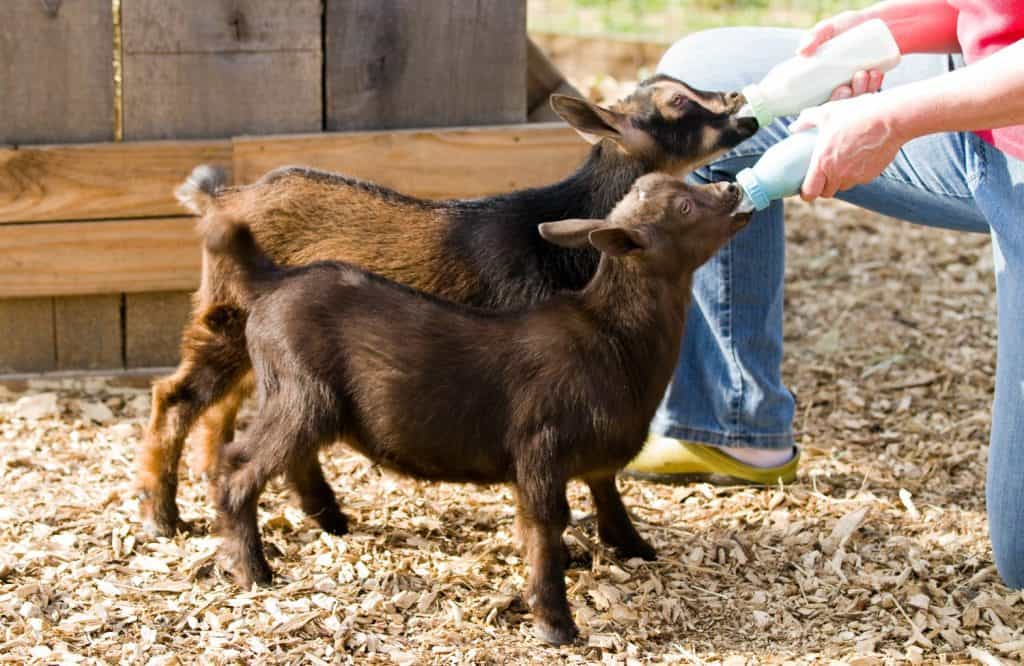
Domestic goats showed the same ability as babies and domestic dogs.
©Steven Frame/Shutterstock.com
In the first version of the test, the hidden researcher stood behind the screen closer to the empty bucket but spoke in an excited, happy voice directed toward the full bucket. In the second version, the researcher remained silent, and in the third version, they turned their back on the screen and spoke away from both buckets.
In each variation, another researcher released a goat, and the goat’s movements were recorded. The team ran 12 separate trials. The results surprised them.
On average, the goats chose the treat-filled bucket 60 percent of the time when the hidden researcher spoke excitedly in its direction. In contrast, their success rate was 47 percent when the researcher was silent and 49 percent when the researcher spoke away from both buckets.
Researchers suggest that the results may indicate untrained goats can use the direction of an unseen human voice to locate a reward. Dr. Stuart Watson, the first author of the study, believes the findings can provide insights into why certain species became more readily domesticated than others.
“I think it’s really advantageous to us and them to understand how they perceive the world better,” he said in a recent news article about the findings.
The Testing Methodology Has a History
The testing methodology was identical to that used in previous studies on human babies, chimpanzees, and domestic dogs. In those studies, both babies and dogs demonstrated similar abilities, but the chimpanzees did not—with one exception.
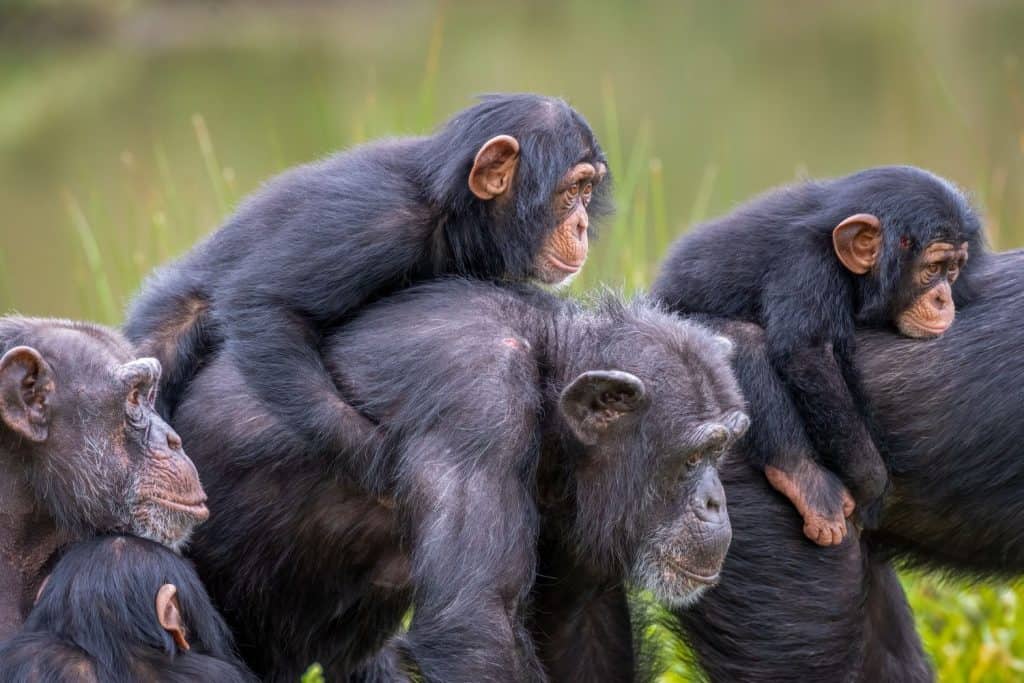
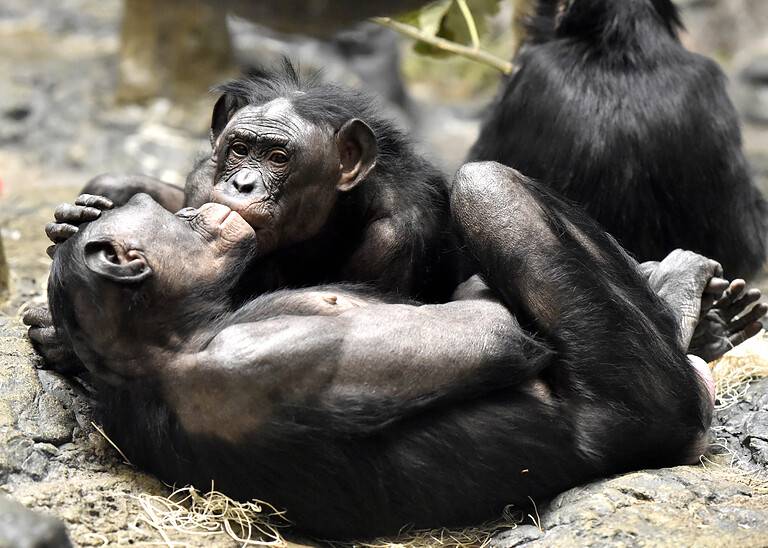
A group of chimpanzees tested using similar methodology did not generally show the same abilities.
©Wirestock Creators/Shutterstock.com
A single chimpanzee did show signs of following human voice cues, but this individual had been raised from infancy in a human home. This exception suggests a direct relationship between the skill and being raised around people.
The Findings Expand Previous Research
This latest study builds upon previous research showing that goats can follow human cues, although this is the first study involving hidden verbal signals.
Previous research has shown that goats can follow nonverbal human motions, such as pointing. Goats can also distinguish between emotions in human voices and have shown a preference for positive human facial expressions over negative ones.
What’s Next?
Going forward, the research team would like to recreate the test but with wild goats rather than domestic ones. They want to determine whether the results are due to domestication or represent an innate ability in the species. They also want to determine whether goats pay attention to the direction of vocalizations within their own species.
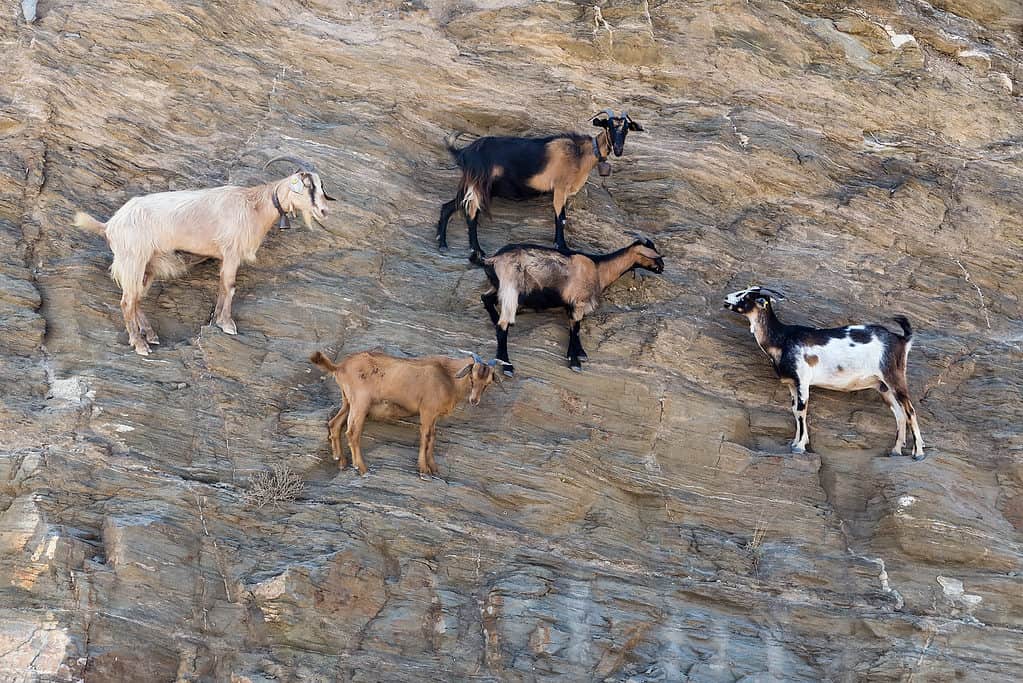
Researchers would like to conduct similar tests on wild goats in the future.
©Ververidis Vasilis/Shutterstock.com
“This is just another nice example where we’re slowly picking apart what is really special to human communication. And when we look, we actually start to see more and more similarities [to other species],” Watson said in the news story.