
Quick Take
- Trail cameras reveal natural animal behavior by capturing undisturbed footage.
- They document elusive or rare species, providing data for conservation and research.
- They monitor daily and seasonal patterns, yielding longitudinal data for ecology and policy decisions.
Surveillance cameras are becoming increasingly common in society. It wasn’t too long ago that these novelties were found only in banks, department stores, and 7-Elevens. Now, there’s a very good chance you’ve got one of these installed on your front porch—and perhaps even several rooms inside your house. These devices are so widespread they’re even finding their way into the farthest reaches of the wilderness.
In the quiet forests of the far North, where snow blankets trees and animal tracks lace the underbrush, sits one of these pieces of technology. Rigged among branches, waiting unseen, untouched—an eye without a brain, unknowing of who or what might soon wander past. This particular piece of equipment is called a trail camera or camera trap, a motion-activated sentinel that captures wildlife behavior without a human in sight. Recently, one such hidden camera in the Yukon captured footage of an unusual, hefty, snow-covered beast, surprising both outdoor enthusiasts and biologists alike. It’s always fun seeing a raccoon or porcupine scurry across your walkway on the porch-cam but imagine seeing THIS! Not only is it delightful to watch, but it’s evidence of why trail cameras have become indispensable tools for modern wildlife research and conservation.
Identifying the Unusual Visitor: A Grizzly Bear

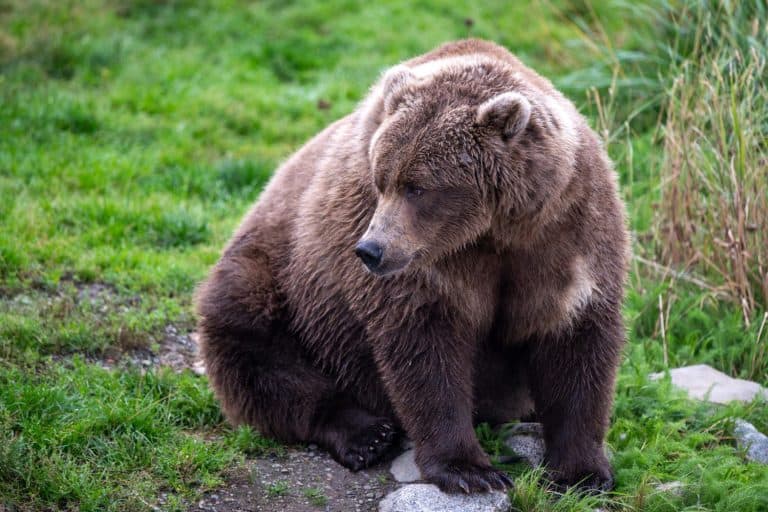
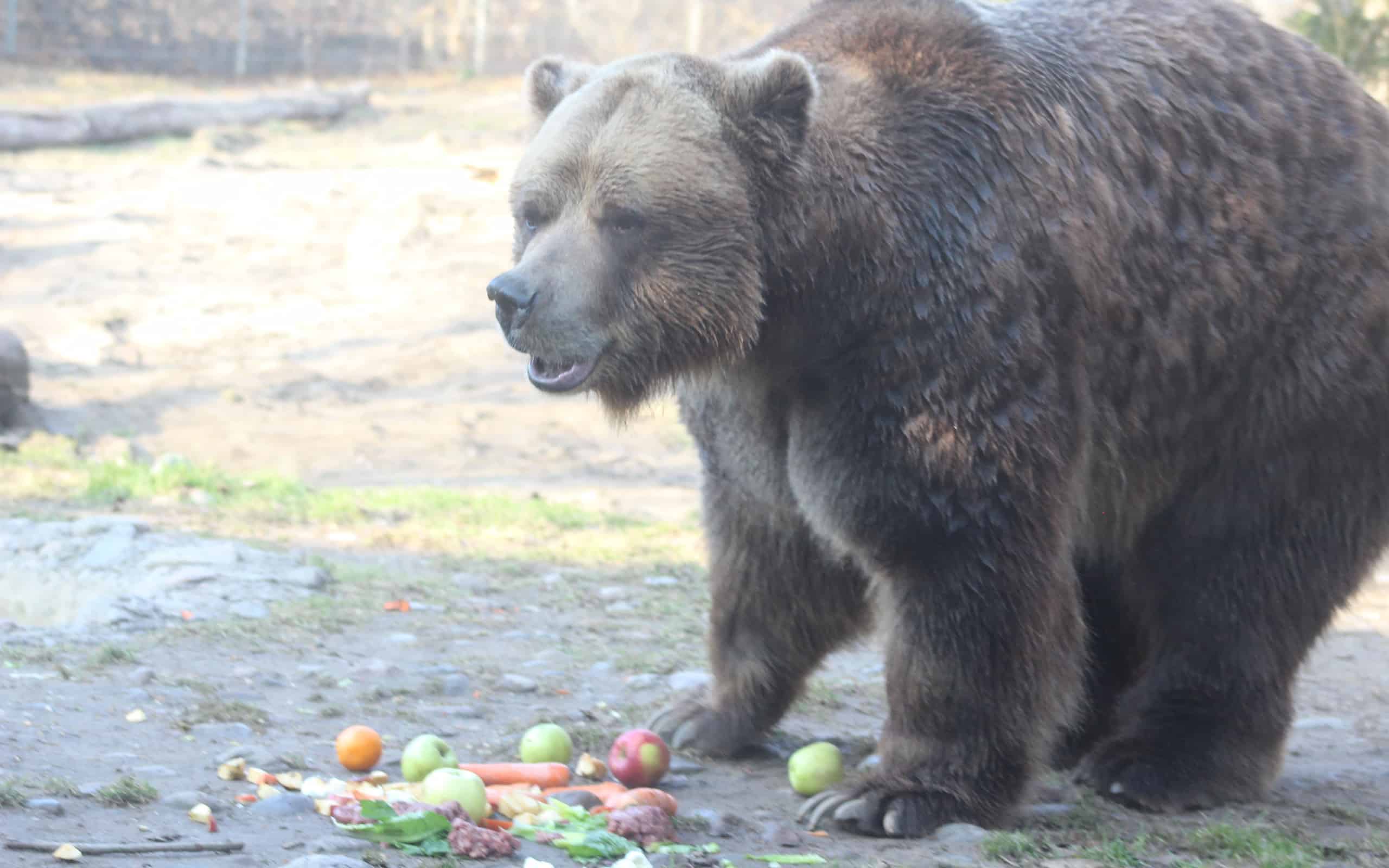
Grizzly bears are known to inhabit that area of the Yukon, but getting candid footage is uncommon.
©The Wild Animal Sanctuary – Original
The animal captured in the Yukon footage was one of North America’s most iconic and powerful mammals: a grizzly bear. Grizzlies are obviously well known to science—it’s not as if the camera captured Bigfoot—but seeing one amble through a snowy forest, thick and coated in snow, is a rare glimpse into the daily life of a large predator in a relatively undisturbed ecosystem. Humans rarely get this close to a grizzly (and no rational human would try to!) but a camera is under no threat.
Let’s do a quick Grizzly 101 refresher: Grizzly bears are subspecies of the brown bear and are typically found in Alaska, Western Canada, and parts of the Northwestern United States. They can weigh anywhere from 400 to over 1,200 pounds and measure up to 8 feet long when standing on their hind legs. They are formidable predators and omnivores adapted to cold climates and rugged terrain.
The Yukon sighting is notable because, while grizzlies are known to inhabit the region, candid footage of them in deep snow without human disturbance is uncommon, especially outside of dedicated research projects. The bear in the footage appeared relaxed and unconcerned, which likely would not have been the case around a film crew or even a single human with a camera, underscoring again how camera traps can observe natural behaviors that would be difficult to document otherwise.
The Quiet Revolution in Wildlife Observation
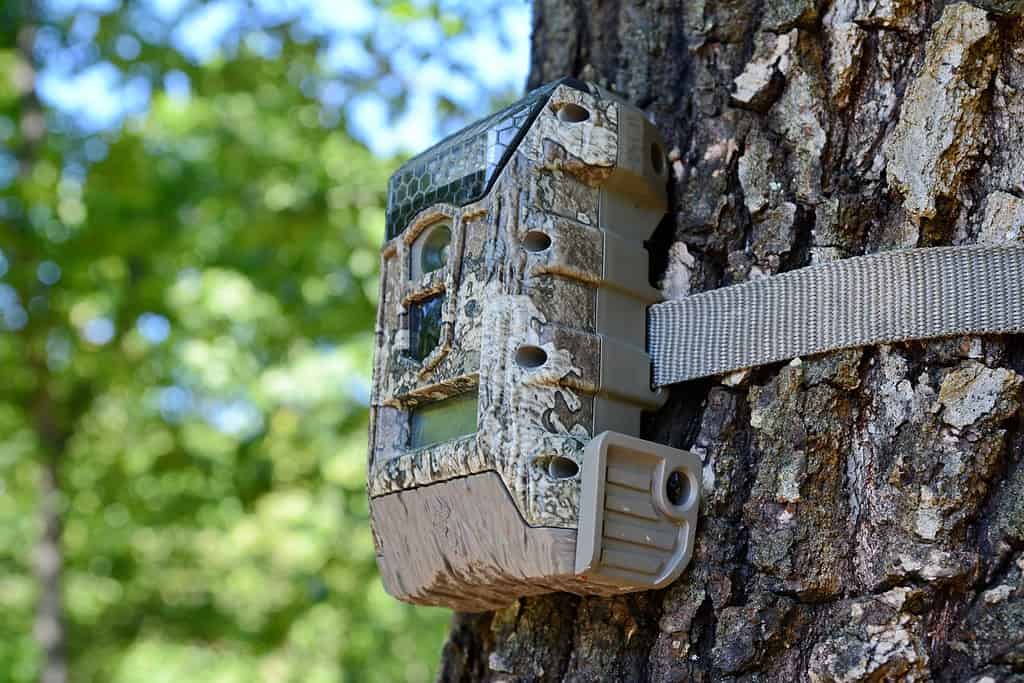
Trail cameras have many advantages over a human being with a camera.
©milart/Shutterstock.com
So what exactly is a trail camera? At its simplest, it’s a motion-activated digital camera designed to sit in the wild, often camouflaged to look like bark or rock, and record whenever an animal passes by. Unlike traditional wildlife observation—where scientists might walk through a forest, disturb habitat, or rely on direct sightings—trail cameras operate continuously and without human presence. They can survive extreme temperatures, they don’t need to eat or sleep, and, perhaps most importantly, they’re practically invisible and unlikely to spook the wildlife. This allows them to capture animals behaving naturally, from dawn to dusk and even through the night.
Common features of trail cameras often include:
- Passive infrared motion sensors that trigger when a warm body moves through the frame,
- Night-vision or infrared illumination to record nocturnal activity,
- Time and date stamps that make scientific analysis possible,
- and increasingly wireless connectivity and AI tools that help researchers automatically sort and even identify species.
Because they require minimal maintenance and no direct supervision once deployed, trail cameras can be left in remote, rugged, or otherwise inaccessible environments—in this case, the Yukon’s snowy forests—for weeks, months, or even years.
What Exactly Can Trail Cameras Tell Us?
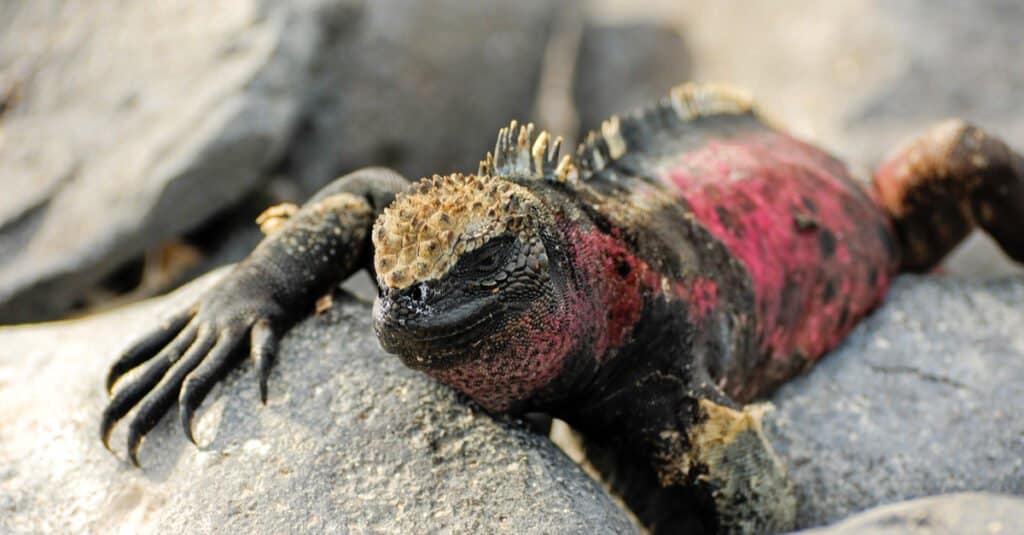
Conservation teams were able to protect the pink iguana from the predations of feral cats in the Galapagos Islands thanks to information learned from trail cams.
©Wirestock Creators/Shutterstock.com
1. Natural, Unfiltered Animal Behavior
When humans enter the scene, many animals change their behavior. They become wary, alter their paths, or flee entirely. Trail cameras remove this interference, giving researchers candid views of how animals move through their habitat, what times of day they’re most active, social interactions, and behavioral clues that are nearly impossible to observe otherwise.
For example, cameras in Vermont once captured photos of tiny moths drinking moose tears—a phenomenon called lachryphagy that had never been documented with such clarity before.
2. Documenting Elusive or Rare Species
Some wildlife is simply difficult to see. Nocturnal animals, creatures that avoid humans, or those that exist in very low numbers are especially hard to study. Trail cameras have successfully documented:
- rare long-footed potoroos in Australia not seen since the 1990s, helping confirm they still survive in certain forests,
- the return of species like the fisher (a native carnivore) to parts of Ohio for the first time in over 100 years,
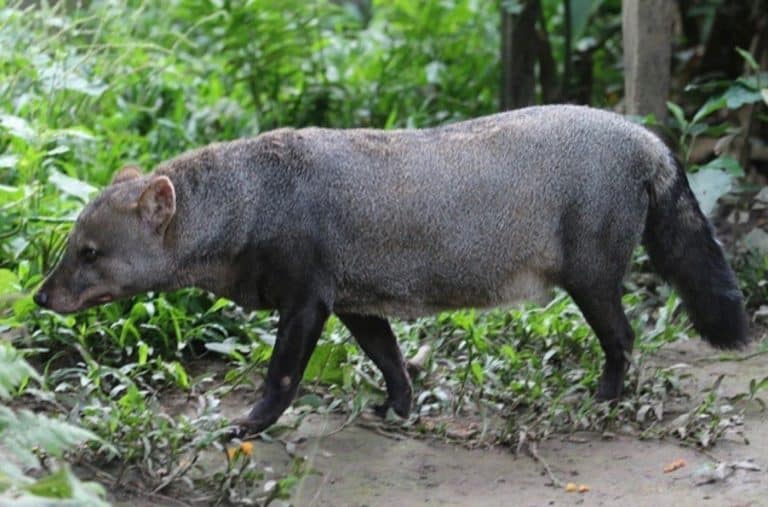
- and endangered cat species in Latin America that had been elusive for researchers.
These insights are not just “cute videos;” they can shape conservation strategy, influence habitat protection policies, and help scientists decide where to focus future research.
3. Monitoring Daily and Seasonal Patterns
Trail cameras can operate year-round, capturing whether animals are active at night or during the day, how often they return to certain areas, and whether their routines shift with seasons. This kind of longitudinal behavioral data is vital for understanding species’ ecological roles, migration patterns, and responses to environmental change.
For instance, a network of cameras in British Columbia recorded dozens of species from bears to mountain goats and even warm-blooded birds all using the same trail systems, revealing not just wildlife movement but how humans share those spaces too.
4. Supporting Conservation and Management Decisions
All that data adds up to better informed science and policy. Wildlife managers use camera footage to:
- estimate population sizes,
- monitor endangered species,
- assess the effectiveness of habitat restoration,
- and even detect illegal poaching or habitat encroachment.
For example, by identifying that feral cats were preying on vulnerable pink iguanas in the Galápagos, conservation teams could take targeted action to protect hatchlings.
Hidden Watchers Revealing Nature’s Secrets

The footage was more than just a cool video of a grizzly bear; there’s a lot researchers can learn form it.
©through-my-lens from Getty Images and SimpleFoto/ via Canva.com
Trail cameras have revolutionized wildlife research. By capturing candid footage of animals like the Yukon grizzly bear, they allow scientists to study wildlife behavior without disturbance, document rare or elusive species, and contribute to conservation and management strategies across ecosystems. These devices quietly watch; we learn. That simple combination of patience, technology, and curiosity teaches us more about the world than any walk through the woods ever could.
You might think a snow-covered grizzly strolling past a camera in the Yukon is just a cool clip for a nature blog, and you wouldn’t be wrong, but it represents something deeper. Each image or video clip from these silent observers adds another data point to scientific databases, helping us understand not just who’s out there, but how they live, when they move, and why certain patterns emerge in the natural world. And in an era of rapid environmental change—with climate shifts, habitat loss, and human-wildlife conflicts on the rise—those insights are more valuable than ever.
For you or me, we might watch this clip and say, “Whoa! Check out that grizzly bear! Crazy!” then move on with our day. And that’s fine. But to a researcher, it’s a scientific snapshot of life in the wild, helping to broaden our understanding of our shared planet, one frame at a time.