
Quick Take
- Scientists have documented same-sex behavior in hundreds of animal species, though it is not considered a required function for specific ecosystem roles.
- Some researchers suggest that genetic trade-offs and linked traits can complicate simple natural selection models, especially when behaviors serve social rather than reproductive functions.
- Studies of garter snakes show that some males mimic female pheromones, a strategy that can reduce harassment and increase mating opportunities rather than regulate body temperature.
- Phylogenetic analyses suggest that same-sex behaviors have emerged independently across many animal lineages, indicating multiple evolutionary pathways rather than a single origin.
Scientists have recorded same-sex behavior across many animal groups, including mammals, birds, and reptiles. Still, the meaning of that behavior depends on the species and the context. Behavior that may look sexualized from a human perspective might have a different meaning in the animal kingdom. Because animals cannot explain motives, researchers focus on what they can measure. They track patterns, timing, social roles, and outcomes like parenting success to try to understand why animals behave as they do.
This article explains what scientists mean when they describe homosexual behavior in animals, where they have observed it, and why human labels do not map neatly onto animal lives. Much of the controversy around this topic comes not from the observations themselves, but from how people interpret them through a human cultural lens. If we can set aside preconceived notions and simply ask, “what do we observe in nature?” we see that the answer is often complicated.
Roy and Silo and a Penguin Pair Bond
Two male penguins engaging in courtship and raising an adopted chick sounds like a storyline from Pixar (It was in fact the subject of a children’s book called And Tango Makes Three), but it’s based on a real story. Keepers at New York City’s Central Park Zoo noticed two male chinstrap penguins, Roy and Silo, forming a pair bond in the late 1990s. The birds performed courtship behaviors seen in penguins during breeding season. They stayed close, vocalized together, and worked on a nest site. Their bond looked similar to male-female pairs in that colony.
The pair also showed incubation behavior. In 1999, keepers observed them treating a rock like an egg they were attempting to hatch. Staff later provided a fertilized egg from another penguin pair that struggled to raise two chicks. Roy and Silo incubated the egg and helped raise the chick, later named Tango.
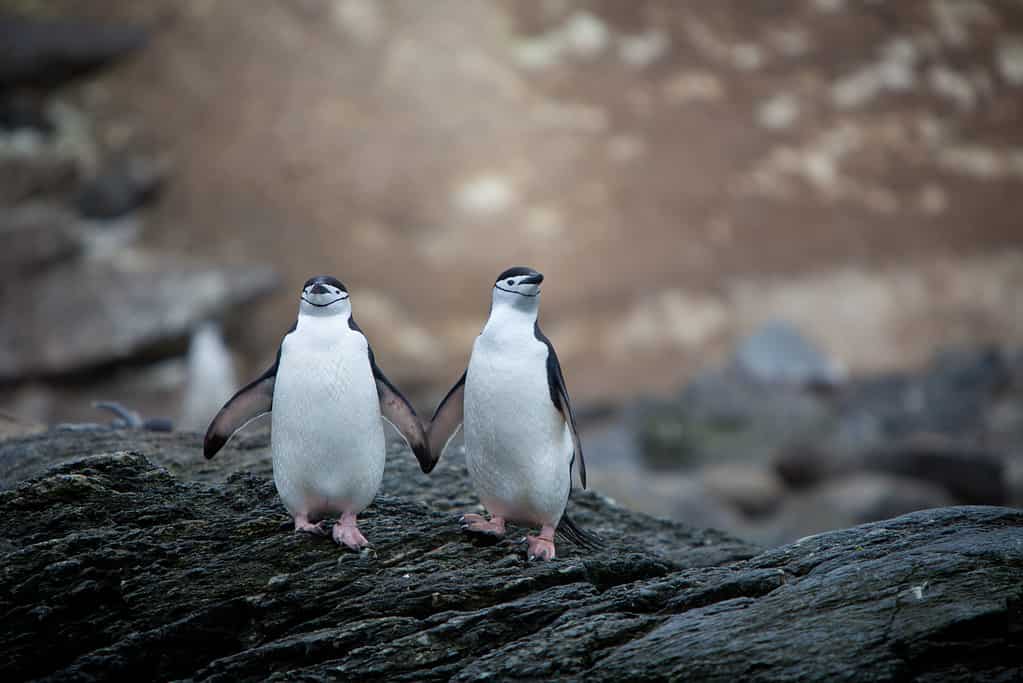
Chinstrap penguins can form strong pair bonds and work together during nesting and chick care.
©Chris Venne/Shutterstock.com
That outcome matters because it moves beyond a brief same-sex animal interaction. It shows coordinated parenting behavior, sustained over time. It also shows how the social structure of penguins can support same-sex pairs under certain conditions.
Is “Homosexual” the Best Word Here?
Because the term “homosexual” in humans is tied to identity, many experts prefer “same-sex behavior” or “same-sex pairing” as terms to describe animal behavior. Those phrases describe what observers can confirm. They avoid implying inner experience. They also reduce the tendency to turn animals into symbols for human arguments about sexual desire and expression. That said, the term “homosexual behavior” remains common in older literature and in some modern papers. When used carefully, it can still be accurate as a behavior label. The key is to clarify exact claims.
What Counts as Same-Sex Behavior in Science?
Researchers use “same-sex behavior” as a broad label. It can include courtship displays, mounting, genital contact, pair bonding, and cooperative parenting. It can also include social behaviors that look sexual but serve other functions, such as tension reduction or alliance building.
The category includes behaviors with different biological roles. Some interactions appear linked to reproduction indirectly, such as practicing mating skills. Others appear linked to group stability, such as reconciliation after conflict. Some occur during adolescence, when animals test social boundaries and signals. Some occur among adults during breeding seasons, when hormones run high and competition increases.
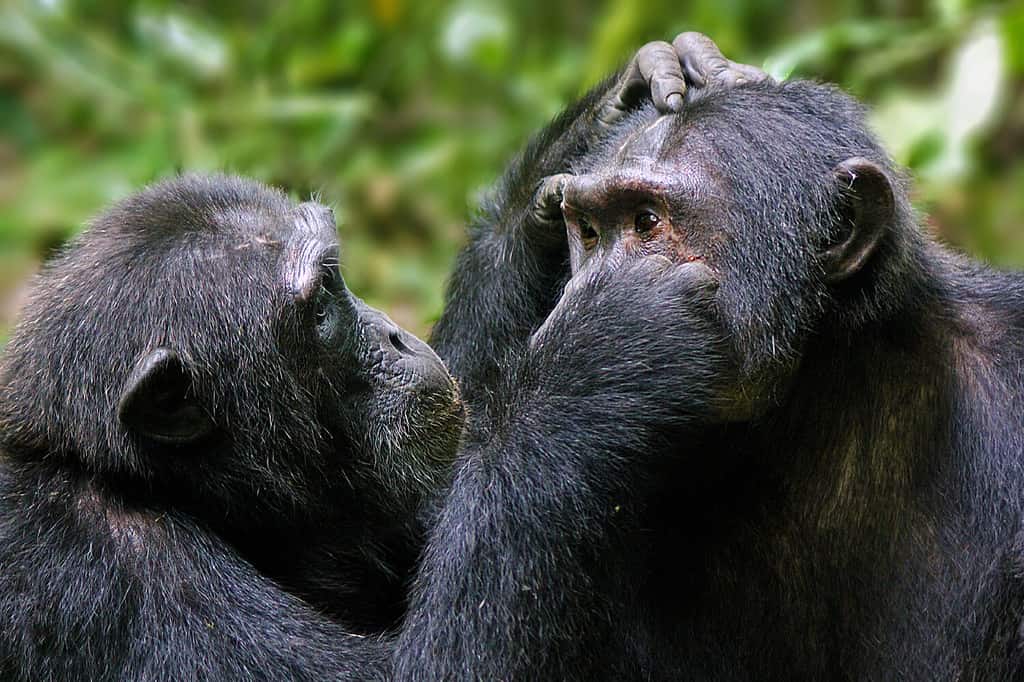
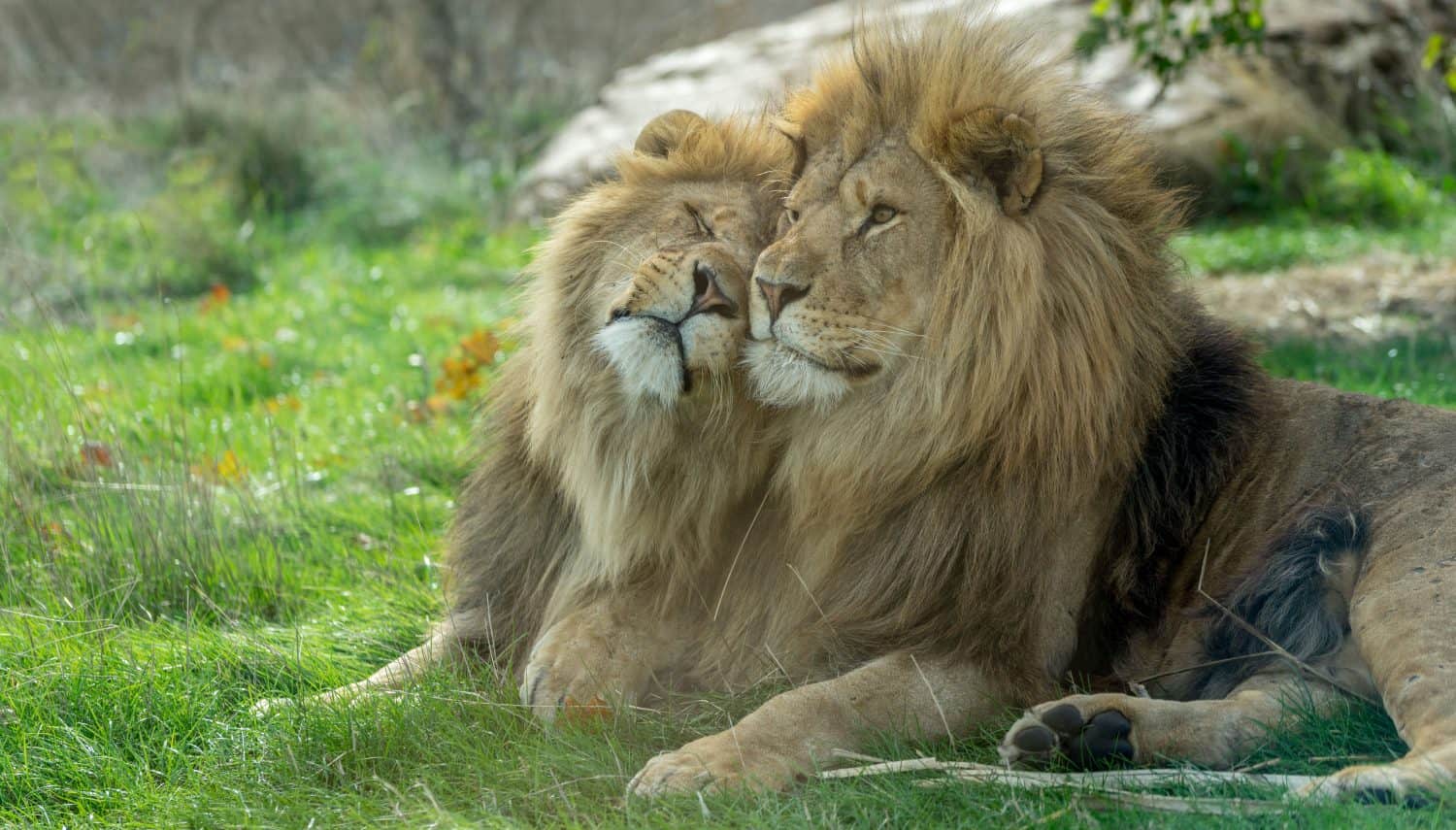
Same-sex behavior in animals can include social bonding and grooming, not just mating.
©ThomasDeco/Shutterstock.com
Because of that variety, scientists often avoid assuming a single motive. They also avoid treating all species as if they follow the same rules. A behavior that means one thing in dolphins can serve a different purpose in penguins or primates.
Captivity and the Wild Shape What We Notice
Many well-known examples come from zoos and aquariums, where staff observe animals daily, across many years. They also keep records. In the wild, observation time is limited. Researchers often focus on survival, feeding, and reproduction, not every social interaction.
Captivity can also shift behavior. Group size, partner availability, and social stress can differ from wild conditions. Single-sex groups can lead to more same-sex pairing, because pairing remains a strong drive in many species. Limited options can shape outcomes. That does not make the behavior “fake.” It means context matters.
How Widespread Is It Across Species?
Recent research has documented same-sex sexual behavior in 59 nonhuman primate species as of 2026, and similar behaviors have been observed in a wide range of mammals, birds—including penguins, gulls, swans, and albatrosses—and domestic animals such as sheep. Reports also exist for reptiles, though research in that group remains limited.
The strength of evidence varies. Some species have decades of detailed observation. Others have only a handful of reports. That uneven record does not prove absence in less-studied animals. It mostly shows where scientists have looked closely. It also reflects how hard it can be to observe private behaviors in the wild, especially in dense habitats or at night.
Pair Bonds and Parenting in Birds
Birds offer clear examples because many species form visible pair bonds and share nesting duties. In some colonies, two females pair and raise chicks together. This pattern has been reported in some albatross populations, where the local sex ratio can affect pairing options. When there are more females than males, female-female pairs may form and attempt to raise offspring, sometimes with help from extra-pair mating.
Recent research documents same-sex partnerships in a minority of bird species, with ecological significance varying by species and context. These pairs may hold territory, share nest defense, or perform synchronized courtship rituals. Parenting success often depends on access to eggs and group support, and in captivity, keepers can sometimes provide eggs for incubation, as with Roy and Silo.
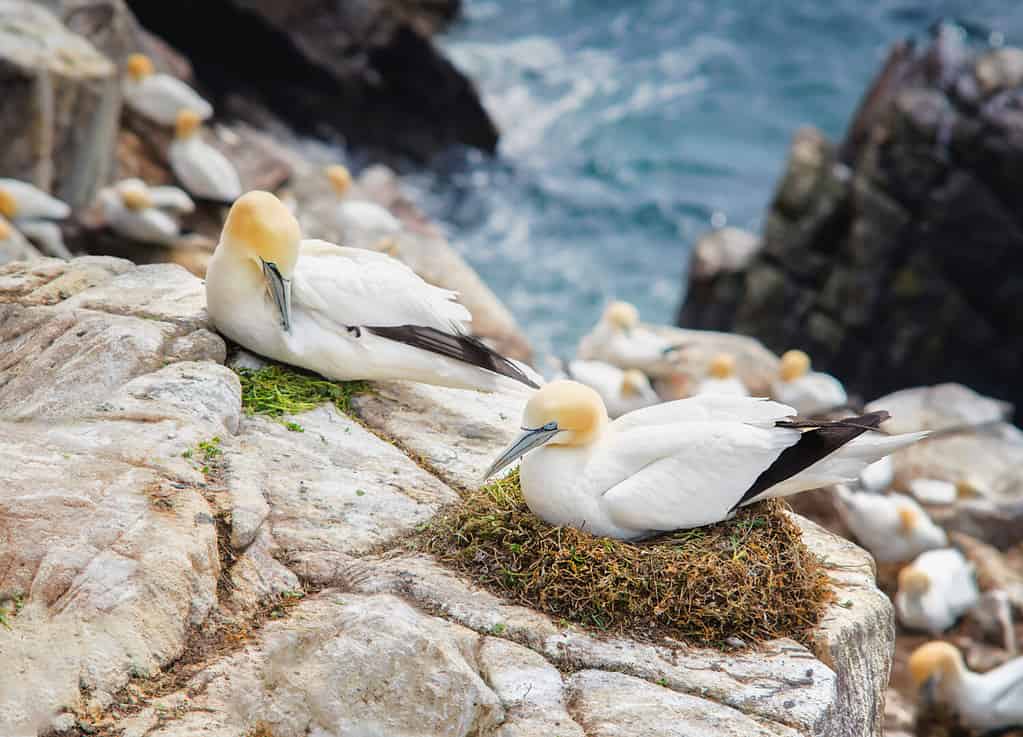
Some bird species form long-term pair bonds and work together to nest and care for young, including same-sex pairs.
©Algirdas Gelazius/Shutterstock.com
Social Reasons in Primates and Dolphins
In some social mammals, sexual behavior is not limited to reproduction. Bonobos provide a well-known example. Sexual contact occurs in many social contexts, including greeting, tension reduction, and alliance formation. Researchers observe these interactions among many partner combinations. The behavior appears tied to group cohesion as much as mating.
Recent studies confirm that same-sex sexual behavior is prevalent in dolphins, particularly among males, with both sexes observed engaging in same-sex interactions in various social contexts. Male dolphins often form alliances involving close contact, coordinated movement, and repeated sexual behavior, which serve purposes such as bonding, cooperation, and even health benefits like slower aging. These behaviors can also relate to dominance and status, and may shift with age, group membership, and season.
Flexible Behavior Versus Stable Preferences
People often wonder if animals have a “sexual orientation” like humans. The truth is that animal research cannot confirm or deny inner identity. It can only track behavior and preference patterns. Still, preference patterns do exist in some species.
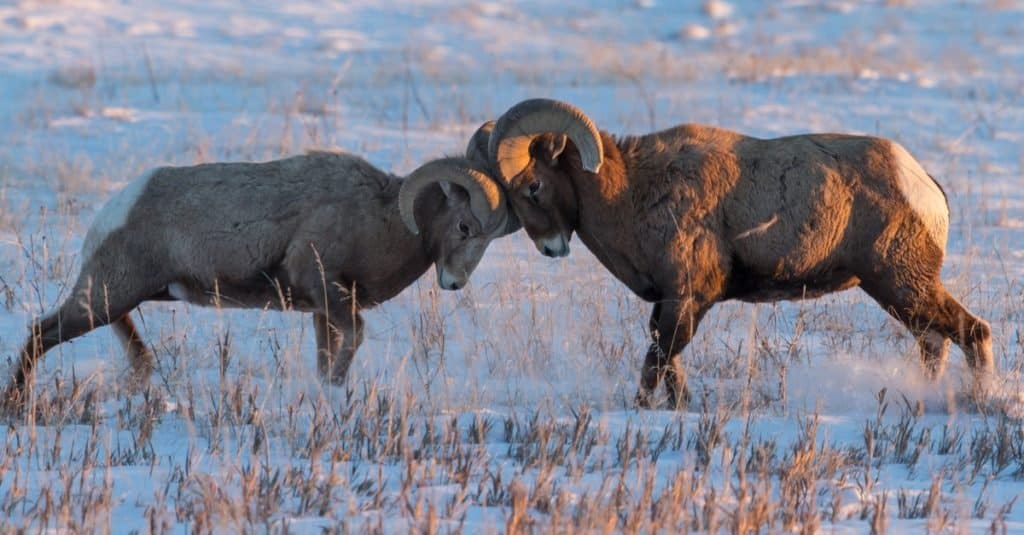
Studies of domestic rams show that some individuals consistently prefer same-sex partners.
©Warren Metcalf/Shutterstock.com
Many animals that engage in same-sex behavior also mate with the opposite sex and produce offspring. That suggests flexibility rather than exclusivity. In other species, a smaller subset of individuals shows consistent same-sex partner preference across time, including when opposite-sex partners are available. Domestic rams provide one of the best-studied cases. Recent studies indicate that 8-10% of domestic rams consistently engage in activity with same-sex partners, making them one of the best-studied examples of stable same-sex behavior patterns in animals.
Functions of Same-Sex Behaviors
Same-sex behaviors can serve multiple functions. Mounting can be a dominance signal in some species. Grooming can reduce stress and reinforce bonds. Courtship displays can serve as practice and learning. Sexual contact can act as conflict resolution in tightly social animals.
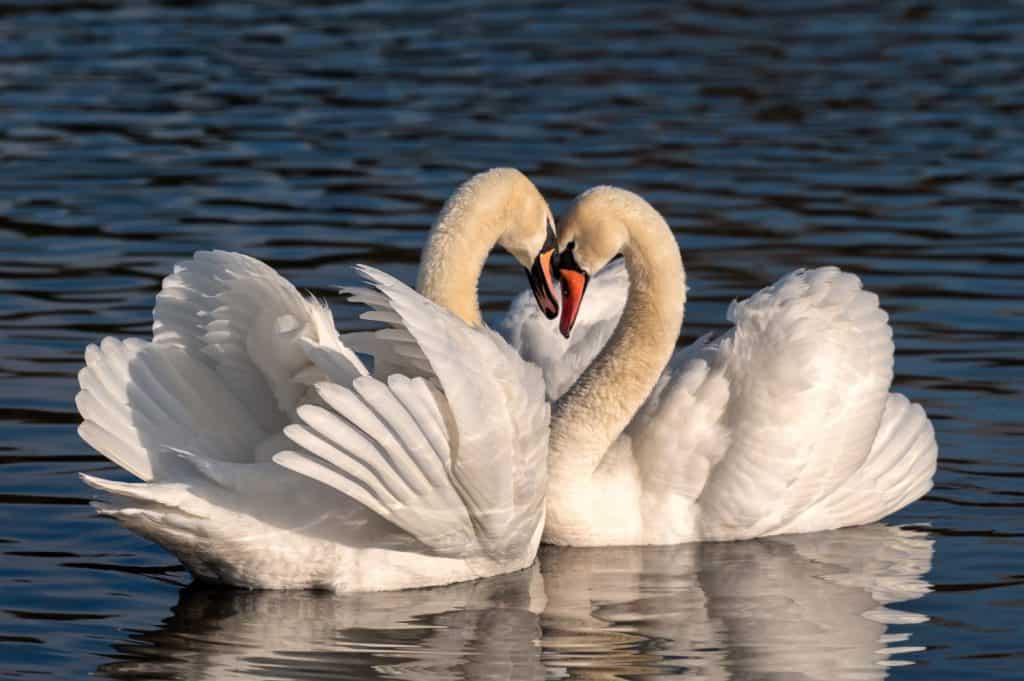
Animals of the same sex sometimes engage in courtship displays for reasons like dominance or practice, not because they have a preference for the same sex.
©oliver magritzer/Shutterstock.com
Age also matters. Young animals sometimes experiment with behaviors as they learn social cues. Hormones can amplify behavior during breeding seasons. Crowding and partner access can shape who pairs with whom. Social rank can influence opportunities for any mating behavior.
Because motivations cannot be asked directly, researchers look at outcomes. Does the behavior reduce aggression? Does it increase alliance stability? Does it occur after conflict? Does it predict parenting success? Those measurable patterns help scientists avoid guessing.
Where Human Comparisons Break Down
Humans often compare animal behavior to human identity because of a general tendency to anthropomorphize animals. But animals do not form identity categories or attach social meaning to labels. They respond to instincts, learned social cues, and environmental conditions. Animals also engage in many behaviors that humans consider acceptable, alongside many other that humans do not. For that reason, animal behavior is descriptive, not a guide for human norms.
Animal studies cannot resolve human debates about sexual identity. What they can do is address a narrower question: whether same-sex behavior occurs in nature. The evidence shows that it does, across many species and contexts. Human sexuality involves culture, language, and personal narrative, and those elements do not map cleanly onto animal lives.

Human sexuality, unlike that of animals, involves culture, language, and personal narrative.
©GBJSTOCK/Shutterstock.com
What These Observations Can Teach Us
Animal behavior research shows that sexual behavior can serve more than reproduction. It can support bonding, reduce conflict, and stabilize groups. It can also appear as part of flexible mating systems shaped by ecology and social structure.
Observations also remind us that “natural” does not mean “simple.” Nature contains variety, complexity, and context-dependent behavior. Scientists gain insight by studying what animals do, how often, and under what conditions. Those insights can improve our understanding of social systems, parenting strategies, and evolutionary pressures.
At the same time, animal behavior does not map neatly onto human identity categories. The safest approach respects that difference, treating animals as animals, not as symbols of human experience.