
Quick Take
- A parasitic queen conquers an entire colony not with force, but with a disguise so effective the enslaved workers never suspect a thing. See the queen's disguise →
- Formica ants appear to submit peacefully, yet they have found one quiet way to fight back that costs Polyergus ants dearly. Discover their quiet resistance →
- The most feared raider in the ant world can't feed itself, raise its young, or survive a single day alone. See their fatal dependency →
- Which ant is truly stronger: the one doing the raiding, or the one being enslaved? The answer isn't what you'd expect.
Ants are seen as some of the hardest-working creatures, tending to put their colonies above themselves. However, one species of ant is incapable of caring for itself on the most basic level. Therefore, their only chance of survival is to become slave-making ants that raid neighboring colonies. If Polyergus ants did not engage in this process, they would cease to exist.
Continue reading
Polyergus Ants Raid Formica Ant Colonies
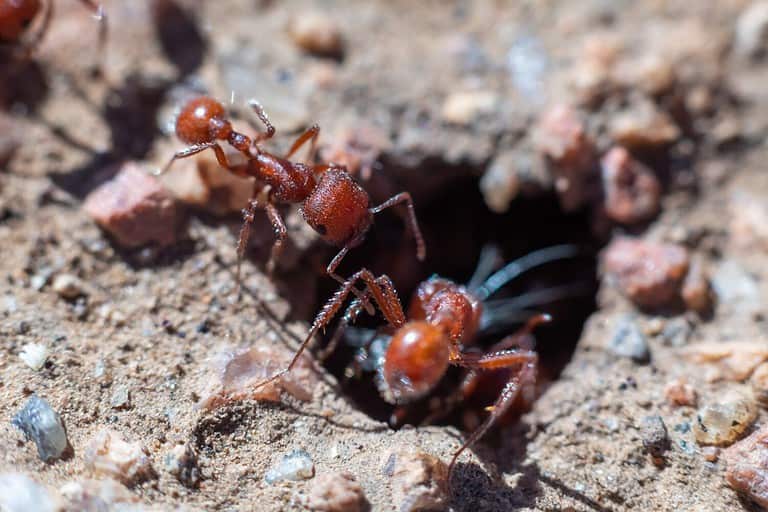
Polyergus ants lack the ability to care for themselves. They cannot forage for or feed themselves, nor can they care for their young. Consequently, these parasitic ants raid Formica ant colonies and enslave the Formica ants to survive.
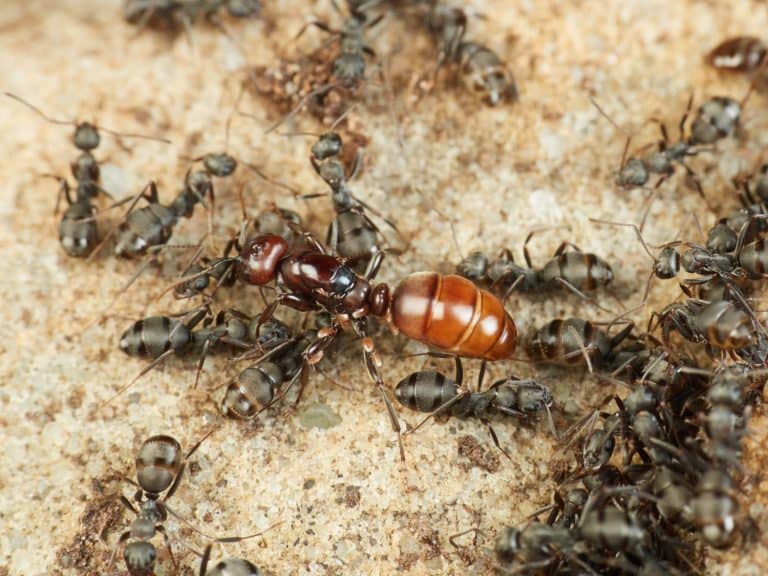
The process of taking over a colony is rather brutal. The queen Polyergus ant will follow her soldier ants into a Formica ant colony and kill the Formica ant queen. Without skipping a beat, the Polyergus queen steps into the dead queen’s role. She hides her true identity by covering herself in the dead queen’s chemical pheromones, and begins to lay eggs in the stolen colony.
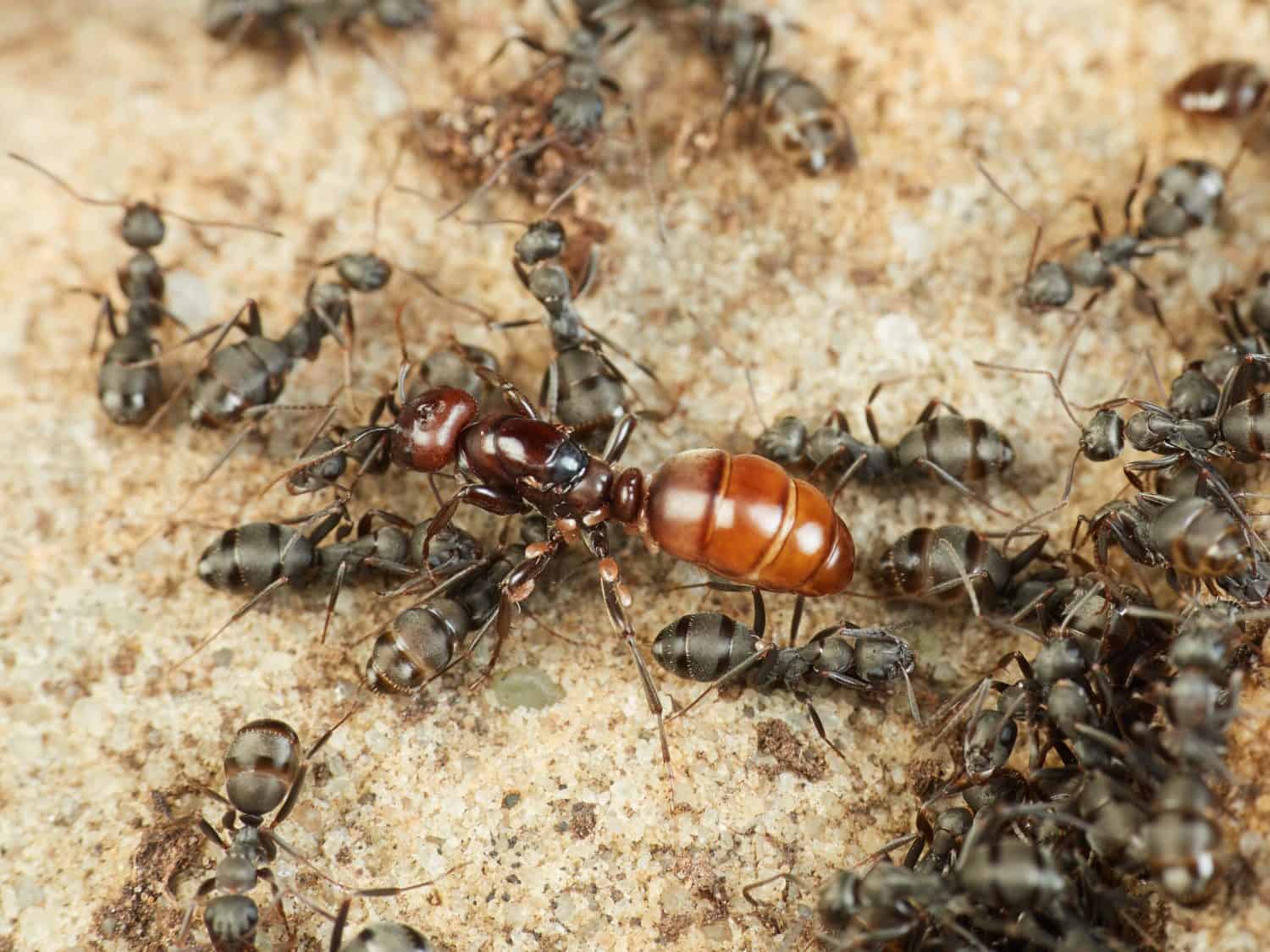
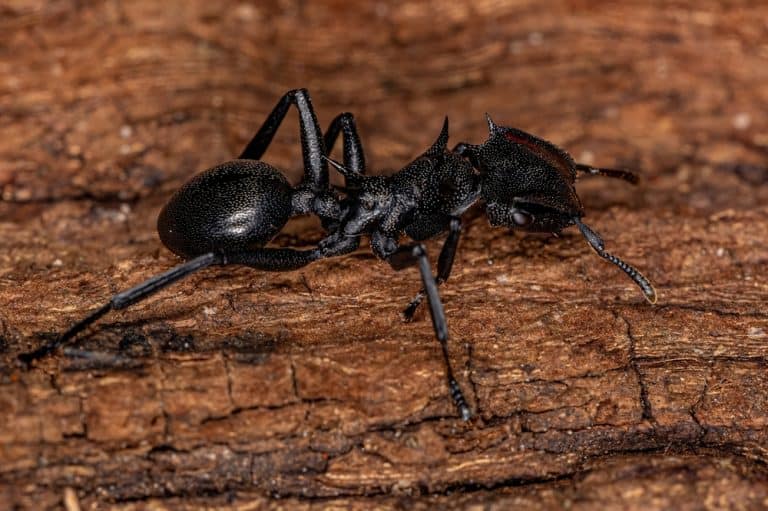
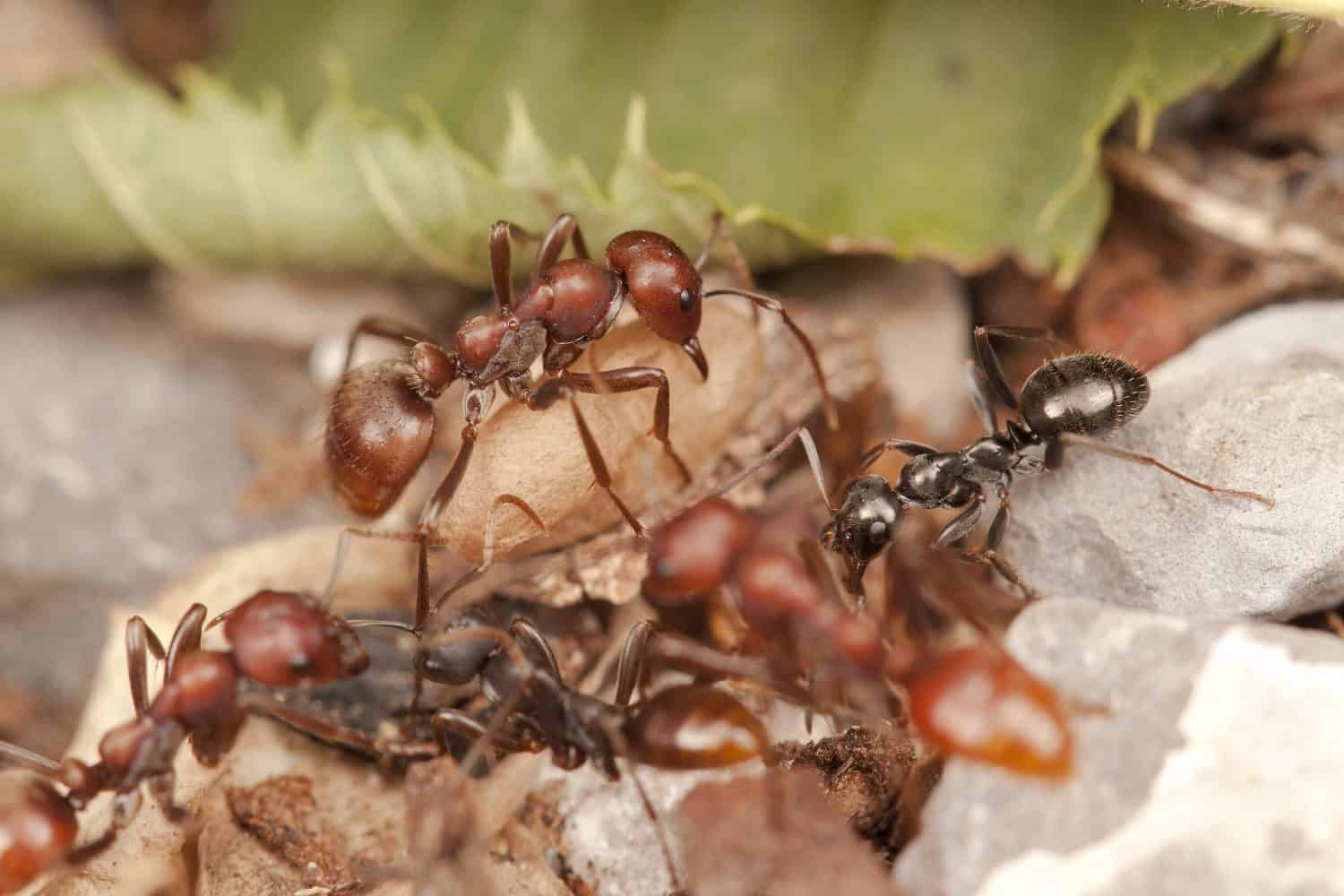
Polyergus ants will invade Formica ant colonies and take them over as their own, enslaving Formica ants in the process.
©Macronatura.es/Shutterstock.com
The Formica ants continue their work of foraging for the colony, feeding the queen, tending to the eggs, and raising Polyergus ants as their own.
However, to keep the colony running smoothly, Formica ants need to be replenished. To do this, the Polyergus ants raid nearby Formica ant colonies and steal pupae. These pupae are then raised within the Polyergus/Formica ant colony as slaves.
Why Do Formica Ants Submit Instead of Fighting Back?
Once the Polyergus queen has killed the Formica queen and coated herself in the dead queen’s chemicals, the Formica ant colony follows the parasitic queen. They do not resist the Polyergus ants and appear to live in harmony, working to keep both themselves and the Polyergus ants alive.
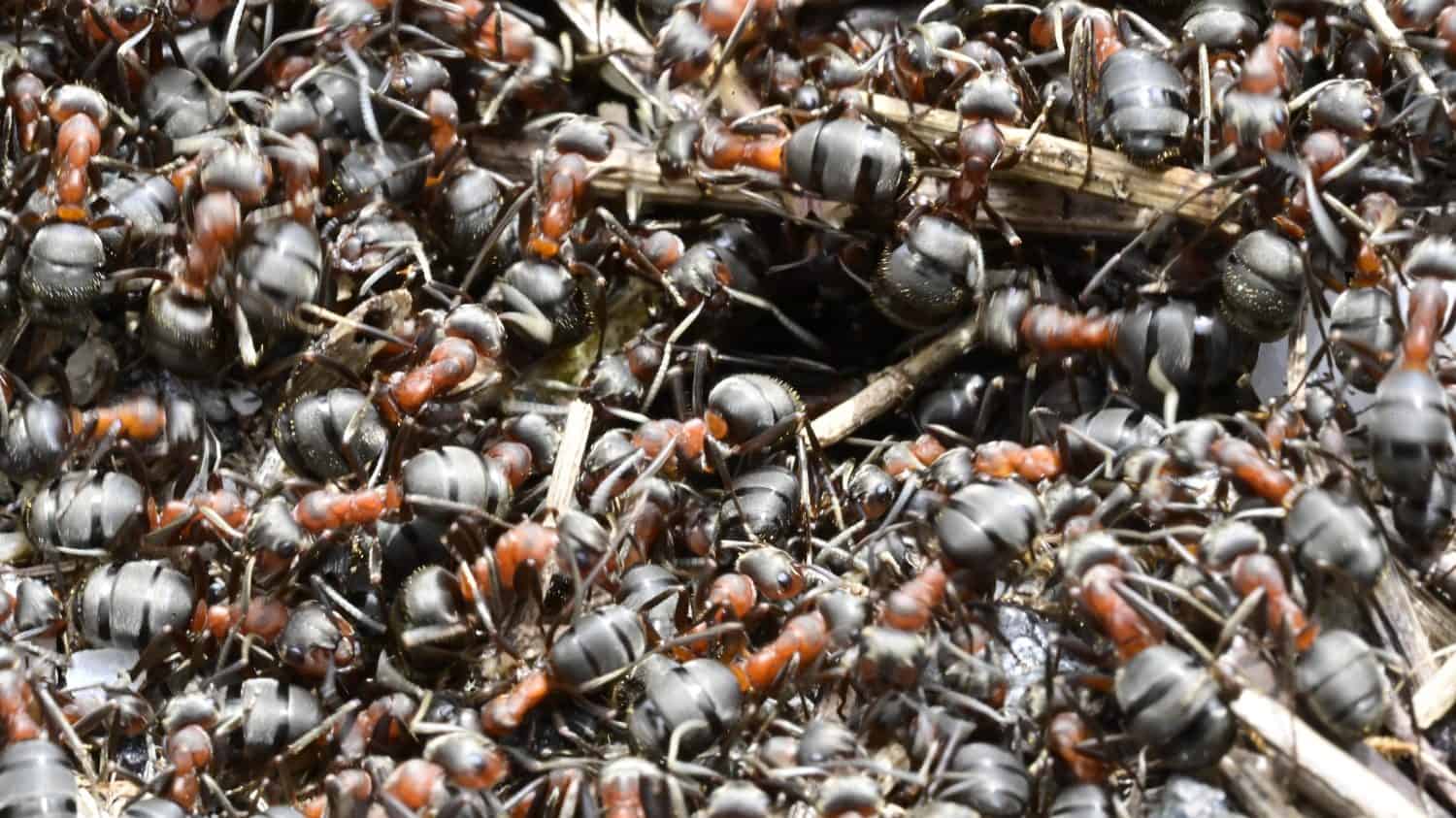
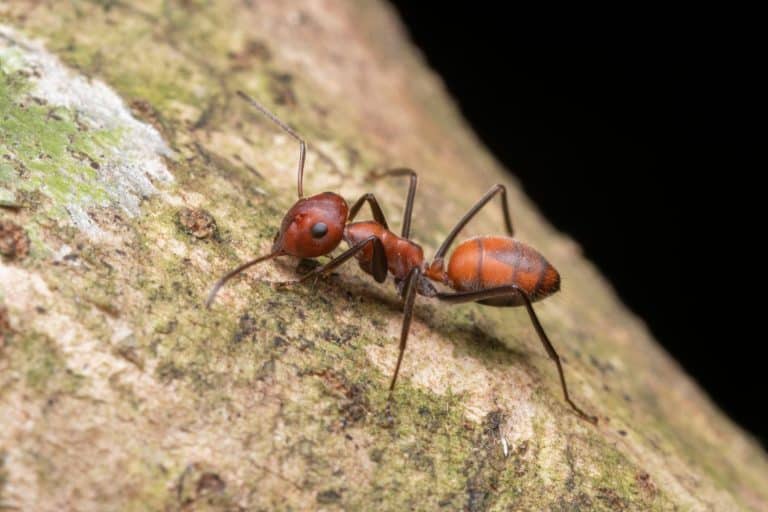
Thanks to the modification of species-specific chemicals, Formica ants will not fight back against adult Polyergus ants.
©Rickmica/Shutterstock.com
As more and more Formica ants are added to the stolen colony, the species-specific chemicals they possess are modified. Instead of seeing Polyergus ants as enemies, the Formica ants tolerate them. As a result, they continue to work as slaves rather than rebelling against their captors.
However, the Formica ants may not be as tolerant as once believed. This is because, as Polyergus eggs are laid, worker Formica ants slowly kill them. The Formica ants will target the eggs of future Polyergus queens and kill them. As a result, 60% of Polyergus eggs are killed by Formica ants while the eggs are in the colony.
Polyergus Ants Would Die Without Formica Ants
At one time, Polyergus ants may have been able to handle daily tasks themselves and enslaved Formica ants only to conserve energy. Today, despite their powerful mandibles and ability to overpower Formica ant colonies, Polyergus ants would perish without the ants they enslave.
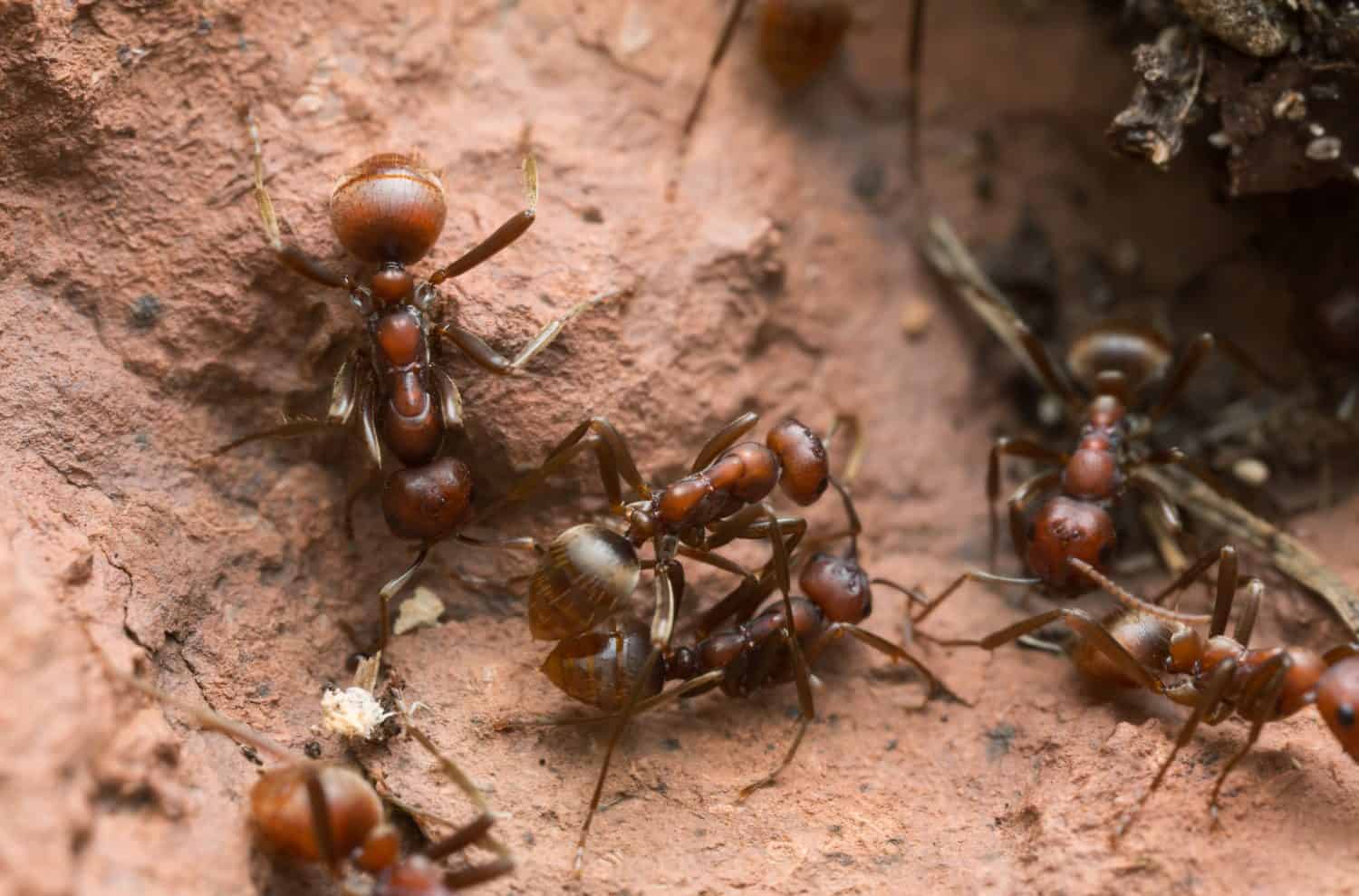
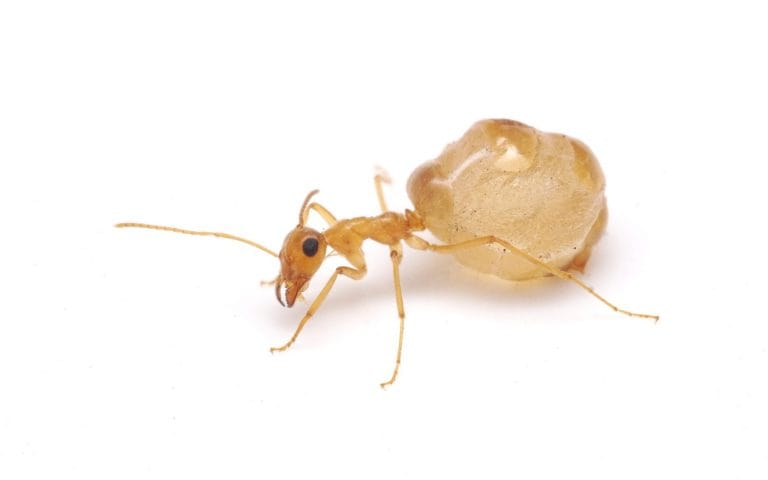
Polyergus ants would cease to exist without enslaving Formica ants.
©Henrik Larsson/Shutterstock.com
Polyergus ants focus solely on raiding other ant colonies. Consequently, within the colony, they represent only 10% of the overall population. As they have evolved, they have lost the ability to care for themselves and their young. These ants are incapable of foraging, feeding, caring for the queen, or tending to the eggs and larvae.
The fact that Polyergus ants are so dependent on Formica ants paints a picture of just how fragile these intimidating ants are. If Formica ants were to revolt and stop caring for Polyergus ants, the latter would not survive. This leads to the question of which species is truly stronger. Is it the species that takes over and raids other ant colonies, or the one that is enslaved? Only time will tell which species outlasts the other in the end.