
Quick Take
- The same feathers that make the salmon-crested cockatoo sacred to one indigenous tribe also put it in the crosshairs of something far more destructive. See the threats it faces →
- A centuries-old initiation rite legally couldn't happen anymore, but researchers found a loophole hiding in the birds themselves. Discover the feather loophole →
- The Huaulu tribe wasn't responsible for this cockatoo's collapse, yet they voluntarily changed a sacred tradition to help save it. Learn about the Huaulu tribe →
- Celebrating indigenous conservation wins could actually backfire, and researchers have flagged one uncomfortable reason why. Read the cautionary note →
A recent and impressive example of animal conservation by Indigenous people is the Huaulu people of Seram Island, Maluku, and their efforts to protect the endangered salmon-crested cockatoo (Cacatua moluccensis). Although the Huaulu people is not primarily responsible for the species’ decline, the community is taking significant steps to protect the salmon-crested cockatoo.
Continue reading
What We Know About the Salmon-Crested Cockatoo
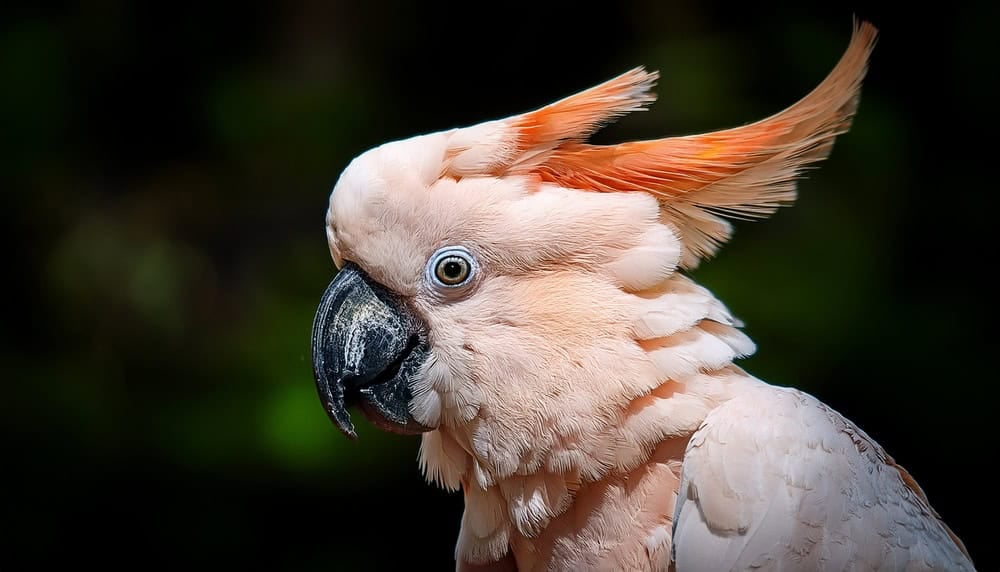
The salmon-crested cockatoo is one of the largest of the white cockatoos. It has white-orange feathers and a large retractable recumbent crest. These red-orange plumes are meant to scare away potential attackers, but these same feathers have also made the bird an attractive target for human hunters.
The birds are native to the Seram archipelago in eastern Indonesia, where they live in tropical forests and may also visit cultivated areas. They are highly social and will even form flocks with other cockatoo species. At night, they rest in tree hollows and among the canopies. During the day, they forage for seeds, fruit, nuts, and coconuts.
What Is the Conservation Status of Salmon-Crested Cockatoos?
These birds are classified as endangered, and their population has likely declined by more than 50 percent over the past three generations (64 years). Even though they were once widespread, they now face local extinctions on several islands. So, what caused this decline?
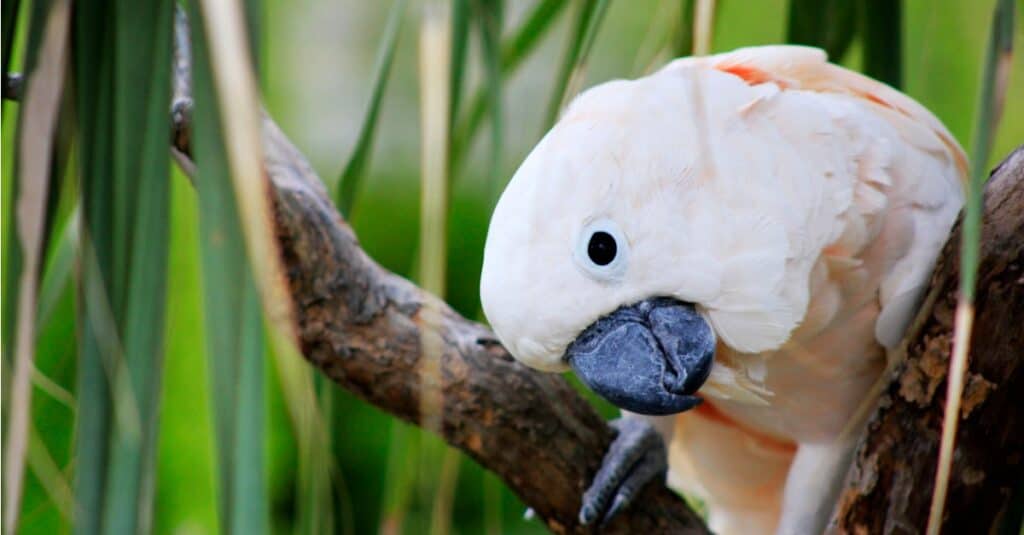
The salmon-crested cockatoo was once widespread.
©iStock.com/Blue_Crystal
The main driver has been demand from the wildlife market. Birds are the most frequently traded taxonomic group in Indonesia’s commercial wildlife markets. This has been magnified by loss of habitat due to logging and agriculture. Currently, their largest and most secure populations are found within Manusela National Park on Seram Island, though smaller groups persist in other parts of the island.
Their decline has significant implications for the local ecology. Additionally, bird diversity is a reliable indicator of overall ecosystem health.
The Role of the Huaulu
The Huaulu people occupy Seram’s interior and are one of the area’s oldest Indigenous tribes. Their relationship with the area’s wildlife is both complex and reciprocal. For the Huaulu, hunting is not just a means of obtaining food; it is also deeply connected to social identity, spirituality, and maintaining cosmic balance. Hunting is justified as a way to appease forest spirits (called kaitahuupuem by the Huaulu). While it’s true that wild animals are killed, this is only done after careful negotiation with the non-human powers believed to protect them. This approach contrasts sharply with the careless slaughter and capture of wildlife carried out in the name of ‘progress’ and for the profit of wildlife traffickers.
Nowhere is this more apparent than in the Cidaku ritual. This ritual marks a boy’s transition to manhood and originally required a human sacrifice. Due to pressure from colonial and missionary influences on the island, this was later replaced with animal sacrifices. One element of the ritual is the hunt. The salmon-crested cockatoo became a primary target, and its feathers were used in the ceremonial headdress, called a puheliam.
However, as the chosen animal for sacrifice became endangered, this created an additional challenge for the Huaulu people. National and international conservation mandates gave these birds protection. The legal framework prohibited any form of capture, possession, or killing of the bird, even for ceremonial purposes.
The Need for Biocultural Negotiation
When cultural practices are in conflict with conservation efforts, there is a need for biocultural negotiation. A recently published study has recounted how this has taken place for the salmon-crested cockatoo.
First, the Perkumpulan Konservasi Kakatua Indonesia (a non-governmental organization focused on cockatoo conservation) established a collaboration with the Huaulu of Seram Island. Researchers collected data through in-depth interviews, observations, and social media.
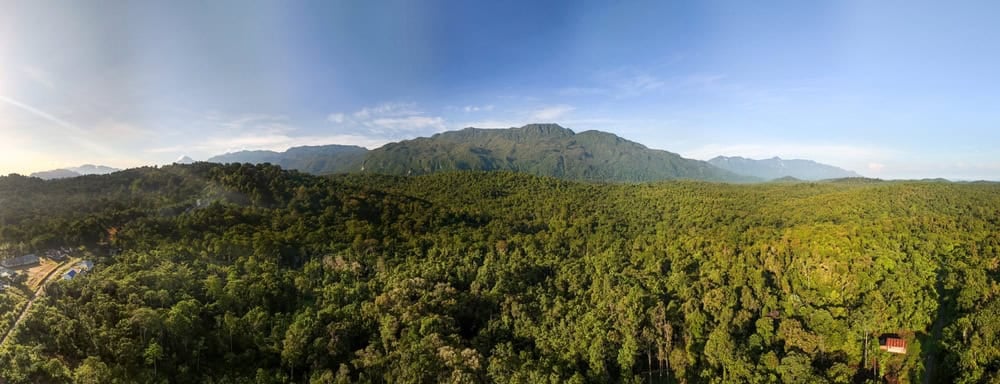
The Huaulu occupy the interior of Seram Island.
©KELE project/Shutterstock.com
The research confirmed that cockatoo feathers are required for the traditional Cidaku ritual, in which boys transition to adulthood. There are strict and closely followed rules for the rituals, and the feathers are a key element of that. The only acceptable substitute for the feathers would be a human head.
However, elders confirmed that as long as the feathers were truly from a salmon-crested cockatoo, they satisfied the cosmological requirements of the Cidaku. Molted feathers were acceptable, and no hunting was strictly necessary. This was incorporated into a formal customary agreement signed by the Head of Huaulu village. Molted feathers are now collected by or donated to the village. They are stored in dry boxes ready for use.
Despite some initial concerns that using molted feathers might diminish the ceremony, these concerns have largely been overcome. Young men were finding it increasingly difficult to locate these endangered birds for hunting, which was causing delays in their initiation rites.
Meeting Conservation and Community Needs
This is an example of successfully integrating biocultural diversity into conservation strategies. It shows that conflicts between cultural traditions and conservation laws can be resolved with careful negotiation. By using a culturally sensitive approach, long-term solutions can be achieved.
However, it is important to remember that the Huaulu’s traditional sacrifices were not the main cause of the cockatoo’s decline. Threatened wildlife often have high commercial value on the illegal market and international online marketplaces. Highlighting their sacred importance could even inadvertently increase their perceived economic value!
Therefore, initiatives like this must be accompanied by robust monitoring and the formalization of local taboos against all forms of commercial trade. Importantly, indigenous values can be a highly effective enforcement mechanism against wildlife trafficking.