
Quick Take
- Your instinctive reaction to a bee sting is the exact thing that dooms the bee, and it turns out there is a counterintuitive alternative. Why swatting dooms the bee →
- A honeybee's stinger is both its only weapon and the mechanism of its own death, making this design a fatal trade-off worth understanding. The fatal stinger trade-off →
- A bee can sometimes escape after stinging you, but it requires something most people would never think to do. How a bee can escape →
A honeybee sting can be a scary and painful experience, especially if you’ve never had one before. In reality, the only people who have a reason to fear a bee sting are those who are allergic. For everyone else, the sting is merely an inconvenience accompanied by temporary pain. The honeybee takes the brunt of the damage and almost always dies after stinging a human.
But in rare cases, a honeybee might be able to survive a human encounter. As seen in the Instagram video above, honeybees can sometimes free themselves from human skin, but this requires us to resist our typical first reaction.
Continue reading
If a Honeybee Is Stuck, Don’t Swat It
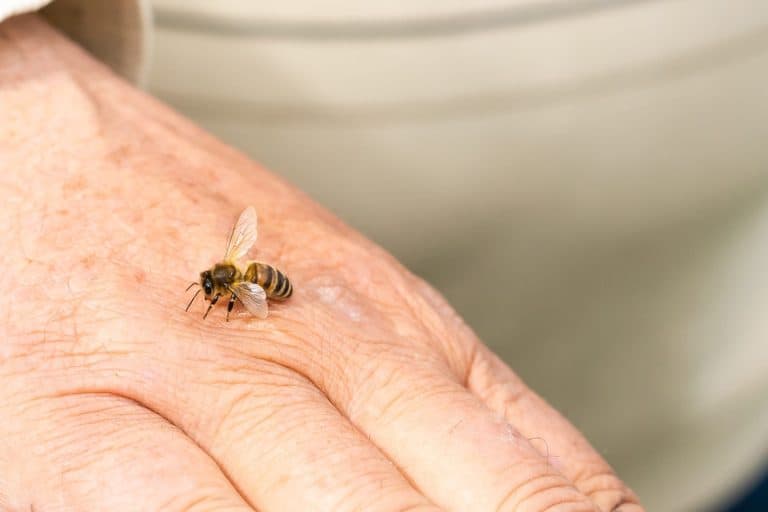
It’s human instinct to swat or swing at anything that causes us pain. There’s a tiny alarm bell that goes off as our bodies recognize that we’ve been harmed, and it’s not always easy to ignore. However, for the sake of the honeybee, sometimes it’s necessary. If the bee’s stinger is only at the surface and not anchored too deeply, the bee may be able to gently work the stinger free. This is your cue to be patient and see whether the honeybee can be saved.
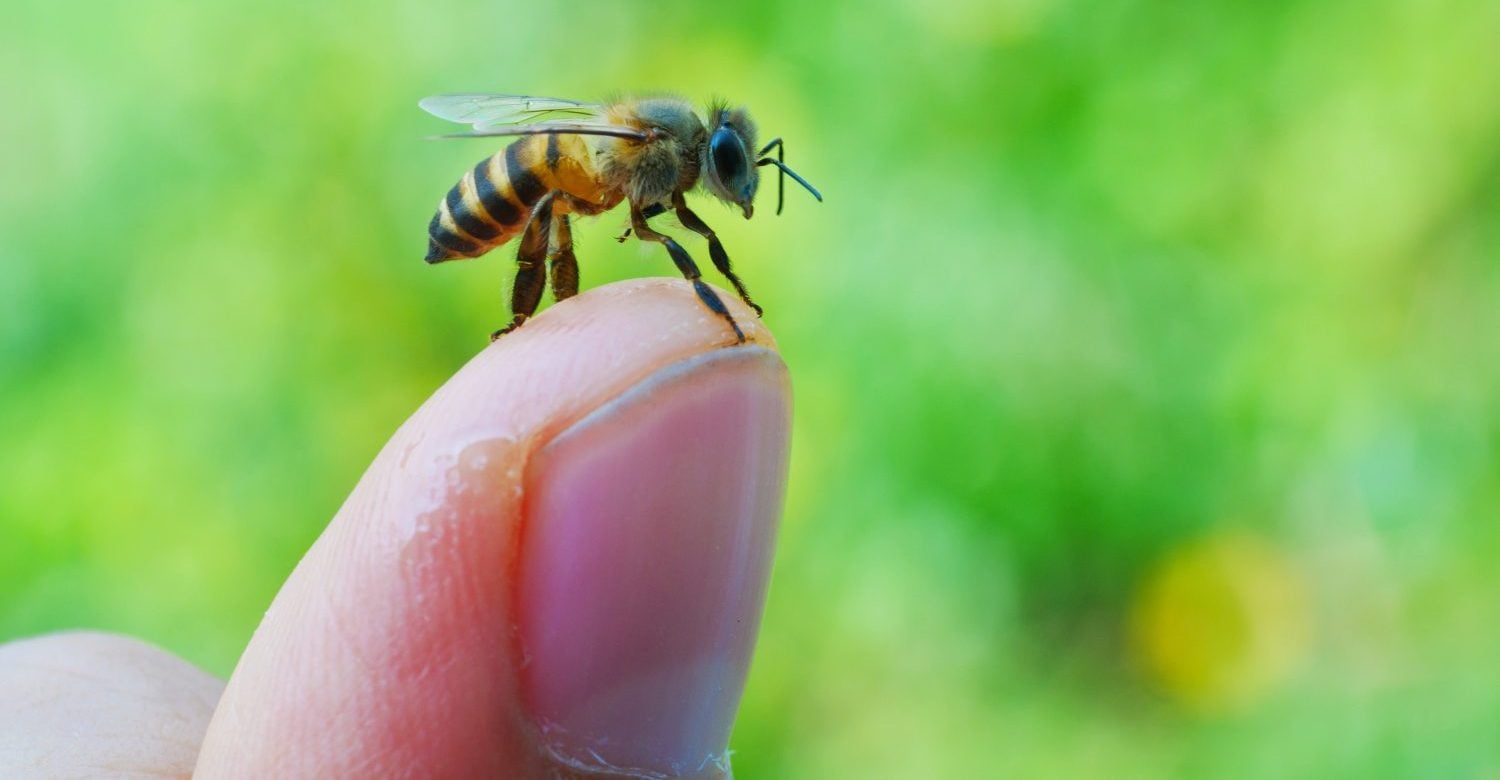
Honeybees are the only bee species that die when they sting a mammal; most other species—and the honeybee queen—have smooth stingers.
©Lipatova Maryna/Shutterstock.com
In the Instagram reel, the beekeeper stands perfectly still and allows the bee to rotate. As it does, the tiny barbs on the bee’s stinger slowly become unhooked from the skin. The process is not painless, but it doesn’t last long. A honeybee will either get free in a minute or so, or it will die when its body ruptures from the force of the pull.
Honeybees Don’t Want Anything to Do With Stinging Humans
If a honeybee stings you, it’s because it either perceived you as a threat or was accidentally squished. Stinging is not something bees do regularly, because one wrong sting can mean a death sentence for them. Their stinger is attached to their internal organs, allowing them to pump venom into a potential predator. However, this is a double-edged sword. Because it’s attached to their venom glands, it also leaves them vulnerable if they can’t retract their stingers.
In the video, you can see the honeybee slowly wiggle its stinger free. This takes time and is exhausting for the bee as it rotates, swings in circles, and gently tugs. The amount of venom delivered depends on how long the stinger remains in the skin, and the chances of being stung twice after this encounter are extremely low. It’s more traumatic for the honeybee, which faces certain death if it cannot get free.
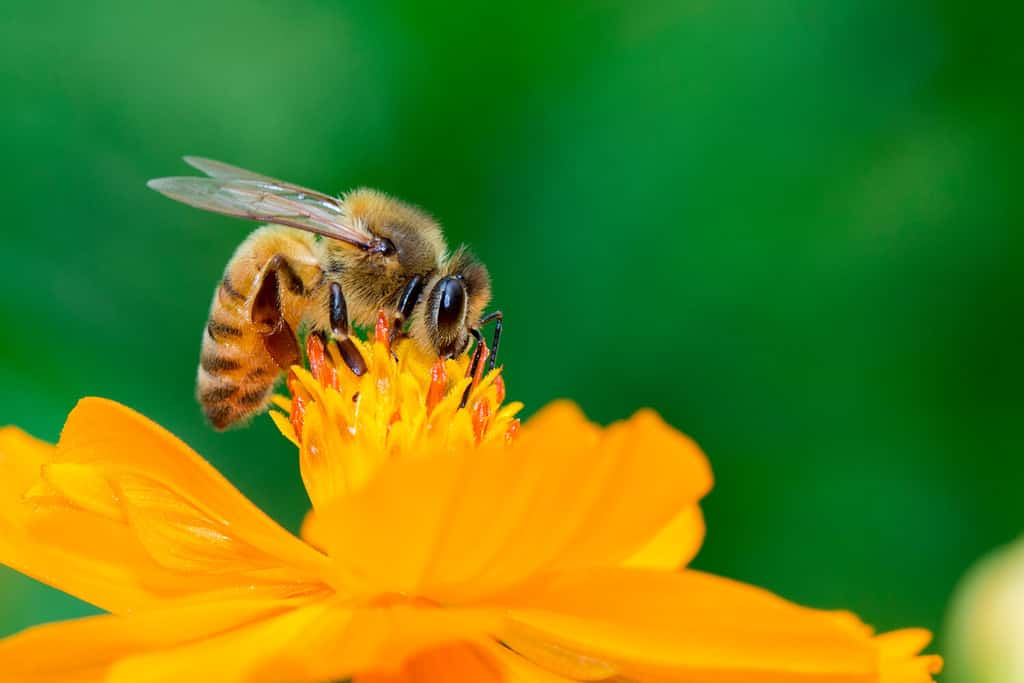
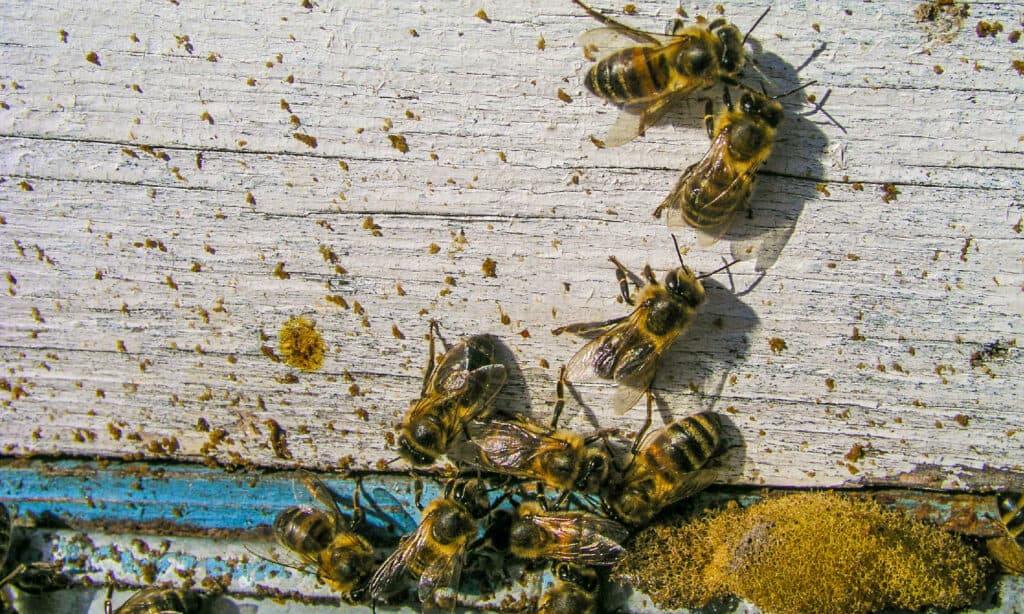
It doesn’t always work, but allowing honeybees to work out their stingers can sometimes save them.
©yod 67/Shutterstock.com
Male honeybees do not have stingers. Both drones and female worker bees are equally important. Minimizing unnecessary deaths helps maintain the overall health of the colony. It’s not always realistic, but like this beekeeper, your patience may save a honeybee from a gruesome death.