
Quick Take
- This tree grows a food source that keeps its tiny army fed and loyal. Discover the exclusive food →
- The ants protect the tree from a threat that has nothing to do with insects or animals, and scientists still don't fully understand how they do it. See how ants fight pathogens →
- In a garden without ants, the bullhorn acacia tree needs a human caretaker to take over their job. Explore the tree's dependence →
- Two species so locked together that one going extinct would instantly doom the other, a relationship that took millions of years to reach that point. Trace millions of years of coevolution →
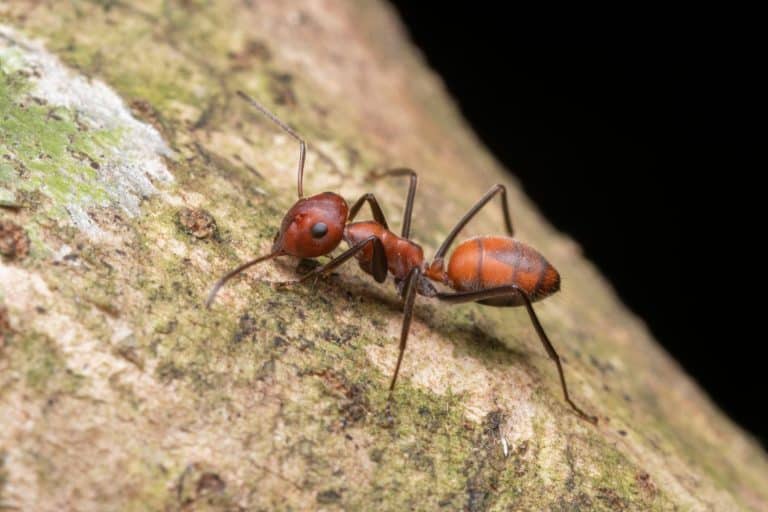
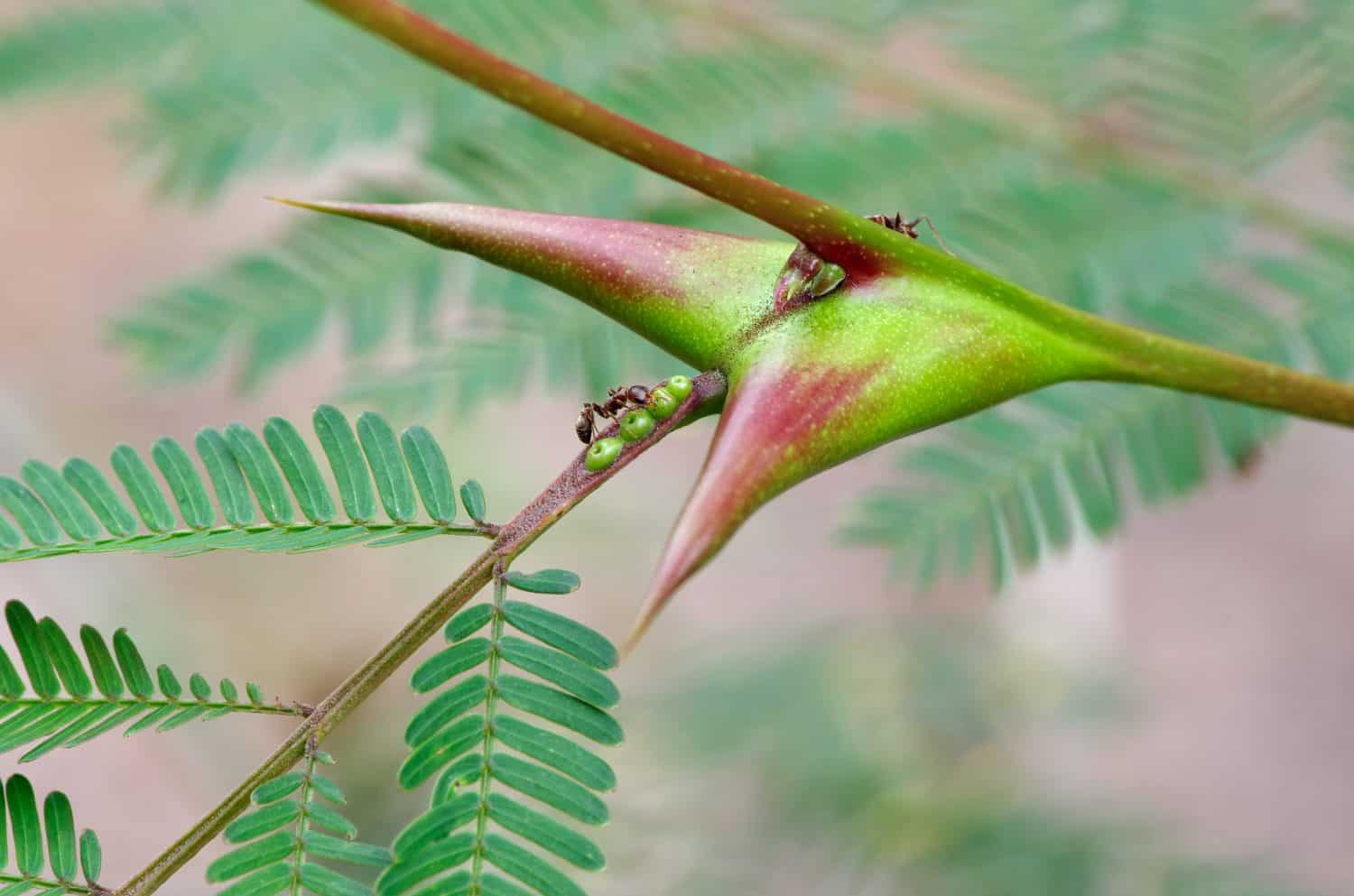
In an extreme case of mutualism, the bullhorn acacia cannot survive in the wild without a certain species of ant. Nor can the ant (Pseudomyrmex ferruginea) survive without the tree. It’s known as an obligate mutualism, and, in this unusual arrangement, the tree offers food and shelter to the ant. In return, the ant aggressively defends the tree.
Continue reading
Bullhorn acacia trees and bullhorn acacia ants are an example of obligate mutualism.
©Angel DiBilio/Shutterstock.com
The Acacia Provides a Home and Food
Bullhorn acacia trees are native to the lowlands of Mexico and Central America. Pseudomyrmex ferruginea, also known as the bullhorn acacia ant, lives in a specific microhabitat of the hollowed-out and enlarged thorns of acacia trees. The thorns are waterproof and provide shelter for the ant brood. During dry periods, the thorns retain moisture, helping the ants survive droughts. The sharp tips of the thorns provide another layer of defense from birds that would eat the ant eggs.
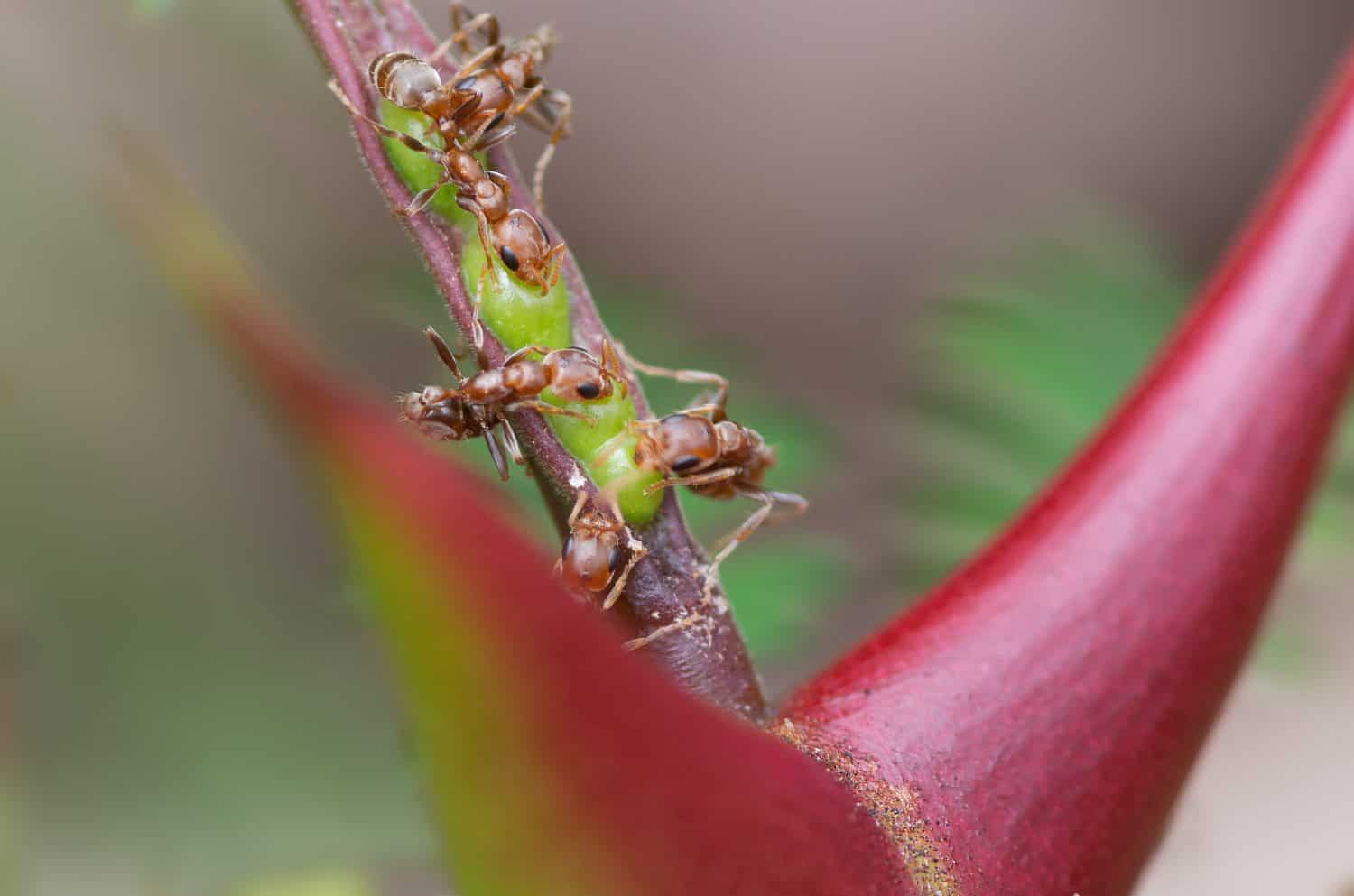
Not only does the tree give shelter, but it also provides food. Glands, called foliar nectaries, produce a sugary liquid which provides instant energy to busy ants. More than just nectar, the tree produces a tiny sac called a Beltian body. Growing at the ends of the leaves, Beltian bodies contain protein, fatty nutrients, and vitamins. These two food sources give the ants all the nutrition and energy they need to survive.
An Army That Defends Its Home
As the tree provides food and shelter to the ants, the ants give back to the tree. A common problem for plants in the forests of Central America is competing for sunlight against the many vines and other plants. However, bullhorn acacia trees don’t have to worry about missing out on sunlight. The ants use their powerful jaws to remove grass and plants growing around the tree. This prevents the tree from having to compete with other plants for sunlight and nutrients.
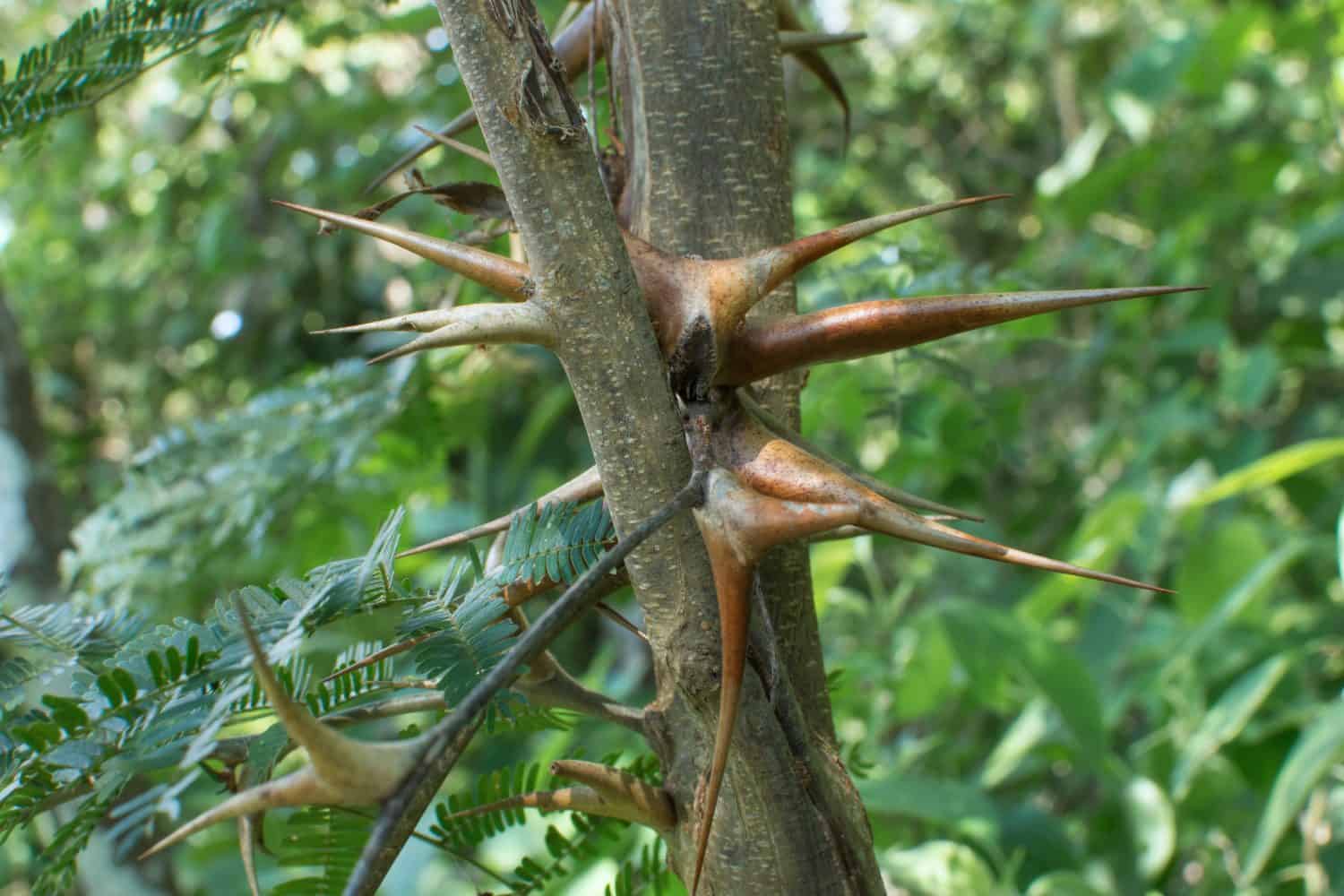
The tiny ants live inside the hollowed-out and enlarged thorns of acacia trees.
©Chad Zuber/Shutterstock.com
The ants also aggressively defend the bullhorn acacia tree from plant-eating insects and other herbivores. When a scout ant spies an invader, it sends out an odor alarm to the rest of the colony, and the ants swarm the intruder, delivering stinging bites.
And finally, researchers discovered the ants offer one more key service to the trees. The ants appear to help protect the trees from pathogens that can cause bacterial disease. However, the exact way that the ants provide antimicrobial protection isn’t fully understood.
A Partnership That Keeps Both Species Alive
Although gardeners sometimes grow bullhorn acacias in their yards or greenhouses in warm climates, humans must take over the defensive role the ants perform in the wild. While bullhorn acacia trees cannot survive without bullhorn acacia ants, the reverse is also true.
Obligate mutualism doesn’t happen overnight; it takes millions of years to evolve. These two species have shown how working together has helped them both survive a competitive landscape.