
Quick Take
- Capturing the largest wild hog in Oklahoma requires overcoming massive weight and perception hurdles.
- The Rush Springs encounter highlights why a crossbow creates lethal vulnerabilities when targeting 760-pound animals.
- Hybrid genetics forced National Geographic to investigate if the 800-pound specimen was a hoax.
Wild hogs were unseen in the state until the 1830s. Today, they’re a concern for residents because of how quickly and overwhelmingly they reproduce. They have been spotted in nearly all counties, though they tend to appear more regularly in the southern region of the state. Residents can get rid of these animals, especially when they become a nuisance on their property. Discover the largest wild hog ever caught in Oklahoma!
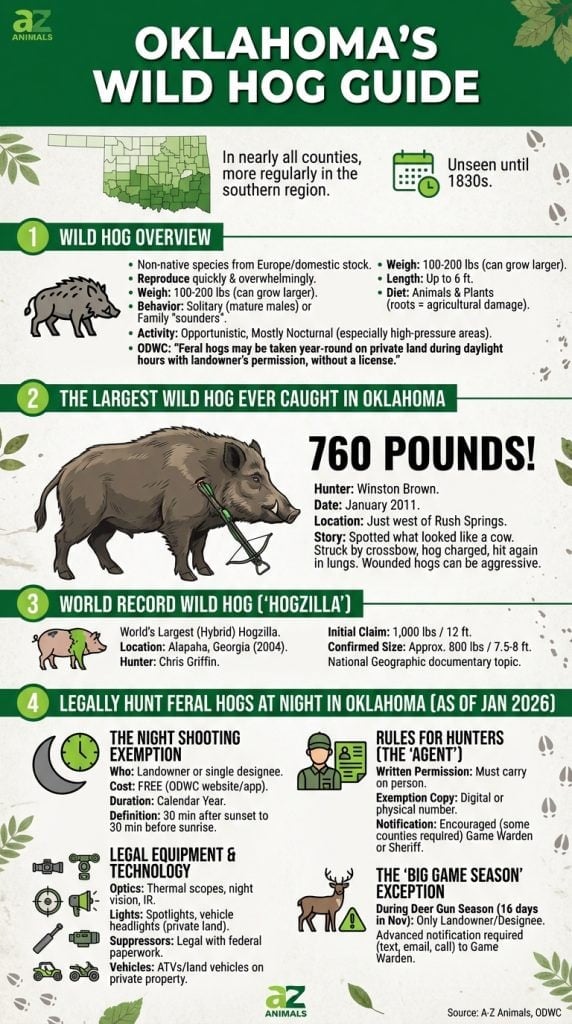
From 760-pound monsters to high-tech night raids, discover how Oklahoma is fighting an overwhelming surge of invasive wild hogs.
©A-Z Animals
Wild Hog Overview
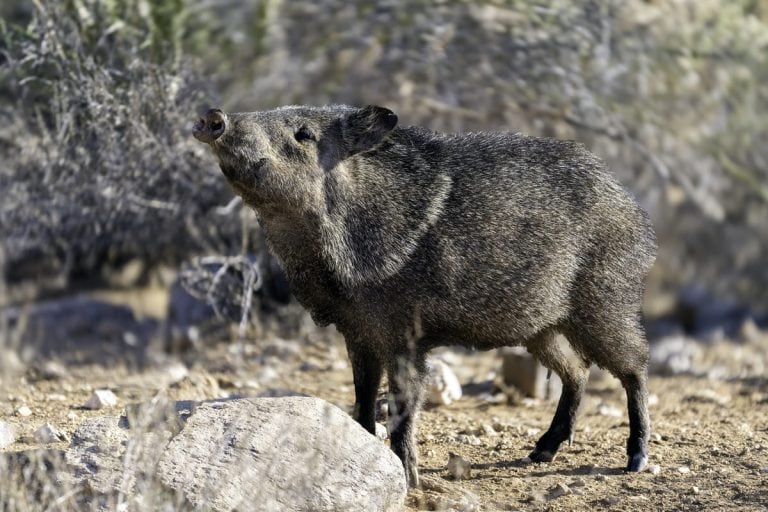
Wild hogs, also known as wild swine, are a non-native species introduced to North America from Europe and later escaped domestic stock. These animals typically weigh between 100 and 200 pounds, though they can grow larger. They can be as long as six feet. These may be solitary creatures (typically mature males) but they also travel in family groups called “sounders.”
Wild hogs are opportunistically active at night, especially in high-pressure hunting areas. Their diet consists of animals and plants. When they dig into plants, they go for the roots, which creates massive agricultural damage. According to the Oklahoma Department of Wildlife Conservation (ODWC), “feral hogs may be taken year-round on private land during daylight hours with the landowner’s permission, without a license.”
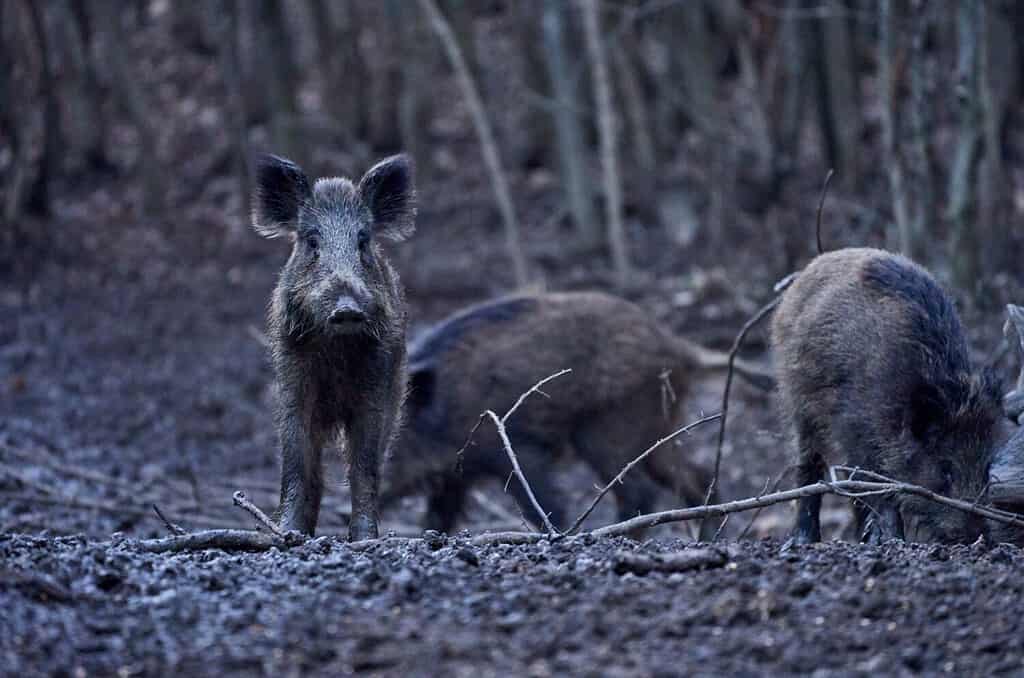
Wild hogs are most active at night, when daylight clears.
©Slatan/Shutterstock.com
The Largest Wild Hog Ever Caught in Oklahoma
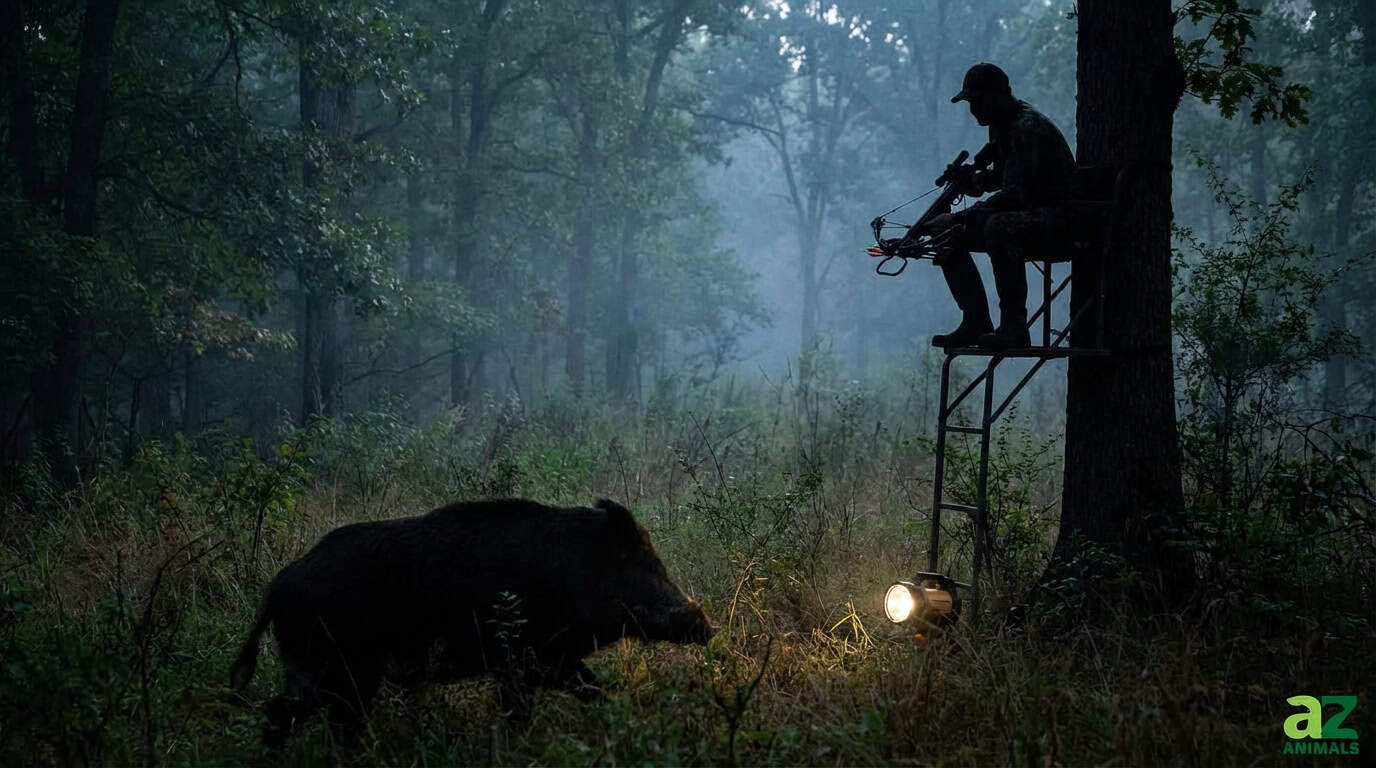
It was January 2011 just west of Rush Springs when deer hunter, Winston Brown, spotted what he thought was a cow. The apparent cow had scared off some whitetail does he had his eye on. When he took a better look, he realized he was looking at a massive wild hog. He was sitting in a tree stand when he decided his next move. He shouldered his crossbow and struck the wild hog the first time.
The wild hog was hurt and Brown descended from the tree stand. Suddenly, the wild hog charged. Brown moved quickly and shot it again, this time hitting both lungs. The animal died quickly after. Brown realized that moment could have gone horribly wrong, as wounded hogs can be aggressive. The feral hog weighed a total of 760 pounds on a certified scale!
The Largest Wild Hog Ever Caught in the World
The largest wild hog in the world (famously known as “Hogzilla”) was a hybrid. The largest wild hog caught in the world was a hybrid of a wild hog and a domestic pig. Most people believed the initial 1,000-pound capture was a hoax, but it was proven true at a slightly smaller size when the hog’s body was exhumed and examined by forensic scientists. The National Geographic Channel took interest in this story for a documentary.
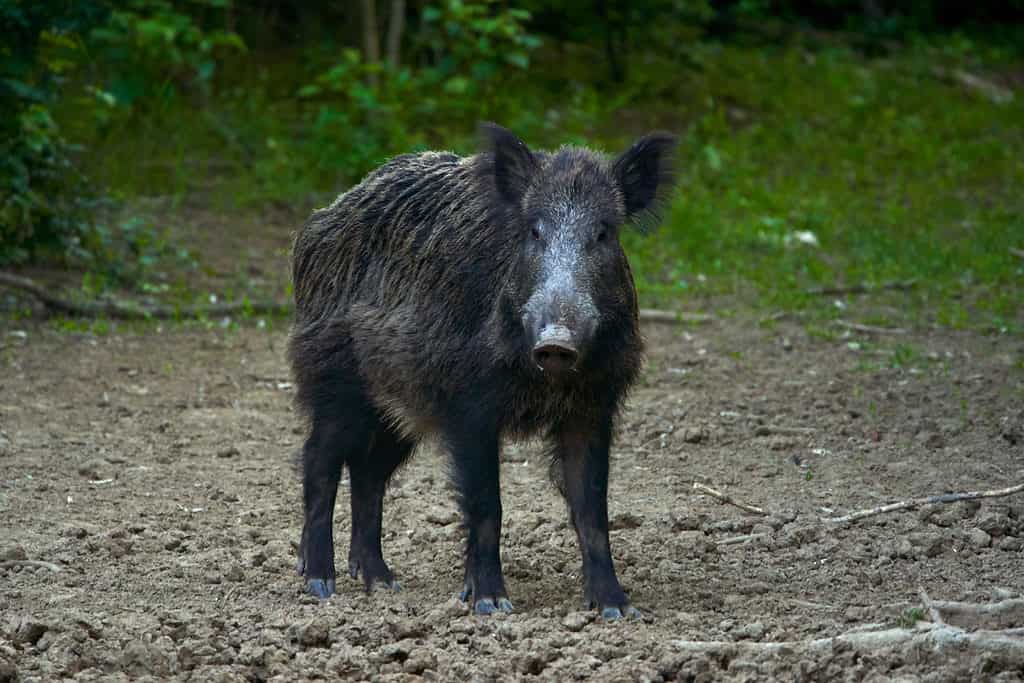
The largest wild hog in the world was a hybrid.
©Slatan/Shutterstock.com
The person who shot and killed this wild hog hybrid was Chris Griffin. He was in Alapaha, Georgia in 2004 when he spotted the animal on Ken Holyoak’s fish farm. The animal was initially claimed to weigh over 1,000 pounds and was about 12 feet long. After further examination by National Geographic experts, it was determined it weighed approximately 800 pounds and was between 7.5 and 8 feet long.
How to Legally Hunt Feral Hogs at Night in Oklahoma
As of January 2026, here is the essential guide to night-hunting feral hogs on private property.
1. The Night Shooting Exemption
While daylight hunting on private land generally requires only landowner permission, night hunting (defined as 30 minutes after sunset to 30 minutes before sunrise) requires a Night Shooting Exemption.
- Who can get it: Only the deed-holding landowner or their “single designee” can register the property.
- Cost: The exemption is free and can be obtained instantly through the Oklahoma Department of Wildlife Conservation (ODWC) website or mobile app.
- Duration: The exemption is valid for the calendar year.
2. Rules for Hunters (The “Agent”)
If you are not the landowner, you can still hunt at night under their exemption, provided you meet these criteria:
- Written Permission: You must carry written permission from the landowner on your person.
- Exemption Copy: You must have a copy (digital or physical) of the property’s Night Shooting Exemption number.
- Notification: It is highly encouraged (and in some counties required by local policy) to notify the local Game Warden or County Sheriff before your hunt to prevent “shots fired” calls from neighbors.
3. Legal Equipment & Technology
Oklahoma is very permissive regarding the technology you can use to combat the hog population:
- Optics: Thermal scopes, night vision, and infrared (IR) technology are all 100% legal.
- Lights: Handheld or firearm-mounted spotlights and vehicle headlights (while on private property) are permitted.
- Suppressors: Legal to use for hog hunting if you possess the appropriate federal tax stamp/paperwork.
- Vehicles: You may hunt from an ATV or other land vehicle on private property.
4. The “Big Game Season” Exception
There is one major restriction to watch out for: Deer Gun Season.
During the 16-day Deer Gun Season (usually in November), night shooting rules tighten significantly. Only the landowner or their designee may hunt at night, and they must provide advanced notification (text, email, or call) to their local Game Warden before heading out.