
Quick Take
- Achieving a 40% to 60% removal rate is required just to stabilize feral hog populations.
- Feral hogs are intelligent and reproduce multiple times a year, making it hard to reduce populations.
- Standard recreational hunting methods frequently cause sounders to splinter into multiple breeding colonies.
- Government task force groups have proven more successful at eliminating feral pigs than recreational hunters.
In America, recreational hunting is a pastime that many enjoy. From deer to wild turkeys, pheasants, and more, like it or not, hunting is an integral part of the fabric of the United States.
Recreational hunting has been used for more than sport. In recent years, it has also been utilized and encouraged to reduce feral hog populations. Over the last few decades, it has become apparent that recreational hunting alone usually does not solve a feral hog infestation. Because of this, states have had to implement new tactics to try to cull the pigs. While success has been shown with programs other than hunting, many states are unwilling to ban recreational hunting of feral hogs. This has led to feral hog population growth and increased economic loss as a result.
Recreational Hunting Alone Does Not Solve the Feral Hog Infestation Problem
Beginning in the early 2000s, it was clear that feral hogs were a problem in several U.S. states. To address the growing pig population, many states turned to hunters and encouraged them to engage in recreational hunting with no bag limits. This is still done today. But what is different now than two decades ago is the knowledge that recreational hunting alone does not solve the feral hog infestation problem. Instead, it takes cooperation between multiple entities, including the public, to help bring the feral pig population under control.
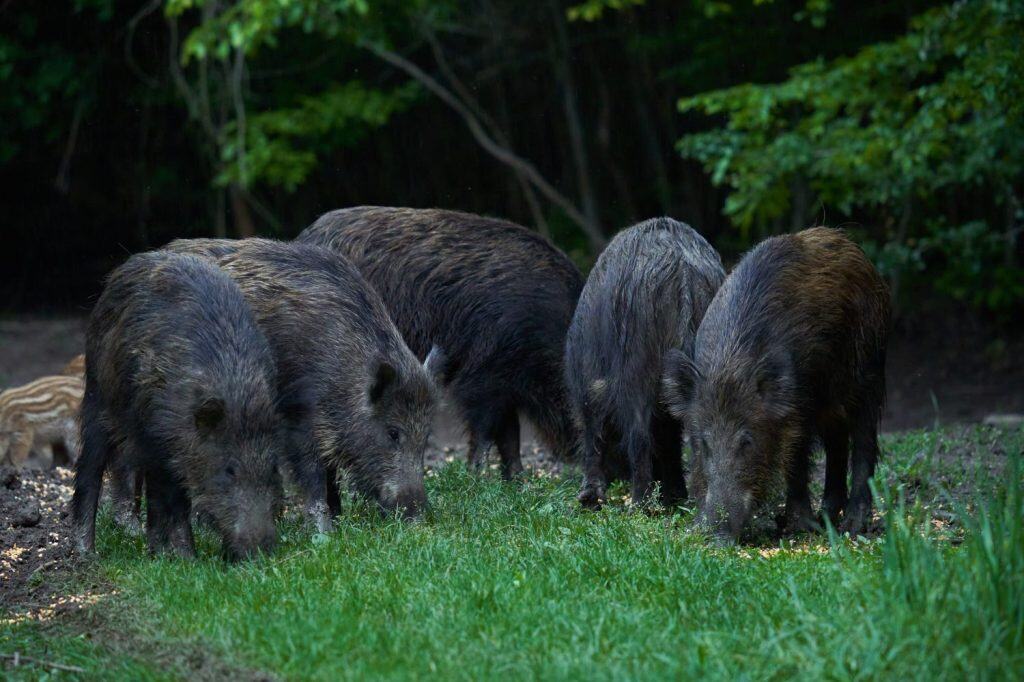
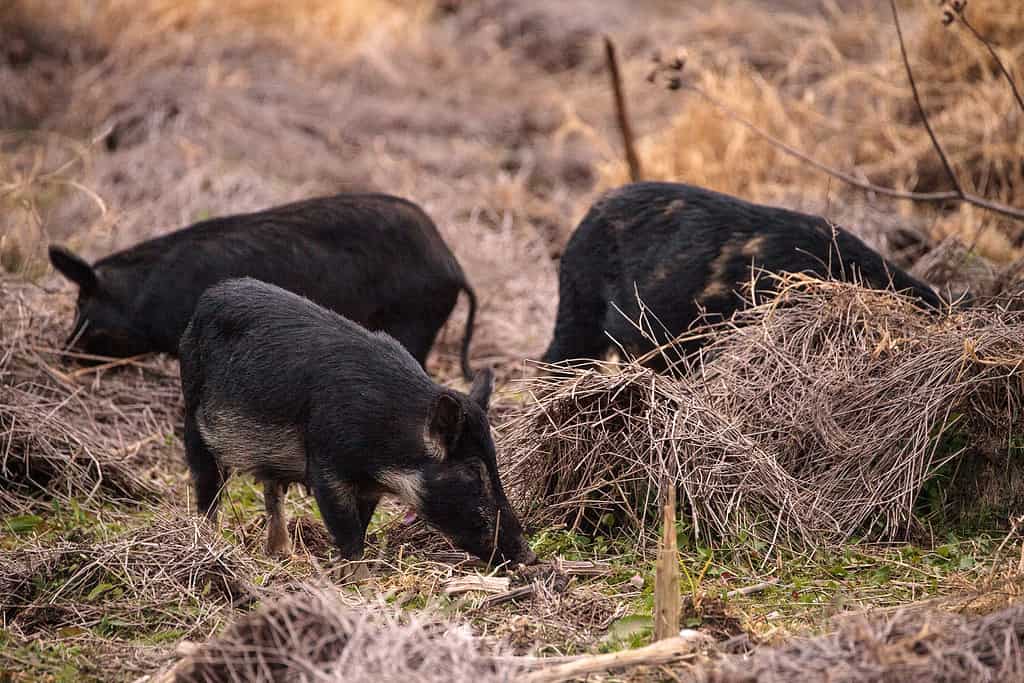
Feral hogs are better culled when experts hunt and kill the entire sounder rather than recreational hunters reducing the population by one or two at a time.
©Slatan/Shutterstock.com
In recent years, government agencies have been working together to round up sounders, or groups of feral hogs. Sharing information and being given the go-ahead to address feral hogs, regardless of agency jurisdiction, have been instrumental in reducing feral hog populations. In addition, agencies rely on real-time information relayed to them by the public. One of the most successful ways to do this is via the Squeal on Pigs! app.
The Squeal on Pigs! app allows users to report feral hog sightings, provide pictures, and submit any other important information. That information is then verified by experts and passed along to agencies to respond.
With feral hogs difficult to spot from the air and even harder to find in thick forest environments, this information is invaluable. The more people are involved in sharing information rather than recreationally hunting feral hogs, the faster the population can be reduced. Agencies can take out the entire sounder before feral hogs learn what to fear, in some instances, stopping a regional problem before it takes hold.
Feral Hogs Are One of the Most Destructive Invasive Species
There are invasive species in every state in the U.S. The difference between those species and feral hogs is that once feral hogs take hold in a state, they are nearly impossible to eradicate. This has to do with a number of factors that have made the pigs such formidable foes for decades.
When feral hogs were first introduced to the United States in the 1500s by Europeans, they were seen as a reliable food source. But the pigs were also very smart and escaped their pens, which is how invasions began in multiple states.
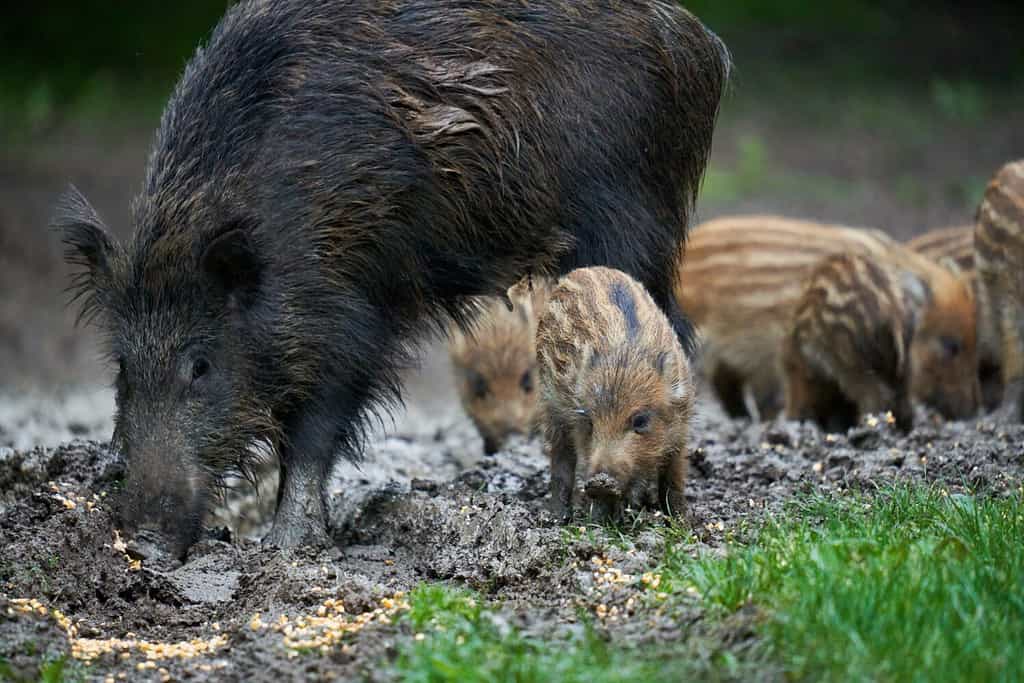
Feral hogs cause .6 billion+ in damage annually in the United States.
©Slatan/Shutterstock.com
Since that time, feral hogs have become one of the most destructive invasive species. Each year, feral hogs cause more than $1.6 billion in damage in the United States. This damage comes in two forms: crops such as corn, soybeans, wheat, rice, and more being decimated, and livestock losses from disease and death associated with feral hog contact.
The breakdown in costs of feral hogs in the agricultural and farming industries are as follows:
- Crop production loss: $203.1 million
- Livestock disease and predation loss: $85 million
- Pastureland loss: $192.9 million
- Altered farming approaches: $121.8 million
- Replanting crops: $17.5 million
- Harvesting equipment repair: $25.85 million
- Farm infrastructure damage costs for crops: $102.9 million
- Farm infrastructure damage costs for livestock: $375 million
With the devastation affecting the farming and agriculture industry year after year, many wonder whether they can continue given the losses they incur. Recreational hunting is not going to fix this problem, which has grown out of control in so many states.
What Has Been Learned by Allowing Feral Hog Hunting?
States that allow feral hog hunting have long concluded that recreational hunting is not providing effective population growth control. Despite this, some states have year-round recreational hunting because they have no other means to stop the sounders from expanding. However, there are some gems of knowledge that have been gleaned by those states and others that allow feral hog hunting.
Controlling the feral hog problem is best addressed when government agencies, hunting groups, and community members work together.
©SunflowerMomma/Shutterstock.com
Over the years, states have changed their tactics for controlling feral hogs. What they have learned in the process includes:
- Controlled hunting via drones or aerial support is more effective than random shooting of feral hogs
- Community support is necessary to reduce feral hog populations
- Dedicated year-round staff is key to reducing feral hog populations
- Partnership with landowners and hunting groups decreases the number of feral hogs in a community
- The ability to adapt with new strategies keeps feral hogs from avoiding tactics used to cull them
Clearly, there is still more work to be done to decrease the number of feral hogs in the United States. Not all states have the funding to implement the strategies proven to be effective in the fight against the pigs. But, if those involved in the recreational hunting of feral hogs are willing to stop releasing hogs into areas where they have been permanently removed, it can go a long way to decreasing the populations nationwide.
Why the Feral Hog Population Continues To Grow
Despite years of efforts to reduce the number of feral hogs in the United States, the population nationwide is larger than ever. It is clear that traditional efforts to cull the hogs via hunting alone are not working, with six to nine million feral hogs in America alone. With the population growing in 35 states, the question is why, despite efforts to significantly reduce the number of feral hogs, the goal is not being achieved.
The answer to this question is actually quite simple. The reason the feral hog population continues to grow is a combination of how quickly the hogs can reproduce, how smart they are, and efforts to rid states of the animal being thwarted by hunters.
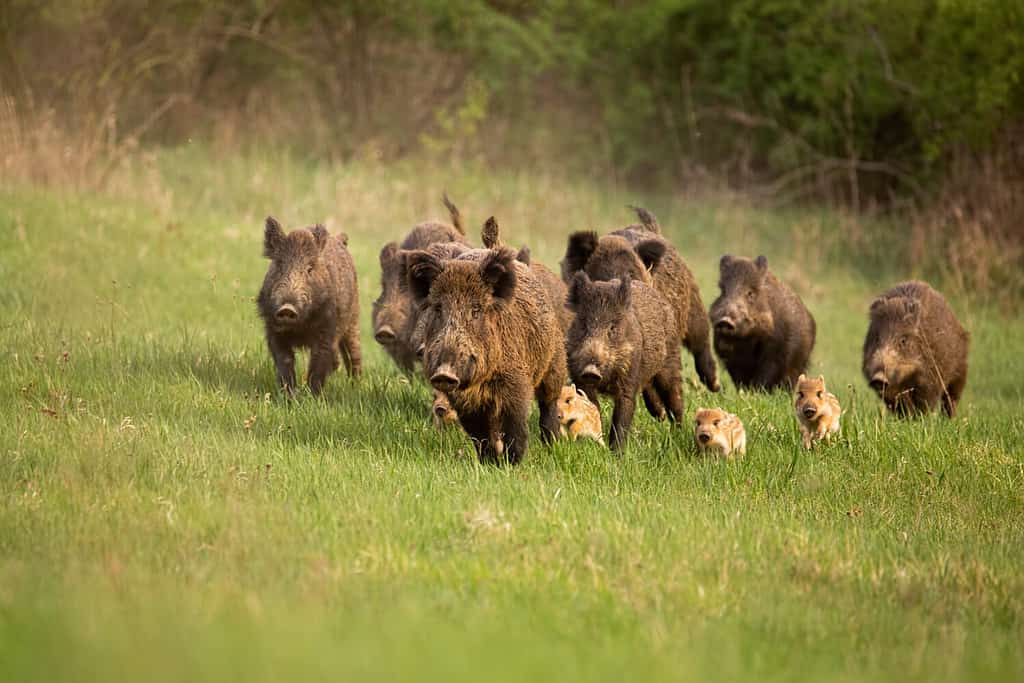
Feral hogs are intelligent and have multiple litters each year, making their populations hard to control.
©WildMedia/Shutterstock.com
Feral hogs have the capability of having multiple litters per year. In each litter, there are multiple piglets. The majority of the piglets survive, given the omnivorous diet the hogs consume. Not only is there no specific time of year that piglets are born, but females also reach sexual maturity between five and eight months of age. Therefore, within a year, multiple generations of feral hogs can be having litters.
Additionally, feral hogs are very intelligent. The older pigs teach the younger ones skills to survive in their sounders. This, along with their long memory, is why sounders learn to avoid feral hog traps after seeing others caught in them. Because of this, those agencies tasked with reducing feral pig populations understand that the entire sounder must be eradicated before feral pigs have a chance to learn to avoid traps.
Hunters also contribute to the problem of massive feral hog populations. If the population decreases, companies that offer pig hunts lose money. Those who enjoy the sport of hunting have fewer opportunities to bring home a pig to consume. Because of this, it is not uncommon for feral pigs to be illegally trapped and released into areas where the hogs were once removed. When this happens, the sounder has an opportunity to grow and grow quickly, only increasing the number of feral hogs and the damage they cause.
Is There a Solution to Ending the Feral Hog Problem?
To successfully reduce or even eliminate feral hog populations, it is estimated that 40% to 60% of a population needs to be culled annually. In states with tens of thousands of feral hogs, this task can seem overwhelming. To date, 16 states have successfully eradicated feral hogs. This proves that it is possible to overcome the feral hog problem with dedicated resources.
The states that have been successful in eliminating or greatly reducing feral hog populations are those that have a dedicated task force that does nothing but respond to calls of where feral hogs or entire sounders are located. There is community support with apps like Squeal on Pigs! In these states, hunting feral pigs requires a permit or is banned. This ensures there will not be any incentive to release feral hogs into regions where they have previously been removed.
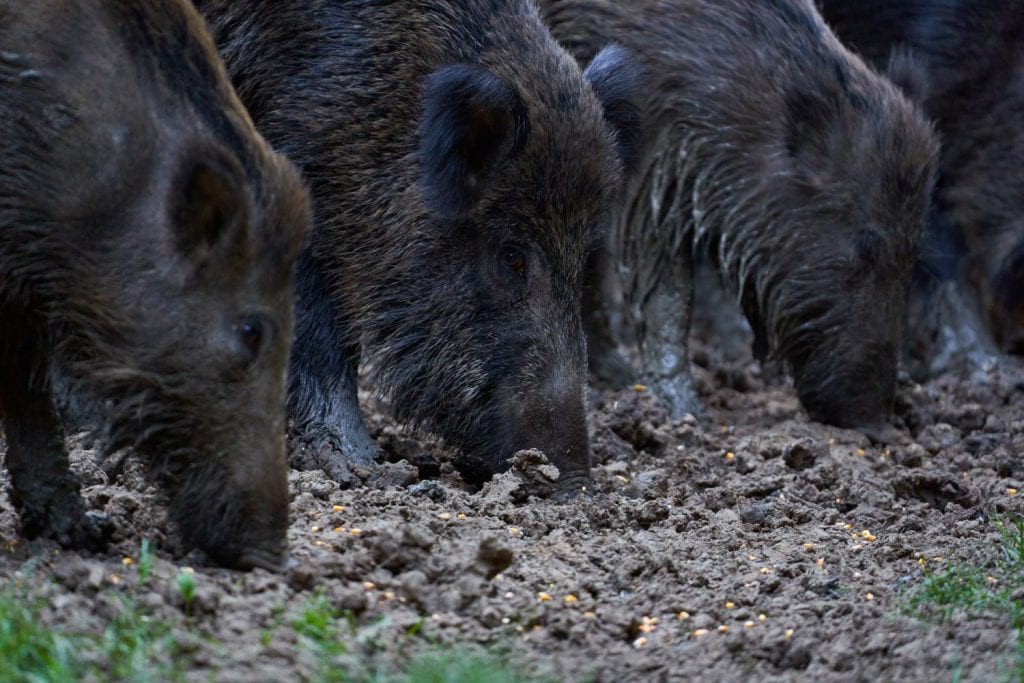
Allowing a government task force, rather than hunters, to combat the feral hog problem has proven to be the most effective approach to eliminating wild pig populations.
©Slatan/Shutterstock.com
The biggest feral hog problems are in regions with few to no hunting regulations. States like Texas, Florida, and Georgia allow feral hog hunting year-round on private property. With no bag limits, this incentivizes releasing pigs onto private property for profit and sport. Instead of reducing the population, this only increases it.
To properly manage the feral hog problem, recreational hunting is not enough. It only makes the problem worse. If states truly want to reduce or eliminate the feral hogs wreaking economic havoc, they need to follow the recipe for success that other states have created. This means having a dedicated task force responsible for responding without delay to calls reporting feral pigs. It also means banning the hunting of feral pigs on both public and private land. Until this is done, feral hogs will continue to cause billions in damage each year. Those who have built their livelihoods on agriculture cannot afford this. They need the problem to end now before the damage the feral hogs cause puts them out of business permanently.