
A recent report by the Sanibel-Captiva Conservation Foundation (SCCF) revealed that nearly 30% of sea turtle nests on Sanibel Island have already been destroyed this season. The culprit? Coyotes.
Once rare on Florida’s barrier islands, coyotes are increasingly preying on turtle nests and hatchlings, raising new concerns for one of the state’s most important nesting sites. Now, wildlife experts are racing to protect these fragile nests from the growing population of predators.
The Rise of Coyotes on Sanibel Island
While coyotes are not new to Florida, sightings have increased recently — even on barrier islands like Sanibel. According to the Florida Fish and Wildlife Conservation Commission (FWC), coyotes are now present in all 67 of the state’s counties. This is partly due to the predator’s ability to swim across channels and small bodies of water.
However, this growing presence isn’t just a matter of geography. It’s also tied to opportunity. Coyotes are opportunistic feeders, meaning they’ll eat whatever is available — whether that’s a nearby small mammal or trash left on the beach.
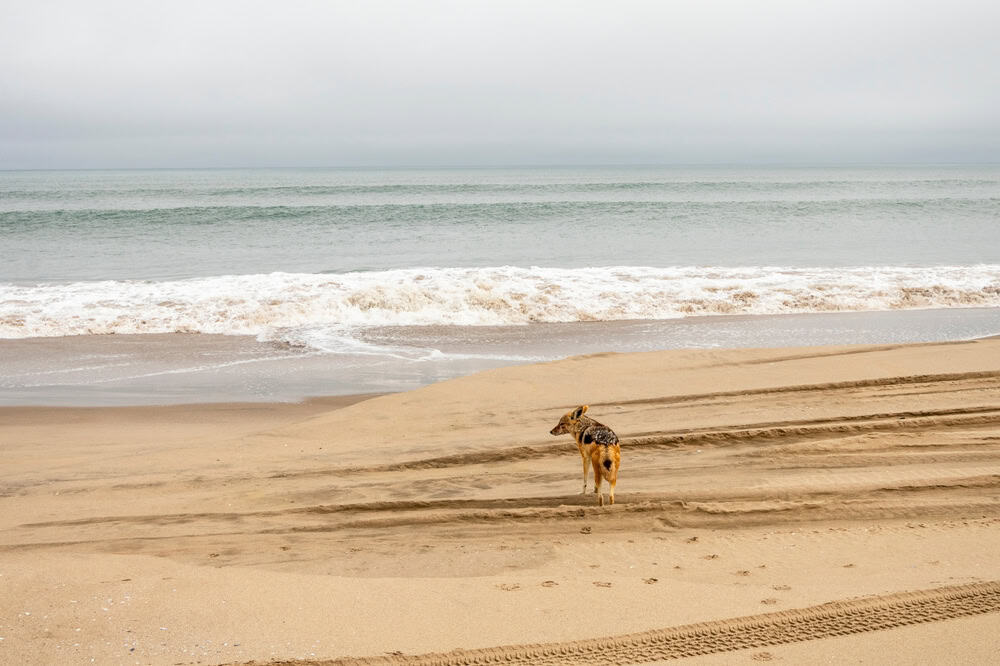
Coyotes are strong swimmers capable of crossing channels to reach barrier islands like Sanibel, where they’ve become established predators.
©Sopotnicki/Shutterstock.com
“Members of the public can help reduce predation of shorebird and sea turtle eggs, chicks, and hatchlings by removing trash and other food attractants that may attract coyotes,” said the FWC in a recent statement. “People also can help by not feeding wildlife. Feeding wildlife can also lead to an overpopulation of predators.”
Rising Rates of Nest Destruction
In 2023, nearly 43% of turtle nests experienced some level of coyote predation, and while the 2025 season isn’t over, almost 30% of nests have already been lost. To combat these losses, conservationists are using protective measures like cages and hot pepper powder. Cages are placed over nests to physically block predators, while hot pepper powder is a scent and taste deterrent. Still, coyotes are adapting to these efforts, raising the stakes for conservationists who understand the long-term consequences of nest loss.
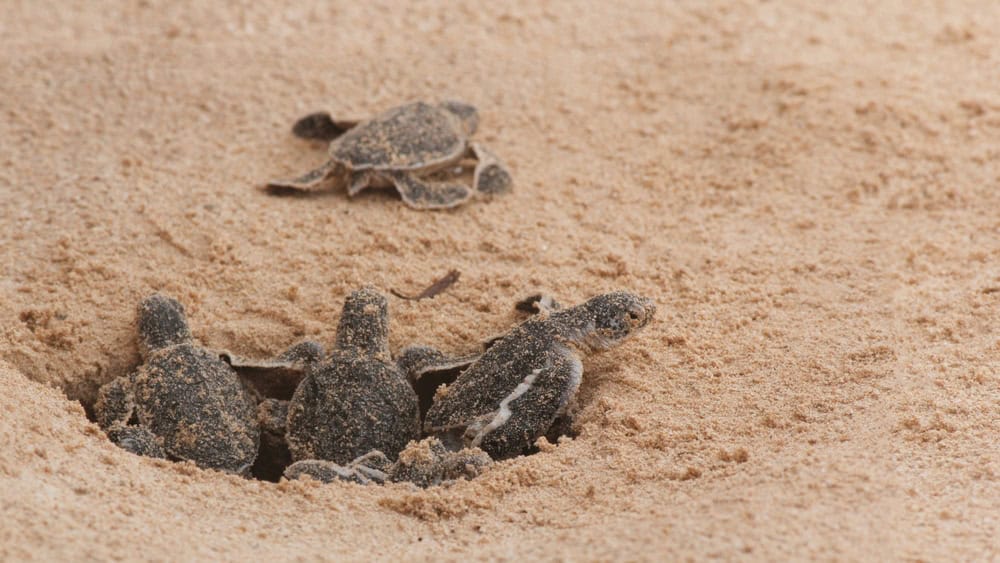
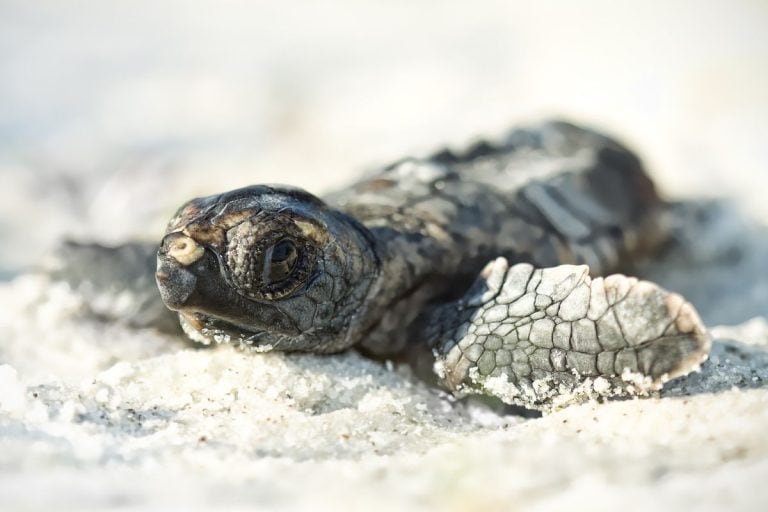
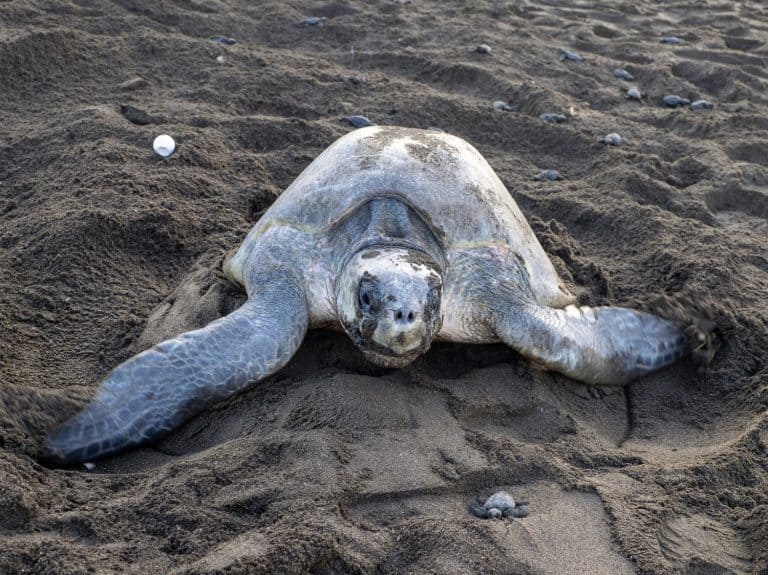
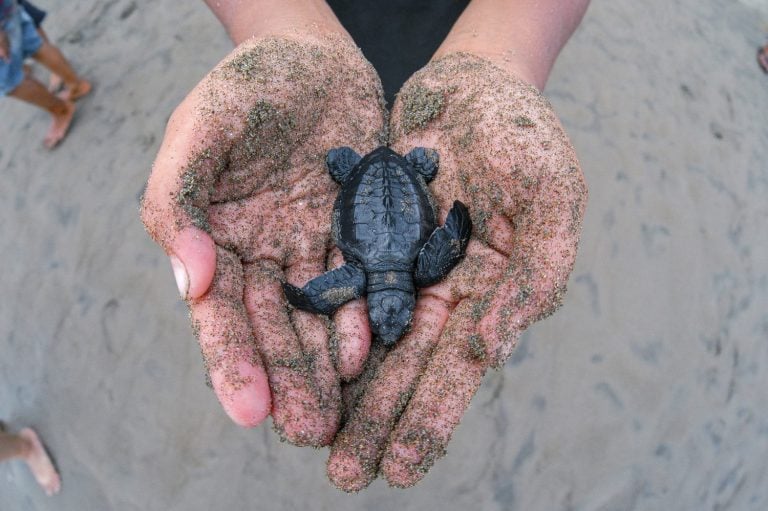
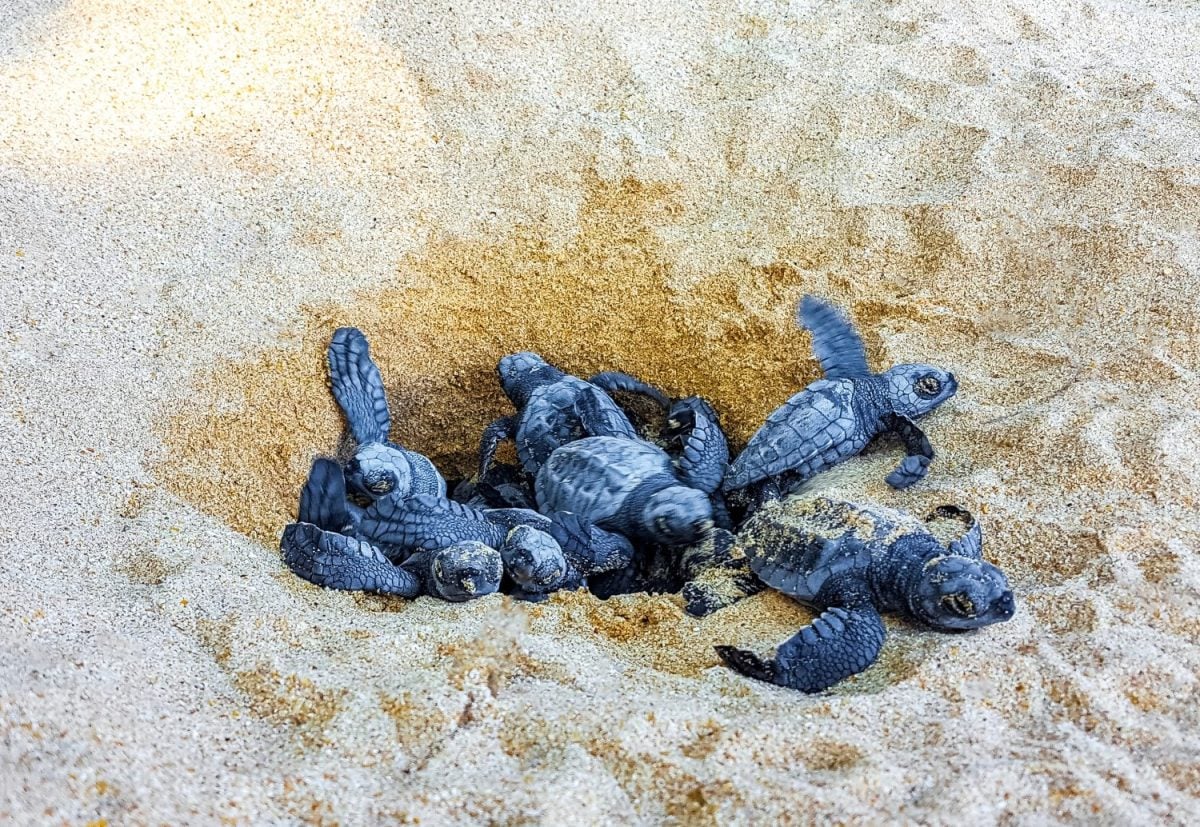
Sea turtle nests are typically buried in shallow sand, making them vulnerable to predators like coyotes that have learned to locate and dig them up.
©SLSK Photography/Shutterstock.com
SCCF biologist Jack Brzoza explains that current nest counts impact the health of sea turtle populations for decades. “Sea turtles are a long-lived species that take decades to reach sexual maturity, so nest counts are often in some way representative of occurrences many years prior,” Brzoza says. “Today, we may be seeing the conservation efforts from 30, 40, 50 years ago.”
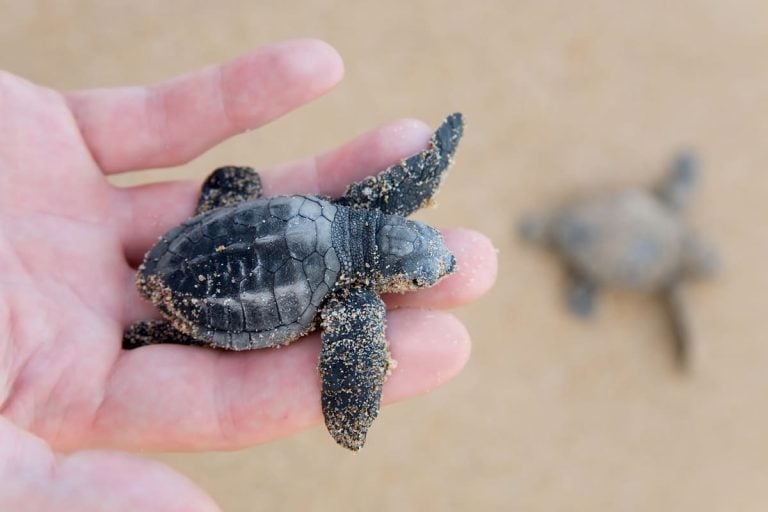
In other words, the nests destroyed this season will have long-term effects. The loss of hatchlings means fewer breeding females will return to Sanibel’s beaches in the 2050s or beyond.
Conservation Efforts & Ecological Context
To protect Sanibel’s sea turtles, experts use a multi-layered approach that includes more than just cages and pepper powder. For example, they are also focusing on restoring natural defenses. Hurricane Ian significantly changed Sanibel’s landscape, reducing vegetation that once provided habitat for small mammals, a coyote’s typical prey. As native vegetation returns and prey populations stabilize, experts hope coyotes may shift their focus away from turtle nests.
In the meantime, community involvement is critical. The FWC uses drones to monitor coyote activity and encourages residents and visitors to report sightings. Additionally, following “Be a Beach Hero” guidelines — like keeping beaches clean, removing trash and food attractants, and avoiding feeding wildlife — can help reduce predator activity.
Yet Brzoza emphasizes that the work is far from over. “Conservation efforts, research, and informing policy to protect nesting and foraging habitat are still critically important,” he says.
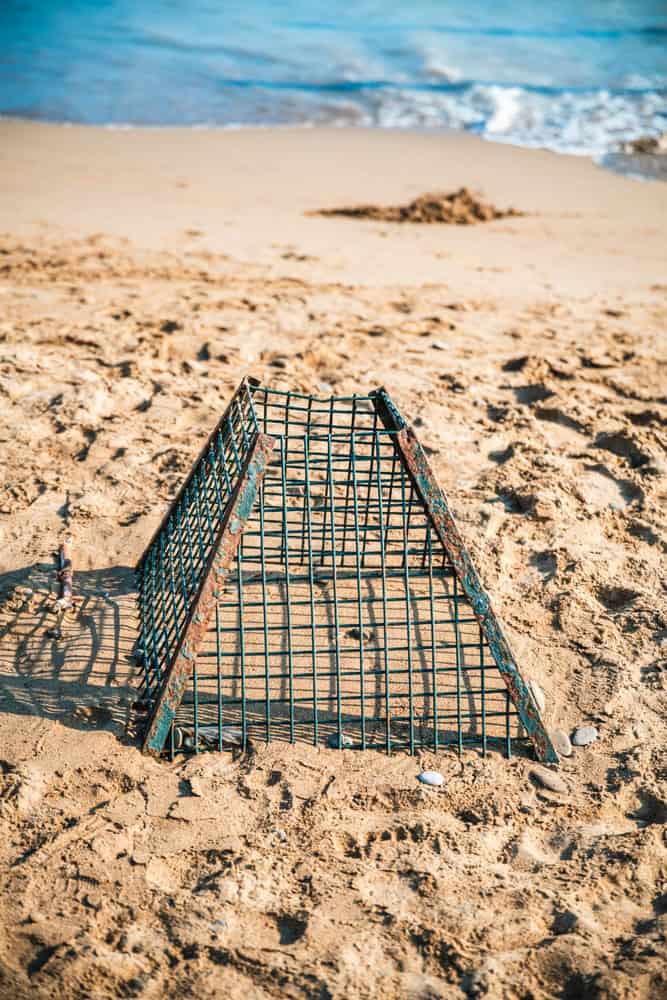
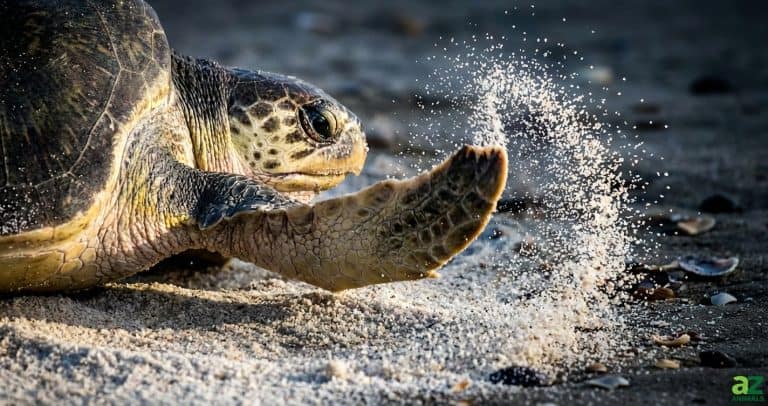
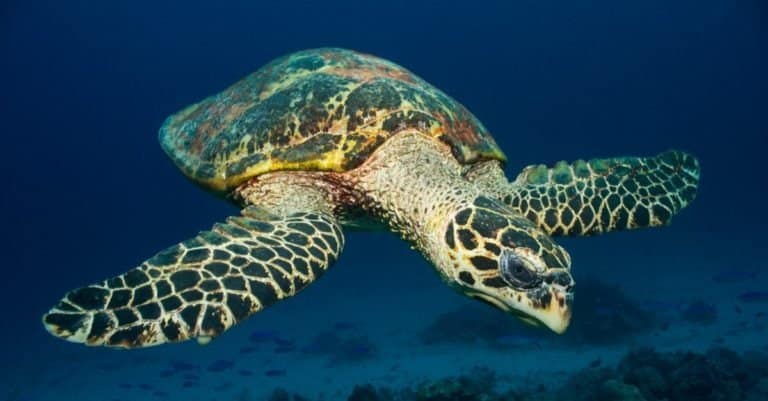
Despite protective cages and deterrents like hot pepper powder, conservationists say safeguarding all 800 to 1,000 annual nests on Sanibel remains nearly impossible.
©Olga Ilina/Shutterstock.com
It’s important to remember that nesting females will lay more than one nest across a season and may not nest every year.
Jack Brzoza, Sanibel-Captiva Conservation Foundation biologist
Nest Counts Show Hope (For Now)
Despite these high predation rates, there is a silver lining: Sanibel’s overall nest counts are actually up this year. In 2025, SCCF reported 651 loggerhead nests and 20 green turtle nests, compared to 630 loggerhead nests and three green nests in 2024. The current season also sits slightly above Sanibel’s 10-year average of 635 loggerhead nests.
However, Brzoza cautions against reading too much into year-to-year comparisons. “Annual fluctuations in nest count … on any nesting beach are common,” he explains. “It’s important to remember that nesting females will lay more than one nest across a season and may not nest every year.”
Individual loggerheads typically lay four to six nests per season but may only return to nest every two to three years. Therefore, a turtle that nested in 2025 might not return until 2027 or 2028, causing natural fluctuations in annual nest counts that do not necessarily indicate changes in the overall population’s health.
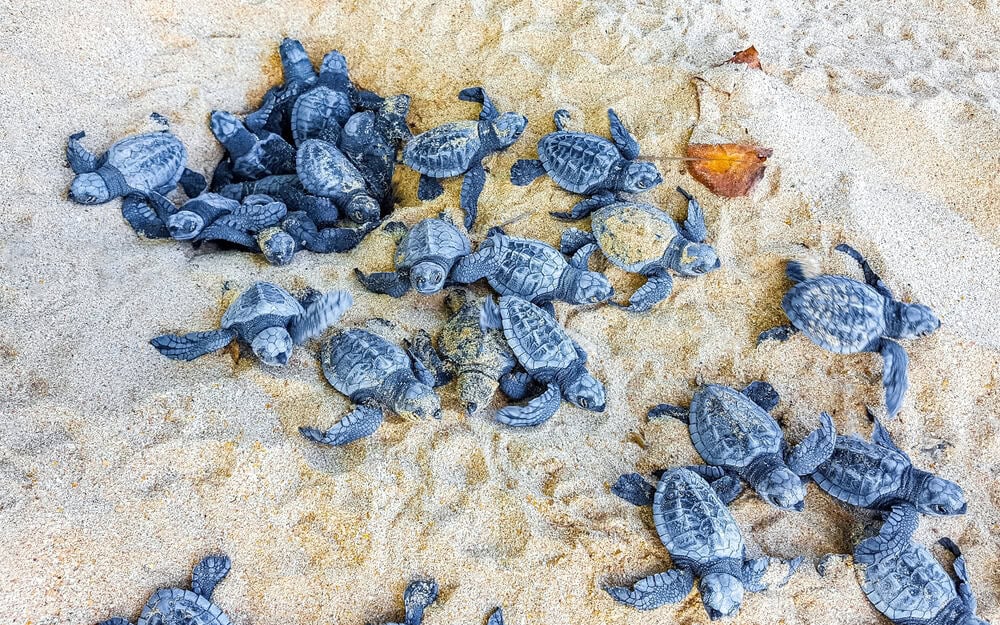
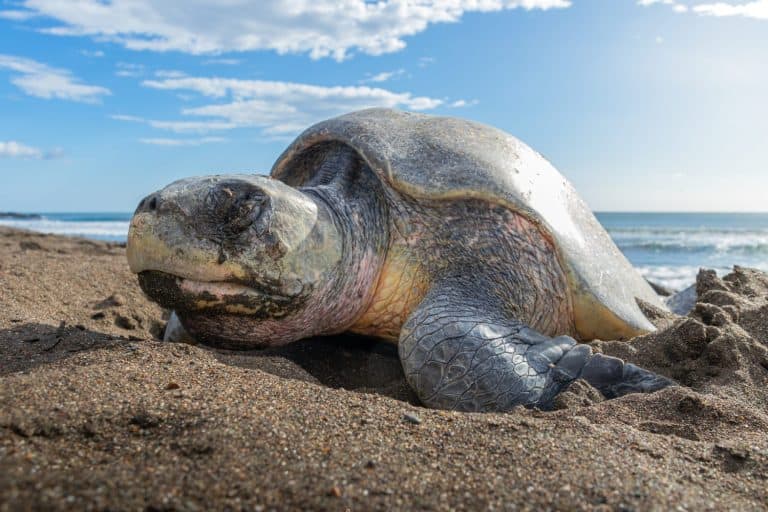
Despite high predation rates, loggerhead sea turtles continue nesting on Sanibel Island in numbers that exceed the 10-year average.
©Arkadij Schell/Shutterstock.com
When viewed in a broader context, the picture becomes clearer. “Ultimately, statewide in Florida, there is a stable (neither increasing nor decreasing) trend in nest counts,” Brzoza notes. While Sanibel faces serious localized challenges, the broader trend suggests Florida’s sea turtle populations remain stable — for now.
The Bigger Picture: Long-Term Recovery Still at Risk
Sanibel’s sea turtles have survived hurricanes, habitat loss, and decades of human development. Now they face a new challenge: the rise of an intelligent predator that has learned to exploit one of the island’s most carefully protected resources.
The data tells a complex story: nest counts are up, but so is predation. Conservation efforts continue, yet coyotes keep adapting. While statewide trends show stability, Sanibel’s localized losses may have consequences that will not be fully understood for decades.
What happens next depends on whether the island’s ecosystem can achieve a new balance and whether the community remains committed to protecting the turtles. The results will not be seen this season, or even the next, but the efforts made today will shape the future of Sanibel’s shores in 2050.