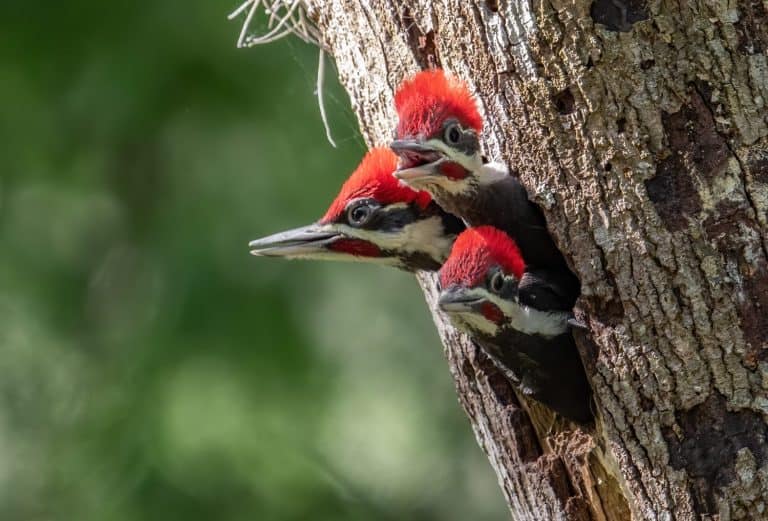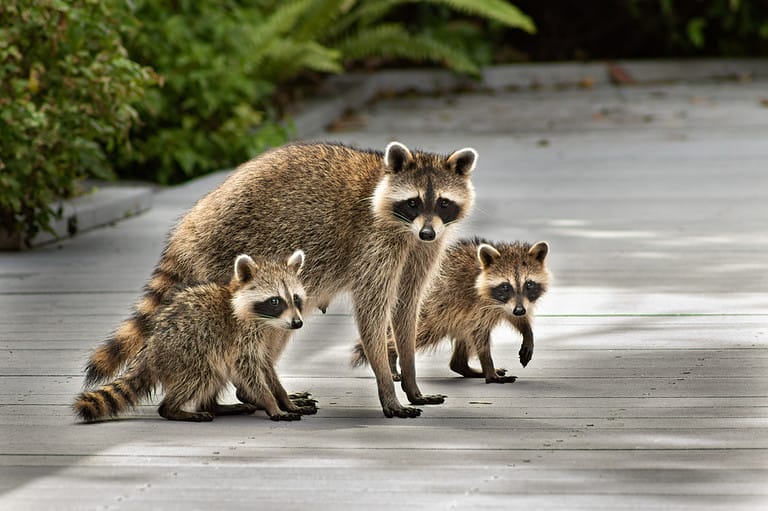

Mount Rainier National Park, rising above western Washington with its snowy crown and sprawling forests, is a sanctuary for a stunning diversity of wildlife. Spanning more than 236,000 acres, the park encompasses ancient forests, subalpine meadows, glacier-fed rivers, rugged valleys, and icy peaks. Each year, more than 1.6 million people visit to explore these wild habitats. The park nurtures over 180 species of birds, 65 mammals, numerous reptiles and amphibians, and a world of colorful insects. Mount Rainier’s animal life is sure to surprise you with its beauty and diversity.
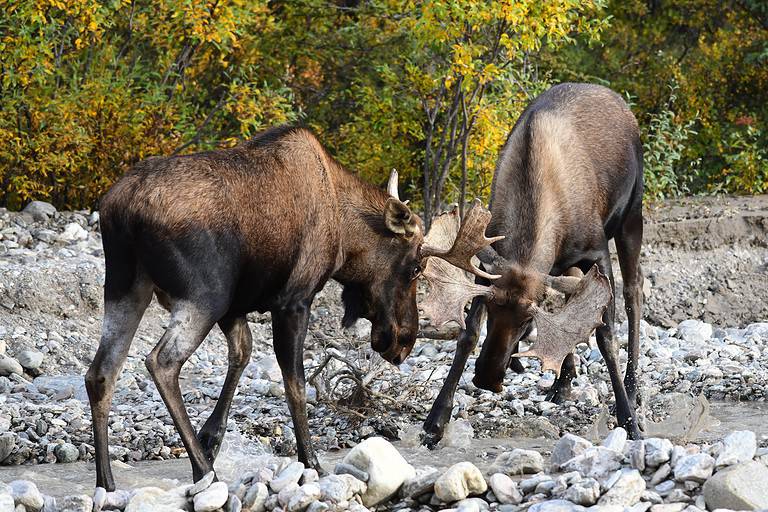
Moose (Alces alces)
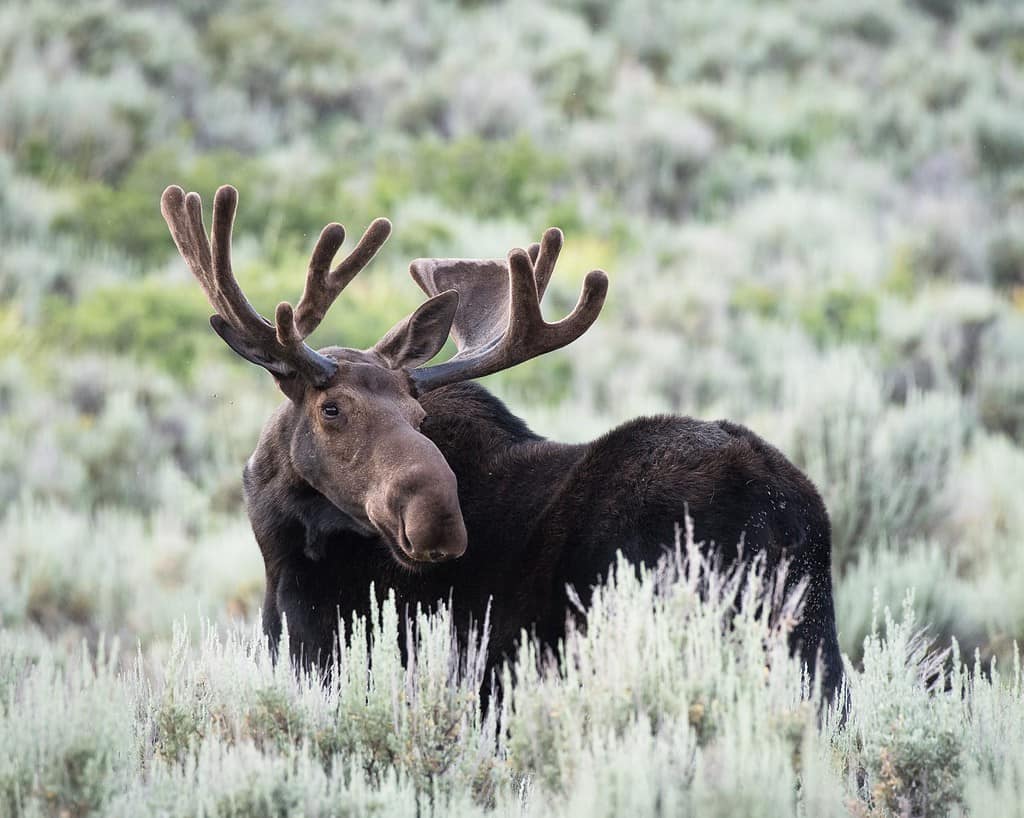
Moose (Alces alces)
©Justin Crook Photography/Shutterstock.com
Although moose are rarely spotted in the park, these magnificent mammals do make the occasional appearance in lakes and wet lowland areas. The moose’s imposing stature, long legs, and drooping nose are unmistakable. Despite their sheer size, they are surprisingly quiet travelers, moving through marshes with the grace of ghosts. In winter, they wade through deep snow to browse on willow and birch, steam rising from their breath like smoke from a slow fire.
Pacific Treefrog (Pseudacris regilla)
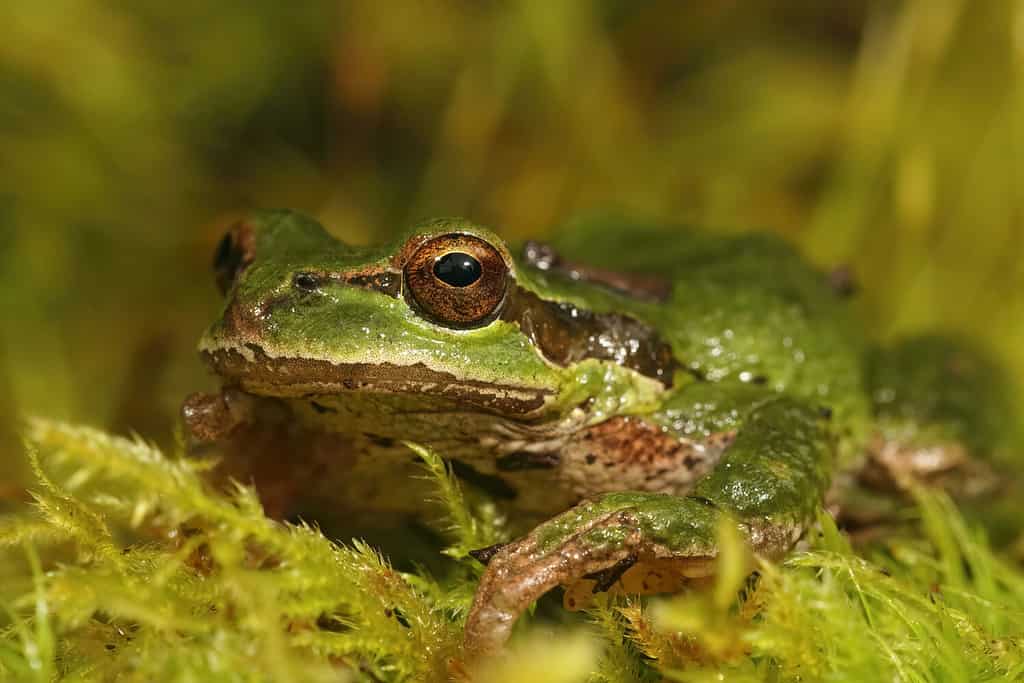
Pacific Treefrog (Pseudacris regilla)
©Oakland Images/Shutterstock.com
Small but spirited, the Pacific treefrog fills spring evenings with vibrant, trilling calls. Found in ponds, wet meadows, and roadside ditches, these amphibians are recognizable by their green or brown skins and distinctive black eye stripe. They emerge in force after spring rains, and while rarely seen during the dry heat of day, they’re easy to hear and spot at dusk or after rain showers, especially near Paradise and Longmire.
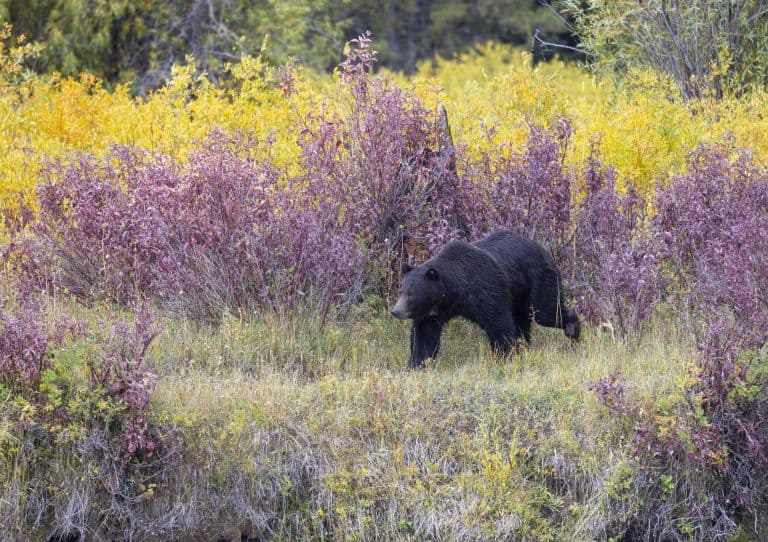
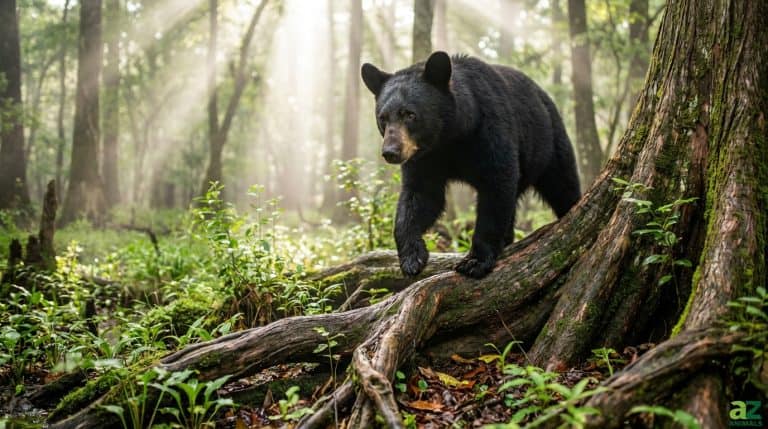
Black Bear (Ursus americanus)
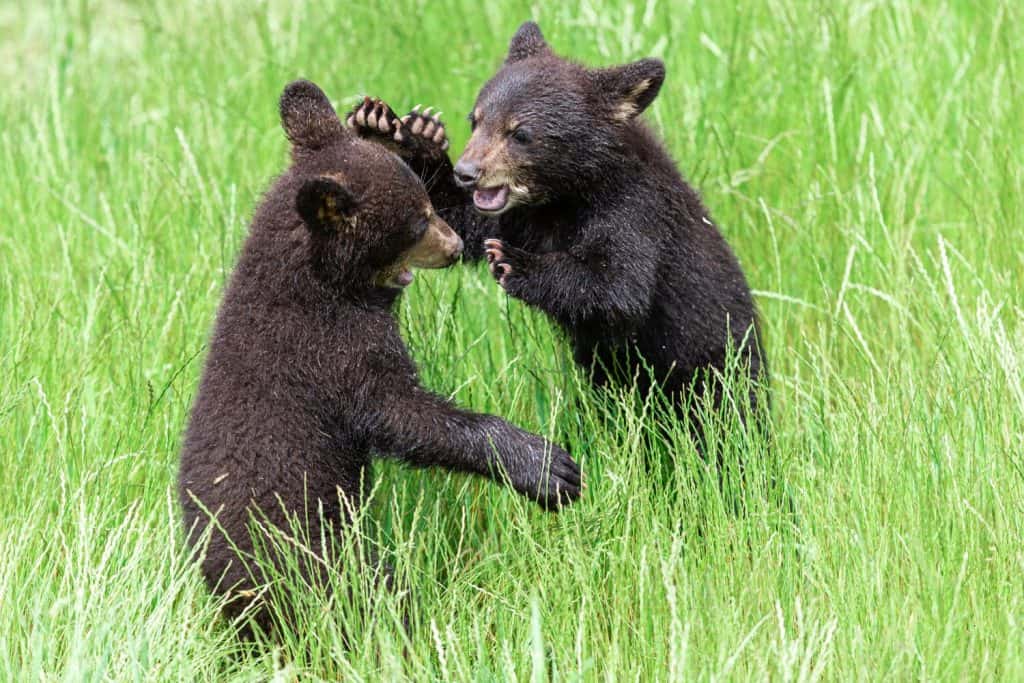
Black Bear (Ursus americanus)
©AB Photographie/Shutterstock.com
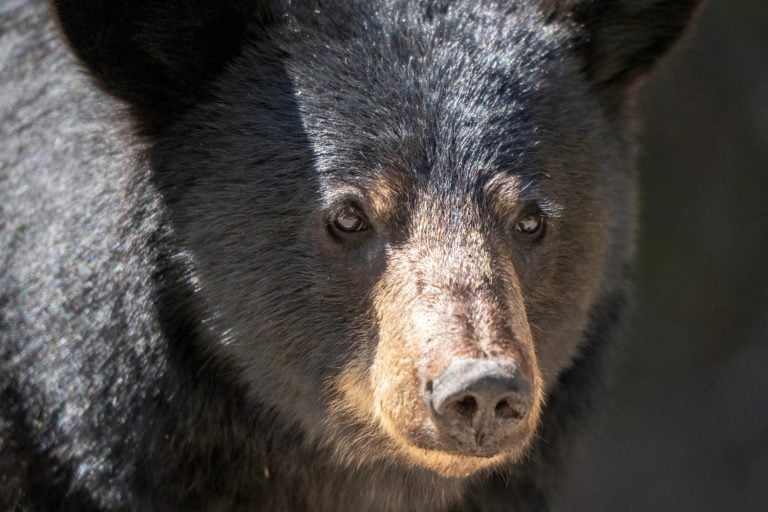
The symbol of the untamed North American wilderness, black bears are thriving in Mount Rainier. These omnivores roam forests, meadows, berry patches, and riversides in search of roots, insects, berries, and fish. They’re most active from spring through late autumn, before denning for winter. Quiet hikers may see them foraging in subalpine meadows, along the Wonderland Trail, or even within sight of the popular visitor areas, especially in late summer. Even if you don’t see them, they’re around, so make sure to keep food and garbage at your campsite securely locked up.
American Dipper (Cinclus mexicanus)
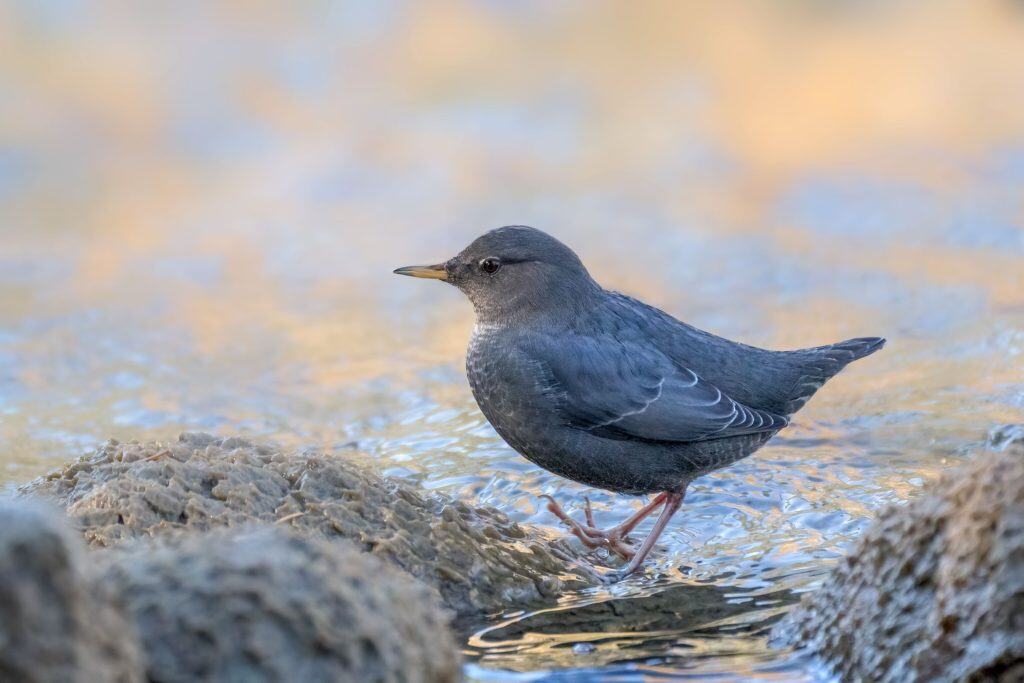
American Dipper (Cinclus mexicanus)
©Wirestock Creators/Shutterstock.com
Also called the water ouzel, this small gray songbird is a true aquatic specialist. Dippers bob and “dip” along icy creeks and waterfalls, diving underwater to catch insects and larvae. They are present year-round in clear, cold streams and often fearless around people. In all seasons, a visit to the Nisqually or Carbon River is a good bet for spotting a dipper, especially as they feed and sing from midstream rocks.
Rainbow Trout (Oncorhynchus mykiss)
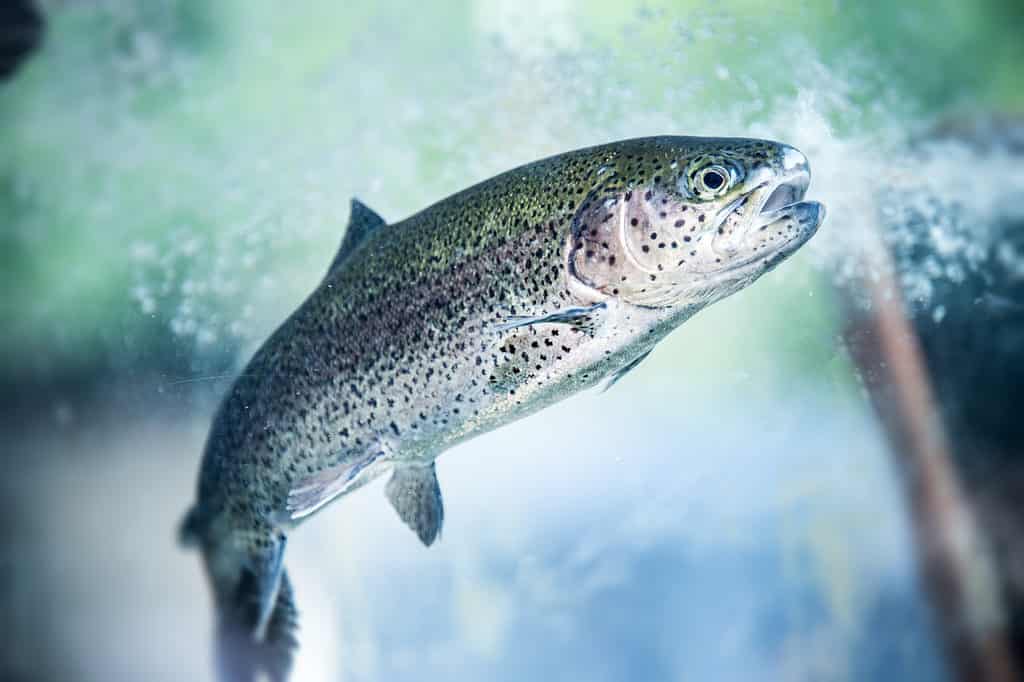
Rainbow Trout (Oncorhynchus mykiss)
©iStock.com/Max2611
Popular with anglers, rainbow trout thrive in the cold, clear rivers and alpine lakes of the park. It’s mesmerizing to watch their silvery forms flash beneath the surface and leap for insects. Most active in spring and early summer, trout spawn in gravel-bottomed creeks and can be observed in the White River, Mowich Lake, and other waters, sometimes even from the shoreline.
Columbian Black-tailed Deer (Odocoileus hemionus columbianus)

Columbian Black-tailed Deer (Odocoileus hemionus columbianus)
©Columbia Black-tailed Deer, Peter Davis/USFWS, Public Domain, https://www.fws.gov/media/columbia-black-tailed-deer – Original / License
This deer, a smaller cousin to the mule deer, is an abundant and visible resident of the park’s lowland forests, meadows, and visitor areas. Easily identified by their dark tails and alert ears, black-tailed deer forage for tender plants at dawn and dusk. In spring, keep an eye out for spotted fawns hidden in deep grass, while winter brings tracks to snowy woodlands. If you find a fawn camouflaged and alone in a thicket, do not disturb it. Its mother has left it hidden there while she grazes and will return.
Cascade Red Fox (Vulpes vulpes cascadensis)

Cascade Red Fox (Vulpes vulpes cascadensis)
©Tom Reichner/Shutterstock.com
Known for its bushy tail and elegant movements, the native Cascade red fox inhabits high subalpine meadows and forest edges. With a stunning array of color morphs—red, black, or cross—these foxes are mostly nocturnal but are sometimes seen at dawn or dusk near Paradise, Sunrise, or along quiet roadside pullouts. In winter, visitors sometimes spot their tracks trailing across fresh snow at higher elevations.
Common Raven (Corvus corax)
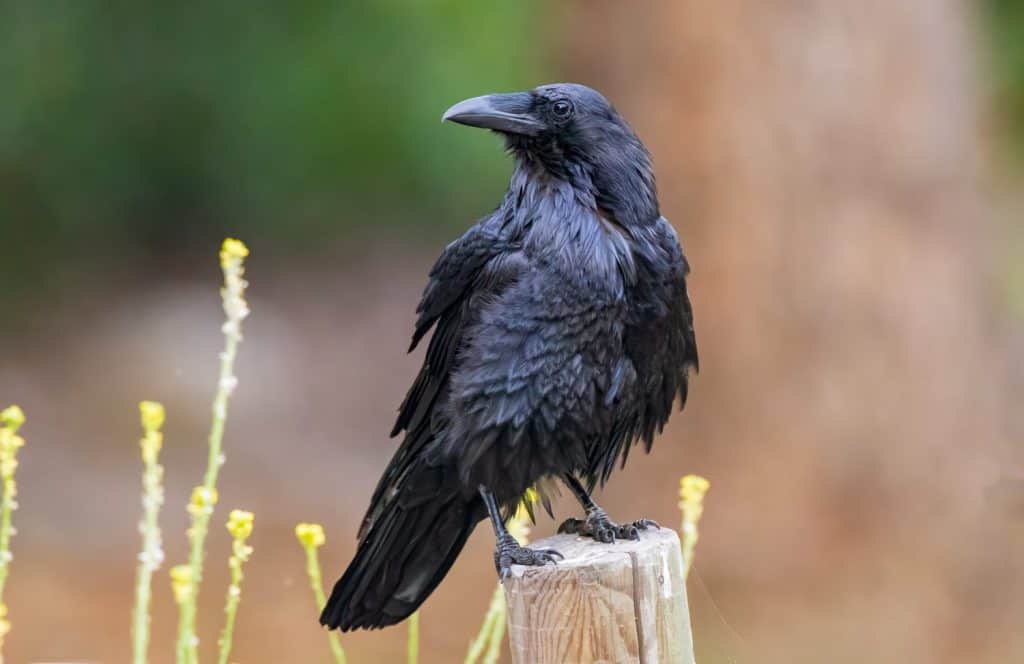
Common Raven (Corvus corax)
©Matt Krofcheck/Shutterstock.com
Ravens are ever-present in the park, soaring on mountain updrafts, croaking from treetops, or walking boldly through parking lots in search of crumbs. Large and jet-black, with wedge-shaped tails, they’re among the smartest of songbirds. Active throughout the year, ravens play, scavenge, and keep watch from high perches, always ready to alert you with a raucous call to passing wildlife or lunch left unattended.
Mountain Goat (Oreamnos americanus)
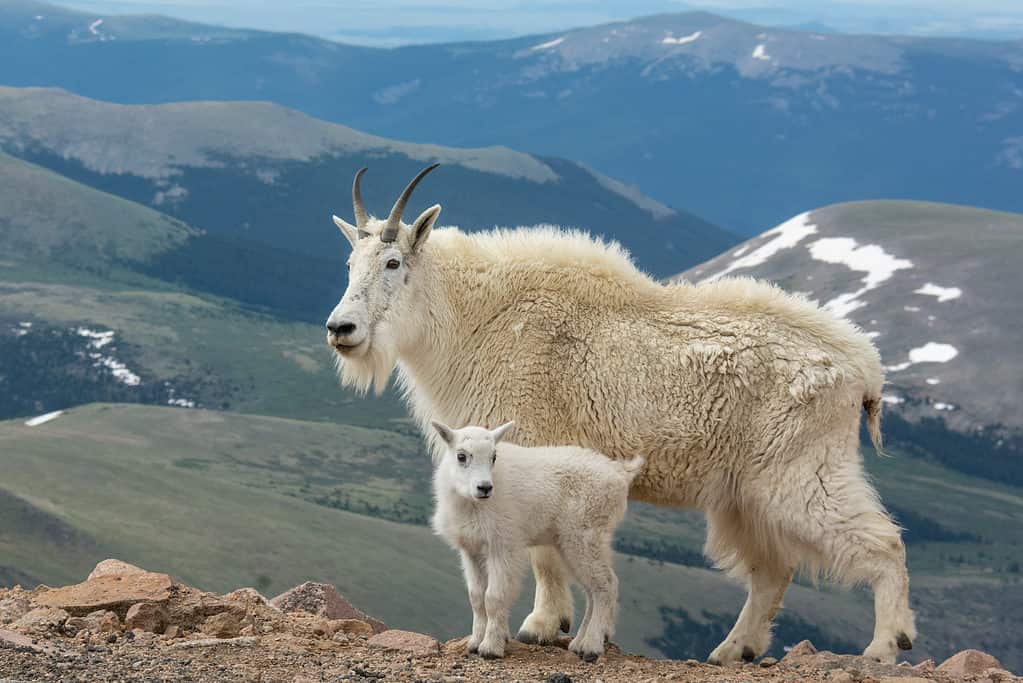
Mountain Goat (Oreamnos americanus)
©Eivor Kuchta/Shutterstock.com
With their shaggy white coats and sure-footed climbing, mountain goats are symbols of the park’s wildest heights. These agile herbivores browse on alpine grasses and wildflowers, most commonly along rocky ledges and open slopes above 5,000 feet. Late spring through summer is best for sightings. Try using binoculars to scan the cliffs of Tatoosh Range or Fremont Lookout for family groups with kids in tow.
Northwestern Garter Snake (Thamnophis ordinoides)
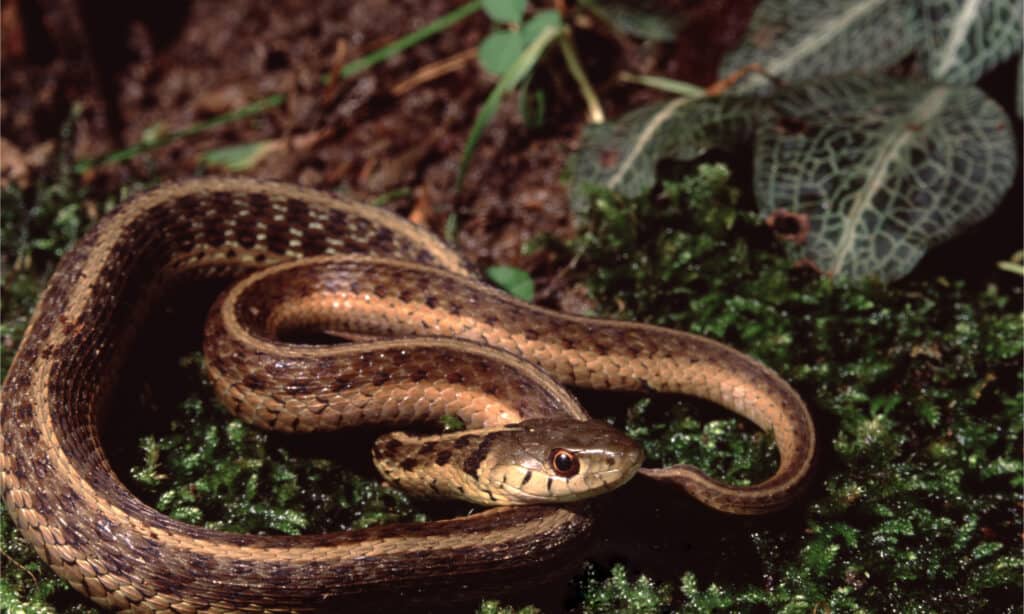
Northwestern Garter Snake (Thamnophis ordinoides)
©Liz Weber/Shutterstock.com
A small, colorful snake, the northwestern garter thrives in meadows, edges of forests, and along riverbanks. Striped green, yellow, or orange, it preys on worms, slugs, amphibians, and small fish. While shy, these snakes do like to bask in sunlit openings from late spring to summer and can be spotted slithering through dew-damp grass or under driftwood on warm afternoons.
Northern Spotted Owl (Strix occidentalis caurina)
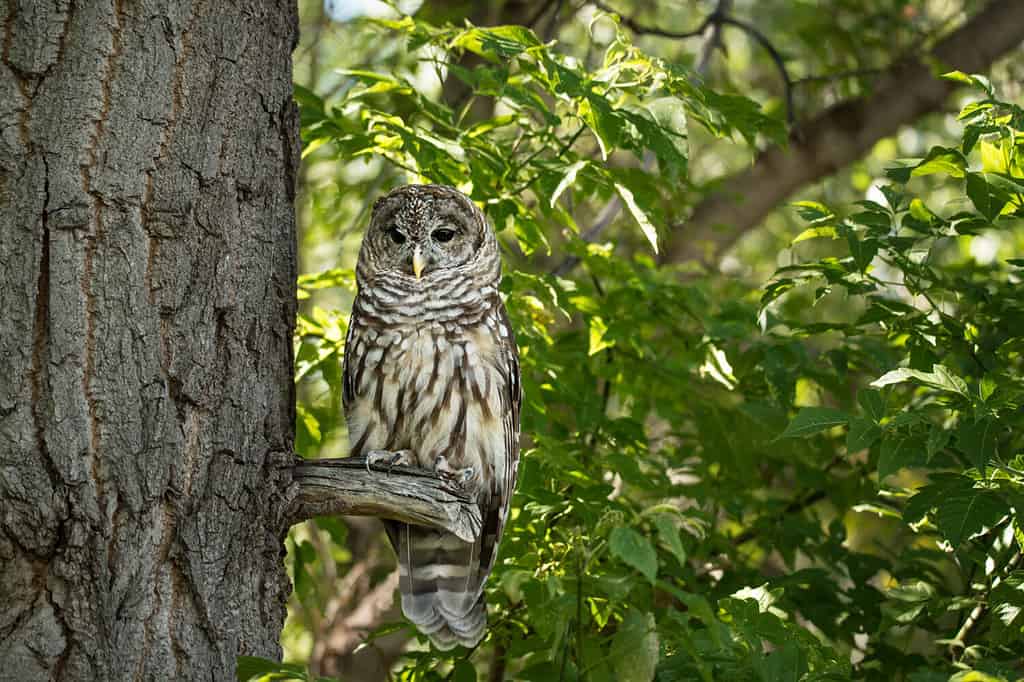
Northern Spotted Owl (Strix occidentalis caurina)
©Georgia Evans/Shutterstock.com
This secretive and endangered raptor haunts old-growth forests, where dense canopies and shade suit its nighttime hunting style. Preferring to roost during the day, the best chance of spotting one is with a trained guide or during organized birdwatching tours. Listen for their hoots at dusk, especially in the park’s western valleys. That area is part of a critical habitat for this declining species.
Hoary Marmot (Marmota caligata)
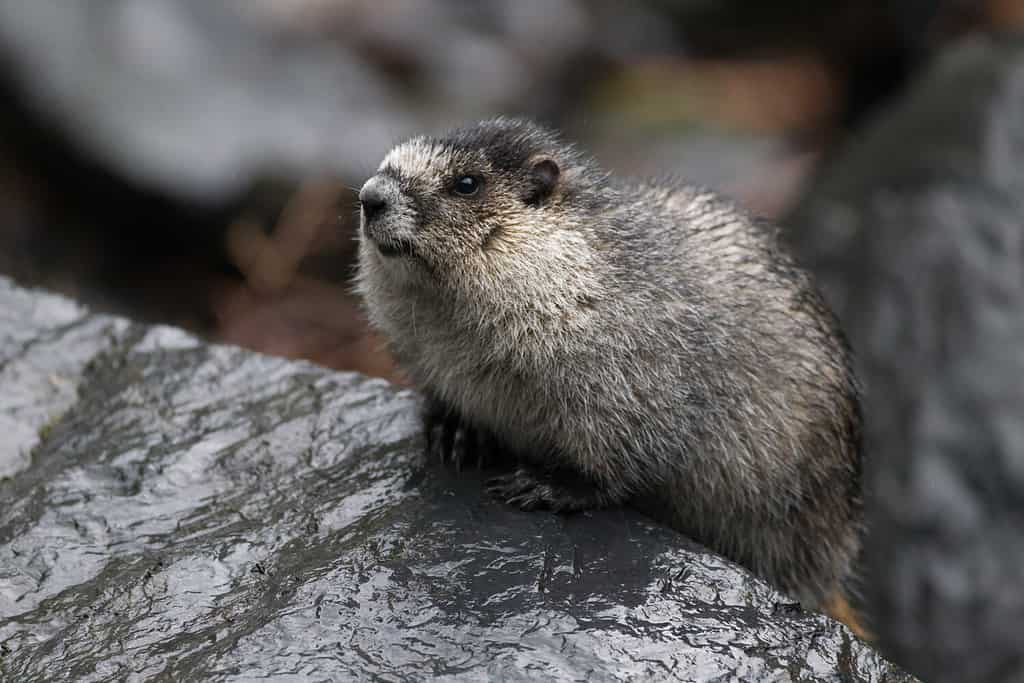
Hoary Marmot (Marmota caligata)
©Alexandre Boudet/Shutterstock.com
Sometimes called “whistlers” for their sharp warning calls, hoary marmots are large, plump rodents often seen basking on rocks in subalpine meadows. Gray-white coats make them difficult to spot among boulders, but alert hikers might find them munching flowers, sunbathing, or wrestling in family groups in places like Sunrise or Spray Park. Late July and August offer the most active marmot moments.
Western Tanager (Piranga ludoviciana)
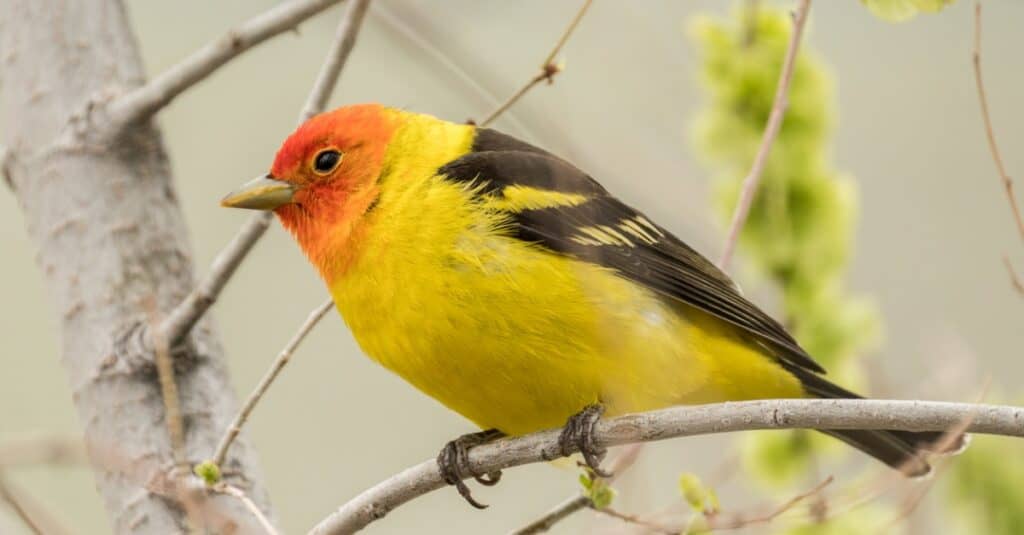
Western Tanager (Piranga ludoviciana)
©iStock.com/mtnmichelle
Bringing tropical color to the Pacific Northwest, the western tanager sports a brilliant red face and yellow body in breeding plumage. These birds migrate north each spring and occupy conifer and mixed forests from late May through July. Their sharp chip-note and striking colors make them easier to spot than some songbirds, especially in the canopies around Ohanapecosh or Longmire.
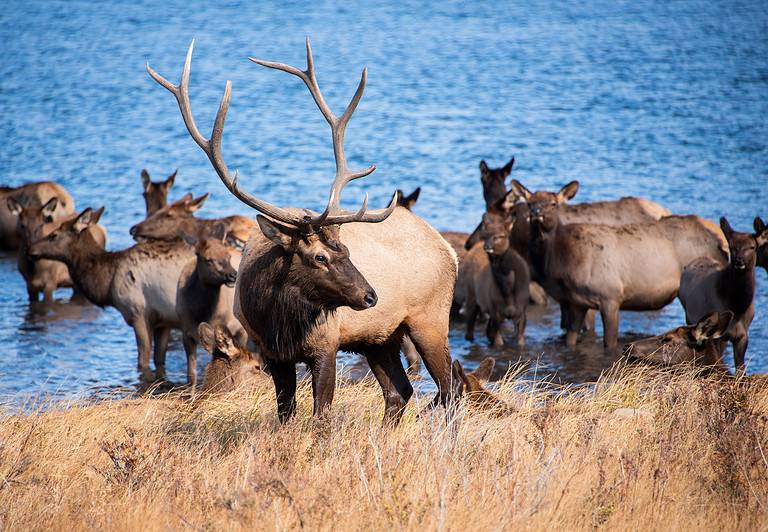
Roosevelt Elk (Cervus canadensis roosevelti)
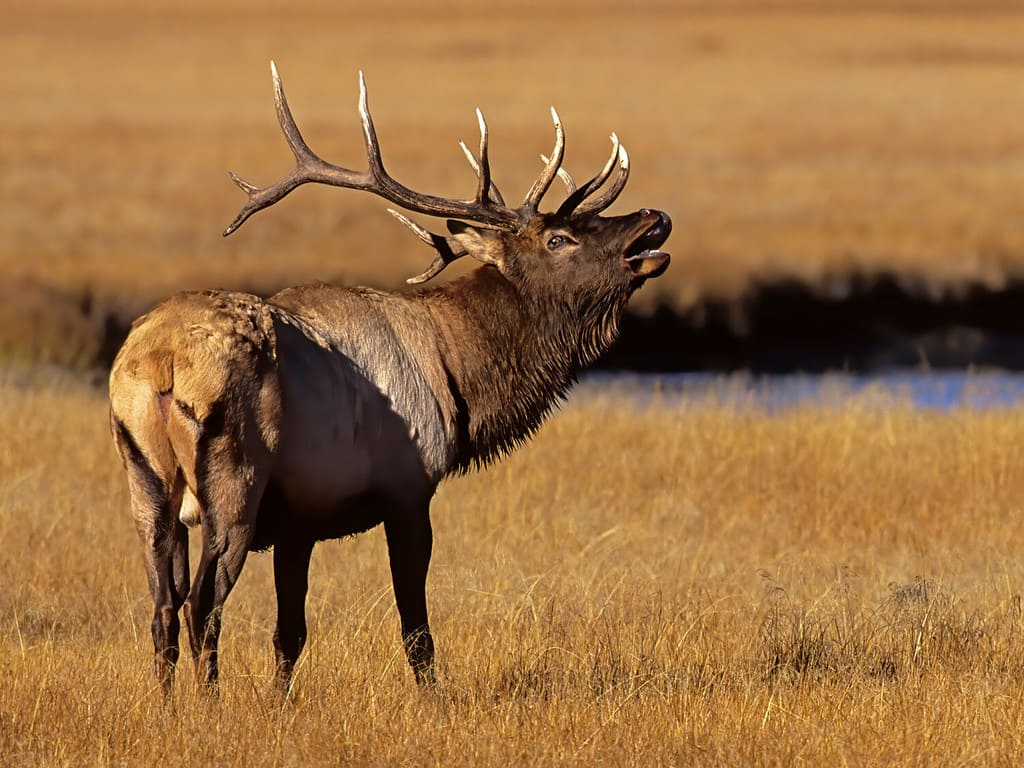
Roosevelt Elk (Cervus canadensis roosevelti)
©Danita Delimont/Shutterstock.com
Stately Roosevelt elk roam the forests and meadows from the Carbon River to Ohanapecosh, feeding on grasses and shrubs. The largest land mammal in the park, elk travel in herds, with fall’s rutting season bringing bugling males and unforgettable displays. Dawn and dusk are best for viewing, and winter snow sometimes brings herds down into valleys and river bottoms.
Cedar Waxwing (Bombycilla cedrorum)
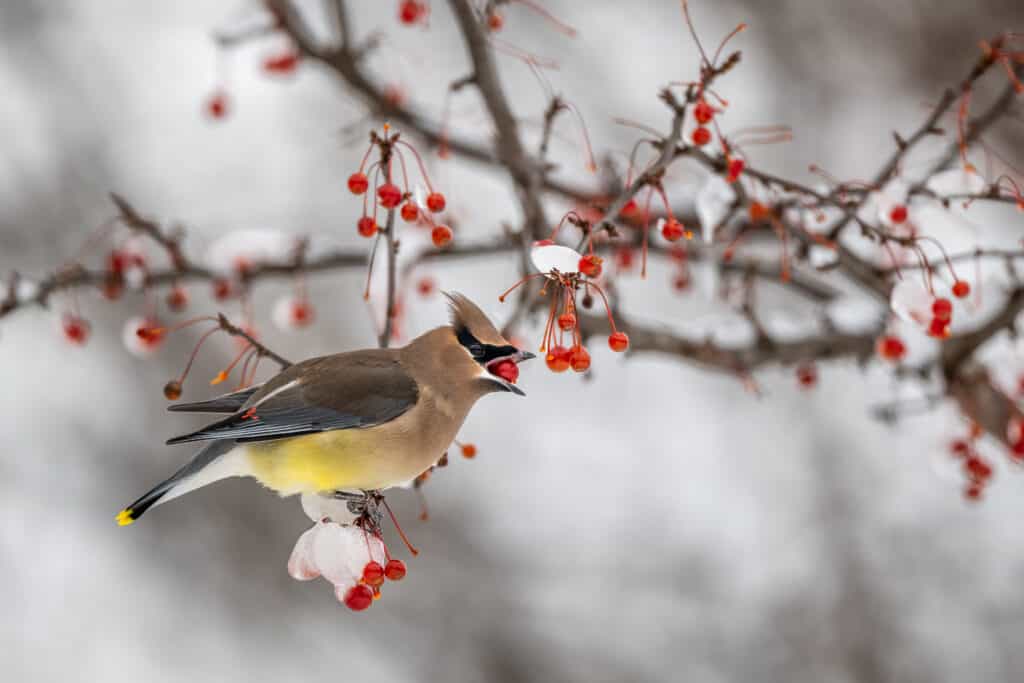
Cedar Waxwing (Bombycilla cedrorum)
©Skyler Ewing/Shutterstock.com
Known for their sleek crests, black masks, and yellow-tipped tails, cedar waxwings flit through berry-laden shrubs along rivers and lakes. Feeding in flocks, they fly around gardens, thickets, and along forest margins from late spring through the fall. Their soft whistles signal feeding frenzies when mountain ash or elderberry is fruiting, making this an ideal time for birdwatching.
The Wild Cascade Chorus
From the massive moose trudging through lakeside marshes to the tiny Pacific wren trilling in emerald forests, the wildlife of Mount Rainier National Park echoes the mountain’s grandeur. Each species plays a role in the delicate balance that makes this northwest sanctuary so remarkable.