
Quick Take
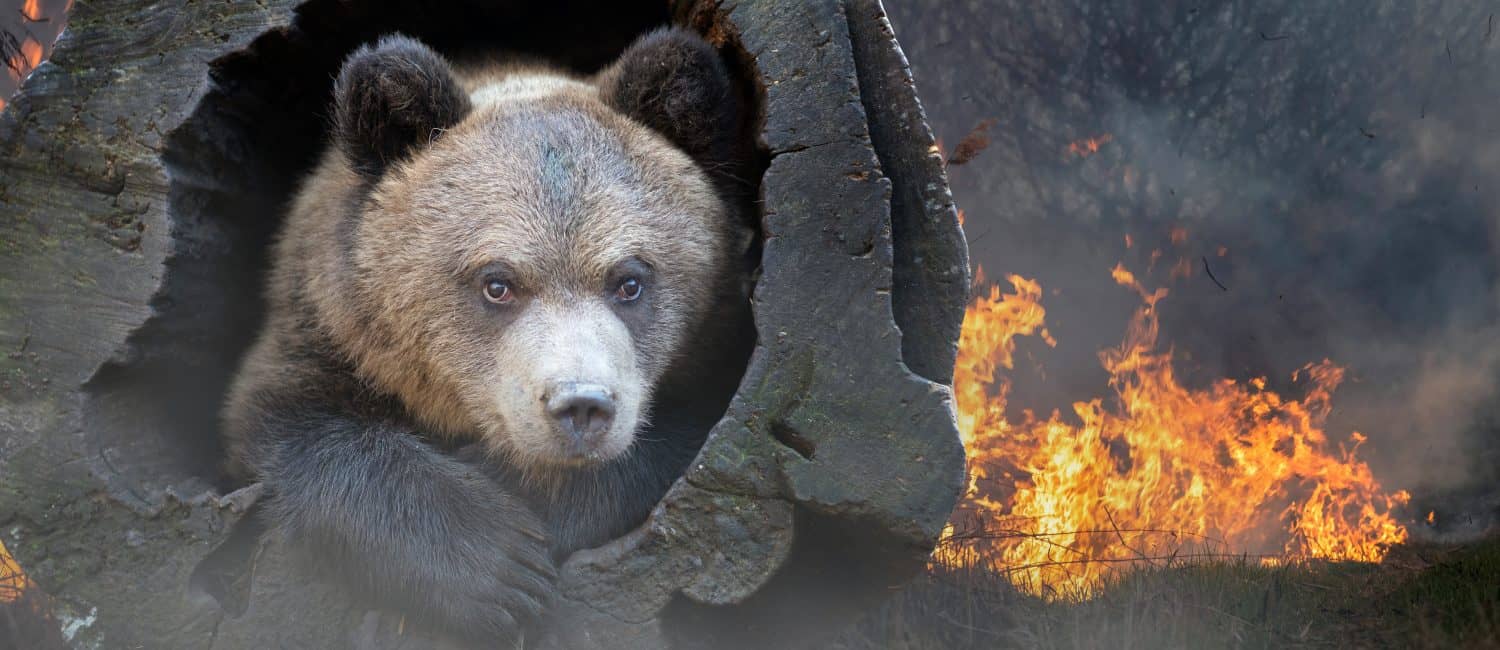
- Surviving a 17,000-acre Capitan Gap Fire became a requirement for the state’s highest animal honor.
- Isolated Sky Islands create genetic separation that complicates the survival of regional bear populations.
- The 1927 game species classification counter-intuitively ensured black bear survival through a regulated hunting framework.
- The 1950 rescue process in the Capitan Mountains necessitated a complete national conservation messaging shift.
New Mexico’s official state animal is the American black bear, but the choice reflected more than the presence of a large mammal in the state’s forests. Lawmakers selected the black bear in 1963 because it represented the state’s high mountain ranges, the national recognition of Smokey Bear, and a shift toward modern wildlife science after decades of predator eradication. At the time, New Mexico was redefining how it viewed large mammals that once faced widespread removal. The black bear stood for survival, adaptation, and a growing awareness that wildlife and people must share the same landscapes. Today, the animal continues to symbolize recovery after fire, respect for nature’s power, and the ongoing responsibility of managing land where humans and bears live side by side.

A Symbol Born From Fire
The story behind New Mexico’s state animal begins with Smokey Bear, one of the most recognized wildlife figures in American history. In 1950, firefighters rescued a black bear cub after the Capitan Gap Fire burned more than 17,000 acres in the Capitan Mountains of Lincoln National Forest.
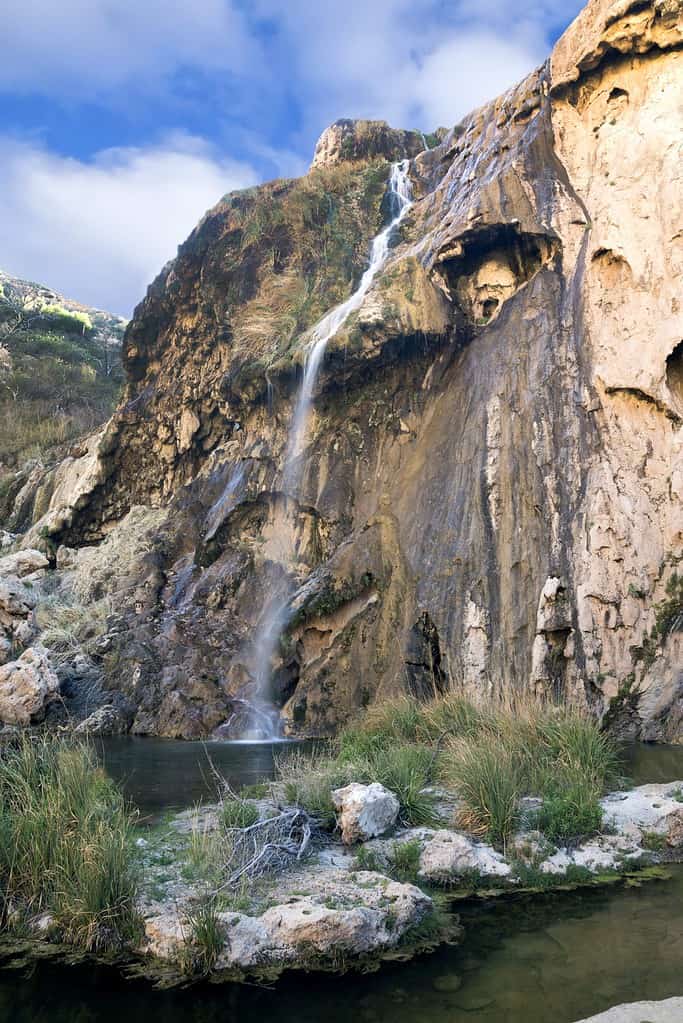
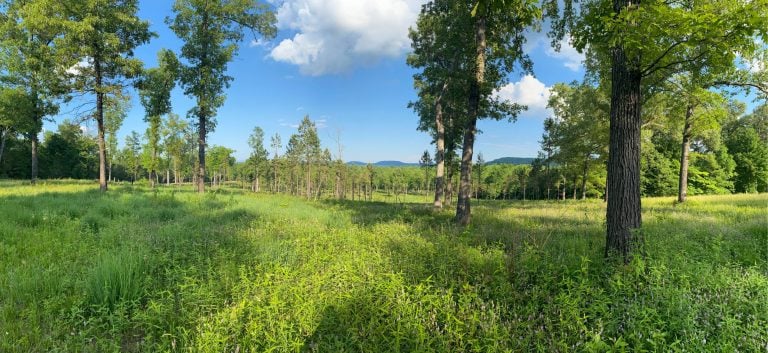
A waterfall in Lincoln National Forest, where the 1950 Capitan Gap Fire burned more than 17,000 acres, and began the story behind New Mexico’s state animal.
©IrinaK/Shutterstock.com
The cub suffered burns on his paws and hind legs and was found clinging to a scorched tree. He became the living symbol of the Smokey Bear fire prevention campaign, which had already existed in posters since 1944. Smokey lived at the National Zoo in Washington, D.C. for 26 years, where millions of visitors learned about wildfire awareness through his story. After his death in 1976, his remains were returned to Capitan, where the Smokey Bear Historical Park honors both the animal and New Mexico’s role in shaping a national conservation message.
Choosing the Bear: Legislation and Timing
The New Mexico Legislature officially named the black bear as the state animal on February 8, 1963. The decision came during a period when Western states were rethinking wildlife policies rooted in removal and control. Earlier in the century, bears were treated as threats to livestock and settlement.
By 1927, New Mexico had already classified black bears as a game species, allowing regulated hunting and replacing indiscriminate killing with population monitoring and seasonal limits. Selecting the black bear tied New Mexico’s identity to Smokey Bear’s legacy while emphasizing that large mammals belonged in the landscape. The designation reflected confidence that bears could be managed responsibly rather than eliminated, a position that aligned with the emerging conservation science of the era.
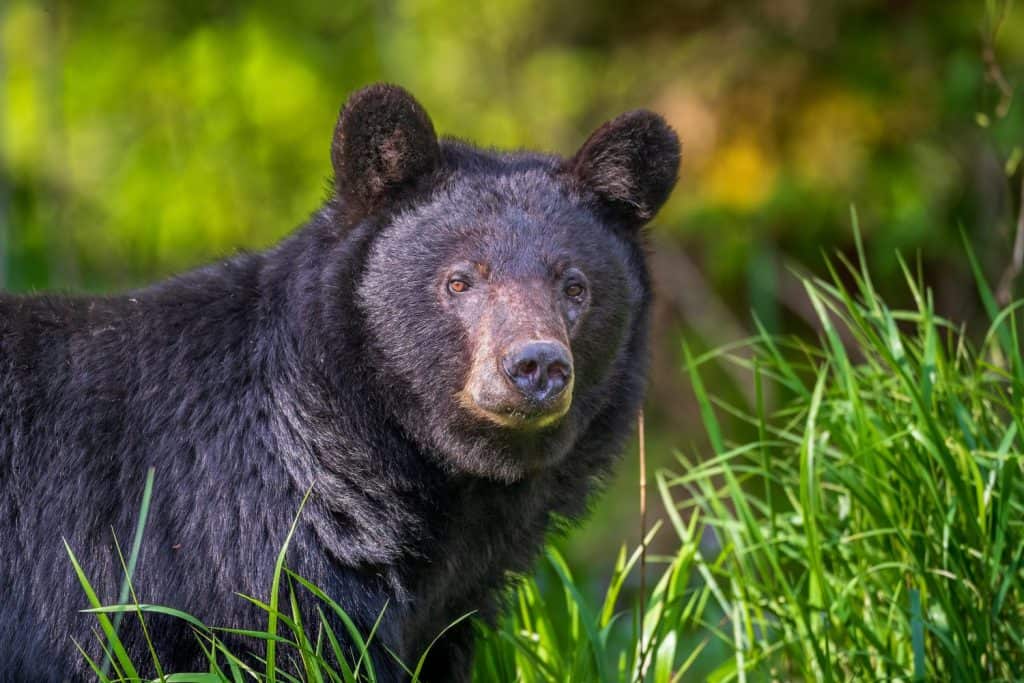
New Mexico designated the black bear as its state animal in 1963, reflecting a shift from predator control to regulated wildlife conservation.
©Ben McMurtray/Shutterstock.com
Why States Designate Official Animals
Across the United States, state animals serve as public symbols meant to reflect shared history, geography, and values. These designations often focus on species that are native to the region or closely connected to its landscapes and livelihoods. In many states, the process involves community input, school projects, or youth-led campaigns, turning the selection into a hands-on lesson in civic participation, biology, and local history. Once adopted, a state animal becomes a recognizable marker that appears in classrooms, museums, and public materials, helping residents associate local wildlife with a sense of belonging and place.
Official animals can also influence how people think about conservation and land use. Recognition at the state level often draws attention to habitat protection, research, and management needs. For wildlife agencies, the designation can strengthen public support for science-based policies. For residents, it reinforces pride in local ecosystems and encourages stewardship. In this way, state animals function as representatives for the natural world, linking cultural identity with environmental responsibility and reminding communities that human life and wildlife are closely connected.
The New Mexico Black Bear: A Southwestern Population
New Mexico’s state animal belongs to a recognized southwestern population commonly known as the New Mexico black bear. This population occurs across parts of New Mexico, eastern Arizona, southern Colorado, western Texas, and extends into northern Mexico. These bears are adapted to mountain forests that rise above the surrounding deserts and grasslands.
The New Mexico black bear is a variant of the species adapted to mountain forests that rise above the state’s deserts and grasslands.
©mountinez/iStock / Getty Images Plus via Getty Images
Within New Mexico, black bears display a wide range of coat colors, from black to brown and cinnamon shades. Lighter coats are especially common in areas such as the Jemez Mountains and parts of north-central New Mexico. While black bears across North America share many traits, those in the Southwest have developed adaptations suited to drier climates and higher elevations. By recognizing this animal, the state highlights a species that links its forests to a broader regional ecosystem shaped by elevation, fire, and seasonal food availability.
Life in the Land of Enchantment: Habitat and Behavior
Black bears in New Mexico inhabit conifer and mixed woodland habitats, where food and cover remain reliable throughout the year. Forests dominated by pine, oak, and juniper support bears in mountain ranges including the Sangre de Cristo, Sacramento, and Gila Mountains. Bears are opportunistic feeders. In the spring, they consume grasses and emerging plants.
During the summer and fall, their diet shifts to include berries, acorns, piñón nuts, insects, and occasional carrion. This seasonal feeding pattern allows them to build fat reserves before entering winter dormancy. Adult bears can live for over 20 years in the wild, although the average life expectancy is lower due to hunting, vehicle collisions, and natural hazards. Cubs learn survival skills from their mothers, such as how to find food and avoid danger.
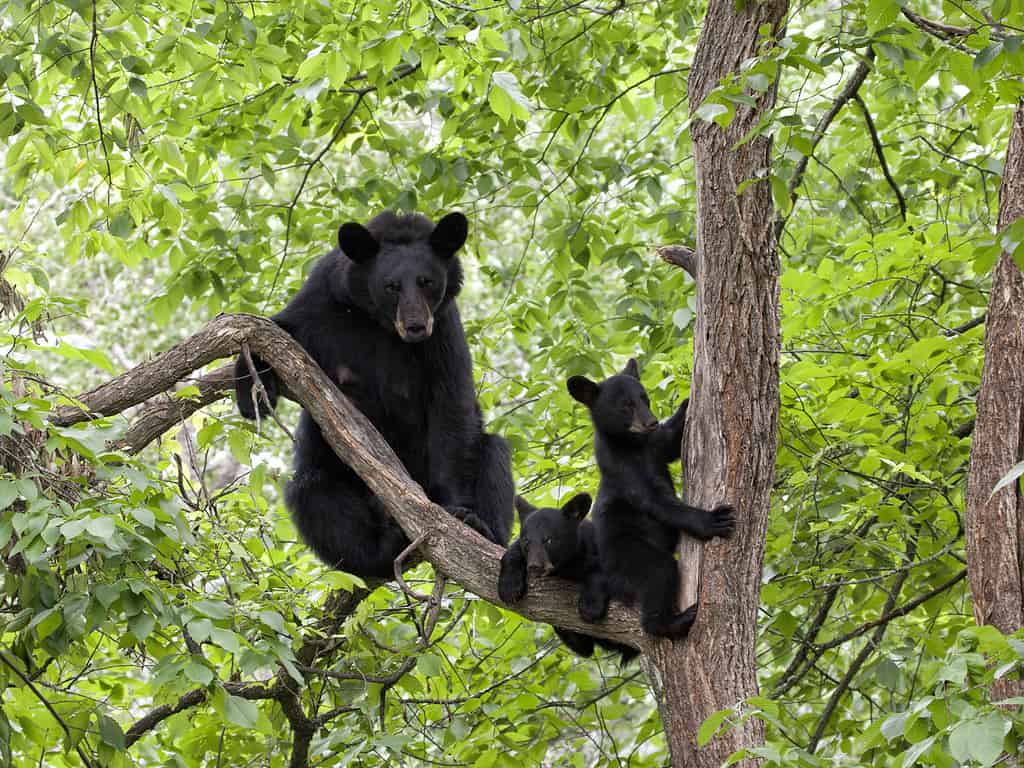
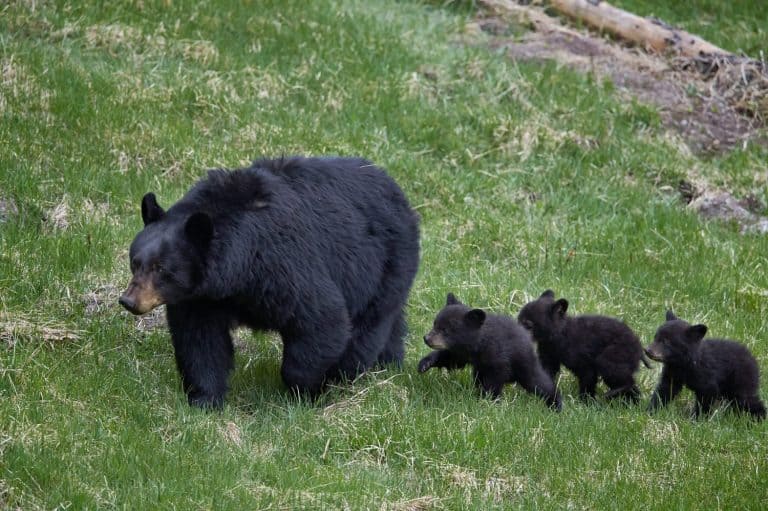
Mother and cub black bears navigate the trees of New Mexico’s mountain forests, learning to forage and stay safe in the wild.
©dssimages/iStock via Getty Images
Bears, People, and Migration Across Sky Islands
New Mexico’s mountains form forested islands surrounded by desert basins and grasslands. These isolated ranges create natural separation between bear populations. Genetic research indicates that bears in the Southwest belong to several regional groups with limited movement between mountain systems. Narrow forest corridors allow for some dispersal over long periods, helping to maintain genetic diversity.
As temperatures rise and wildfires increase in size and frequency, these corridors face growing pressure from development and habitat loss. Biologists emphasize that preserving movement routes between mountain ranges remains essential for long-term population health. The black bear’s presence in these isolated forests illustrates how wildlife depends on connected landscapes, even in regions where suitable habitat is fragmented.
From Predator Control to Conservation Symbol
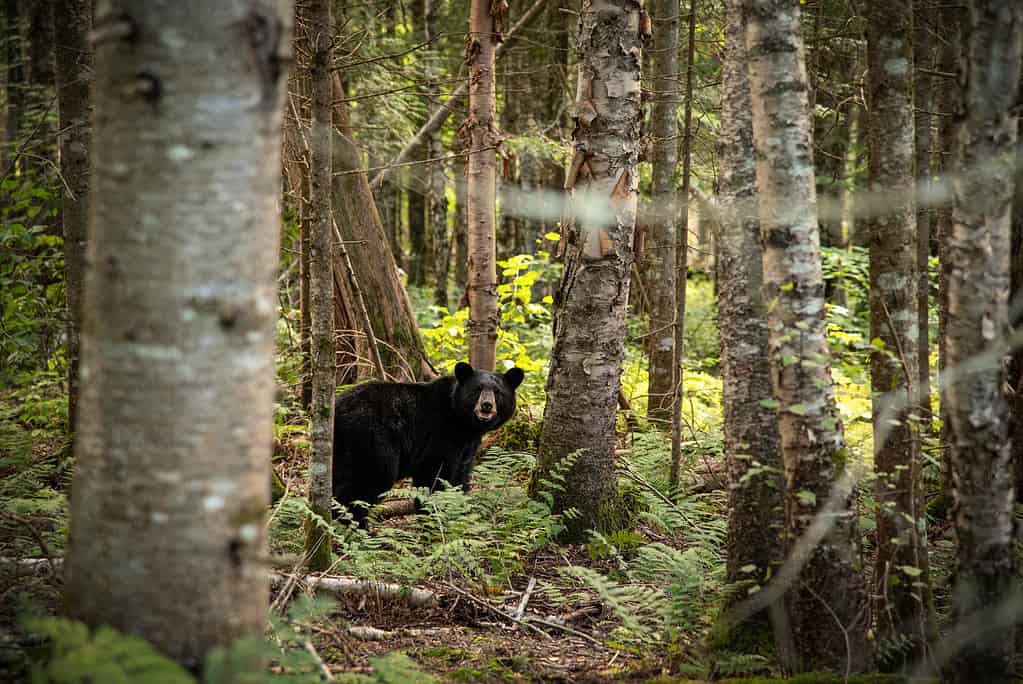
During the early twentieth century, predator control programs targeted large carnivores across New Mexico. Grizzly bears were eliminated from the state, while wolves and cougars declined sharply. Black bears survived primarily in remote terrain where access remained limited.
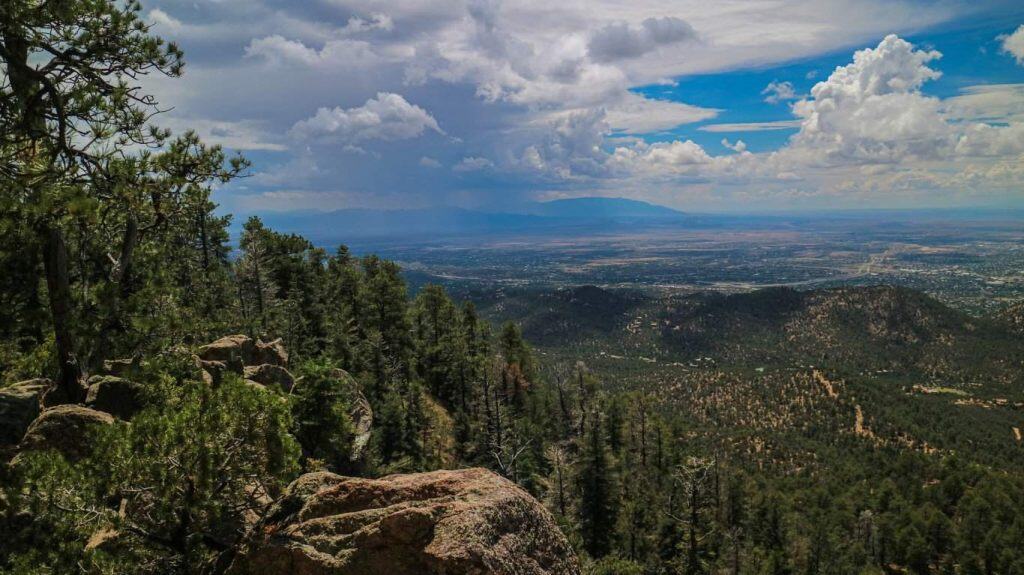
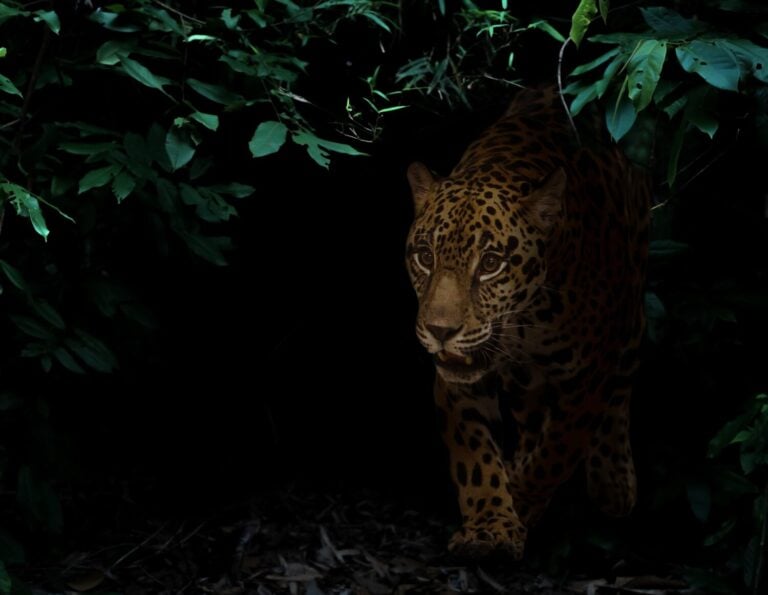
Forests and mountains of New Mexico provided refuge for black bears during a time of predator control and helped shape modern wildlife conservation.
©Laurie Drake / iStock via Getty Images
The shift toward regulated hunting in 1927 marked a turning point. Rather than removing bears entirely, wildlife officials began tracking populations and setting limits designed to maintain stable numbers. By 1963, when the black bear became the state animal, New Mexico had committed to a system that balanced hunting, safety, and conservation. The bear’s survival during this period transformed it into a symbol of recovery and restraint, reflecting a broader shift in attitudes toward wildlife management.
Hunting, Management, and the State Seal
Today, black bears in New Mexico are classified as protected game animals. Hunting is allowed only during specific seasons and requires a license issued by the Department of Game and Fish. Biologists use harvest data, population surveys, and conflict reports to adjust regulations from year to year.
The department’s emblem features a stylized bear head, reinforcing the animal’s role as a representation of responsible stewardship. This approach links science, public participation, and tradition. The bear stands not only for wild lands but also for a management system that relies on research and public cooperation instead of unchecked exploitation.
Encounters on the Edge: Bears Near New Mexico Communities
As development expands into foothill and forested areas, encounters between people and bears have become more common. These interactions increase during late summer and fall when bears search for calorie-rich foods. In dry years, younger bears may travel long distances, occasionally entering towns along river corridors such as the Rio Grande.
Attracted by fruit trees, unsecured trash, and livestock feed, bears can lose their natural caution around humans. Wildlife officials note that most bears prefer to avoid people, and conflicts usually arise from accessible food sources. Repeated incidents may result in relocation or removal when public safety is at risk.
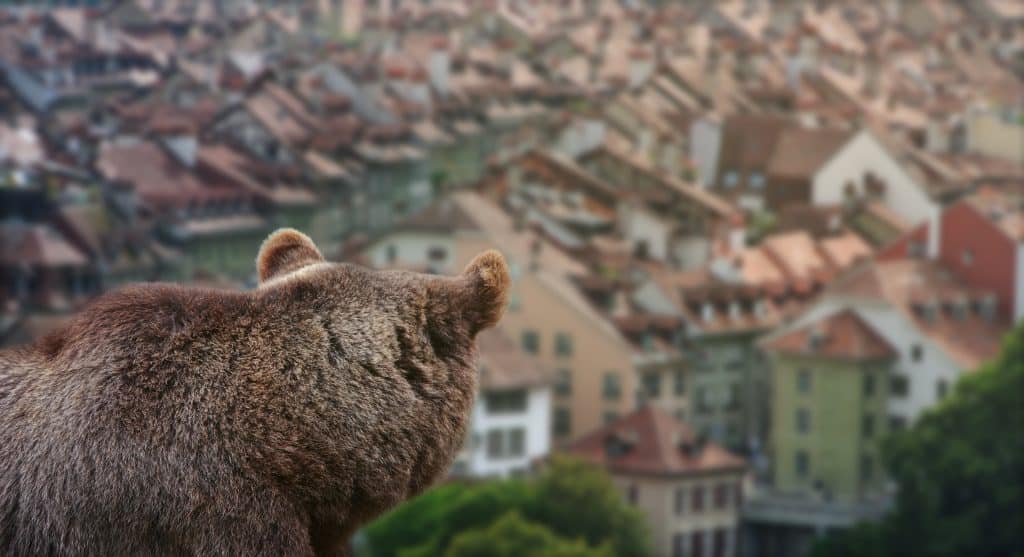
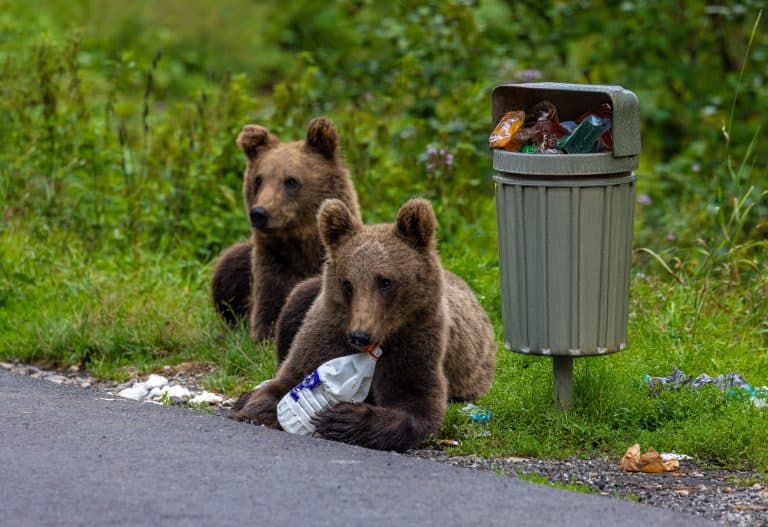
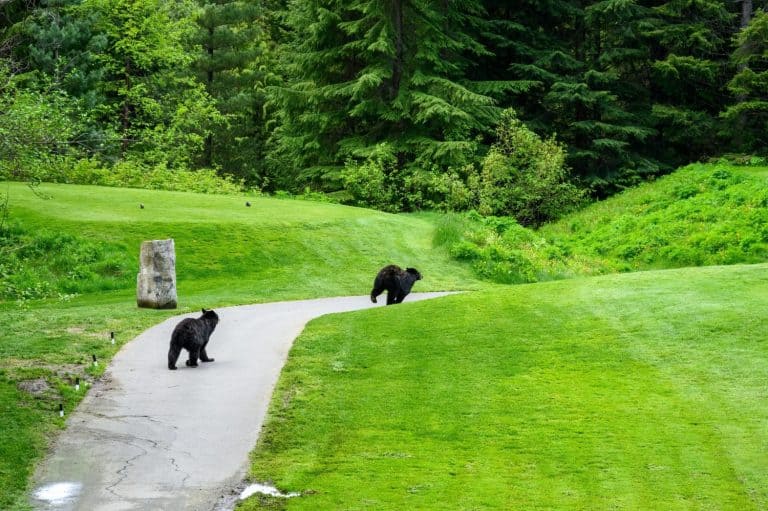
Bears sometimes explore near homes in search of food, especially during late summer and fall.
©Marcus Placidus/Shutterstock.com
Learning to Live With Bears: BearWise and Local Outreach
To reduce conflicts, state agencies and local organizations promote BearWise education programs. These efforts focus on reducing attractants around homes and campsites. Residents are encouraged to secure trash, remove bird feeders when bears are active, clean grills, and avoid leaving pet food outdoors.
Outreach programs emphasize that preventing access to food protects both people and bears. When bears remain wary of humans, they are less likely to be involved in dangerous encounters. These practices help ensure that the state animal remains part of the wild landscape rather than becoming a recurring problem near communities.
What the Black Bear Represents Today
When lawmakers selected the black bear as New Mexico’s state animal, they recognized it as more than just a popular mascot.
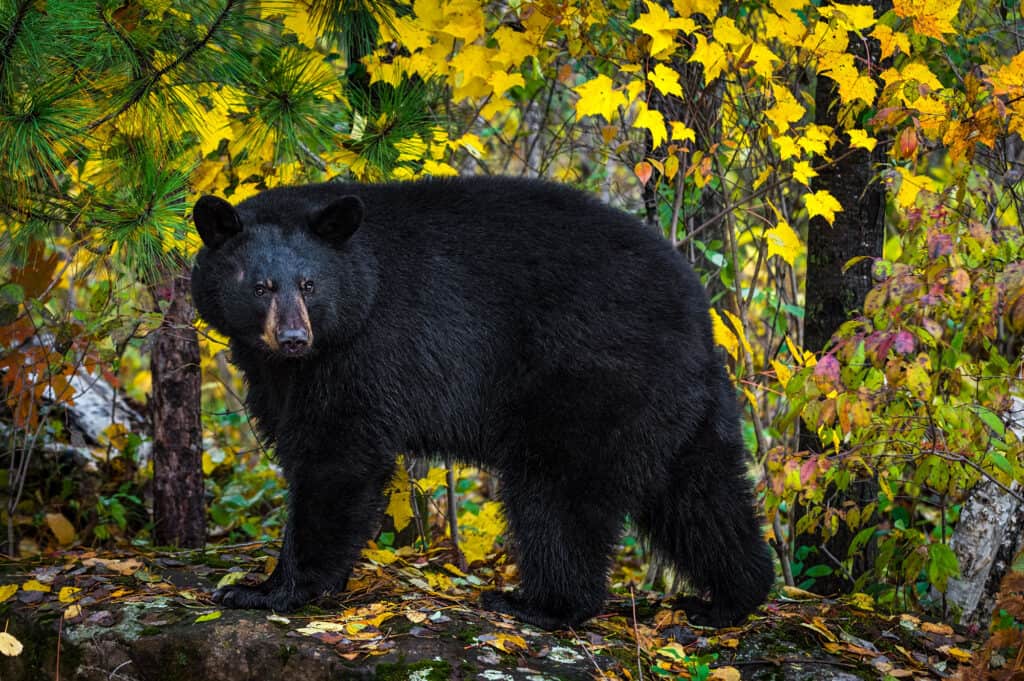
The black bear reflects recovery and responsible land management, continuing to thrive across New Mexico’s landscapes.
©Holly Kuchera/Shutterstock.com
The bear represented recovery after fire, the value of responsibility in land management, and respect for wildlife that had once been treated as expendable. Today, those meanings continue to resonate. Climate-driven fires, extended drought, and expanding development present new challenges for wildlife and people. The black bear embodies the need for caution, adaptability, and long-term thinking. Its continued presence throughout New Mexico’s forests demonstrates that coexistence is possible when effective management and public cooperation are in place.
From a Cub in a Tree to Lasting Emblem
The story of New Mexico’s state animal begins with a frightened cub rescued from a burned forest and grows into a symbol recognized far beyond state lines. By honoring the American black bear, New Mexico acknowledges its forested mountain ranges, its role in the Smokey Bear legacy, and decades of progress in wildlife science. Visitors may spot bears from a safe distance in areas such as the Valles Caldera or the Sacramento Mountains. In those moments, the black bear embodies what the state seeks to represent: a landscape shaped by fire and elevation, where people accept the responsibility of sharing space with powerful wild animals.