
Quick Take
- Standard observation methods fail to capture the hidden polar bear acclimatization process.
- Initial cub development contradicts long-held assumptions about arctic thermal regulation.
- The scouting phase is necessary to prevent catastrophic failure during the first outdoor exposure.
Regular folks who care about wildlife generally know that climate change is bad for polar bears, but they have only vague ideas about the mechanics of it. We picture polar bears floating on ice floes to hunt seals, but we may not understand why they can’t simply hunt from the seashore if the ice melts. If you look into it a little deeper, you’ll discover that seals hunt under sea ice and surface for air at breathing holes.
Polar bears can lurk by those holes and ambush seals without using a lot of energy, the way they would have to do if they had to swim out from shore and chase this fast-moving prey in the open water. Over the past decades, as sea ice has been forming later in the fall and breaking up earlier in the spring, bears have lost critical hunting time and entered winter with fewer fat reserves. This means that more bears will starve.
Less widely understood is that warming also affects denning behavior. Changes in snow depth, stability, and timing can disrupt maternity dens, shorten the acclimation period cubs need after emerging, and increase the risk that young bears will die before reaching their first year.
Climate change, then, not only limits access to food but also undermines the early life stage that determines whether the next generation survives at all. New den-camera and satellite-collar research published in 2025 has revealed what happens when families finally emerge and why the first days outside play a decisive role in cub survival.
Polar Bears and Their Arctic Role
Polar bears are the largest land carnivores on Earth, adapted to thrive in ice-dominated tundra biomes. Adult males can exceed 1,200 pounds, while females are smaller and lighter, an advantage during months of fasting. Thick fur, dense undercoats, and deep layers of blubber slow heat loss in extreme cold.
Broad paws distribute weight across snow and ice while providing traction on slick surfaces. These bears depend on sea ice to hunt seals, their primary food source. Timing matters because mothers leaving maternity dens must reach hunting areas before their fat reserves run dangerously low.
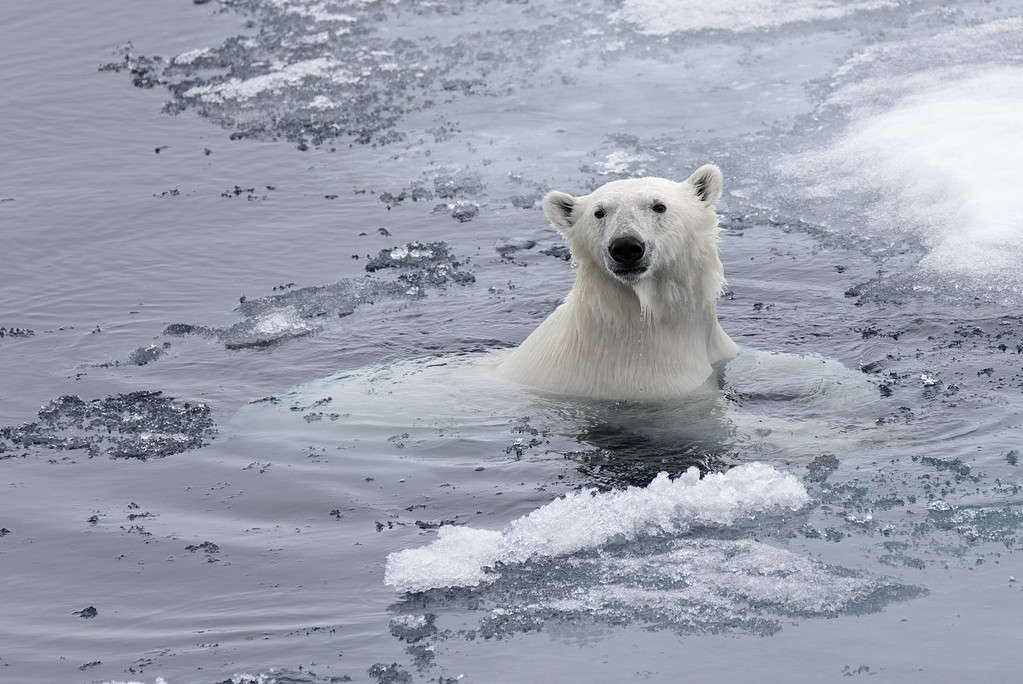
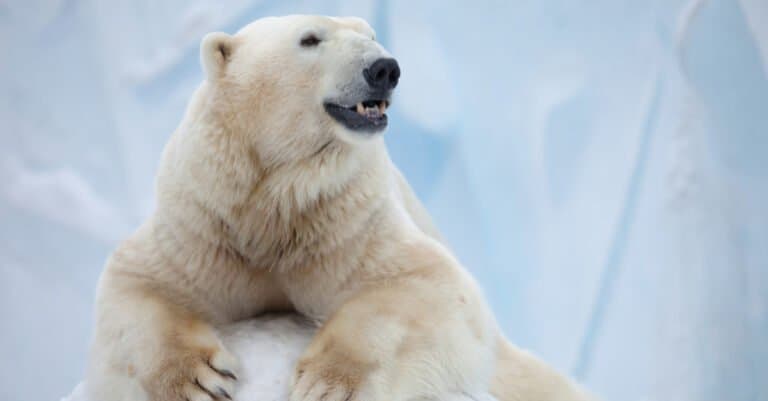
The thick coat and deep layers of blubber of a polar bear help it survive in extreme cold.
©Alexey_Seafarer/iStock via Getty Images
How Do Snow Dens Stay Warm?
Pregnant females dig maternity dens into snowdrifts on coastal slopes, pressure ridges, or low hills near the Arctic shoreline. Counterintuitively, a polar bear den stays warm because snow is a very effective insulator. Wind-packed snow traps air in tiny pockets, and that trapped air slows the loss of heat almost like the insulation in a house.
When a female polar bear digs a den into a deep drift, her own body heat raises the temperature inside, and the surrounding snow prevents that heat from escaping. The inside of the den stays right around freezing: cold enough to keep the snow compact and dry rather than slushy.
The floor becomes a hard, slightly icy surface formed by compressed snow and the bear’s weight, not pooled water. The den isn’t warm in the way your house is; rather, it serves as a shelter against the wind, keeping the temperature constant—more like a refrigerator than a heated room.
So why don’t the bears freeze? The mother survives the cold thanks to her thick layer of blubber, while the cubs stay warm by snuggling with her and each other as they nurse and sleep, sharing body heat.
Maternity Dens
Females usually enter dens in November or December and remain inside without eating or drinking for several months. Cubs are born in January, blind and sparsely furred, and weigh about one pound each. They survive by nursing on milk that contains more than 30 percent fat. By early spring, the cubs have grown rapidly, but they have never experienced open air, wind, or uneven snow.
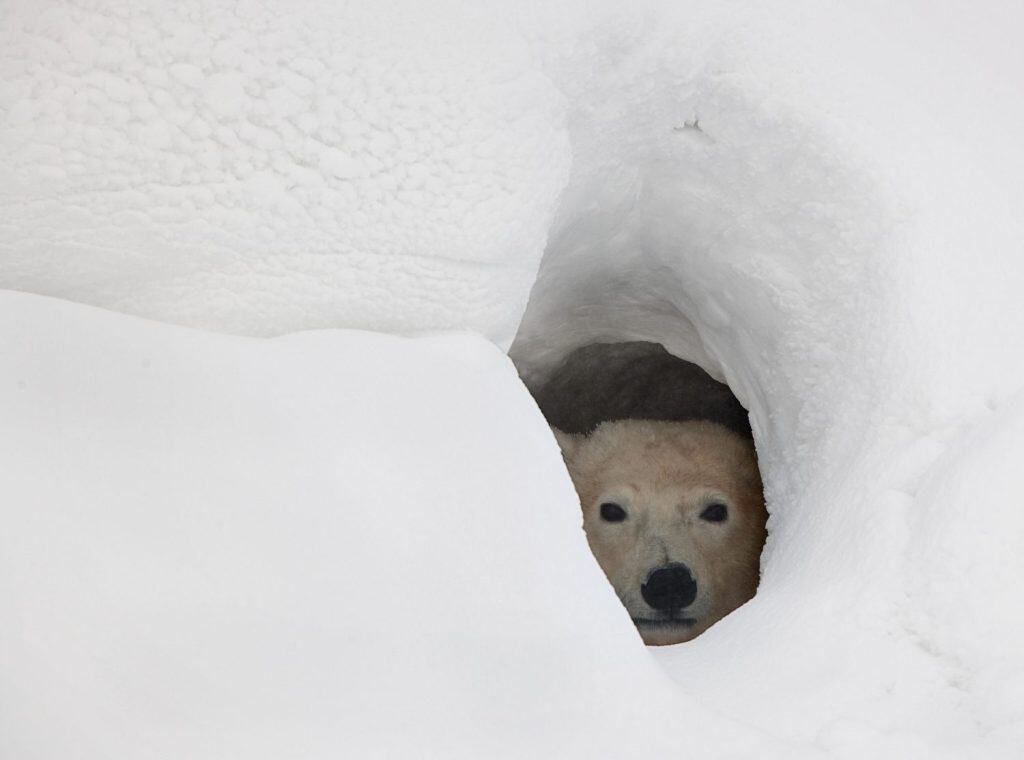
Polar Bear cubs spend the entire first winter of their lives inside the den.
©Sergey Uryadnikov/Shutterstock.com
For decades, scientists struggled to observe what happens when polar bear families emerge from their dens, as dens are difficult to locate and close human presence can cause mothers to abandon their cubs. Dens are difficult to locate, and close human presence can cause mothers to abandon cubs.
In a long-term study conducted in Svalbard, Norway, researchers from Polar Bears International, the Norwegian Polar Institute, San Diego Zoo Wildlife Alliance, and the University of Toronto Scarborough combined satellite radio collars with remote camera traps to observe maternal polar bears and their cubs as they emerge from snow dens.
This work, published on February 27, 2025, in The Journal of Wildlife Management, provides the first detailed synchronized data on den emergence timing and post-emergence behavior, helping scientists understand how cubs acclimate to Arctic conditions and how changing climates may affect their survival.
Short Trips Outside the Den
Once they break the roof open in spring, polar bear families do not immediately head for sea ice. Instead, mothers make repeated short excursions outside the den. These outings average about 27 minutes, though some last only seconds and others several hours.
Roughly half the time, cubs accompany their mother and remain close to the entrance. In colder or windier conditions, females step out alone more often. Warmer and calmer weather increases the likelihood of family outings. Across the monitored dens, researchers recorded 178 separate emergence events, showing consistent patterns across individuals.
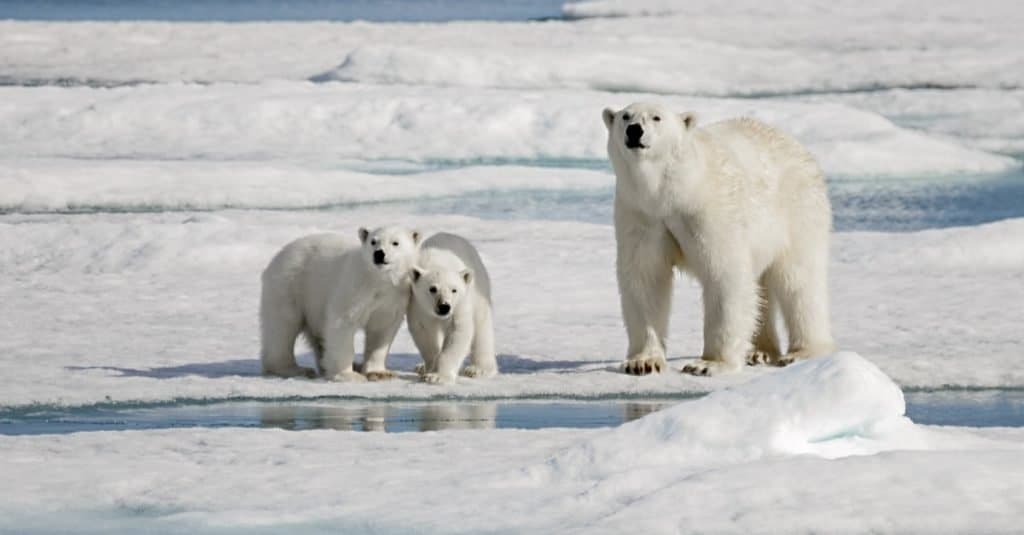
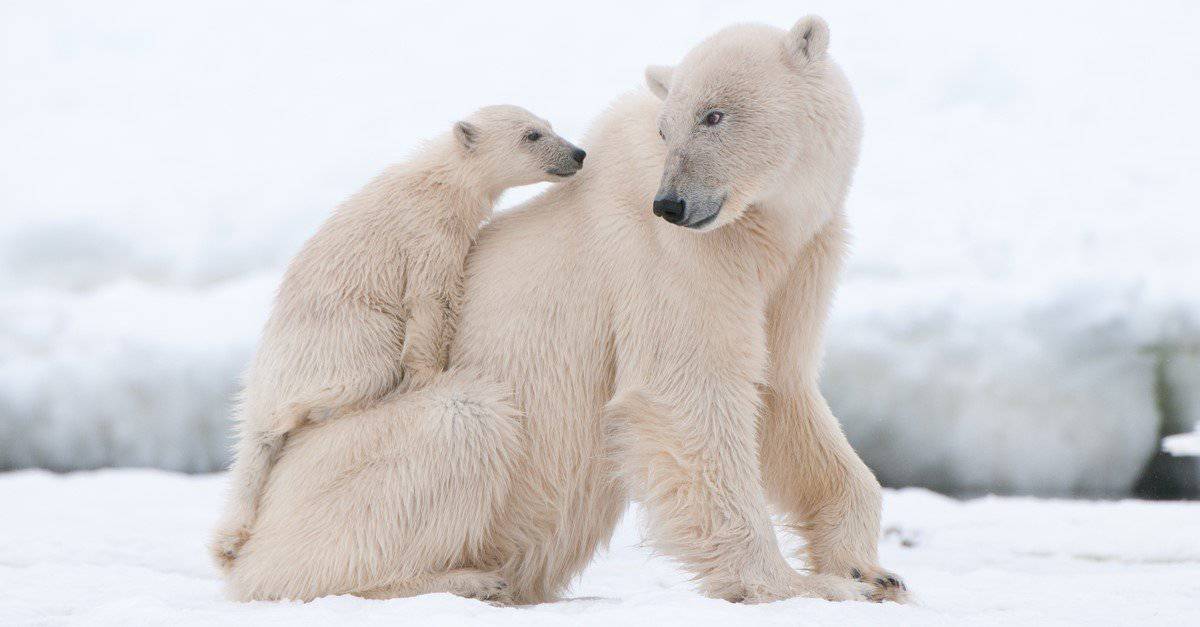
Mothers take their cubs on short outings to acclimate them to the cold.
©Alexey Seafarer/Shutterstock.com
These short trips serve as a controlled adjustment period for the cubs. After weeks in a stable environment, they must adapt to colder air, stronger winds, and increased physical activity. Early outings involve clumsy walking, sliding, and frequent pauses near the mother.
Gradual exposure allows their lungs, muscles, and circulation to adapt without overwhelming stress. Cubs also learn to follow scent trails and to respond quickly when their mother signals them to retreat. For the mother, these trips provide a chance to assess the weather, snow stability, and nearby threats before committing to a longer journey.
The Den as a Staging Area
On average, families in the Svalbard study emerged around March 9 and remained near the den for several days. During this period, the area outside the den functions as a training ground. Cubs climb small drifts, tumble down slopes, and practice short-distance travel. Activity peaks during daylight hours, when temperatures rise slightly, and visibility improves.
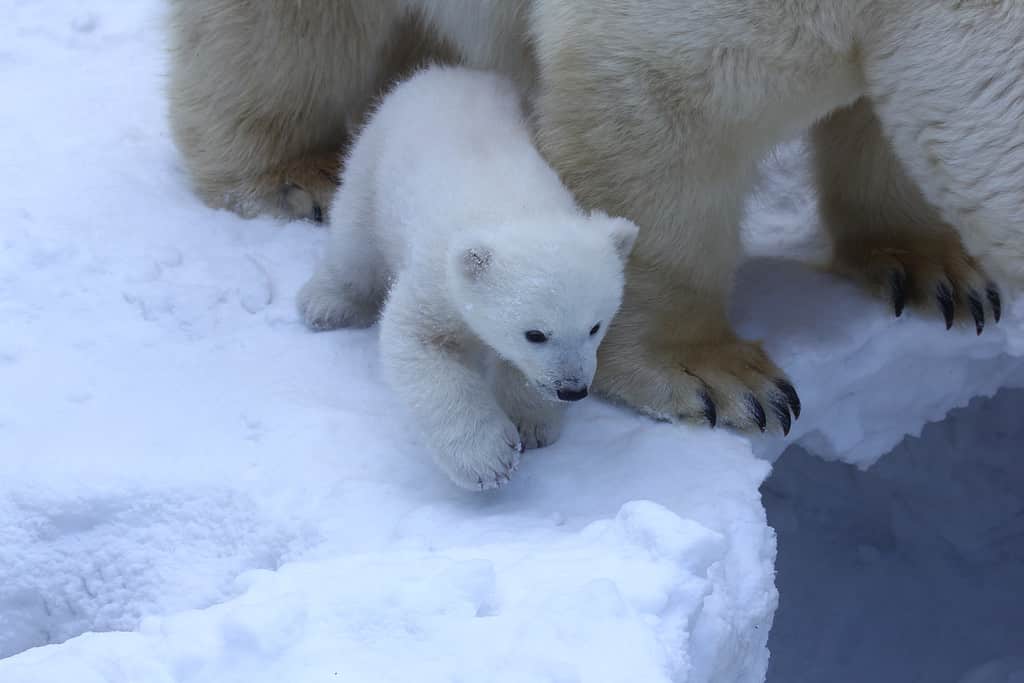
Polar bear cubs tumble around outdoors to strengthen their muscles and improve their coordination, always under the protective eye of their mothers.
©Belovodchenko Anton/Shutterstock.com
Mothers rarely stray far, often staying within a short distance from the den. During storms or sudden cold snaps, the families retreat underground. Leaving too early increases the risk that the cubs will tire before reaching suitable hunting habitat.
Climate Change and Survival Timing
Warming conditions in the Arctic are altering the balance between denning and hunting. Sea ice now forms later in the autumn and melts earlier in the spring in many regions. This reduces hunting time for adults and limits the energy reserves needed for reproduction.
Warmer temperatures can also weaken snow dens or expose them to rain and thawing. Research indicates that cub survival declines when families leave den sites too soon after emergence. Even under favorable conditions, only about half of all cubs survive their first year. Additional stress linked to climate change could further reduce these odds.
Protecting Denning Areas
Because denning is a critical stage in the polar bear life cycle, conservation efforts increasingly focus on reducing disturbances near dens. Satellite collars help identify den locations without direct human presence.
In some regions, managers establish buffer zones around known or likely denning areas and restrict industrial activities during sensitive months. The 2025 study shows that den use varies widely in duration. Some families leave within two weeks, while others remain active for more than a month. Protection measures must account for this variation, especially as climate conditions continue to shift denning schedules.
What the Research Reveals
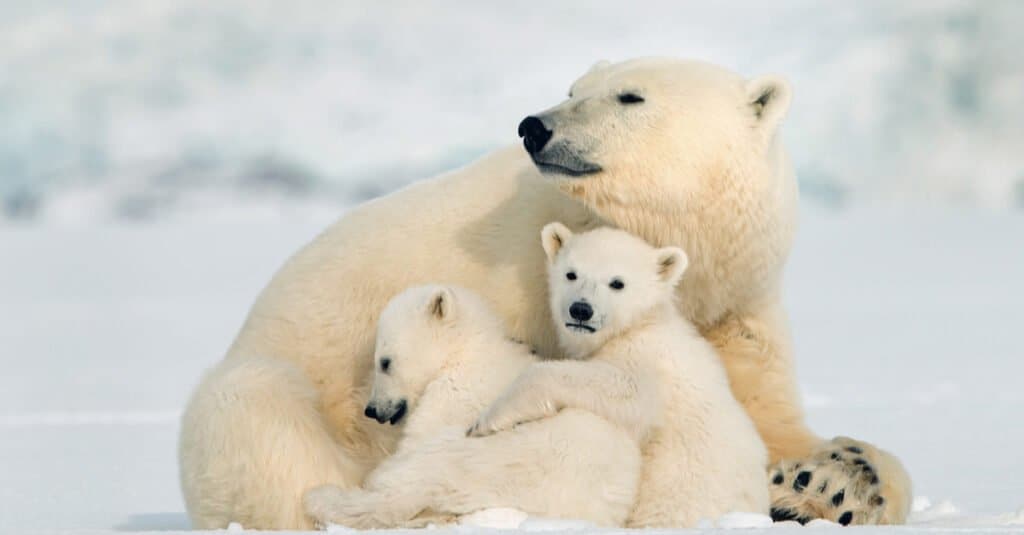
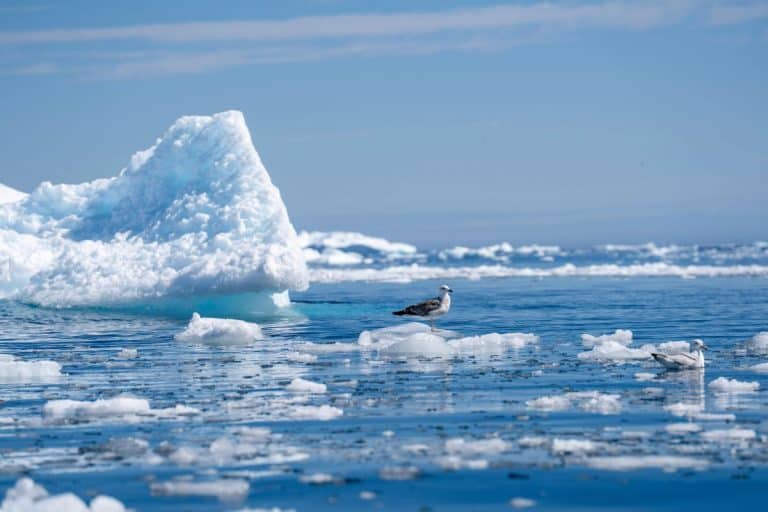
Scientists are only now discovering the intricate ways climate affects polar bear life—a species that is just one of thousands of Arctic animals at increased risk.
©isabel kendzior/Shutterstock.com
The discovery of repeated 27-minute outings has transformed understanding of a once-hidden life stage. These brief trips show mothers acting as careful guides, preparing their cubs for the demands ahead without forcing rapid exposure. As Arctic conditions change, this delicate timing faces increasing pressure.
Knowing how long families need to stay near dens helps managers design better protections and regulate human activity. The future of polar bears depends on keeping this narrow adjustment period intact, giving each cub a realistic chance to survive its first year.