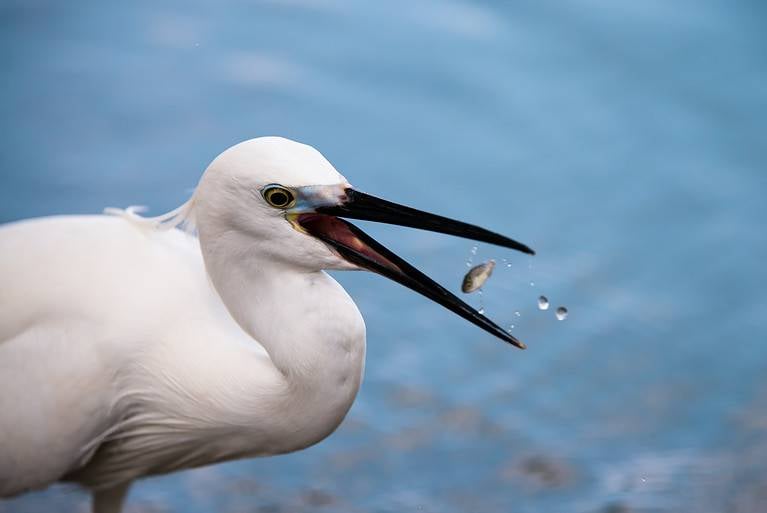

You’re standing by a pond at sunrise. A tall, statuesque bird stalks through the reeds, perfectly still one moment, lightning-fast the next. It spears a fish, takes a slow step, and you’re left wondering: was that a heron—or an egret? At first glance, the two seem nearly identical. Both are long-legged hunters with dagger-like bills, haunting wetlands across the world. But look closer, and subtle differences emerge. This guide unpacks the heron-versus-egret puzzle, so next time you’re out in nature, you’ll know exactly what you’re looking at.
The Heron and Egret Connection

A blue heron at sunset on Hilton Head Island.
©iStock.com/Tricia Jeter
The first thing to know about these birds is that, scientifically, there is no strict division between herons and egrets. Both belong to the Ardeidae family, which includes more than 60 species worldwide. Egrets are, biologically, a subgroup of herons. But the naming conventions are used to distinguish species or subspecies that look different from one another. This helps researchers and birdwatchers more precisely describe what they are seeing in the field, based on identifying details that casual observers might not notice.
Where to Find Them
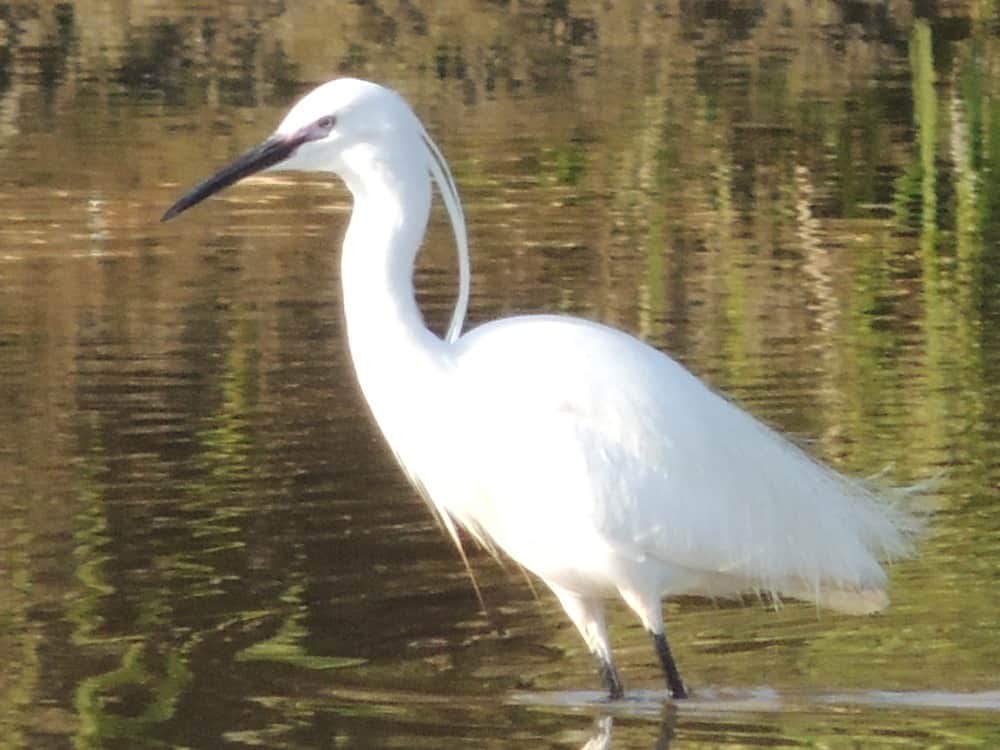
A Little Egret keeps an eye out for predators and prey.
©Paul Wranek – Copyright A-Z Animals
Herons and egrets live almost anywhere there’s shallow water with a lot of fish, frogs, and insects. They appear on every continent except Antarctica, from tropical swamps to chilly estuaries. In North America, the Great Blue Heron and the Great Egret are two of the most iconic birds. In Europe, the Grey Heron dominates rivers and lakes, while the Little Egret brings a flash of white. In Asia, Africa, and Australia, multiple species overlap, sometimes standing side by side in the same marsh. You’ll also see them adapting to urban life, nesting in city parks or even golf-course ponds.
Size and Build: A Quick Guide
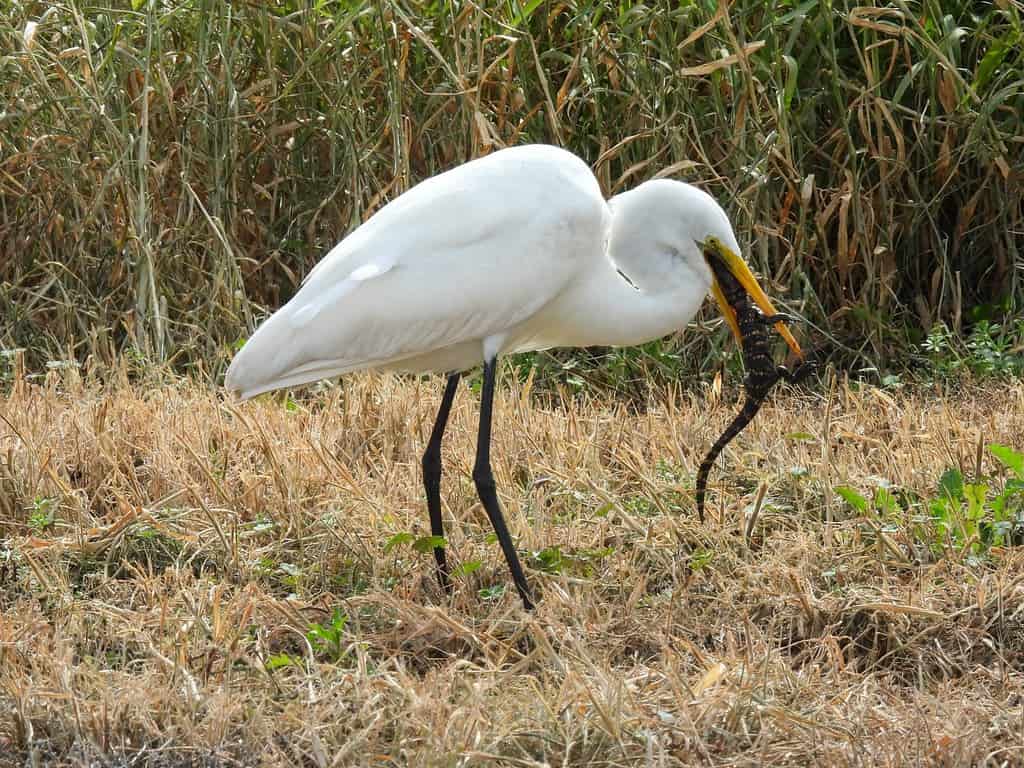
This egret is eating a baby alligator. As they say: “eat or be eaten!”
©Lisa Crawford/Shutterstock.com
When in doubt, size is one of the easiest clues to distinguish these birds. Herons are generally bigger. The Great Blue Heron, for example, can reach 4 feet tall with a wingspan pushing 7 feet. Standing next to ducks or geese, it towers above them. Egrets are more slender. The Great Egret stands just over 3 feet tall with a wingspan closer to 4.5 feet. If the bird appears massive and broad-winged, it is likely a heron. If it appears slimmer and more graceful, it may be an egret.
Color Clues: The Plumage Puzzle
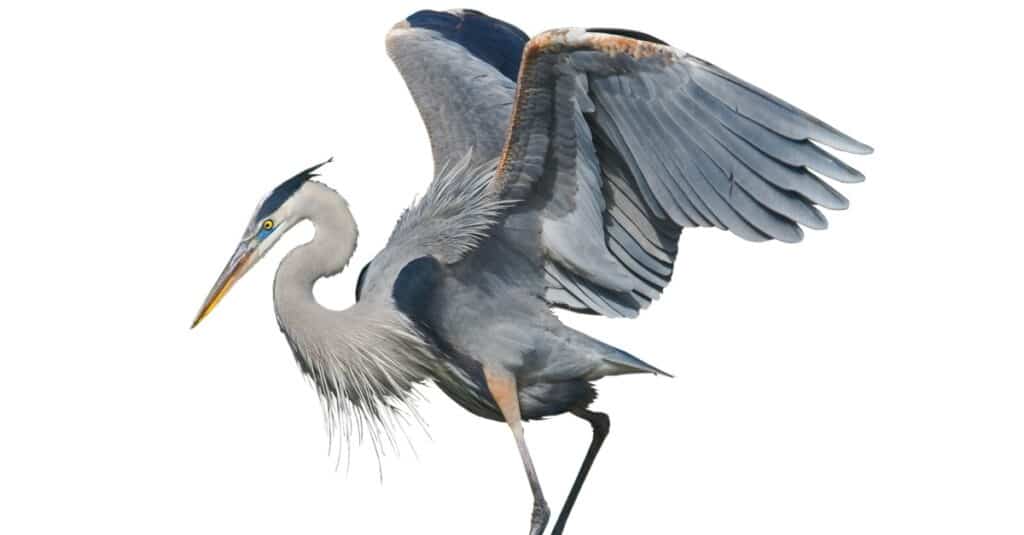
The Great Blue Heron has feathers in gorgeous shades of grey and blue.
©Tathoms/Shutterstock.com
Color often helps with identification, but it’s not foolproof. Egrets are almost always white. The Great Egret and Snowy Egret gleam like ghosts across the marsh. During breeding, some egrets develop orange or buff patches, but their base color remains white. Herons, on the other hand, are blue-gray or ash-colored, like the Great Blue or the Grey Heron. But some, like the white morph of the Great Blue Heron, can be nearly all white. So if you see a big white bird, don’t jump to “egret” too quickly—a white heron is always possible.
Legs and Beaks: Subtle But Telling
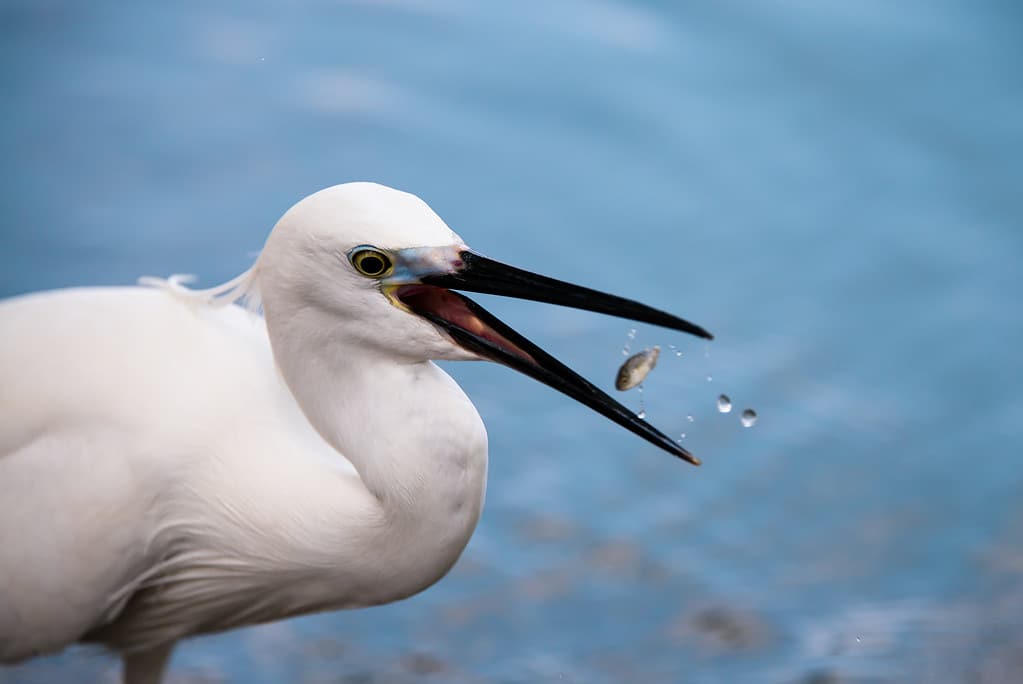
Little egrets have black beaks.
Legs and beaks are another difference between egrets and herons that can help you tell them apart. Most egrets have black legs and dark bills. The Snowy Egret is extra fancy, with black legs and brilliant yellow feet looking like golden slippers. Many herons have yellowish or duller legs and heavier bills. The Great Blue Heron is the classic example, with pale legs and a thick, dagger-like yellow bill. So if you see a large white bird with jet-black legs and a thin bill, chances are it’s a Great Egret. A larger bird with duller legs and a heavier bill might be a white morph of a heron instead.
Plumes and Ornamentation

This Snowy Egret in Florida displays the wispy feathers that make it look especially elegant.
©Harry Collins Photography/Shutterstock.com
During breeding season, some of the best identification markers appear. Egrets grow long, wispy plumes called aigrettes. In the 1800s, these feathers were so fashionable in ladies’ hats that hunting nearly wiped out several egret populations. Conservation movements were born in part to stop this slaughter.
Herons also have ornamental feathers, but they tend to be shaggier around the head, chest, or neck, and many are present year-round. So if you see extravagant sprays of fine plumes in spring, you’re almost certainly looking at an egret.
Behavior: Watching Their Moves

You can find the reddish egret on brush-covered islands off the Texas coast.
©iStock.com/Donyanedomam
Both herons and egrets are patient hunters, standing like statues for long stretches before striking lightning-fast to spear fish and frogs in the water. Still, some species add their own flair. Herons are more deliberate, slow, and measured in their hunting methods. Some egrets tend to be more dramatic, though. The Reddish Egret, for example, “dances” crazily around shallow water, flapping its wings and dashing about to startle and confuse the fish it preys upon. Behavior isn’t always a giveaway, but it is an early piece of the puzzle that you may be able to see further away before getting close enough to the bird to see more detailed features.
Young Birds and Color Morphs

The little blue heron lives along the coast in marshes and swamps.
©iStock.com/Florence and Joseph McGinn
To complicate things further, age and genetics blur the lines. For example, the Reddish Egret comes in two “morphs”—a dark version with reddish-brown plumage and a completely white version. Both belong to the same species. The Little Blue Heron is snow-white when it is young but turns blue-gray as it matures. And there is a white morph of the Great Blue Heron that occurs mostly in southern Florida and the Caribbean. It looks like a giant egret but is actually a heron. With these confusing variations, even seasoned birders hesitate before naming the species they’re observing and look for other contextual cues.
In Flight: The Neck Test

Great white egret (Ardea alba) flying at Lake Csaj, Kiskunsagi National Park, Pusztaszer, Hungary.
©iStock.com/CreativeNature_nl
If you see a big white bird in flight, there’s a possibility that it is neither an egret nor a heron, but a crane. One of the simplest rules for identifying herons and egrets in the sky is the neck tuck. Both groups fly with their necks pulled back into an S-curve. Cranes, which they’re often confused with, fly with their necks stretched straight out. Spotting that tucked neck can immediately tell you that you’re watching a heron or egret, not a crane.
Ecology and Conservation
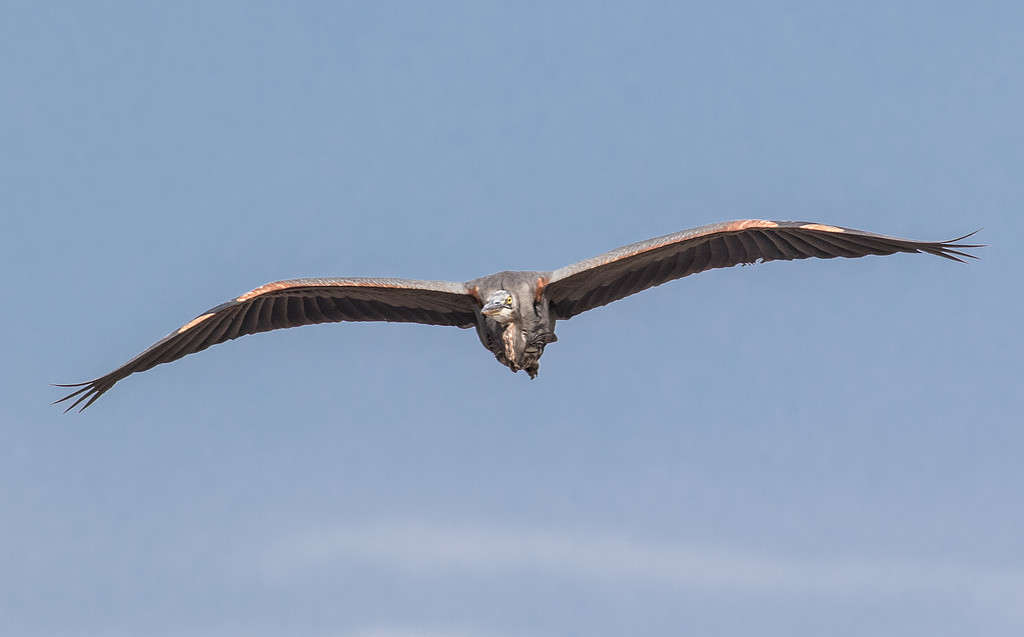
A Great Blue Heron is coming right at you over the Chippewa River in Northwestern Wisconsin.
©MJT Photography/iStock via Getty Images
Herons and egrets play vital roles in wetland ecosystems. By feeding on fish, amphibians, and insects, they help keep populations balanced. Their presence often signals a healthy waterway. But their survival depends on the health of their habitats. Although hunting by humans is no longer the existential threat it was in the 19th century, they are still threatened by wetland loss, pollution, and climate change.
Most heron and egret species are listed as Least Concern on the IUCN Red List, meaning their populations are generally stable and widespread. However, a few species—like the Reddish Egret—face greater risks and may be threatened or near threatened, especially in certain regions. Habitat loss, wetland destruction, and disturbance at nesting sites are ongoing concerns, but strong legal protections and conservation efforts have helped many populations recover from past declines.
Spotting with Confidence

A Great Blue Heron stalks through the muck in search of a meal.
©Joseph Scott Photography/Shutterstock.com
Once you learn to watch for size, plumage, legs, beak shape, and seasonal plumes, the differences between herons and egrets leap out at you. The next time you walk past a marsh or city pond, you’ll see more than just a big bird in the reeds. You’ll see a bird that requires closer and more patient observation to identify, rewarding you with the challenge of discovery.