
Bees are nature’s pollinators, which is a heavy responsibility. Because of this, bees must constantly repopulate to help maintain the ecosystem. This video by National Geographic shows a bee hatching, evolving from egg to adult. If you’re curious to learn more about how bees hatch, keep reading below.

©Lehrer/Shutterstock.com
Bee Life Cycle
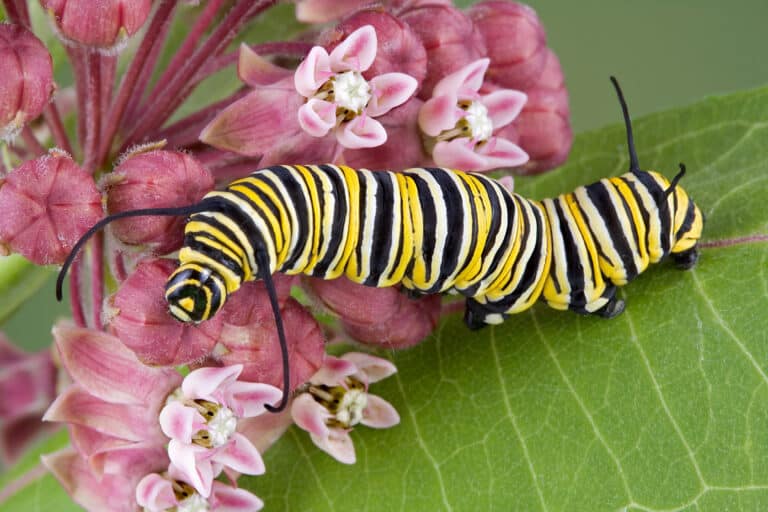
Similar to how caterpillars turn into butterflies, bees undergo metamorphosis, changing structure as they age. Complete metamorphosis is divided into four stages: egg, larva, pupa, and adult.
Egg Stage
The egg stage is the start of a bee’s life. In this stage, the queen bee will lay an egg in one of the cells of the hive. The eggs are cylindrical and white. For worker bees, the egg hatches after roughly three days, with the larva inside the egg splitting it open to emerge. After emergence, the bee enters the larval stage.
Larval Stage
The larval stage is crucial as the larva must eat to grow. In this stage, the larva’s main job is to gain the nutrients needed to grow into an adult. Worker bees are in charge of the feeding, offering royal jelly, pollen, and nectar. Lasting around five to six days, the larva molts several times to adapt to its growing size. As seen in the video, the bee continues to grow, most likely in the larval stage.
Pupa Stage
The pupal stage is the longest stage before adulthood. Lasting around 12 days, this stage is when the bee starts to take on noticeable features. To begin this process, the hive cell is covered with wax. Inside the cell, the larva begins its transformation into a pupa. The pupa will grow features such as wings, legs, and eyes. While external changes are occurring, internal changes also occur. All organ development occurs before the bee emerges as an adult.
Adult Stage
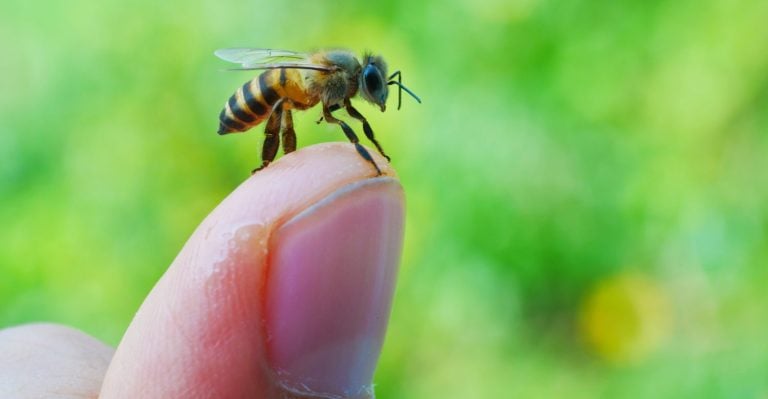
The adult stage is the final stage of metamorphosis. Chewing its way out of its waxy cell, the bee begins its roles in the hive. Some duties include foraging, nursing, cleaning, defense, and more. How long the adult lives depends on the species and time of year. Worker bees typically live 5 to 7 weeks (35 to 49 days) during the active season, but those born in the fall can live up 4-6 months. Overall, development takes roughly 21 days, followed by about a month of adulthood.