Quick Take
- These insects are fearsome enough to kill frogs and salamanders, but males spend weeks performing a surprisingly tender ritual to keep their eggs alive. See the caregiving ritual →
- Laying eggs underwater should be impossible for these bugs, so evolution found a workaround that involves the male's own body. Discover evolution's workaround →
- Genetic studies revealed something deeply strange about which eggs a male is actually raising, a finding that changes how scientists think about invertebrate parenting. Explore the genetic findings →
- Being a devoted father costs male giant water bugs something tangible, and that price raises the question of why the behavior persists at all. See the costs of fatherhood →
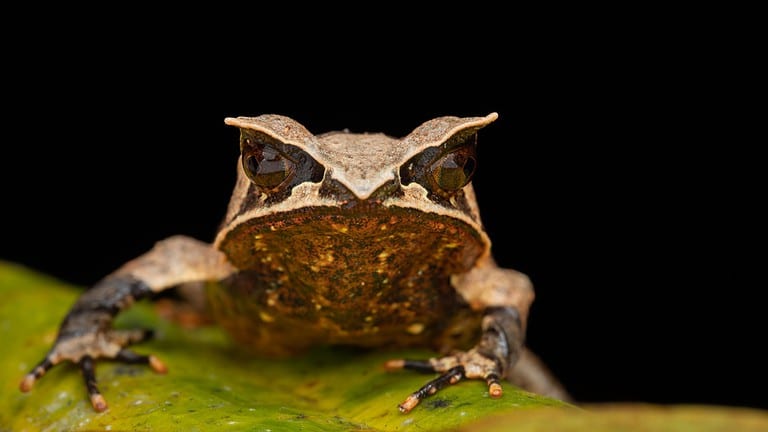
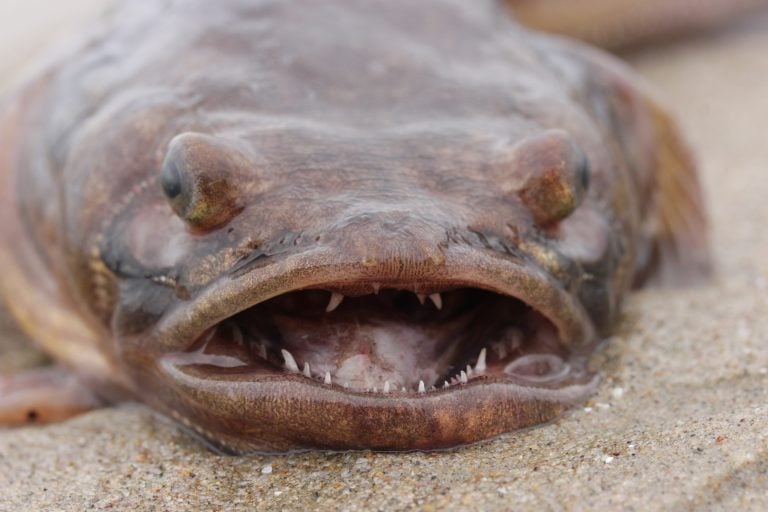
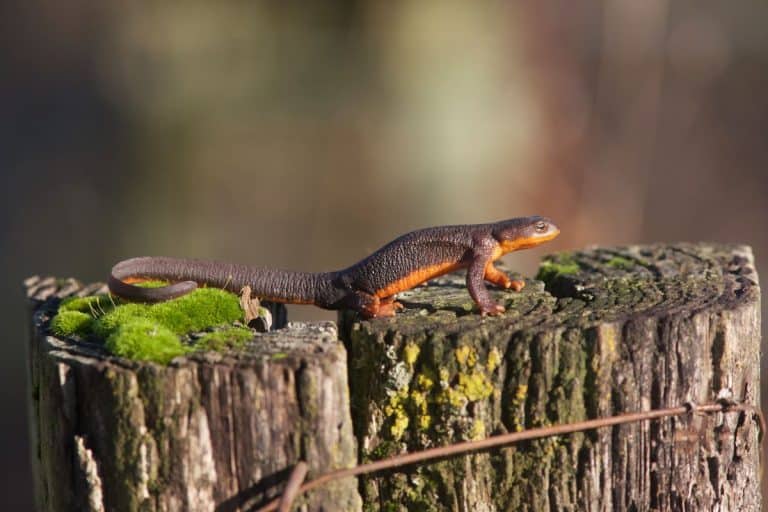
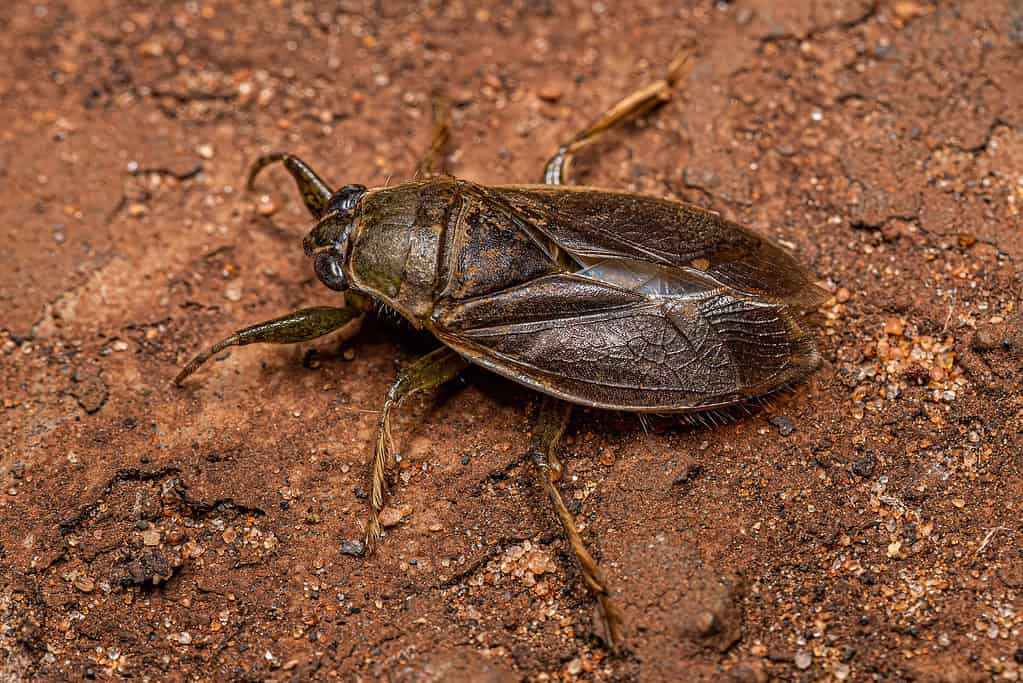
In freshwater ponds, streams, and marshes across the globe lurks a streamlined and agile predator: the giant water bug. This insect is armed with sharp, grasping forelimbs and a toxic, excruciating bite. Giant water bugs, family Belostomatidae, are known as “toe-biters” across North America for their proclivity for delivering a stinging bite when startled or provoked. Not only are these aquatic insects the largest true bugs (order Hemiptera) on the planet, but they are also known for being able to hunt and kill vertebrates many times their size, including frogs, toads, and salamanders. But these fearsome hunters have a sympathetic side as well; male Belostomatidae are crucial caretakers for the species’ eggs, representing a rare example of paternal care among invertebrates.

Male giant water bugs (Family Belostomatidae) are among the most active fathers in the invertebrate world.
©Vinicius R. Souza/Shutterstock.com
Continue reading
©iStock.com/ViniSouza128
Adapting to a Watery Lifestyle
Belostomatidae, like all true bugs, originally evolved on land. To become a dangerous pond predator, giant water bugs needed to find a way to live underwater. Other freshwater insects, including dragonflies, damselflies, stoneflies, and mayflies, have evolved gills in their aquatic larval and nymph stages to stay oxygenated underwater, but giant water bugs rely on a different strategy. In order to maintain access to oxygen, they regularly swim to the surface and use a siphon on their rear ends to pull a bubble of air into the space between their bodies and their wings. Oxygen diffuses from this bubble into their tissues, ensuring their survival.
Time spent near the surface is time spent in danger: these bugs make a snack for egrets, amphibians, and snakes, and they are safest nestled against aquatic vegetation near the bottom of their body of water. To prolong their time underwater, Belostomatidae have developed the ability to “pump” their trapped air bubbles, allowing oxygen to diffuse into the bubble from the water more efficiently.
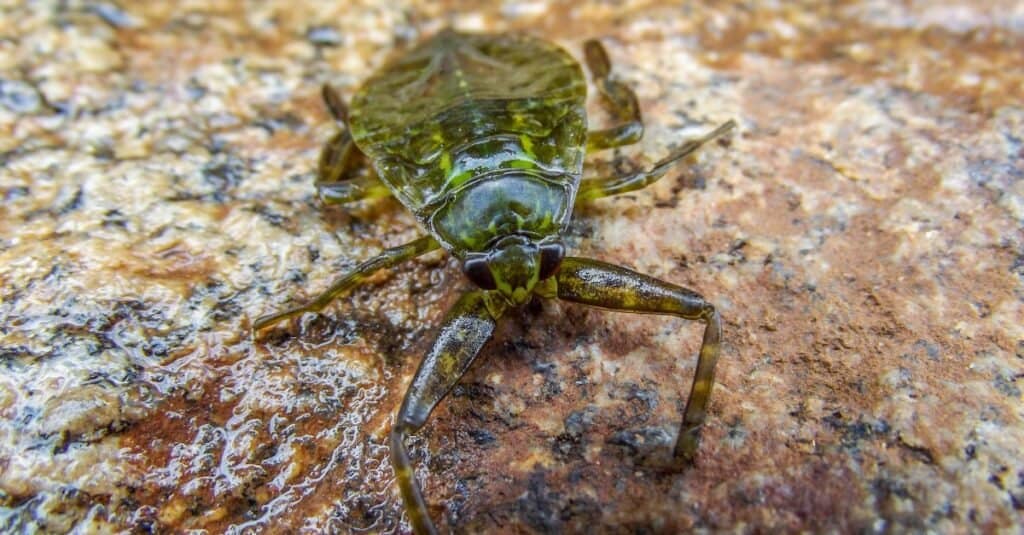
As with all the true bugs, their mouthpart forms a rostrum which they use to pierce their food source and suck fluids from it.
©iStock.com/Eric Kukulowicz
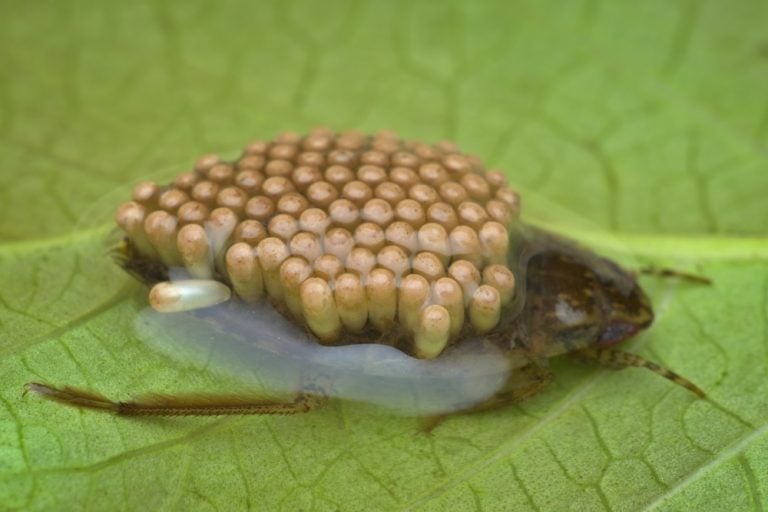
But this underwater bug lineage has run into a problem: their eggs need access to oxygen in excess of what freshwater can provide. This means that laying eggs underwater is not an option, unless a female lays those eggs on the back of a male.
Paternal Parental Care: A Rare but Effective Reproductive Strategy
In order to ensure that the eggs don’t run out of oxygen, male giant water bugs swim to the surface and perform pumping “push ups” that help aerate the eggs. He repeats this process many times for around two weeks, until the eggs hatch. This is an energetically costly behavior, but it ensures that the male has an opportunity to pass on his genes. Not only that, but males that are already carrying eggs are more likely to be selected as mates by females.
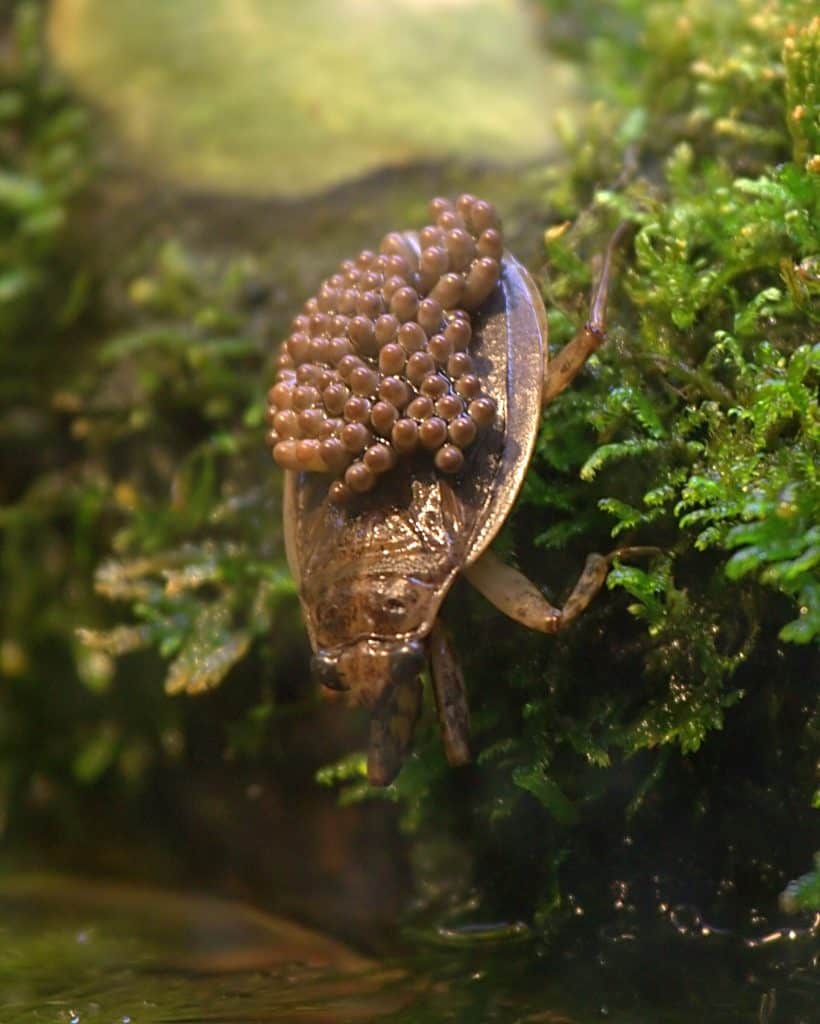
A male Abedus herberti carrying eggs at the Cincinnati Zoo.
Females mate with a male, lay their eggs, then mate with him again. Scientists aren’t sure why this pattern persists, but genetic studies have shown that most males are carrying eggs laid by multiple females– and most males are carrying eggs fertilized by other males. In a sense, these bugs are raising the eggs as a community.
One subfamily of giant water bugs, Lethocerinae, exhibits paternal care just like their relatives– but with a twist. Giant water bugs are so adapted to aquatic life that their eggs dry out if laid above the waterline. But females in the Lethocerinae family lay their eggs on vegetation that is sticking out of the water anyways. Males station themselves on the stems of these plants, and climb up onto the eggs periodically, allowing the water from their bodies to drip onto the eggs, saving them from drying out.
Caring Fathers
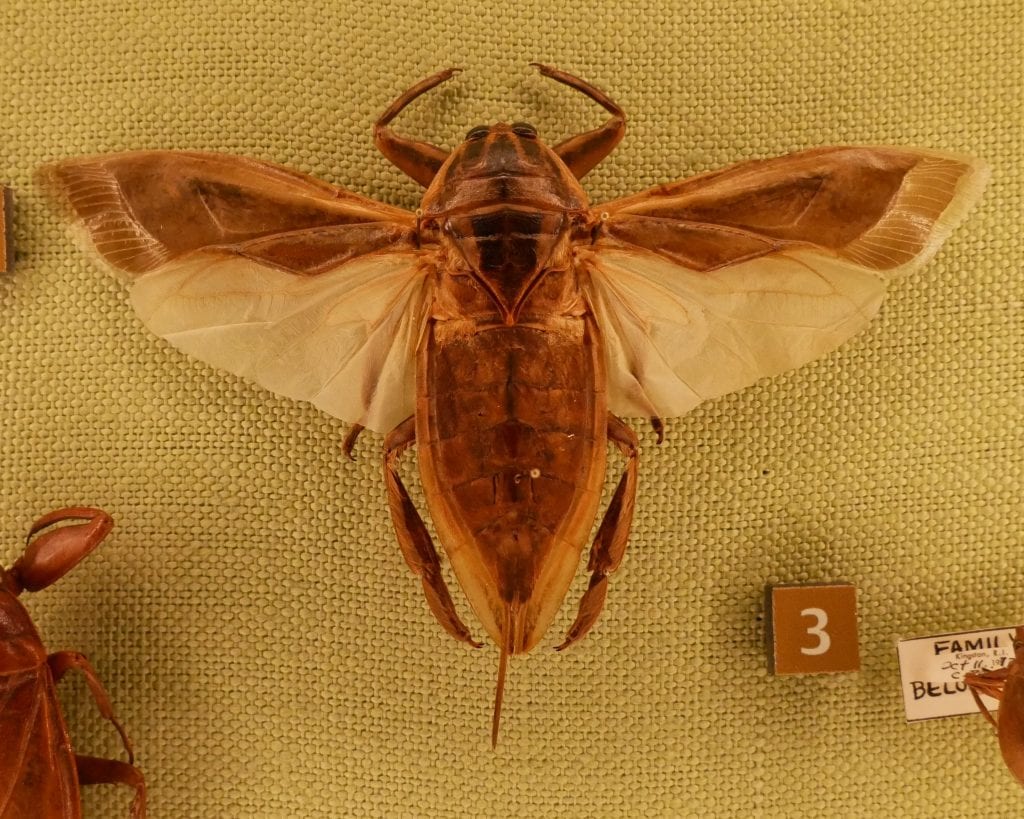
Adult giant water bugs can fly, like most adult true bugs.
Paternal care is extremely rare in the invertebrate phylum Anthropoda, but giant water bugs aren’t the only examples. One species of harvestman (order Opiliones), Iporangaia pustulosa, exhibits paternal care; females lay eggs near their partners and males guard the eggs exclusively. Among several species of assassin bugs (family Reduviidae), males are also guards of each clutch of eggs, and females are more likely to mate with males who are guarding eggs.
Scientific studies of invertebrates that exhibit paternal care have found that a vanishingly small number of eggs hatch without a dad helping out; whether the bug is helping the egg get oxygen, water, or avoid being eaten by predators, the male plays a crucial role. But this behavior comes at a cost to the male; unable to engage in typical hunting patterns, he will lose weight over the period he is on duty. This is the cost of involved fatherhood: the reward is a thriving brood of offspring.