
Quick Take
- These 'killer bees' are running a sophisticated climate control system, and they do so with no thermostat, no leader, and no instructions required. See how bees self-organize →
- A 1956 lab experiment gone wrong is why Arizonans now share their pipes with one of the world's most defensive bee colonies. Trace the 1956 origin →
- Fanning wings isn't just about keeping cool. Bees use the same motion for something that ends up in your kitchen. See how fanning makes honey →
- When bees push their abdomens into the air and fan, they're sending a message. Decode the bee signal →
The Instagram Reel above shows the fascinating behavior of a colony of Africanized honey bees that have made their home in an abandoned metal pipe. These bees are in Cochise County, Arizona. Living inside a metal pipe in Arizona, as you can imagine, gets pretty hot. Also known as “killer bees” for their highly defensive nature, these bees are in a perfect formation, facing the same direction, and rapidly beating their wings. This behavior is known as “fanning,” and it’s how bees create a cooling system for their hives. Besides air conditioning, fanning has other important uses. It helps honey production by dehydrating nectar, and it also broadcasts pheromones for communication.
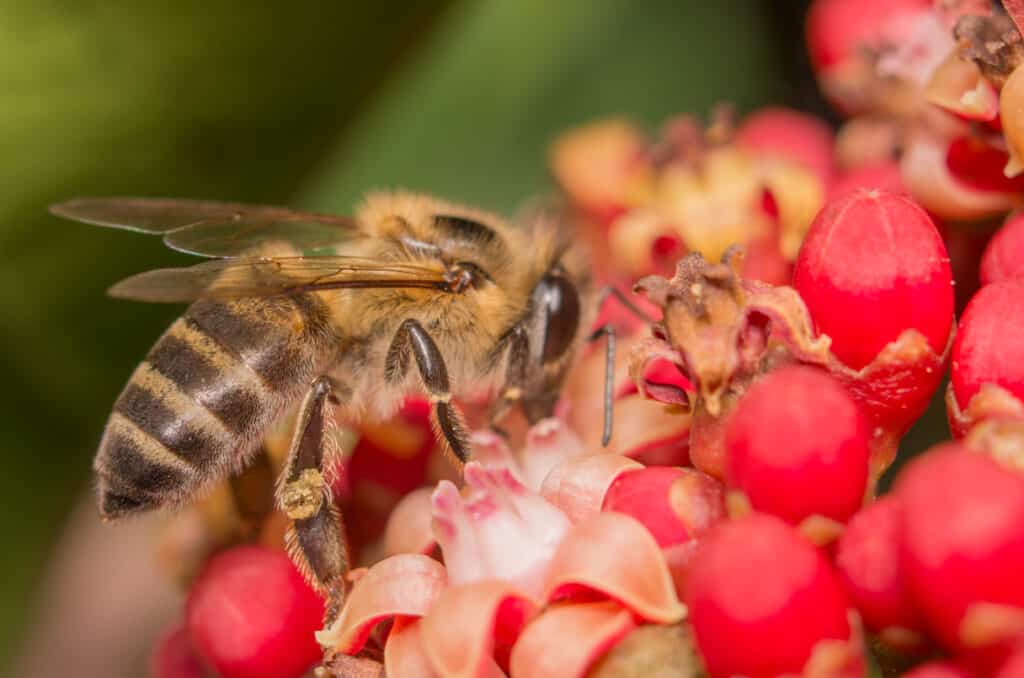
Africanized bees are moving north, but cold winters limit their range.
©Philip Marsden/Shutterstock.com
Meet the Africanized Honey Bee
The bees in the Instagram Reel are Africanized honey bees. They are a hybrid of the western honey bee, also called the European honey bee (Apis mellifera), and a subspecies of the African honey bee (Apis mellifera scutellata). European honey bees are not native to North America, but they were introduced in the 1600s.
Africanized honey bees were created when biologist Warwick E. Kerr imported colonies of African honey bees to Brazil in 1956. Scientists hoped to increase local honey production while also creating a crossbreed that would thrive in the warm climate.
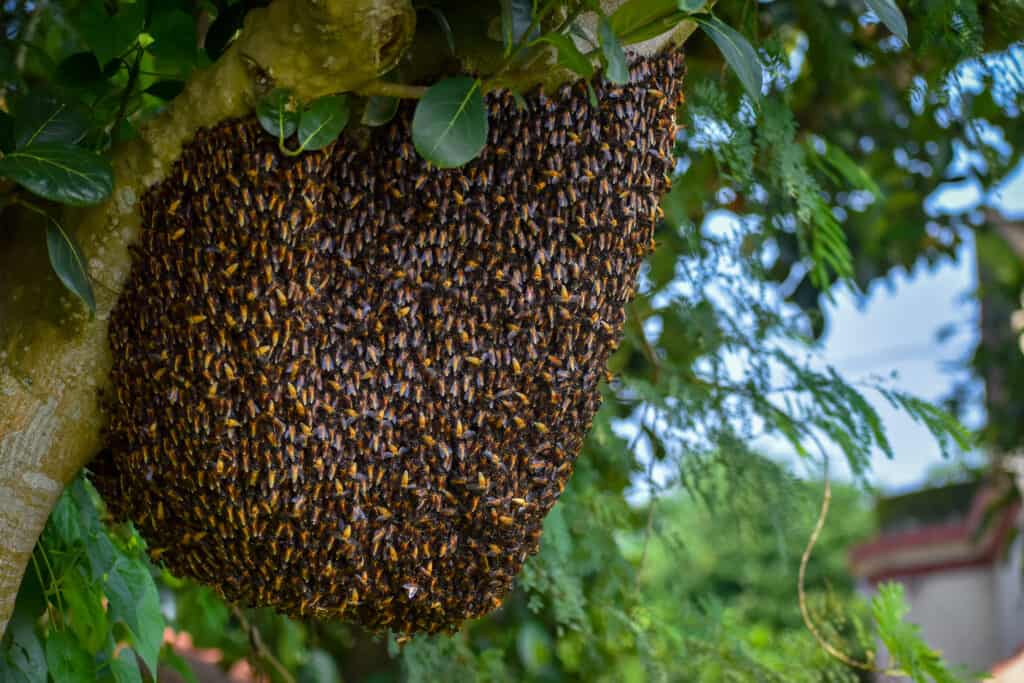
Africanized bees are less selective about where they nest than European honey bees, sometimes choosing unusual places, like abandoned metal pipes.
©Nandalal Sarkar/Shutterstock.com
The project went awry one year later when 26 African honey bee queens escaped with swarms of European honey bees. The escaped African honey bees began interbreeding with local and wild colonies in Brazil. Since then, their range has continued to spread north, and today, they can be found as far north as the southern US. The Africanized bees in the Instagram Reel are located in Arizona, where they are widespread.
Bees Have Their Own Ventilation System
It’s difficult to tell an Africanized honey bee from a European honey bee by appearance, but their behaviors are different. Africanized honey bees are more aggressive and defensive than European honey bees. They control the temperature inside their hives by fanning their wings.
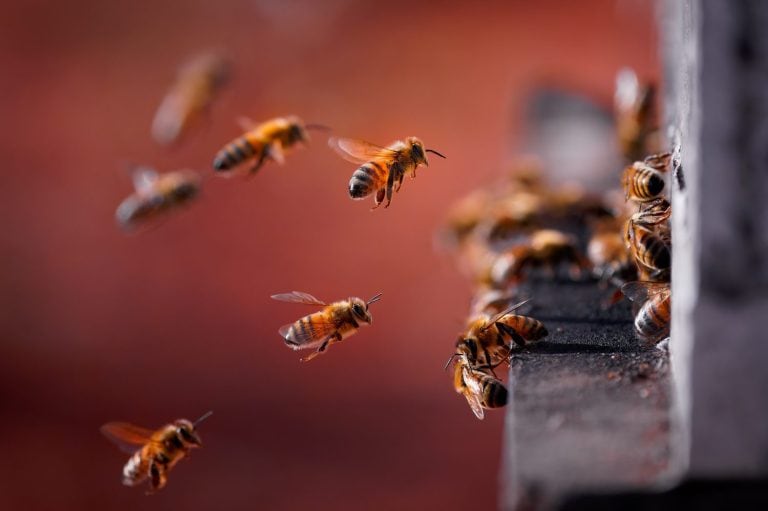
Honey bees live in large nests with one opening. Researchers found that when the temperature reaches a certain level, worker bees organize themselves at the entrance and rapidly fan their wings. The fanning pulls hot air out of the nest. When the bees stop moving their wings, cooler outside air replaces the hot air, lowering the overall temperature inside the nest.
Scientists found that the worker bees organize themselves into groups to control where air flows in and out. This organized behavior helps keep the brood at a stable temperature, which is important for the developing larvae. The bees don’t need a leader to tell them when to fan. They respond to environmental conditions, like warm air or too much carbon dioxide. As each individual begins to move their wings, other workers join in, creating a cohesive unit of fanning bees.
Bees Use Their Wings to Spread Messages
Although keeping the air temperature cool in the hive is an important job, bees also fan their wings for other reasons. The behavior also helps to distribute chemical signals. When you see bees rapidly moving their wings with their abdomens pushed high into the air, they are distributing scent from their Nasonov glands.
Only worker bees have this specialized scent-producing organ. They use the scent to communicate to other members of the hive, helping foragers find their way back to the colony. Odors from the Nasonov glands also help guide colonies when moving to a new site. It’s also used to communicate where to find sources of food or water. By rapidly fanning their wings, the bees distribute their pheromones into the air.
Bees Fan Their Wings to Make Honey
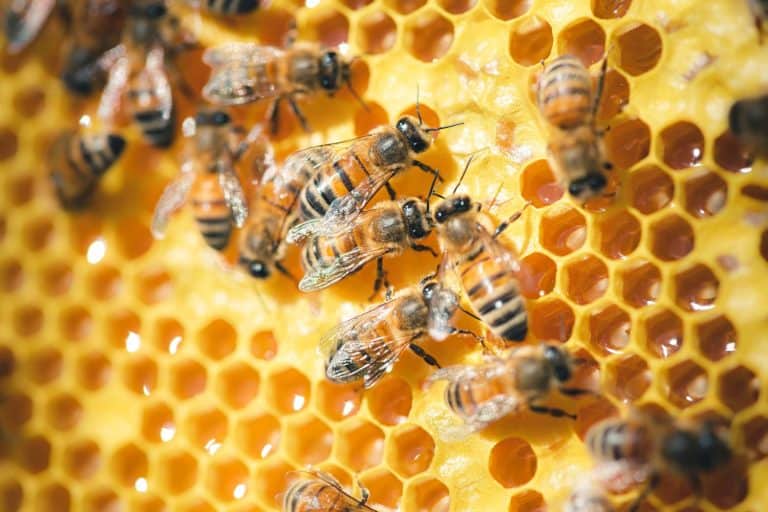
Fanning is also important to honey-making. Nectar from fresh flowers contains a lot of water. To produce honey from the nectar, bees need to dehydrate it. When they deposit the nectar into the hive, the bees spread it out in the wax cells of the honeycomb so it has more surface area to dry.
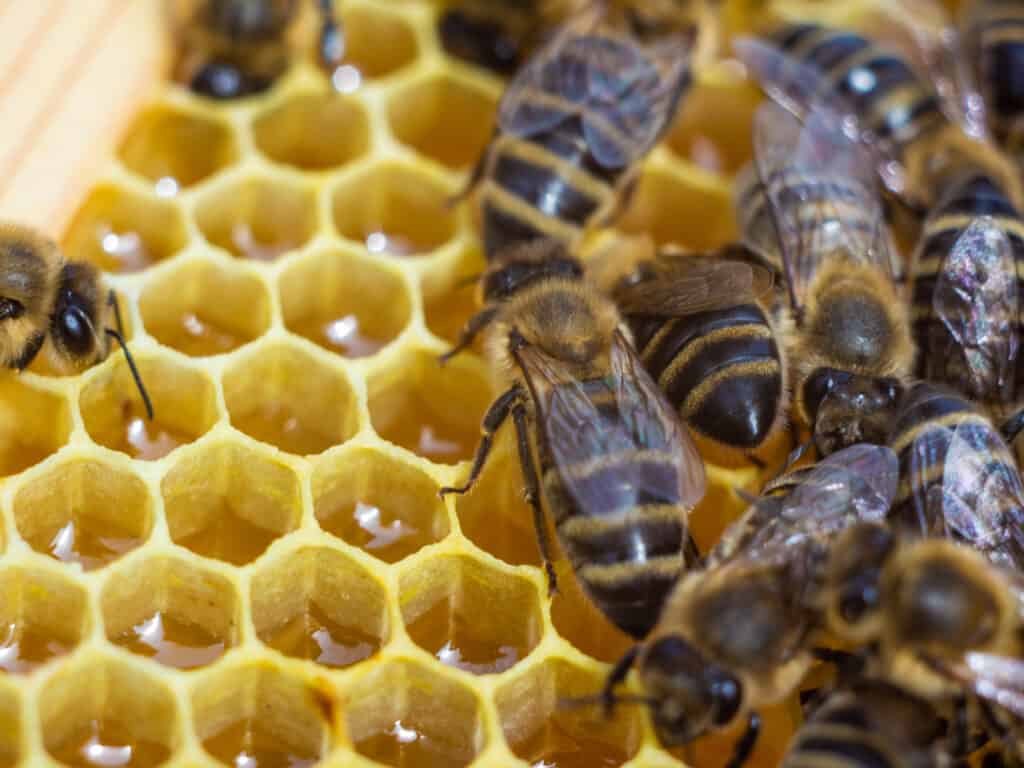
Bees make honey by collecting nectar, adding special enzymes, and fanning it with their wings until moisture is removed and it thickens.
©Goncharov Taras/Shutterstock.com
Fanning moves air across the nectar, allowing the water to evaporate more quickly. Once the moisture drops enough, the bees seal the cell with beeswax to preserve the honey. The low moisture content is one reason why honey remains shelf-stable and never goes bad.
Is It Rare to See Bees Fanning Like This?
The bee expert in the Instagram Reel mentions that it’s rare to capture so many bees fanning at the entrance of their hive. Although it may be unlikely for us to observe so many bees rapidly beating their wings in the same direction, the actual behavior is pretty common for honey bees.
However, seeing such a large hive of Africanized bees working together in a perfectly synchronized manner demonstrates the amazing ability of bees to organize behavior without a central commander.